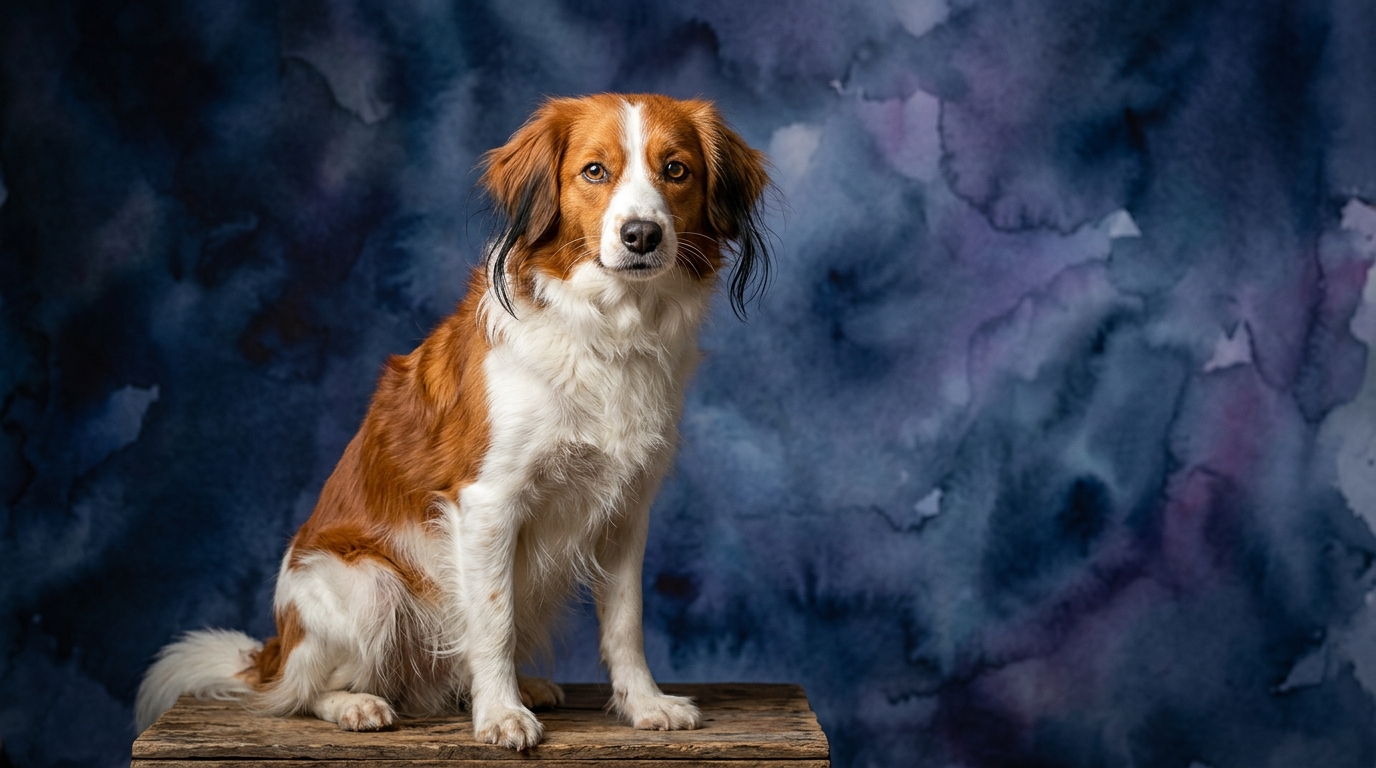

Side-by-Side IQ Profile: Unpacking Identical Scores with Distinct Minds
The Cosmic Pet Pet IQ Lab employs a five-dimensional model to assess canine intelligence, and interestingly, both the Kooikerhondje and the Basset Hound register a consistent 3 out of 5 across all categories. However, these identical scores belie profound differences in how their cognitive abilities are expressed and applied in their daily lives, rooted deeply in their historical functions and breed temperaments. Understanding these nuances is key to appreciating their individual brilliance.
For the Kooikerhondje, a lively Sporting dog, a Problem Solving score of 3/5 reflects a practical, agile mind. These dogs were historically employed as “duck lures,” requiring them to move stealthily and strategically to entice waterfowl into traps. Their problem-solving manifests in their ability to quickly assess visual cues in their environment, navigate complex spaces, and devise methods to achieve a tangible goal, such as retrieving a toy from under furniture or figuring out the mechanism of a puzzle feeder. Their solutions are often quick and physically engaged, demonstrating a keen spatial awareness and a desire to interact with their surroundings.
Their Training Speed, also at 3/5, indicates a moderate pace of learning new commands. Kooikerhondjes are generally eager to please their handlers and are highly responsive to positive reinforcement, especially when training feels like a purposeful activity or a game. They absorb new tasks steadily, retaining information well, and are often motivated by the opportunity to work collaboratively.
Social Intelligence at 3/5 for the Kooikerhondje speaks to their sensitivity and attunement to human companionship. They are adept at reading their owner's emotional state and body language, often forming strong, reciprocal bonds. This intelligence is geared towards a partnership, making them excellent companions who can anticipate needs and respond appropriately within a family dynamic.
The Instinctive Drive of 3/5 is strongly tied to their retrieving and luring heritage. This manifests as a powerful inclination to chase, fetch, and engage in repetitive, focused tasks. They possess a natural enthusiasm for outdoor activities and games that simulate their historical role, showcasing a drive that is both energetic and directed.
Finally, their Memory score of 3/5 means Kooikerhondjes possess a reliable capacity to recall learned routines, commands, and past experiences. They remember where specific toys are kept, the sequence of events leading to a walk, or the commands they've mastered, particularly when these memories are associated with positive interactions or task completion.
In contrast, the Basset Hound, a distinctive member of the Hound group with a Coren ranking of #71, applies its identical scores through an entirely different lens. Their Problem Solving at 3/5 is profoundly olfactory. A Basset's world is dominated by scent, and their problem-solving prowess is demonstrated in their methodical, tenacious approach to unraveling complex scent trails. They can spend hours meticulously following a faint odor, piecing together a sensory puzzle with unwavering focus. This isn't about quick, physical manipulation, but rather a deep, singular cognitive engagement with environmental data, often to the exclusion of other stimuli.
Their Training Speed of 3/5, while numerically similar to the Kooikerhondje, presents differently in practice. Basset Hounds are capable of learning, but their independent nature and overwhelming drive to follow a scent can make traditional obedience training a test of patience. They learn at a moderate pace, but their willingness to comply often depends on their assessment of the task's inherent value compared to the allure of a captivating odor. High-value rewards and an understanding of their motivations are crucial.
Social Intelligence at 3/5 for the Basset Hound translates into an amiable, affectionate, and generally placid demeanor. They enjoy the comfort of companionship and are adept at understanding the nuances of human affection and the rhythm of a home. Their social intelligence is less about active partnership in tasks and more about establishing a harmonious, low-key presence within their chosen family, often charming their way into the best nap spots.
The Instinctive Drive of 3/5 is almost entirely dedicated to their profound sense of smell. This drive is not about high-energy bursts but a persistent, almost meditative focus on scent. When a Basset Hound's nose hits a compelling trail, their world shrinks to that single sensory input, demonstrating an unwavering commitment to their primal hunting purpose.
Their Memory, also a 3/5, is particularly strong for scent profiles and significant locations. A Basset will remember the route to a favorite park, the spot where an interesting smell was once discovered, or the scent of specific individuals, even after a long absence. Their recall of environmental details is often tied to their olfactory experiences, building a rich sensory map of their world.
Where the Kooikerhondje Wins Cognitively: Agility of Mind and Body
The Kooikerhondje's cognitive strengths truly shine in scenarios demanding a blend of mental and physical agility. Their problem-solving, while rated 3/5, is more about dynamic assessment and quick, responsive action. They excel at tasks requiring them to process visual information rapidly and adapt their behavior accordingly, such as navigating an intricate agility course or figuring out how to open a gate. This breed demonstrates a superior capacity for learning and executing complex sequences of commands that involve movement and object manipulation, reflecting their historical role in actively luring ducks. Their social intelligence is more geared towards active collaboration, making them quicker to pick up on subtle human cues for direction and engagement in shared activities.
Where the Basset Hound Wins Cognitively: The Unrivaled Olfactory Detective
The Basset Hound's cognitive advantage lies squarely in its unparalleled olfactory processing and relentless persistence. While their problem-solving is also rated 3/5, it is a specialized form of intelligence centered entirely on scent. No other breed, perhaps save for those with even higher scores in instinctive drive related to scent, can match the Basset's ability to methodically dissect and follow a complex scent trail over long distances, often ignoring significant environmental distractions that would deter other dogs. Their memory is profoundly linked to their olfactory experiences, enabling them to map their world through an intricate tapestry of smells, recalling specific scents and their associated locations with remarkable accuracy. This deep, focused cognitive engagement with sensory data is a unique and powerful form of intelligence.
Which is Easier to Train and Why: Purpose vs. Persistence
When it comes to ease of training, the Kooikerhondje generally presents as the more straightforward student. Their 3/5 training speed is often bolstered by their eager-to-please temperament and a strong desire for cooperative engagement with their handler. A Kooikerhondje, stemming from its sporting heritage, typically views training as a shared activity, and their social intelligence allows them to quickly interpret and respond to human commands. For instance, a Kooikerhondje is more likely to disengage from chasing a squirrel if a 'come' command is issued, driven by a desire to please and participate. They respond well to varied training methods and enjoy the mental stimulation of learning new tricks or commands, making their 3/5 training speed feel more consistent and adaptable across different tasks.
The Basset Hound, despite sharing the same 3/5 training speed, offers a different experience. Their profound 3/5 instinctive drive for scenting means that if a compelling odor captures their attention, their focus on human commands can significantly wane. Training a Basset requires immense patience, creativity, and an understanding of their independent, scent-driven motivations. While they are capable of learning, their compliance often hinges on whether the reward (which needs to be high-value) outweighs the allure of a fascinating scent. A Basset on an interesting trail might simply "tune out" a repeated 'come' command, not out of defiance, but because their cognitive processing is singularly dedicated to their olfactory task. This behavioral difference means that while both breeds can learn at a moderate pace, the *consistency* of a Basset's response can be more challenging to achieve in real-world scenarios, particularly outdoors.
Which Suits Active Owners vs. Relaxed Owners: Energy and Engagement Styles
The distinction between the Kooikerhondje and the Basset Hound becomes particularly clear when considering owner lifestyles. The Kooikerhondje, with its sporting background and balanced 3/5 scores across cognitive dimensions, is an ideal match for active owners. They thrive on consistent mental stimulation and physical activity, enjoying structured play, dog sports like agility or obedience, and long, engaging walks. Their instinctive drive for retrieving and luring means they need outlets for this energy, making them excellent companions for hikers, runners, or families who enjoy interactive games. An owner who can provide varied activities and cooperative tasks will find the Kooikerhondje to be a highly engaged and satisfied partner.
Conversely, the Basset Hound, while requiring regular exercise for health and scent enrichment, is generally better suited for more relaxed owners. Their primary instinctive drive (3/5) is focused on scenting, which can be satisfied with leisurely sniffing walks rather than high-impact physical exertion. They are typically content with a comfortable spot indoors, enjoying long naps and gentle companionship. While they benefit from structured scent work or tracking games, their energy levels are generally lower than a Kooikerhondje's. Owners who appreciate a steadfast, independent companion and are willing to accommodate a dog whose nose often leads the way, without expecting constant high-energy engagement, will find a Basset Hound to be a wonderfully serene addition to their home.
The Verdict
Choose the Kooikerhondje if you seek an active, cooperative partner eager for engaging training and dynamic physical activities, thriving on shared tasks and responsive interaction.
Opt for the Basset Hound if you appreciate a patient, independent companion with an unparalleled scenting ability, content with a relaxed pace and dedicated scent work.
🧠 Find Your Pet's IQ Score
Our Pet IQ Lab assessment covers 25+ tests across 5 cognitive dimensions — personalized to your breed.
Take the Full IQ Test →Frequently Asked Questions
Do identical IQ scores mean Kooikerhondjes and Basset Hounds are equally "smart"?
No, identical numerical scores indicate similar capacity across cognitive dimensions, but the expression and application of that intelligence differ greatly. The Kooikerhondje uses its problem-solving and memory for active, cooperative tasks, while the Basset Hound applies its equally capable mind primarily to complex olfactory challenges. Their intelligence manifests in distinct, breed-specific ways.
Can a Basset Hound be trained for agility like a Kooikerhondje?
While a Basset Hound can certainly learn agility, their physical build and primary motivation (scenting) make them less naturally inclined or proficient than a Kooikerhondje. A Basset's problem-solving and training speed are more effectively engaged in scent-based activities, whereas a Kooikerhondje's athleticism and cooperative drive make them excellent agility candidates.
Which breed is better with children?
Both breeds can be good with children, but their interaction styles differ. Kooikerhondjes are often playful and engaging, enjoying active games, while Basset Hounds are typically more laid-back and tolerant, preferring gentle interaction. Supervised introductions and teaching children how to interact respectfully with any dog are always essential.