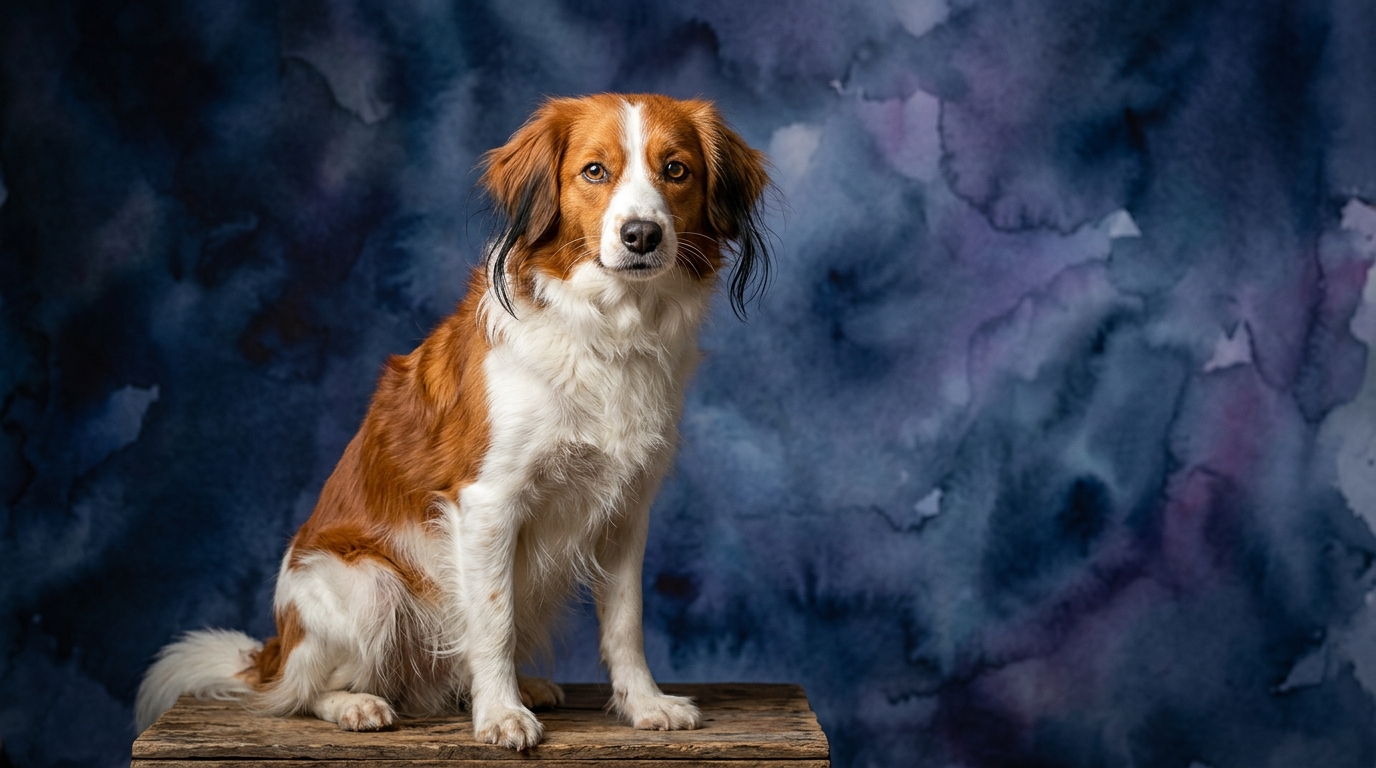

Side-by-Side IQ Profile: Kooikerhondje vs. Lhasa Apso
The Cosmic Pet Pet IQ Lab assesses canine intelligence across five key dimensions. Interestingly, both the Kooikerhondje and the Lhasa Apso register a consistent 3/5 across all categories. However, these identical scores manifest through distinct behavioral patterns shaped by their breed origins and purposes. Understanding these nuances requires looking beyond the numbers to their historical context.
For the **Kooikerhondje**, a Sporting breed, their 3/5 **Problem Solving** aptitude often appears in tasks requiring active engagement, such as figuring out how to retrieve an object from a tricky spot or navigating an agility course. Their 3/5 **Training Speed** reflects a moderate pace of learning new commands, often driven by a cooperative spirit and a desire to work alongside their handler. Their **Social Intelligence** at 3/5 means they are generally observant of their human family's moods and capable of appropriate interactions, forming strong bonds within their inner circle. A 3/5 **Instinctive Drive** for a Kooiker centers on their sporting heritage, manifesting as a focused desire for tasks like retrieving or flushing, providing motivation for structured activities. Lastly, their 3/5 **Memory** supports consistent performance in working roles, retaining learned behaviors and routines reliably.
The **Lhasa Apso**, a Non-Sporting breed with a Coren rank of #68, expresses its 3/5 **Problem Solving** in more independent ways, perhaps by skillfully navigating their home environment to find the most comfortable sunbeam or devising subtle strategies to gain attention. Their 3/5 **Training Speed**, while numerically identical, is often influenced by their independent streak; they can learn at an average pace, but their willingness to comply can vary, requiring patience and making training feel like their idea. A Lhasa Apso's 3/5 **Social Intelligence** typically points to a discerning awareness of their human family, often with a reserved approach to strangers, bonding deeply with a select few. Their 3/5 **Instinctive Drive** is rooted in their guardian heritage, manifesting as vigilance and an instinct to alert and protect their territory, rather than a physical drive for active work. Their 3/5 **Memory** is reliable for routines and remembering who belongs and who doesn't, supporting their role as a watchful companion.
Where the Kooikerhondje Shines Cognitively
Given their background as decoy dogs used to lure ducks, the Kooikerhondje excels in cognitive areas requiring cooperative effort and adaptability in varied environments. Their problem-solving, while rated 3/5, is often geared towards actively engaging with a human partner to achieve a goal. This means they tend to be more proactive in seeking interaction and figuring out tasks that involve teamwork, such as complex retrieving scenarios or navigating obstacle courses. They demonstrate a capacity for sustained focus when engaged in activities that mimic their ancestral work, making them adept at learning sequences of actions in dog sports like agility or obedience.
The Kooikerhondje's moderate instinctive drive, when channeled into appropriate activities, allows them to maintain enthusiasm for learning and performing tasks. This drive, coupled with their social intelligence, makes them responsive to positive reinforcement and eager to please in a working context. They possess a practical intelligence for understanding and executing commands that serve a perceived purpose, making them particularly effective in structured training environments where their efforts contribute to a shared objective.
Where the Lhasa Apso Holds Cognitive Advantages
The Lhasa Apso, originating as a sentinel in Tibetan monasteries, exhibits cognitive strengths centered on independence, discernment, and territorial awareness. Their 3/5 problem-solving often manifests as resourcefulness within their perceived domain, such as finding creative ways to achieve comfort or subtly influencing situations to their benefit. They are astute observers of their environment, capable of identifying subtle anomalies or changes, a testament to their guardian instincts. This observational skill contributes to their ability to quickly recognize and respond to unfamiliar sounds or sights, acting as an effective alarm system.
Despite an identical 3/5 training speed, the Lhasa Apso's cognitive approach to learning is often self-directed. They can quickly grasp routines and rules, especially if they perceive a benefit or if the training respects their independent spirit. Their social intelligence, while not overtly demonstrative, is keenly tuned to their immediate family, allowing them to understand and adapt to household dynamics. Their moderate memory supports their role as a discerning companion, remembering established boundaries, preferred interactions, and who is considered 'part of the pack' versus a stranger.
Training Dynamics: Which is Easier and Why?
When considering ease of training, the Kooikerhondje generally presents a more straightforward path for the average owner. Their sporting heritage has instilled a natural inclination to work cooperatively with humans. While their training speed is 3/5, their willingness to engage and inherent desire to please their handler means they are often more biddable. They respond well to consistent, positive reinforcement and typically embrace new commands with enthusiasm, less likely to question the instruction. This makes them suitable for owners who enjoy structured training sessions and aim for precision in obedience or performance sports.
The Lhasa Apso, conversely, can present a greater training challenge due to their independent and sometimes stubborn nature. Although their training speed is also 3/5, their compliance is often conditional. They possess a discerning mind and may choose to obey only if they see the value in it or if the command aligns with their own agenda. Training a Lhasa Apso requires immense patience, creativity, and a deep understanding of canine psychology to motivate them. Owners must establish clear boundaries and make training feel like a collaborative effort rather than a strict imposition, focusing on consistency and making learning enjoyable to bypass their occasional selective hearing.
Lifestyle Match: Active vs. Relaxed Owners
The Kooikerhondje is an ideal companion for active owners who relish outdoor adventures and enjoy engaging in dog sports. Their sporting background means they thrive on purpose-driven activities that provide both physical exercise and mental stimulation, such as long hikes, fetch sessions, agility, or scent work. An owner who can commit to daily activity and regular training will find a Kooikerhondje to be a joyful, energetic partner eager to participate in family outings and explore the world. Their cooperative nature makes them a rewarding companion for those who enjoy a dog that wants to be involved in everything.
The Lhasa Apso, on the other hand, is better suited for more relaxed owners who appreciate a discerning, independent companion. While they enjoy regular walks and playtime, their overall exercise needs are moderate, making them content with indoor comfort and observing their domain from a cozy spot. They are excellent companion dogs for individuals or families who value a watchful presence and a deep, loyal bond with their chosen people. An owner who enjoys quiet companionship, is patient with an independent spirit, and appreciates a dog that offers affection on its own terms will find the Lhasa Apso to be a delightful and devoted member of the household.
The Verdict
If you seek a cooperative partner for active pursuits, enjoy engaging in dog sports, and appreciate a breed that thrives on shared tasks and outdoor adventures, the Kooikerhondje is an excellent fit.
Opt for the Lhasa Apso if you value a discerning, independent companion who excels at home guardianship, prefers a more relaxed pace, and will offer deep, loyal affection to their chosen family.
🧠 Find Your Pet's IQ Score
Our Pet IQ Lab assessment covers 25+ tests across 5 cognitive dimensions — personalized to your breed.
Take the Full IQ Test →Frequently Asked Questions
Do Kooikerhondjes bark a lot?
Kooikerhondjes can be vocal, especially when alerting to new sights or sounds, a trait stemming from their historical role as decoy dogs to attract ducks. Consistent training and early socialization can help manage this natural tendency.
Are Lhasa Apsos good with children?
Lhasa Apsos can be good with older, respectful children who understand how to interact with dogs. Their independent and sometimes reserved nature means they prefer calm interactions and may not tolerate rough play, making supervision important.
How much grooming do these breeds require?
Both breeds require regular grooming. The Kooikerhondje's medium-length double coat needs weekly brushing to prevent mats, while the Lhasa Apso's long, flowing double coat demands daily brushing to maintain its condition and prevent tangles, often requiring professional grooming.