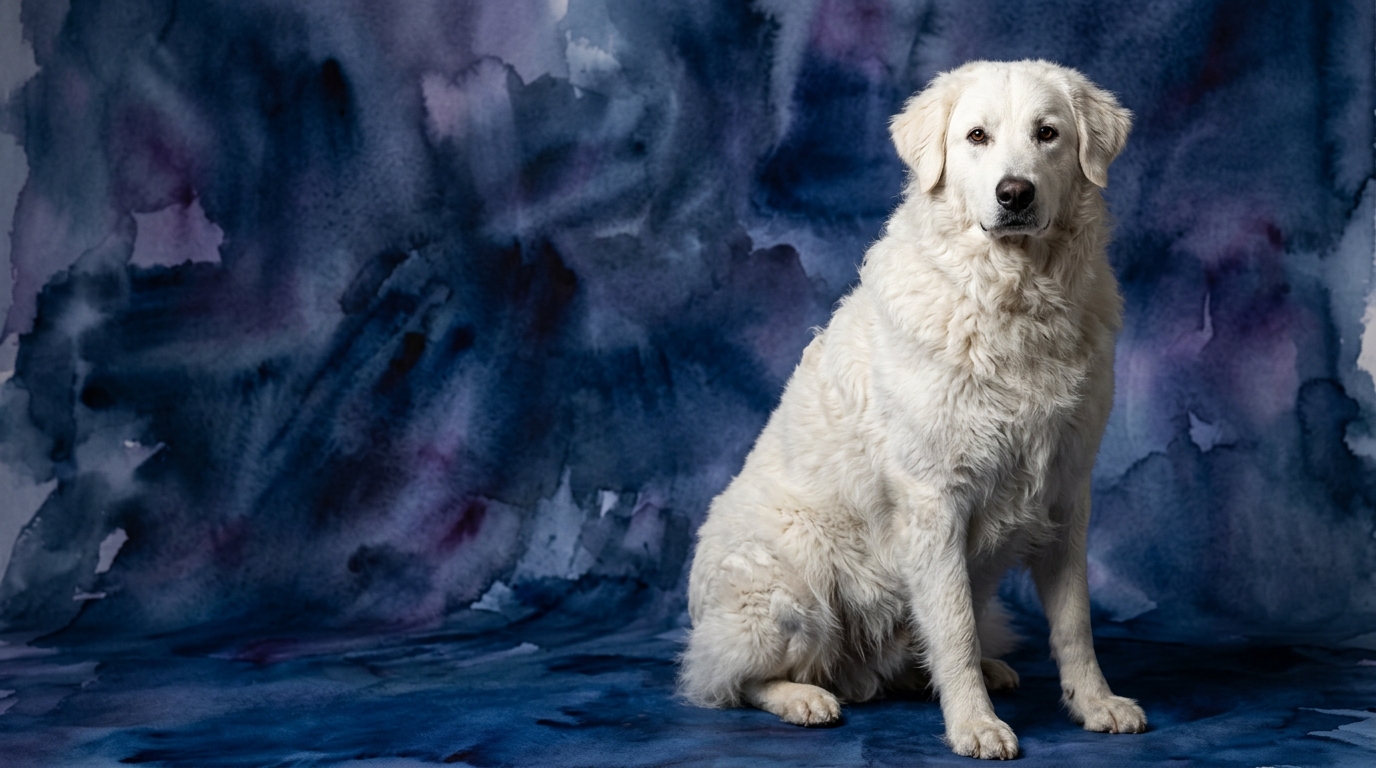
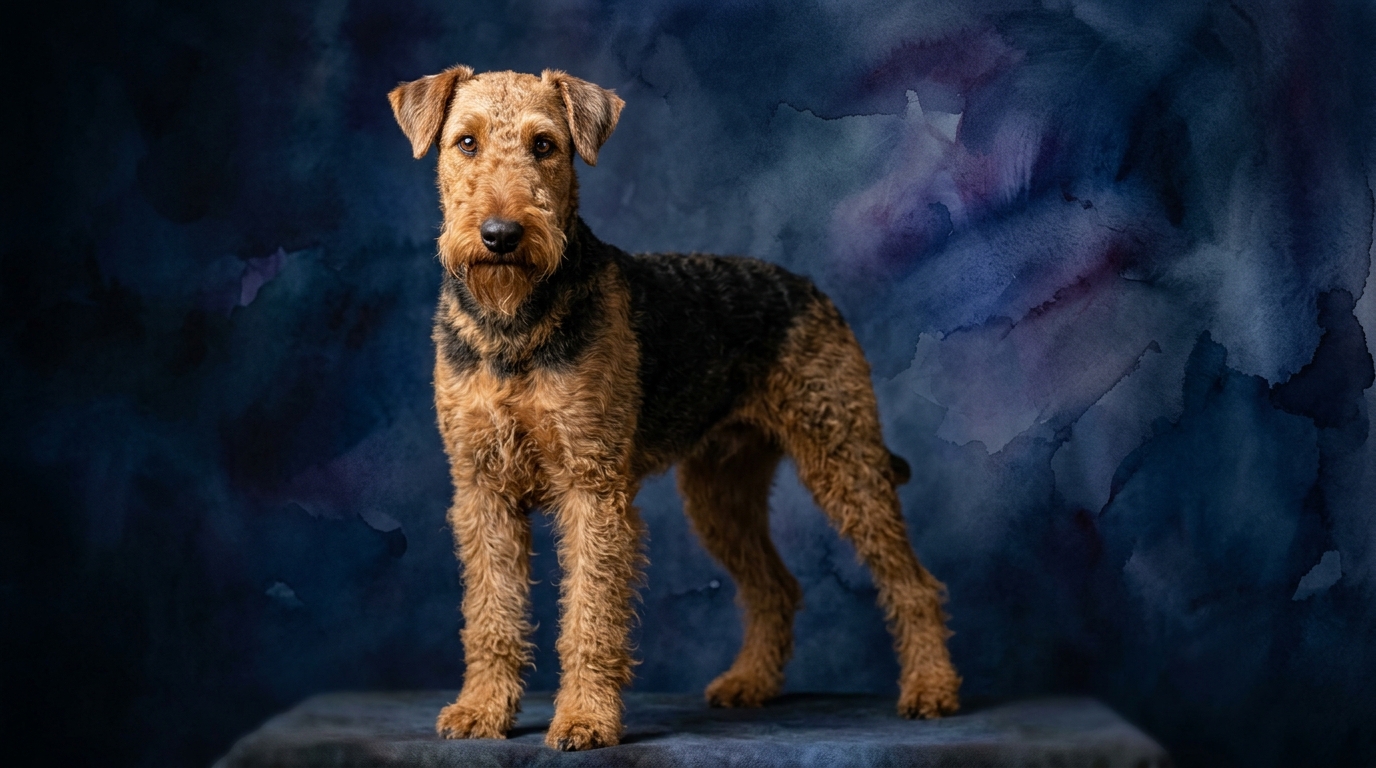
Side-by-Side Cognitive Profiles: Kuvasz vs Airedale Terrier
Delving into the specific cognitive dimensions for each breed reveals their individual strengths and how they process information. The Kuvasz, a Working breed ranked 42nd by Coren, exhibits a particular suite of skills shaped by its historical role. Its problem-solving ability stands at 3/5, indicating a moderate capacity for independently figuring out novel challenges or devising strategies; they can be resourceful but might require more guidance than some breeds. Training speed is also 3/5, suggesting a moderate pace for acquiring new commands, often influenced by their independent nature as livestock guardians who may not always prioritize human directives over their own judgment. Social intelligence is 3/5, reflecting a moderate understanding of human cues and social dynamics within a family unit; they form strong bonds but can be reserved with strangers. Instinctive drive, at 3/5, is a strong, inherent inclination for guarding and protection, translating to vigilance and a natural tendency to survey their environment for potential threats. Memory scores 4/5, showing a good capacity for retaining learned information and experiences, remembering routines, commands, and past interactions effectively.
The Airedale Terrier, a Terrier breed ranked 29th by Coren, presents a different cognitive emphasis. Its problem-solving ability is 4/5, indicating a good capacity for independently tackling new situations and devising solutions; their terrier wit often shines through in their ability to outsmart challenges. Training speed is also 4/5, signifying a good pace for learning new commands and routines; they are generally eager to engage in training, though their independent streak can sometimes lead to stubbornness. Social intelligence matches the Kuvasz at 3/5, reflecting a moderate understanding of human emotions and social structures; they are generally outgoing and adaptable, forming strong bonds with their families. Instinctive drive, also 3/5, is a moderate but distinct inclination for hunting and tracking, typical of their terrier heritage, manifesting as curiosity and a desire to explore and engage with their surroundings. Like the Kuvasz, memory scores 4/5, demonstrating a good capacity for retaining learned information and experiences, remembering commands, routines, and past interactions effectively, contributing to their overall trainability.
Where the Kuvasz Shines Cognitively
While both breeds score 4/5 in memory, the Kuvasz's memory is uniquely geared towards its protective role. It particularly excels at remembering territory boundaries, identifying regular visitors versus potential threats, and recalling the patterns of its flock or family. This isn't merely about command retention; it's a sophisticated spatial and relational memory crucial for its historical duties as a self-sufficient guardian. Furthermore, although both breeds have an instinctive drive score of 3/5, the *nature* of the Kuvasz's drive provides a distinct cognitive advantage. Its drive is fundamentally about independent guardianship, meaning a cognitive strength in assessing potential threats and making decisions without constant human instruction. This self-reliance in decision-making, stemming directly from centuries of protecting livestock alone, represents a unique cognitive prowess in a guardian capacity.
Where the Airedale Terrier Excels Cognitively
The Airedale Terrier's superior problem-solving ability (4/5 compared to the Kuvasz's 3/5) manifests as a quicker capacity to strategize and adapt to novel situations. This includes their adeptness at figuring out how to open gates, retrieve cleverly hidden toys, or navigate complex agility courses. Their characteristic terrier tenacity frequently pairs with this cognitive flexibility, enabling them to overcome various obstacles with ingenuity. Additionally, the Airedale's higher training speed (4/5 versus 3/5 for the Kuvasz) reflects a greater eagerness to engage with human directives and a quicker grasp of new commands. While they possess a terrier's independent streak, their cognitive processing for learning specific tasks from a human handler is generally more efficient than that of the Kuvasz, who often weighs commands against its own judgment or inherent instincts.
Ease of Training: Behavioral Differences in Action
The Airedale Terrier is generally considered easier to train due to its higher training speed and superior problem-solving scores. They are typically more inclined to participate actively in structured training sessions and pick up new concepts faster. Their intrinsic drive to engage with their handler, coupled with their cognitive agility, makes them more responsive to positive reinforcement and diverse training methods. However, their terrier stubbornness means that consistency is paramount; they might test boundaries, but learn quickly when expectations are clear and engaging. This responsiveness makes them excellent candidates for advanced obedience, trick training, or dog sports.
Conversely, the Kuvasz can present a greater challenge in training, largely due to its independent nature and lower training speed score. Their historical role demanded them to make autonomous decisions without constant human input, which has instilled a cognitive bias towards self-reliance. While they are capable of learning, they often deliberate on commands, especially if they perceive them as unnecessary or conflicting with their inherent protective instincts. Training a Kuvasz requires immense patience, unwavering consistency, and a deep understanding of their guardian mindset. The focus should be on building a foundation of trust and mutual respect, rather than striving for strict, unquestioning obedience. Their learning process is often slower and more nuanced, demanding a handler who appreciates their thoughtful, independent approach to directives.
Matching Canine Cognition to Lifestyle: Active vs. Relaxed Owners
For active owners, both breeds can be suitable, though they thrive on different types of engagement. An Airedale Terrier typically flourishes with varied activities that stimulate both their body and mind, such as agility courses, hiking adventures, or advanced obedience work. Their problem-solving abilities and quick training uptake make them excellent partners for challenging and dynamic activities where they can think and move. A Kuvasz, while certainly needing regular exercise, benefits more from purposeful activities that tap into its guarding instincts, such as patrolling a large, securely fenced yard or accompanying owners on long, watchful walks where they can survey their surroundings. Their activity needs are often more about purposeful movement and observation than high-intensity, structured sports.
Regarding relaxed owners, neither breed is truly suited for a lifestyle with minimal engagement. Both demand significant commitment to training, socialization, and mental stimulation. However, if 'relaxed' implies an owner who appreciates a more self-sufficient companion once adequately trained and socialized, the Kuvasz might be a marginally better fit, especially if they have a secure, spacious environment to guard. Their independence means they might be content observing their domain, provided their needs for companionship and exercise are met. The Airedale's higher energy levels and pronounced need for mental stimulation mean that a truly relaxed owner would likely find their terrier's intelligent antics and potential for mischief challenging without sufficient outlets for their cognitive and physical energy. For both breeds, owners must be prepared for a substantial, lifelong commitment.
The Verdict
Choose the Kuvasz when seeking a majestic, independent guardian whose cognitive strength lies in vigilant, self-reliant protection and a steadfast memory for routine and territory. They suit owners who appreciate a thoughtful, deliberate companion.
Opt for the Airedale Terrier when valuing a spirited, adaptable companion with quicker problem-solving skills and a faster training uptake, eager to engage in diverse mental and physical challenges. They suit owners who enjoy an active, interactive partner.
🧠 Find Your Pet's IQ Score
Our Pet IQ Lab assessment covers 25+ tests across 5 cognitive dimensions — personalized to your breed.
Take the Full IQ Test →Frequently Asked Questions
Do Kuvasz dogs learn quickly?
Kuvasz dogs learn at a moderate pace (3/5 training speed), often weighing commands against their independent judgment. Consistency and patience are key to training them effectively, as their cognitive process involves more deliberation than some breeds.
What makes an Airedale Terrier good at problem-solving?
Airedale Terriers excel at problem-solving (4/5) due to their innate curiosity and terrier tenacity. They enjoy figuring out puzzles and challenges, often applying creative solutions to achieve their goals, reflecting their adaptability and quick wit.
How do their social intelligence scores impact family life?
Both breeds score 3/5 in social intelligence, meaning they form strong bonds with their families but may be reserved with strangers. The Kuvasz's social intelligence is often tied to its protective instincts, while the Airedale's is more about engaging actively with its immediate human pack and being generally outgoing.