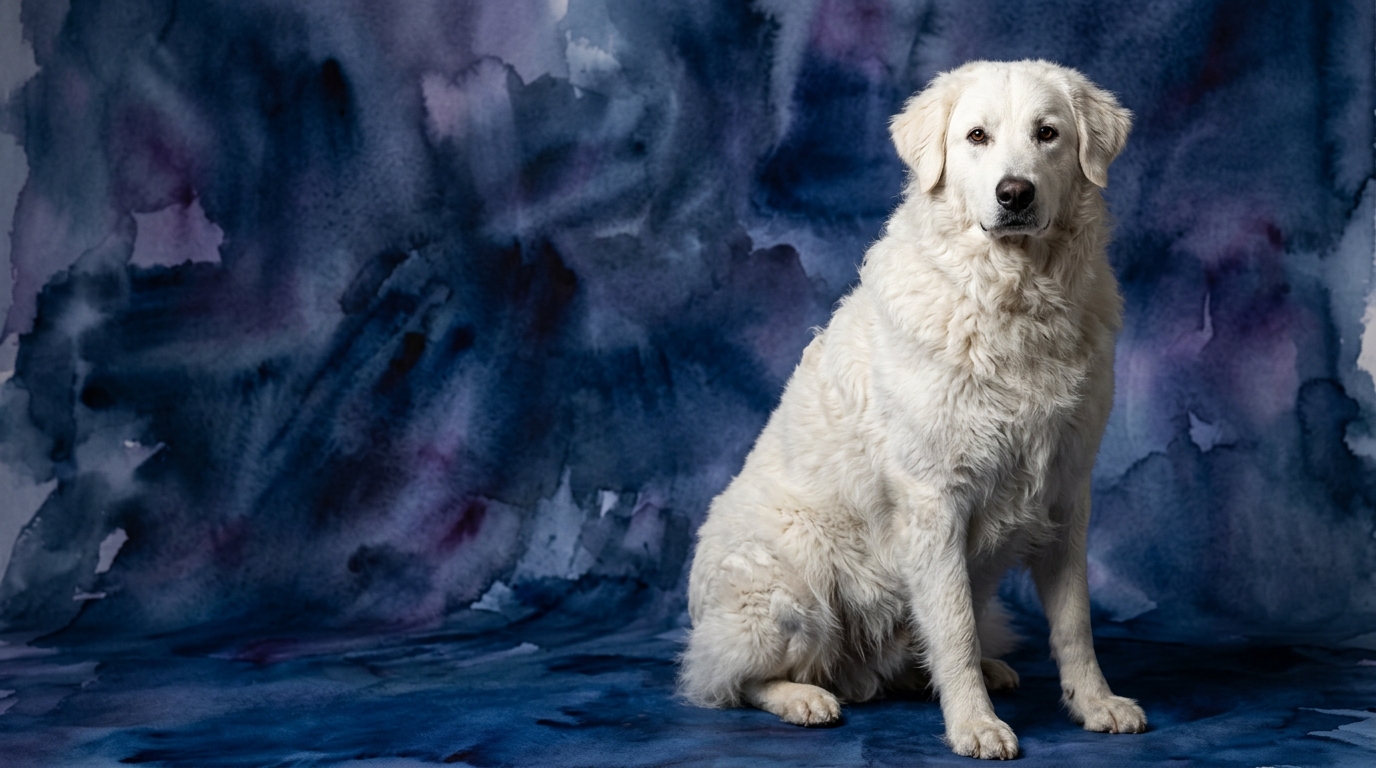

Side-by-Side Cognitive Profiles
The Cosmic Pet Pet IQ Lab employs a five-dimensional framework to assess canine cognition, providing a nuanced understanding of how different breeds process the world. Comparing the Kuvasz, a formidable Working breed ranked #42 by Coren, with the Toy-group Chinese Crested, which is not Coren-ranked, reveals both shared capabilities and distinct applications of their mental faculties.
Both the Kuvasz and the Chinese Crested register a 3 out of 5 for problem-solving, yet the nature of the challenges they are inclined to tackle, and their approach to them, diverge significantly. For the majestic Kuvasz, this score often translates into an impressive capacity for independent decision-making when assessing potential threats or navigating its environment. Bred for centuries to guard livestock without constant human supervision, a Kuvasz might autonomously determine the best course of action to deter an intruder, requiring a cognitive ability to evaluate a situation, weigh options, and execute a response. Its problem-solving is practical and often solitary, focused on maintaining order within its perceived territory. The Chinese Crested, despite the identical 3/5 rating, typically applies its problem-solving acumen to a different set of circumstances. Within a domestic setting, this might manifest as cleverness in manipulating household objects to achieve a desired outcome, such as figuring out how to access a favorite toy hidden in a basket, or devising strategies to secure additional attention or comfort from its human companions. Their solutions are often more socially oriented and less about grand territorial defense.
In terms of training speed, both breeds are rated at 3 out of 5. For the Kuvasz, this indicates a capacity to learn commands and routines, but often with an independent streak that means they process information and then decide whether to comply based on their own judgment of the situation. Their learning can be profound and enduring, but it requires patience and a deep understanding of their guardian mindset. The Chinese Crested, with the same 3/5 score, typically learns at a comparable pace but with a different motivational drive. Their desire for companionship and positive interaction often makes them eager participants in training, especially when it involves their beloved humans. They respond well to gentle, reward-based methods, and their smaller size often makes managing training sessions more straightforward.
Social intelligence for both breeds stands at 3 out of 5. For the Kuvasz, this score reflects its ability to discern friend from foe, understand pack hierarchy within its human family, and interpret subtle cues related to the safety and well-being of its 'flock.' This intelligence is crucial for its protective role, allowing it to differentiate between a welcome visitor and a genuine threat. The Chinese Crested's 3/5 social intelligence is expressed through its remarkable sensitivity to human emotions and social dynamics within its immediate family. They often form deep, empathetic bonds, responding keenly to changes in mood or routine, making them highly attuned and responsive companions who thrive on close human connection.
The instinctive drive for both breeds is also rated at 3 out of 5, but these drives are fundamentally different in their manifestation. The Kuvasz’s instinctive drive is intrinsically linked to its ancient purpose as a livestock guardian. This manifests as a powerful urge to patrol, be vigilant, and protect its territory and family, often leading to a reserved demeanor with strangers and a strong territorial imperative. This drive is a core part of its identity and requires appropriate outlets. The Chinese Crested's 3/5 instinctive drive is primarily focused on companionship and warmth. This breed has been selectively bred to be a devoted lapdog, and its drive manifests as an intense desire for close physical proximity, attention, and interaction with its human family. They often exhibit a 'velcro dog' tendency, seeking comfort and security in their human's presence.
Memory is where a clear distinction emerges, with the Kuvasz scoring an impressive 4 out of 5, while the Chinese Crested is rated at 3 out of 5. The Kuvasz's superior memory likely underpins its ability to retain complex information about its territory, including specific individuals, established boundaries, and routines, over long periods. This enduring recall is vital for its role as a reliable, long-term protector, allowing it to track changes and remember past events that inform its protective responses. The Chinese Crested's 3/5 memory is perfectly adequate for remembering family members, house rules, and training cues within its domestic environment, ensuring it can navigate its daily life effectively, though perhaps without the same robust, long-term retention of environmental specifics seen in the Kuvasz.
Where Kuvasz Wins Cognitively
The Kuvasz’s cognitive edge primarily shines through its exceptional memory, rated at 4 out of 5, a full point above the Chinese Crested. This robust memory isn't merely about recalling a command; it's deeply interwoven with its historical role as a livestock guardian. A Kuvasz can retain intricate details about its territory, remembering specific individuals, their scents, and their patterns of movement, distinguishing familiar faces from potential threats over extended periods. This enduring recall extends to learned boundaries and established routines, making it a reliable, long-term protector once it understands its domain. Furthermore, while both breeds score 3/5 in problem-solving, the Kuvasz’s application of this skill often involves independent, critical decision-making in complex, dynamic outdoor environments, assessing threats and devising protective strategies without direct human intervention. Its Coren ranking of #42, within the Working group, subtly acknowledges a capacity for complex task execution and a certain intellectual gravitas in its approach to its duties.
Where Chinese Crested Wins Cognitively
While the Kuvasz excels in enduring recall and independent judgment in vast spaces, the Chinese Crested demonstrates distinct cognitive strengths within its own specialized niche. Although it matches the Kuvasz with a 3/5 in problem-solving, training speed, social intelligence, and instinctive drive, its application of these traits is often finely tuned to human companionship. Its social intelligence, for instance, is expressed through a remarkable sensitivity to human emotions and subtle cues, often anticipating a family member's needs or mood with an almost intuitive understanding. This makes them adept at navigating complex social dynamics within a household, making them highly responsive and emotionally attuned companions. Their problem-solving often focuses on ingenuity in securing comfort or attention, such as figuring out how to open a specific cabinet for a treat or strategically positioning themselves for a cuddle. While not Coren-ranked, their intelligence is geared towards intricate social bonding and adapting seamlessly to diverse domestic environments, often displaying a charming cleverness in their interactions.
Which Is Easier to Train and Why
Determining which breed is 'easier' to train is less about raw cognitive capacity and more about motivational drivers and behavioral predispositions. Both breeds score 3/5 in training speed, suggesting they can grasp concepts at a similar pace. However, their inherent instinctive drives (also 3/5 for both) dictate *how* they respond to training. The Kuvasz's instinctive drive is rooted in its independent, protective nature. As a guardian breed, it's bred to think for itself and make decisions based on its assessment of a situation, not always immediate human command. This independence can be perceived as stubbornness during training, requiring consistent, patient, and fair methods that appeal to its sense of purpose rather than mere compliance. They often question 'why' before 'how,' and their training requires building deep trust and respect.
Conversely, the Chinese Crested's instinctive drive is geared towards companionship and close bonding. While also scoring 3/5 in training speed, their desire to please their primary human, coupled with their sensitivity, often makes them more eager participants in training sessions. They respond exceptionally well to positive reinforcement, gentle guidance, and reward-based methods. Their smaller size and lower physical demands also make managing training environments simpler. Therefore, while both are capable learners, the Chinese Crested typically presents fewer behavioral challenges related to independence, making the training process feel more straightforward and less demanding for the average owner.
Which Suits Active Owners vs. Relaxed Owners
The choice between a Kuvasz and a Chinese Crested largely hinges on an owner's lifestyle and their capacity to meet a breed's deeply ingrained needs. The Kuvasz, with its history as a nomadic livestock guardian, is unequivocally suited for active owners who understand and can accommodate its robust requirements for space, purpose, and mental engagement. These dogs thrive in environments where they have a 'job' to do, whether it's patrolling a large yard, participating in structured training, or engaging in extensive outdoor activities. Their physical stamina and need for vigilance mean they are not content with short walks or confined living spaces. They demand an owner who is committed to consistent, firm-but-fair leadership and who can provide outlets for their strong protective instincts. A Kuvasz needs an owner who embraces an active, outdoor-oriented lifestyle, prepared for a dog that will be an integral, working part of their world.
In stark contrast, the Chinese Crested is an ideal match for more relaxed owners. As a quintessential companion breed, their needs are predominantly centered around human interaction, warmth, and comfort. They are highly adaptable to apartment living and prefer lounging on a lap to long, strenuous hikes. While they appreciate daily walks and playtime, their physical requirements are modest. They thrive on consistent affection, gentle handling, and being an integral, cherished member of the indoor family unit. Their sensitivity and desire for closeness make them perfect for individuals or families seeking a devoted, low-impact companion who finds contentment in domestic routines and quiet companionship.
The Verdict
Choose the Kuvasz if you are an active, experienced owner seeking an independent, protective companion with a profound memory for its territory and family, capable of making its own sound judgments.
Opt for the Chinese Crested if you desire a sensitive, emotionally attuned companion, adaptable to various living situations, who thrives on close human interaction and offers charming cleverness in a relaxed home environment.
🧠 Find Your Pet's IQ Score
Our Pet IQ Lab assessment covers 25+ tests across 5 cognitive dimensions — personalized to your breed.
Take the Full IQ Test →Frequently Asked Questions
Do Kuvasz dogs truly have better memory than Chinese Crested dogs?
Yes, based on the provided IQ profile, the Kuvasz scores 4/5 for memory compared to the Chinese Crested's 3/5. This indicates a more robust and enduring recall capacity in the Kuvasz, particularly relevant for remembering territorial details and long-term routines.
How does the 'instinctive drive' score impact daily life for these breeds?
Both score 3/5, but their drives differ significantly. The Kuvasz's drive manifests as a strong protective instinct and need for vigilance, requiring outlets for this behavior. The Chinese Crested's drive is centered on companionship and close bonding, meaning they thrive on human interaction and can become distressed if left alone for too long.
Can a Chinese Crested live happily with an active owner, or a Kuvasz with a relaxed owner?
A Chinese Crested can adapt to an active owner who understands its need for companionship and provides gentle, varied activities, but it won't be a robust hiking partner. A Kuvasz is generally not suited for a relaxed owner; its strong protective instincts and need for space and purpose require a dedicated, active handler to prevent behavioral issues.