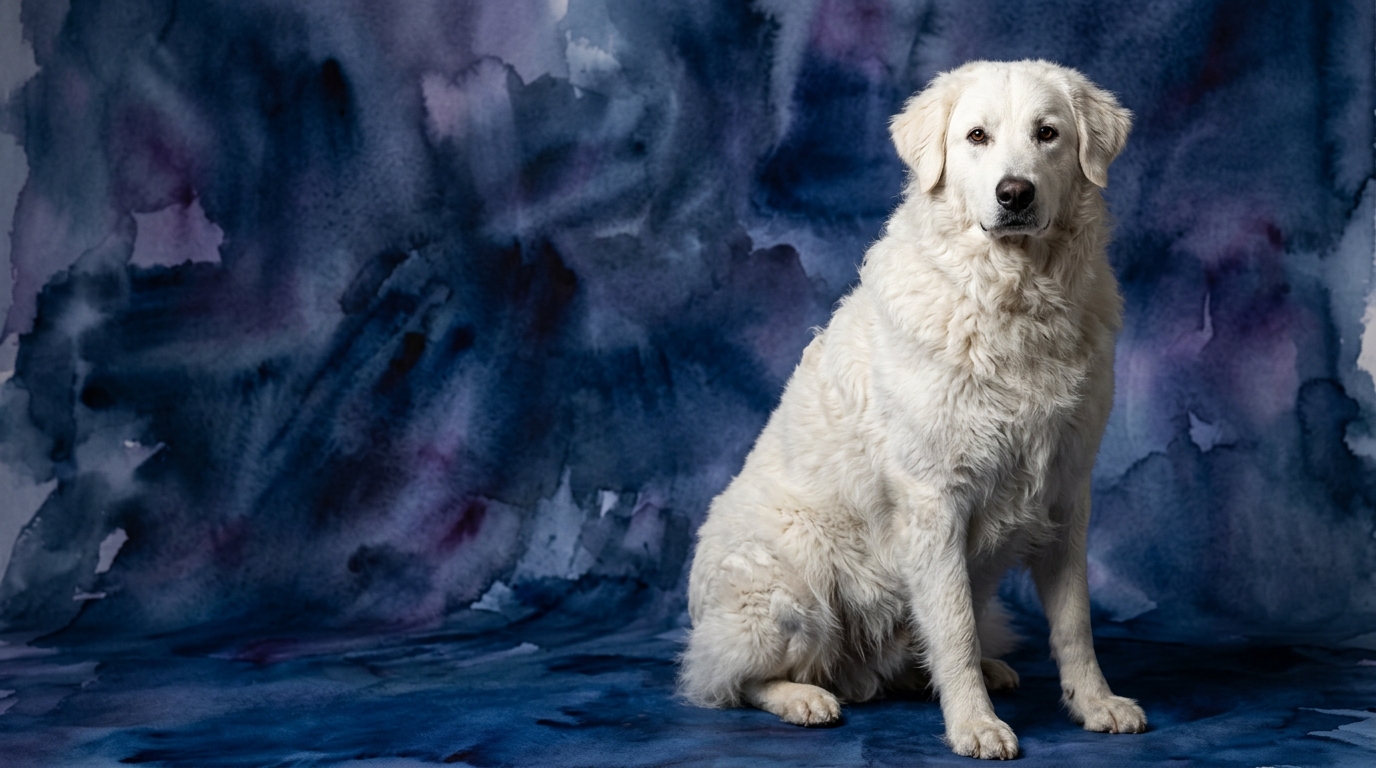

Side-by-Side Cognitive Profile: Kuvasz vs. Norfolk Terrier
A majestic livestock guardian, the Kuvasz exhibits a balanced cognitive profile, with most dimensions scoring 3 out of 5. Their Problem Solving at 3/5 suggests a capacity for independent thought in complex situations, crucial for evaluating threats to their flock without constant human direction. Training Speed, also 3/5, indicates they can learn new commands and routines, though their inherent independence means they often evaluate directives rather than blindly obey. Social Intelligence, at 3/5, reflects their ability to understand and respond to the nuances of human and animal interactions, vital for their protective role. Instinctive Drive, a 3/5, speaks to their deep-seated urge to guard and protect, a powerful motivator for their behavior. Uniquely, their Memory stands out at 4/5, indicating a superior ability to recall past experiences, recognize individuals, and remember the layout of their territory, which is paramount for effective long-term guardianship.
In contrast, the spirited Norfolk Terrier presents a remarkably similar numerical cognitive profile, with Problem Solving, Training Speed, Social Intelligence, and Instinctive Drive all rated 3 out of 5, and Memory at 3/5. Their 3/5 Problem Solving reflects a terrier's characteristic ingenuity in navigating tight spaces or outwitting small prey, applying their wits to immediate, tangible challenges. A Training Speed of 3/5 suggests they are receptive to learning, though their lively, independent terrier spirit often means training requires consistency and engaging methods to hold their attention. Social Intelligence at 3/5 allows them to form strong bonds with their families and read social cues within their human pack, despite their occasional stubborn streak. Their Instinctive Drive, also 3/5, is geared towards their ancestral role of hunting vermin, manifesting as a strong prey drive and a desire to explore. Their Memory, at 3/5, enables them to remember commands and routines, but perhaps without the extensive, long-term recall for complex environmental mapping seen in the Kuvasz.
Where the Kuvasz Wins Cognitively
The Kuvasz’s standout cognitive advantage lies in its superior Memory, rated 4 out of 5, compared to the Norfolk Terrier’s 3/5. This enhanced recall is not merely about remembering where a toy is; for a livestock guardian, it translates into a profound understanding of their territory and its inhabitants. A Kuvasz can vividly remember the faces of their flock members, distinguishing them from intruders, and retain detailed mental maps of their expansive patrol areas, including potential threats or safe havens. This exceptional memory allows them to build complex mental models of their environment, enabling autonomous decision-making over long periods without constant human intervention. While both breeds score 3/5 in Problem Solving, the Kuvasz's superior memory likely informs its problem-solving process in a larger, more strategic context, drawing on a deeper reservoir of past experiences to assess and respond to threats or changes in their environment with a thoughtful, independent approach.
Where the Norfolk Terrier Wins Cognitively
While the numerical scores for Problem Solving are identical at 3/5 for both breeds, the Norfolk Terrier often demonstrates a unique application of this trait that could be considered a cognitive "win" in its specific domain. Their problem-solving is typically characterized by a tenacious, hands-on approach, often involving physical manipulation and persistent effort to achieve a goal, such as digging out a perceived pest or navigating an intricate obstacle. This isn't about grand strategic planning, but rather an immediate, driven ingenuity that excels in practical, immediate challenges. Furthermore, their Instinctive Drive, also 3/5, combined with their compact size, lends itself to a form of practical intelligence focused on tangible tasks. A Norfolk's keen senses and relentless focus on a scent trail, or their ability to squeeze into tight spots to pursue a "quarry," showcases a specialized cognitive strength. While their Social Intelligence is rated the same, their outgoing and curious nature means they readily engage with new people and situations, often using their charming persistence to achieve desired outcomes, a social problem-solving distinct from the Kuvasz's reserved guardianship.
Training Dynamics: Kuvasz vs. Norfolk Terrier
Despite both breeds scoring 3/5 in Training Speed, the *experience* of training a Kuvasz versus a Norfolk Terrier differs significantly due to their inherent temperaments and historical roles. The Kuvasz, bred for independent decision-making as a livestock guardian, often approaches training with a questioning demeanor, evaluating the necessity of a command rather than offering immediate compliance. Their independence means they learn readily but may choose when to apply that learning, requiring a trainer who understands canine psychology and can build a strong, trust-based relationship, making them *not* easier to train in the traditional sense of eager obedience. Consistency, patience, and positive reinforcement are paramount, with a focus on convincing the Kuvasz that cooperation is mutually beneficial and aligns with their protective instincts.
The Norfolk Terrier, while also scoring 3/5 in Training Speed, possesses a spirited, curious, and often tenacious nature. They are generally eager to engage and learn, especially if the training is fun, varied, and rewards-based. However, their strong prey drive and tendency to be easily distracted by interesting scents or sounds mean that maintaining focus can be a challenge. They thrive on mental stimulation but can quickly become bored with repetitive drills, leading to "selective hearing" when something more interesting captures their attention. Training a Norfolk is less about overcoming stubborn independence and more about channeling their vibrant energy and short attention span into productive learning. Neither is "easy" in the sense of a highly biddable breed, but the *nature* of the training challenge is distinct: convincing a thoughtful Kuvasz versus engaging an enthusiastic Norfolk.
Lifestyle Fit: Active vs. Relaxed Owners
For active owners, both the Kuvasz and the Norfolk Terrier can be suitable, but their activity needs manifest differently. The Kuvasz, with its history as a working guardian, requires significant physical activity and, more importantly, mental engagement that stimulates its problem-solving and memory skills. Long, purposeful walks, opportunities to survey a large property, or even participating in protection sports can satisfy its needs. A relaxed owner might find the Kuvasz's need for purposeful activity and independent thought overwhelming, potentially leading to boredom-induced behaviors or an unfulfilled companion who feels their guarding instincts are not being properly utilized.
The Norfolk Terrier, while small, is a robust and energetic terrier requiring regular exercise to manage its instinctive drive. Daily walks, engaging play sessions, and opportunities for mental stimulation through puzzle toys or earthdog trials are essential. Their compact size makes them adaptable to various living situations, but their energy means they are not content to be couch potatoes for extended periods. A relaxed owner who enjoys short, engaging playtimes and can provide consistent mental challenges would find a Norfolk a good fit, but someone expecting a purely sedentary companion might be surprised by their zest for life and exploration. Neither breed is truly suited for a purely "relaxed" owner who prefers minimal interaction; both demand active engagement, albeit on different scales and with different expressions of activity.
The Verdict
Choose a Kuvasz if you seek a vigilant, independent guardian with exceptional memory for territory and people, and are prepared to build a relationship based on mutual respect and consistent, patient guidance for a thoughtful companion.
Opt for a Norfolk Terrier if you desire a spirited, tenacious companion who thrives on engaging activities and possesses a charming, persistent approach to problem-solving, and you are ready for a lively partner in adventure.
🧠 Find Your Pet's IQ Score
Our Pet IQ Lab assessment covers 25+ tests across 5 cognitive dimensions — personalized to your breed.
Take the Full IQ Test →Frequently Asked Questions
Are Kuvasz dogs suitable for first-time dog owners?
The Kuvasz's independent nature and strong guardian instincts mean they are generally not recommended for first-time dog owners. They require an owner with experience in handling strong-willed, large breeds and a deep understanding of their unique cognitive and behavioral needs to ensure proper socialization and training.
Do Norfolk Terriers bark a lot?
Norfolk Terriers can be prone to barking, a trait rooted in their terrier instincts to alert and pursue prey. While their social intelligence allows them to learn appropriate barking limits, their natural vigilance and enthusiasm mean owners should be prepared for their vocal tendencies and manage them through consistent training and mental stimulation.
How do their social intelligence scores of 3/5 manifest differently?
For the Kuvasz, a 3/5 social intelligence often means they are reserved and discerning, forming deep bonds with their immediate family and flock but remaining aloof with strangers, using their social understanding to assess potential threats. For the Norfolk Terrier, a 3/5 social intelligence translates to a more outgoing and adaptable nature, eager to interact and charm, though still capable of terrier stubbornness, using their social skills to navigate human interactions with lively confidence.