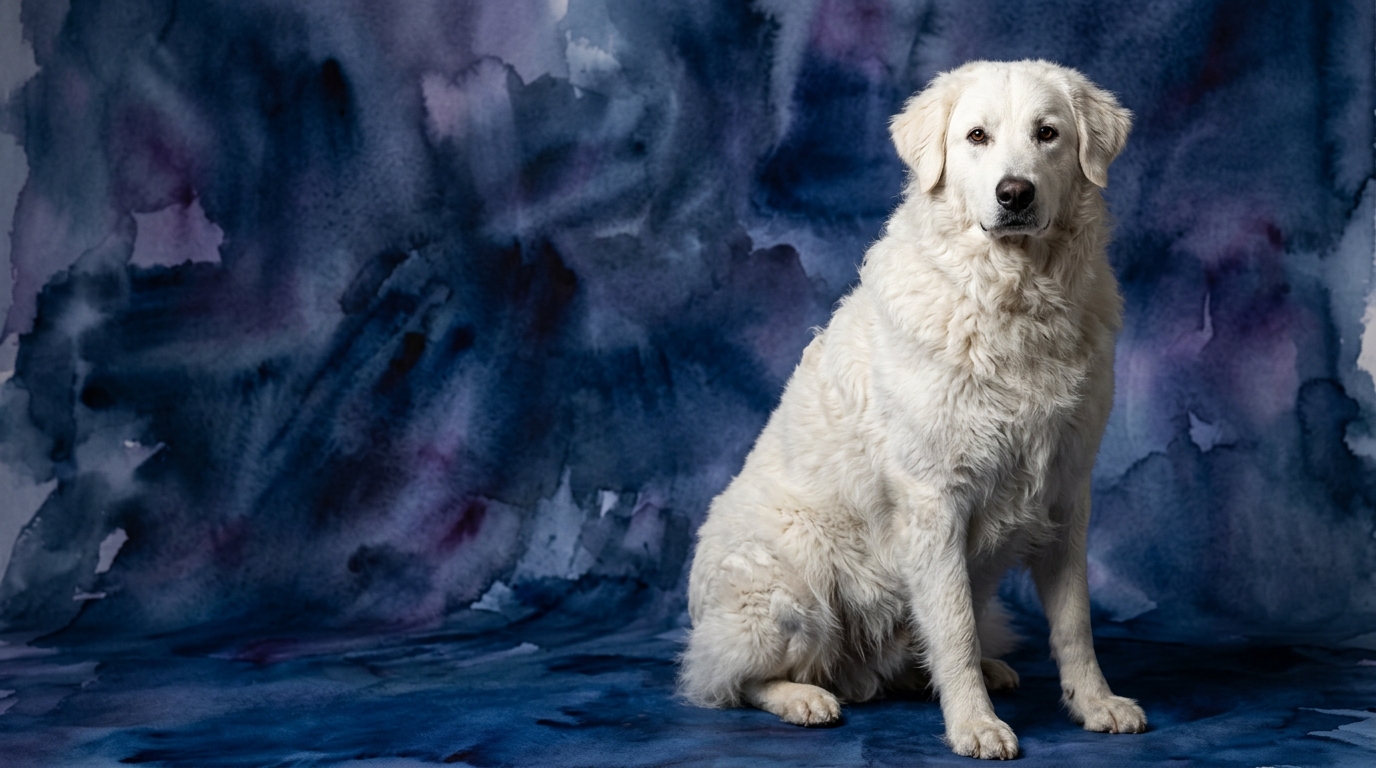
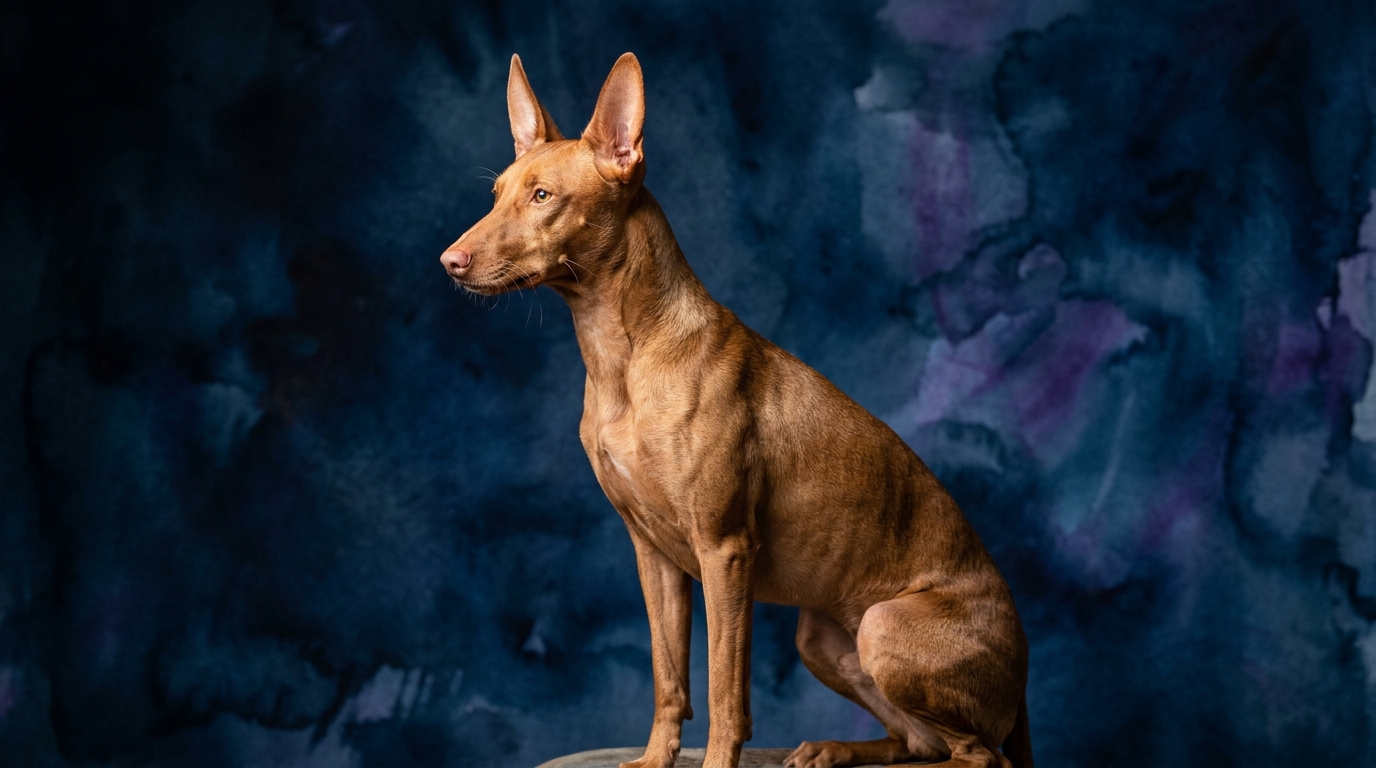
Side-by-Side IQ Profile
The Cosmic Pet Pet IQ Lab employs a five-dimensional framework to evaluate canine intelligence, offering a granular look at how different breeds process information and interact with their world. For the Kuvasz, a Working Group dog ranked #42 by Coren, and the Pharaoh Hound, a distinctive Hound Group breed without a Coren ranking, these dimensions highlight their unique cognitive blueprints.
The Kuvasz exhibits a Problem Solving score of 3/5, indicating a capacity for independent thought and finding solutions, particularly in their historical role of livestock guarding where self-reliance was paramount. Their Training Speed is also 3/5; while capable of learning, their inherent independence means they often assess the necessity of a command before complying, requiring patience and consistency. Social Intelligence stands at 3/5, reflecting deep loyalty to their inner circle but a reserved, often wary demeanor towards strangers, crucial for a protective guardian. Instinctive Drive is 3/5, primarily manifested as a strong territorial and protective instinct, with a focused vigilance rather than a high prey drive. Their Memory, however, is a standout at 4/5, allowing them to recall perceived threats, safe zones, and social hierarchies over extended periods.
The Pharaoh Hound also scores 3/5 in Problem Solving, demonstrating cleverness in the pursuit of prey and navigating terrain, with their cognitive efforts often directed towards task-specific hunting challenges rather than abstract puzzles. Their Training Speed is 3/5; they are responsive and can learn, but their sighthound nature means distractions like movement or scent can easily divert their attention, demanding highly engaging training methods. Social Intelligence is 3/5, characterizing them as generally affable and playful with their family, though they can be sensitive and prone to shyness without adequate socialization. Their Instinctive Drive is 3/5, dominated by a powerful prey drive and an innate urge to chase, a defining trait of the sighthound. Their Memory is 3/5, sufficient for recalling learned tasks and familiar paths, but perhaps less focused on the intricate environmental mapping essential for a livestock guardian.
Where Kuvasz Wins Cognitively
The Kuvasz's cognitive edge lies primarily in its superior memory and its capacity for independent, strategic decision-making within a complex, dynamic environment. With a Memory score of 4/5, the Kuvasz doesn't just remember simple commands; it retains detailed information about its territory, the individuals within it (both familiar and potential threats), and past events that inform its protective strategies. This long-term recall is vital for a breed tasked with autonomous livestock protection, allowing them to anticipate and react to subtle shifts in their surroundings with a depth of understanding. Their problem-solving, rated 3/5, is geared towards real-world, often high-stakes scenarios where independent judgment without direct human intervention is required. They are capable of assessing ambiguous situations and formulating their own course of action, a nuanced form of intelligence that differs significantly from a sighthound's reactive pursuit. This isn't about solving a puzzle box for a treat; it's about evaluating a potential threat to a flock and making a decisive, protective choice based on accumulated experience.
Furthermore, their social intelligence, while rated 3/5, manifests as an profound ability to gauge the needs and intentions of their family, forming deep, protective bonds. This isn't a desire to please, but a deep-seated understanding of their role within the 'pack' and a commitment to its safety, showcasing a different facet of cognitive strength in inter-species relationships.
Where Pharaoh Hound Wins Cognitively
The Pharaoh Hound's cognitive strengths, though yielding similar overall scores in some dimensions, are uniquely tailored to its role as a sighthound. Their problem-solving (3/5) is exquisitely tuned for the hunt, demonstrating rapid, agile thinking in dynamic pursuit scenarios. This involves quickly assessing terrain, predicting prey movement, and adapting their strategy on the fly—a distinct form of intelligence focused on speed, perception, and immediate reaction rather than deliberate, long-term planning. Their sensory processing, particularly their visual acuity and ability to process rapid movement, is a cornerstone of their cognitive prowess, allowing them to interpret subtle environmental cues with exceptional speed and precision.
While their memory is rated 3/5, it is highly effective for recalling hunting patterns, familiar routes, and the nuances of various chasing games, crucial for their historical function. Their social intelligence, also 3/5, often presents as a sensitive awareness of human mood and a strong desire for engaging, interactive play. This makes them highly responsive to positive reinforcement and fosters a communicative bond built on mutual enjoyment and sensitivity, which can make them very attuned to their owner's emotional state, albeit in a less overtly protective manner than the Kuvasz.
Their instinctive drive (3/5), while challenging in some contexts, represents a highly specialized cognitive system dedicated to the art of the chase. This isn't just a physical act; it involves complex spatial reasoning, predictive tracking, and an unwavering focus that is a testament to their evolved intellect.
Which is Easier to Train and Why
Neither breed is typically described as 'easy' to train, but for different reasons rooted in their historical roles and cognitive profiles. The Kuvasz's profound independence and self-reliant nature, born from centuries of guarding livestock without direct human command, mean they often question the necessity of a given instruction. This requires an owner who can establish clear, consistent leadership and make training feel like a partnership rather than a command-and-obey dynamic. Their excellent memory (4/5) ensures retention once they accept a command, but their will, reflected in their 3/5 training speed, demands dedication and a deep understanding of their guardian mindset.
The Pharaoh Hound, conversely, presents a challenge rooted in its profound instinctive drive (3/5) for pursuit and its keen sensitivity. While they can learn quickly in a focused environment, their attention can be easily diverted by a moving object or interesting scent, making consistent outdoor training particularly challenging. Training success hinges on making it a game, using positive reinforcement, and understanding that their inherent sighthound tendencies often override learned commands, especially in stimulating outdoor environments. Therefore, while a Kuvasz might be more overtly stubborn and deliberate in its compliance, a Pharaoh Hound's distractibility and powerful prey drive can be equally, if not more, difficult to manage consistently in real-world scenarios, particularly concerning off-leash reliability.
Which Suits Active Owners vs Relaxed Owners
Neither the Kuvasz nor the Pharaoh Hound are suitable for truly 'relaxed' owners who prefer a sedentary lifestyle. Both breeds demand an active commitment, though the nature of that activity differs significantly.
The Kuvasz requires an owner active in providing mental stimulation and purposeful engagement, rather than just high-intensity physical exercise. They thrive when given a 'job,' whether it's guarding the family or participating in activities that engage their problem-solving and memory. They need regular, moderate exercise, but more importantly, they need space and a clear sense of purpose to satisfy their guardian instincts. A relaxed owner unprepared for their independent decision-making and protective nature would likely find the Kuvasz's needs overwhelming, potentially leading to behavioral challenges.
The Pharaoh Hound, conversely, is built for speed and chase, making them ideal for truly active owners who can provide ample opportunities for vigorous physical exercise. They need regular, intense bursts of running in a secure, fenced area where they can stretch their legs without the risk of bolting after prey. Their playful nature also means they enjoy interactive games and activities that engage their keen senses. A relaxed owner would struggle immensely to meet the Pharaoh Hound's high energy requirements, potentially resulting in boredom, destructive behaviors, and an inability to channel their strong instinctive drives appropriately.
Choosing between a Kuvasz and a Pharaoh Hound depends heavily on an owner's lifestyle, experience, and what they seek in a canine companion's cognitive engagement. Both are magnificent, but their intellectual demands diverge significantly.
The Verdict
Choose the Kuvasz if you are an experienced owner seeking a majestically independent guardian who values deep loyalty, can provide consistent, confident leadership, and appreciates a dog whose superior memory and problem-solving are geared towards protection and territory management. You must be prepared for a strong-willed companion who thrives on purpose and space.
Opt for the Pharaoh Hound if you are an active owner who cherishes a sensitive, elegant sighthound, is committed to providing abundant opportunities for vigorous exercise in secure environments, and enjoys engaging in positive, game-based training. You must be prepared to manage a powerful prey drive and appreciate a dog whose intelligence shines in speed, pursuit, and playful interaction.
🧠 Find Your Pet's IQ Score
Our Pet IQ Lab assessment covers 25+ tests across 5 cognitive dimensions — personalized to your breed.
Take the Full IQ Test →Frequently Asked Questions
Are Kuvasz and Pharaoh Hounds good with children?
Kuvasz can be very protective of their family's children, viewing them as part of their 'flock,' but require extensive socialization and supervision due to their size and guardian instincts. Pharaoh Hounds are generally good with respectful children, often enjoying play, but their sensitivity means they do best with older, calmer children who understand how to interact gently.
Do Pharaoh Hounds bark a lot?
Pharaoh Hounds are not typically excessive barkers, but they will use their voice to alert you to strangers or unusual sounds. They can also 'sing' or make unique vocalizations when excited or to express themselves, a charming trait for many owners.
How much grooming do Kuvasz need?
Kuvasz possess a thick, double coat that requires regular brushing, at least 2-3 times a week, to prevent matting and manage shedding, which can be significant, especially during seasonal changes. Their coat provides protection, so maintaining its health is important.