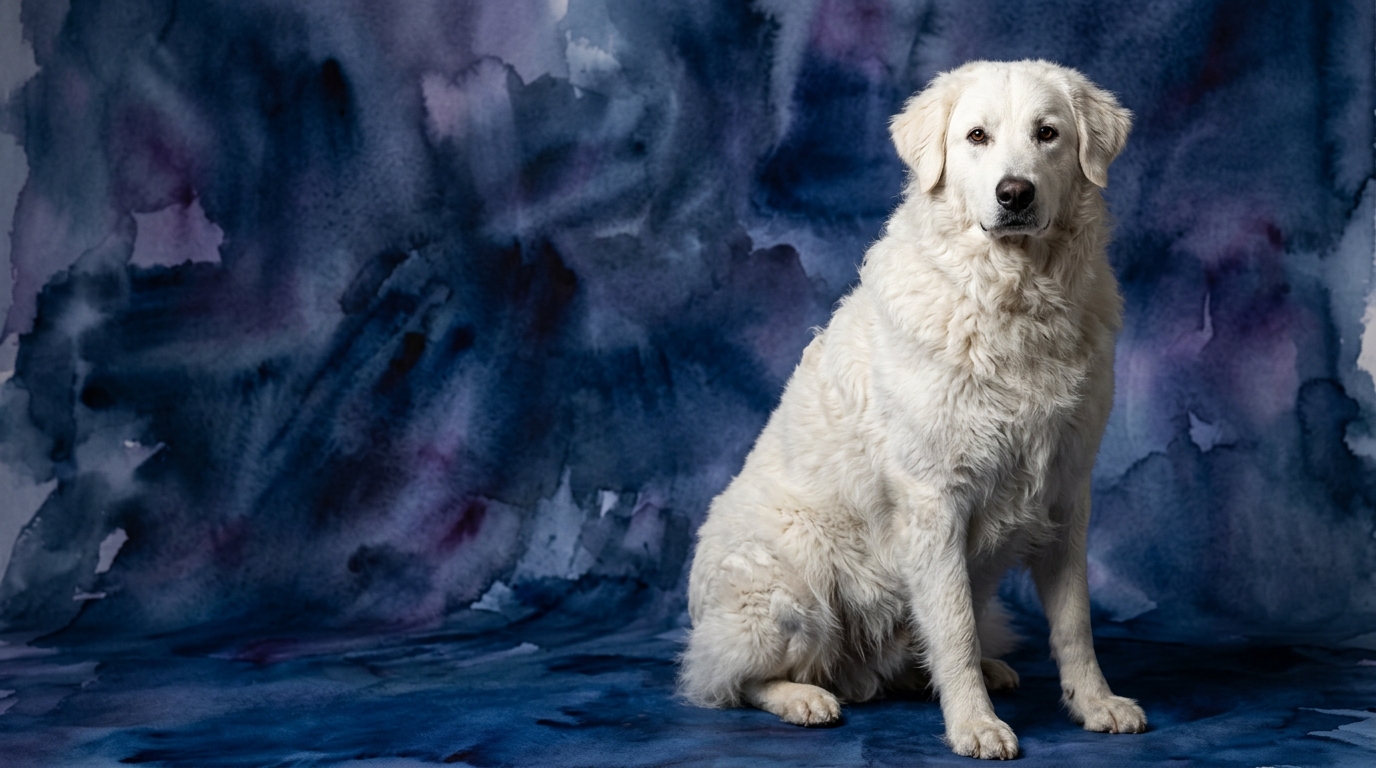
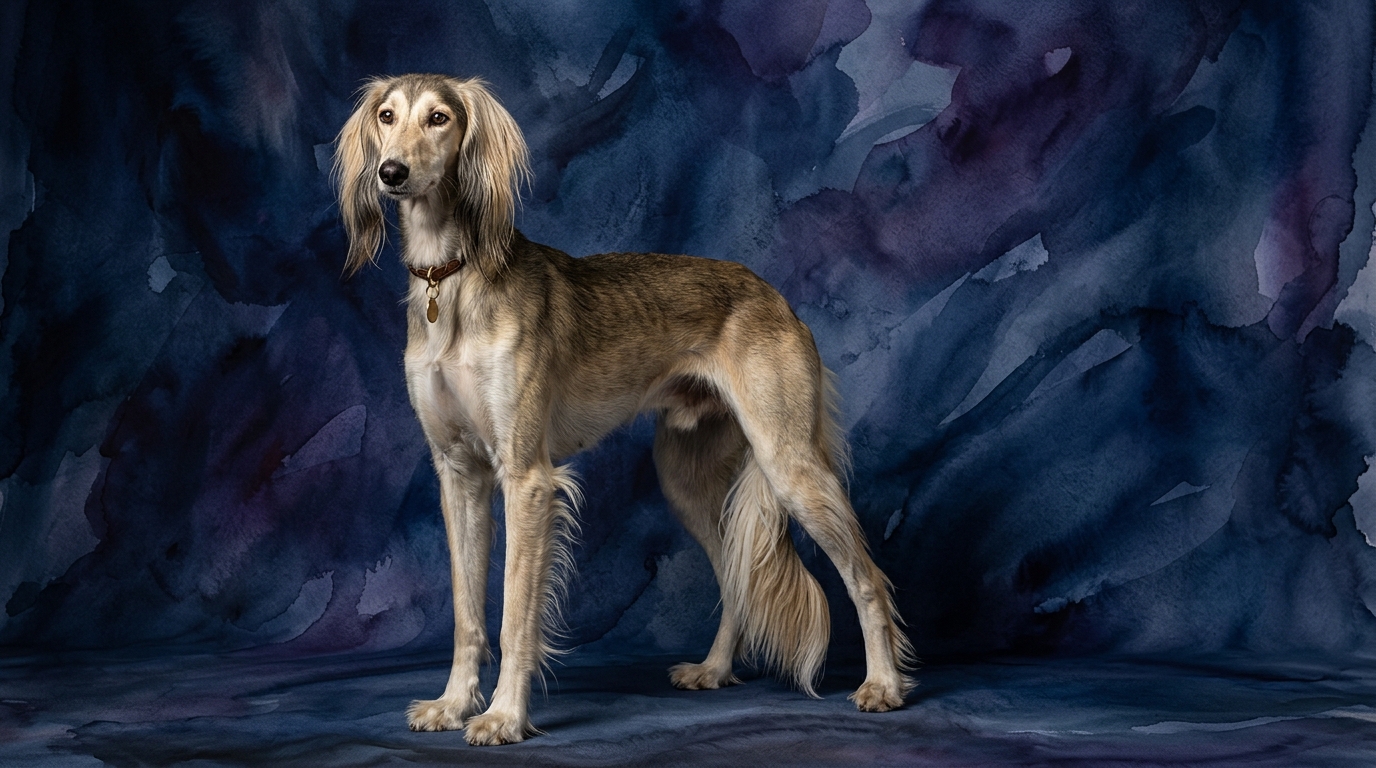
Side-by-Side IQ Profile: Unpacking the Dimensions
At first glance, the Kuvasz and Saluki present a remarkably similar cognitive blueprint across several key intelligence dimensions. Both breeds register a 3/5 in Problem Solving, indicating a solid capacity to navigate novel situations and figure out solutions, though perhaps not with the rapid-fire ingenuity of top-tier problem solvers. This suggests they can learn to overcome obstacles in their environment or achieve goals, but might require some persistence or trial-and-error.
Similarly, both the Kuvasz and Saluki score 3/5 in Training Speed, which means they possess a moderate ability to grasp and retain new commands or behaviors. This isn't to say they are difficult to train, but rather that they may not pick up complex routines with just a few repetitions. Consistent, patient, and engaging training methods are likely to yield the best results for both.
Social Intelligence also sits at a 3/5 for both breeds. This dimension reflects their ability to understand and respond to social cues from humans and other animals. For the Kuvasz, this might manifest as an astute awareness of family dynamics and potential threats, while for the Saluki, it could mean a discerning yet polite interaction style. Neither is overtly effusive in their social interactions, but they are capable of forming deep, albeit sometimes reserved, bonds.
Instinctive Drive, rated 3/5 for both, highlights their inherent predispositions. For the Kuvasz, this drive is rooted in its guardian heritage, manifesting as a strong protective instinct and territorial awareness. The Saluki's drive, conversely, is deeply tied to its sighthound lineage, exhibiting a potent prey drive and an urge to chase, often with remarkable focus and speed. These drives are fundamental to their being and shape how they interact with their world.
The most notable divergence appears in Memory: the Kuvasz holds a 4/5, while the Saluki scores a 3/5. A 4/5 memory for the Kuvasz suggests an excellent ability to recall past experiences, learned commands, and the identities of individuals, which is crucial for its role as a livestock guardian. The Saluki’s 3/5 memory is still perfectly adequate for daily life and learning, but might not retain specific details or sequences with the same tenacity as the Kuvasz.
Where Kuvasz Wins Cognitively: The Guardian's Recall
The Kuvasz's most pronounced cognitive advantage lies in its superior Memory, scoring a 4/5 compared to the Saluki's 3/5. This enhanced recall is not merely an academic point; it's fundamental to its historical role. A Kuvasz, tasked with guarding livestock, needed to remember specific flock members, recognize familiar humans, and recall past threats or intruders to effectively protect its charges. This strong memory allows for a more comprehensive understanding of its environment and its inhabitants, enabling it to act with informed discretion.
Beyond just memory, the Kuvasz's 3/5 in Problem Solving, when combined with its guardian instincts and memory, often manifests as a more deliberate and strategic approach to challenges. Faced with a perceived threat, a Kuvasz might remember past encounters and adapt its response, rather than reacting purely on instinct. This depth of recall allows for a more nuanced application of its protective drives, making its problem-solving less about immediate gratification and more about long-term security.
Furthermore, the Kuvasz's Coren rank of #42, while not a direct measure of all IQ dimensions, hints at a greater willingness to follow human direction compared to the unranked Saluki. While their Training Speed scores are identical, the Kuvasz's working group background often means a cognitive framework predisposed to understanding and executing complex, multi-step tasks under human guidance, which relies heavily on its robust memory for sequences and commands.
Where Saluki Wins Cognitively: Independent Pursuit
While the Saluki doesn't boast a higher score in any single IQ dimension over the Kuvasz, its 3/5 scores, particularly in Problem Solving and Instinctive Drive, coalesce into a distinct cognitive strength: independent, goal-oriented pursuit. The Saluki's problem-solving isn't about guarding a flock or pleasing a handler; it's about efficiently tracking and capturing prey across vast distances. This requires independent decision-making, adapting to changing terrain, and outsmarting quick-moving targets.
The Saluki's Instinctive Drive, while rated 3/5 like the Kuvasz, is channeled entirely differently. Its drive is singularly focused on the chase, demanding quick assessments of speed, trajectory, and evasion tactics. This isn't a social problem-solving, but a primal, highly specialized cognitive function that allows it to excel in its sighthound role. Their entire cognitive system is geared towards this intense, independent hunting, making them unparalleled in their specific field of 'work'.
Even the Saluki's 3/5 in Social Intelligence often manifests as a dignified independence rather than a lack of connection. Their cognitive processing of social cues tends to be more reserved and discerning, valuing calm interactions and respectful distance. This isn't a deficit but a characteristic suited to a breed that historically hunted alongside humans but made many independent decisions in the field, valuing partnership over constant direction.
Which is Easier to Train and Why: A Question of Motivation
Despite both breeds scoring 3/5 in Training Speed, the Kuvasz is generally considered easier to train for obedience and general household manners, primarily due to its working dog heritage and Coren rank. The Kuvasz, as a guardian breed (Coren rank #42), possesses a cognitive framework that, while independent, is ultimately geared towards collaboration with its human family to protect a shared territory or resource. Their memory (4/5) aids significantly in retaining complex command sequences and routines, making consistent training more effective over time.
A Kuvasz typically responds well to positive reinforcement and clear boundaries, understanding its place within the 'pack' and its responsibilities. Their protective instincts mean they are often attentive to their surroundings and the actions of their handler, which, with proper guidance, translates into a willingness to learn and comply with commands that contribute to household order and security. They appreciate a 'job' and direction, even if they apply their own judgment.
The Saluki, conversely, can present more challenges in traditional obedience training, despite the same 3/5 Training Speed score. As a sighthound, their cognitive focus is intensely directed towards visual stimuli and the thrill of the chase. Their independent problem-solving for hunting means they are less inclined to automatically defer to human commands when their powerful instinctive drive (3/5) for pursuit is activated. Their memory (3/5) is sufficient for learning, but their motivation to comply often requires more creativity and understanding from the trainer.
Salukis require a trainer who understands their sighthound nature: short, engaging training sessions, positive reinforcement, and a recognition that their independence is a feature, not a bug. They learn best when training feels like a game or is intrinsically rewarding, rather than simply being about compliance. Their social intelligence (3/5) means they form bonds, but these bonds don't necessarily translate into unquestioning obedience, especially if a squirrel or rabbit crosses their path.
Which Suits Active Owners vs. Relaxed Owners
For active owners seeking a canine companion that thrives on purposeful activity and a sense of 'duty', the Kuvasz is often the more suitable choice. While not a high-energy breed in the sense of needing constant running, a Kuvasz requires mental engagement and physical exercise that aligns with its working background. Their problem-solving (3/5) and instinctive drive (3/5) are best satisfied with responsibilities, such as patrolling a large yard, participating in protection sports, or consistent training that provides structure and purpose. An owner who understands and respects their independent yet protective nature will find a deeply loyal partner.
The Kuvasz needs space to roam and survey its domain, and an owner who is committed to consistent training and socialization to channel its formidable guardian instincts appropriately. Their cognitive needs are met by having a defined role and the opportunity to apply their intelligence to real-world scenarios, making them ideal for owners who enjoy an active, engaged lifestyle that includes their dog in daily tasks and outdoor adventures.
Conversely, the Saluki can be an excellent fit for owners who appreciate bursts of intense activity followed by extended periods of quiet relaxation. While their instinctive drive (3/5) for running is immense, they are not typically 'busy' dogs indoors. An active owner for a Saluki is one who can provide safe, secure areas for them to gallop freely for short, intense periods – a fenced field or lure coursing events are perfect outlets for their specialized cognitive and physical needs.
Once their need for speed is met, Salukis are often content to be elegant, calm companions indoors, making them surprisingly suitable for owners who prefer a more relaxed home environment, provided their exercise requirements are met. Their independent nature means they are often less demanding of constant attention than some other breeds, making them a good choice for owners who appreciate a dog with a dignified, somewhat aloof presence after their 'zoomies' are done.
The Verdict: When to Choose Each Noble Breed
The Verdict
Choose the Kuvasz if you desire a steadfast, protective companion with a strong memory and a willingness to engage in purposeful activities, and you are prepared for consistent, patient training to channel its independent guardian instincts. They thrive with owners who provide clear structure and a 'job' to do.
Opt for the Saluki if you appreciate a graceful, independent dog that combines intense bursts of athletic activity with a calm, dignified presence indoors, and you understand their unique sighthound drives for pursuit and their sometimes-reserved social intelligence.
🧠 Find Your Pet's IQ Score
Our Pet IQ Lab assessment covers 25+ tests across 5 cognitive dimensions — personalized to your breed.
Take the Full IQ Test →Frequently Asked Questions
Is the Kuvasz more adaptable to new environments than the Saluki?
The Kuvasz's strong memory and working background often make it more adaptable to new environments, particularly if its human family is present and provides a sense of security. Its cognitive framework is geared towards assessing and integrating new information into its protective role, which aids in adjusting to changes.
Do Salukis learn commands slower than Kuvasz?
Both breeds score 3/5 in Training Speed, suggesting a similar pace of learning new commands. However, the Saluki's independent nature and strong prey drive mean they may require more creative motivation and consistent effort from a trainer to apply learned commands reliably in distracting environments, compared to the more handler-oriented Kuvasz.
Which breed is better for a first-time dog owner?
Neither the Kuvasz nor the Saluki is typically recommended for first-time dog owners due to their strong independent streaks and specific cognitive needs. The Kuvasz's protective instincts and the Saluki's intense prey drive require experienced handling and a deep understanding of their breed-specific intelligence and motivations for successful integration into a home.