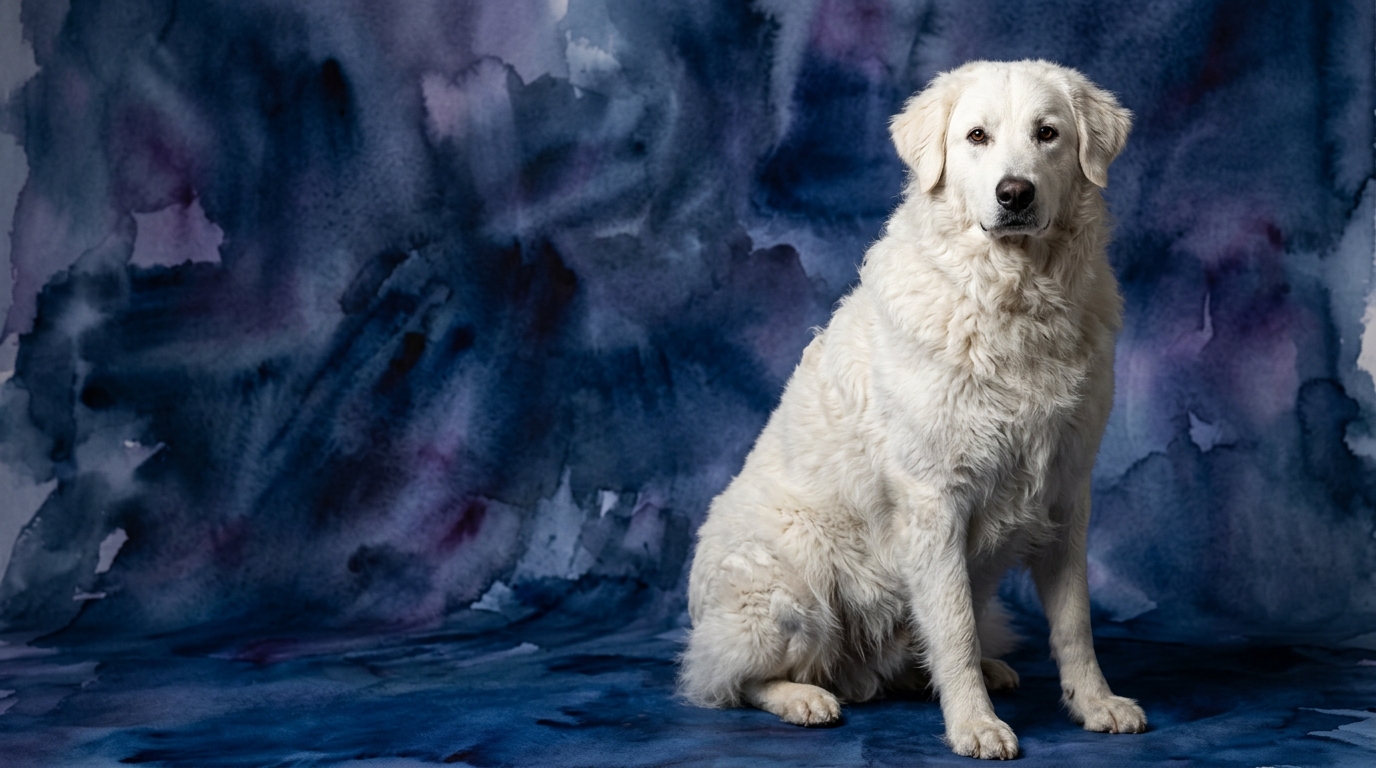

Side-by-Side IQ Profile: Kuvasz vs. Wire Fox Terrier
The Cosmic Pet Pet IQ Lab employs a five-dimensional framework to assess canine intelligence, offering a granular view beyond generic labels. For the Kuvasz and Wire Fox Terrier, this detailed breakdown illuminates their unique cognitive strengths and how they apply to their historical roles and modern companionship.
The Kuvasz, a formidable working dog with a Coren rank of #42, exhibits a Problem Solving score of 3/5. This indicates a methodical approach to challenges, often involving observation and strategic planning rather than impulsive action, particularly within its guarding duties. Its Training Speed, also 3/5, reflects a capacity for learning that is deliberate and requires a clear purpose, aligning with its independent nature rather than an eagerness to please. Social Intelligence stands at 3/5, showing a discerning nature; they understand their core family unit deeply but remain reserved and watchful towards strangers. Instinctive Drive, at 3/5, is predominantly channeled into protection and territorial vigilance. Crucially, the Kuvasz boasts a Memory score of 4/5, indicating an exceptional ability to retain complex information, routines, and past experiences, vital for sustained guardianship.
The Wire Fox Terrier, a lively terrier breed that is not Coren-ranked, shares several numerical scores with the Kuvasz, yet their application differs significantly. Its Problem Solving score of 3/5 signifies a tenacious, hands-on approach to overcoming obstacles, often driven by curiosity and a strong desire to investigate. Training Speed also registers at 3/5, suggesting a quick grasp of concepts, though often challenged by their independent streak and susceptibility to environmental distractions. Social Intelligence, at 3/5, reflects an engaging but assertive personality, adept at navigating social structures. Instinctive Drive, rated 3/5, is strongly rooted in prey drive, digging, and exploration, typical of its terrier heritage. The Wire Fox Terrier's Memory score is 3/5, indicating good retention of commands and routines, though perhaps not with the same long-term strategic depth as the Kuvasz’s protective recall.
Where the Kuvasz Wins Cognitively
The Kuvasz’s superior Memory score of 4/5, compared to the Wire Fox Terrier's 3/5, represents a distinct cognitive advantage. This exceptional recall is not merely about remembering where the treats are; it underpins their entire protective strategy. A Kuvasz can vividly remember past encounters, distinguishing between a harmless regular visitor and a genuine threat over long periods. This allows them to build a comprehensive mental map of their territory, its inhabitants, and potential dangers, leading to consistent and reliable protective behavior. For a breed historically tasked with autonomous livestock guarding, remembering patterns of predator activity, safe boundaries, and the specific nuances of individual animals or people is paramount. This long-term retention enables them to apply lessons learned from previous situations to new, evolving scenarios, fostering a sustained vigilance that is less reactive and more strategically informed. Their memory ensures a reliable consistency in their role as a guardian, making them an unwavering presence in their family's security.
Where the Wire Fox Terrier Wins Cognitively
While both breeds share a Problem Solving score of 3/5, the Wire Fox Terrier’s specific approach to problem-solving offers a unique cognitive strength. Their terrier tenacity means they are incredibly persistent and resourceful in overcoming obstacles, particularly when driven by curiosity or a perceived mission, like digging out a scent. Unlike the Kuvasz's methodical observation, the Wire Fox Terrier often employs a trial-and-error strategy, tirelessly trying different angles, pushes, or digs until they achieve their objective. This relentless drive to 'get to it,' even if it means unconventional or physically demanding solutions, is a hallmark of their breed. Their cognitive edge lies in this spirited adaptability and unyielding determination to conquer immediate, tangible challenges. This persistence, combined with their quick physical agility, allows them to navigate and manipulate their environment in ways that a more deliberate dog might not attempt, making them formidable in tasks requiring hands-on, persistent investigation.
Which is Easier to Train and Why
Despite both breeds scoring 3/5 in Training Speed, their inherent temperaments and motivations create vastly different training experiences. The Kuvasz, with its independent and protective nature, is not inherently driven by a desire to please. They learn effectively when commands and tasks are presented with logical consistency and align with their guarding instincts or perceived duties. Training a Kuvasz requires immense patience, clear communication, and establishing yourself as a trustworthy leader. They might grasp a command quickly but choose not to execute it if it doesn't align with their strong sense of purpose or if they deem it unnecessary. Their training is about mutual respect and understanding their independent decision-making, rather than rote obedience.
The Wire Fox Terrier, while also scoring 3/5 in Training Speed, presents a different set of challenges. They are quick to learn new concepts but are easily distracted by their environment and possess a strong, independent will. Their terrier spirit means they can become bored with repetitive drills and might even challenge authority if not engaged. Successful training for a Wire Fox Terrier involves making it fun, varied, and tapping into their innate curiosity and prey drive. They excel with positive reinforcement and games that stimulate their minds. While they grasp concepts readily, their exuberance and occasional impulsivity can make consistent, precise execution more difficult than with the more reserved and deliberate Kuvasz. Neither breed is 'easy' in the conventional sense, but the path to successful training requires understanding their distinct cognitive and behavioral predispositions.
Which Suits Active Owners vs. Relaxed Owners
The Kuvasz, despite its imposing size, often projects an aura of calm, frequently content to survey its surroundings from a vantage point. This outward tranquility, however, can be deceptive. A Kuvasz requires significant mental stimulation and a clear sense of purpose, often related to guarding or family oversight. Owners who are truly 'relaxed' and provide minimal structured engagement might find a Kuvasz becoming bored, leading to undesirable behaviors. They thrive with owners who understand their need for a 'job,' whether it's patrolling the yard or participating in consistent, purposeful training that engages their protective instincts. Their activity needs are more about quality of engagement than constant, high-intensity physical output.
The Wire Fox Terrier, by contrast, is a dynamo of energy and curiosity. They are ideally suited for highly active owners who enjoy consistent physical activity such as long walks, runs, or dog sports like agility. Their high instinctive drive and tenacious problem-solving mean they require ample outlets for their boundless energy and investigative nature. A truly relaxed owner who cannot commit to regular, engaging physical and mental activities will likely find a Wire Fox Terrier overwhelming. Without proper channeling, their energy can manifest as incessant digging, barking, or relentless exploration, making a chaotic home environment. They demand an owner who can match their zest for life and provide consistent opportunities for exploration and play.
The Verdict
Opt for a Kuvasz if you seek a vigilant, independent guardian with a remarkable memory, suitable for owners who value a protective presence and can provide consistent, purposeful engagement.
Select a Wire Fox Terrier if you desire a spirited, tenacious companion for an active lifestyle, thriving with owners who enjoy interactive play and can channel their relentless curiosity.
🧠 Find Your Pet's IQ Score
Our Pet IQ Lab assessment covers 25+ tests across 5 cognitive dimensions — personalized to your breed.
Take the Full IQ Test →Frequently Asked Questions
Does the Kuvasz's higher memory score make it cognitively superior to the Wire Fox Terrier?
Not inherently. The Kuvasz's superior memory (4/5) is specifically tailored for its guarding role, allowing it to retain complex patterns and threats over long periods. The Wire Fox Terrier's (3/5) memory is entirely sufficient for its active, exploratory life, focusing on immediate stimuli and learned behaviors. Both are exceptionally well-suited to their respective historical purposes and lifestyles.
Why do both breeds have similar scores for problem-solving and training speed if they are so different?
While the numerical scores are identical, their *approach* to problem-solving and training differs significantly due to their breed heritage and inherent motivations. The Kuvasz employs methodical, observational solutions for long-term guarding efficacy, while the Wire Fox Terrier uses tenacious, hands-on experimentation for immediate, tangible challenges. Similarly, their training speeds are comparable, but the motivations and challenges in teaching each breed are distinct, requiring different strategies from their owners.
How does the 'Not Coren-ranked' status for the Wire Fox Terrier impact its intelligence comparison?
Coren's ranking primarily assesses 'working and obedience intelligence,' which often favors breeds eager to follow human commands and perform specific tasks. The Wire Fox Terrier's independent, tenacious, and sometimes willful nature, while cognitively rich in its own right, doesn't align with these specific obedience-focused criteria in the same way, hence its absence from that particular ranking system. It does not indicate a lack of intelligence, but rather a different expression of cognitive ability that prioritizes independence over strict human-directed compliance.