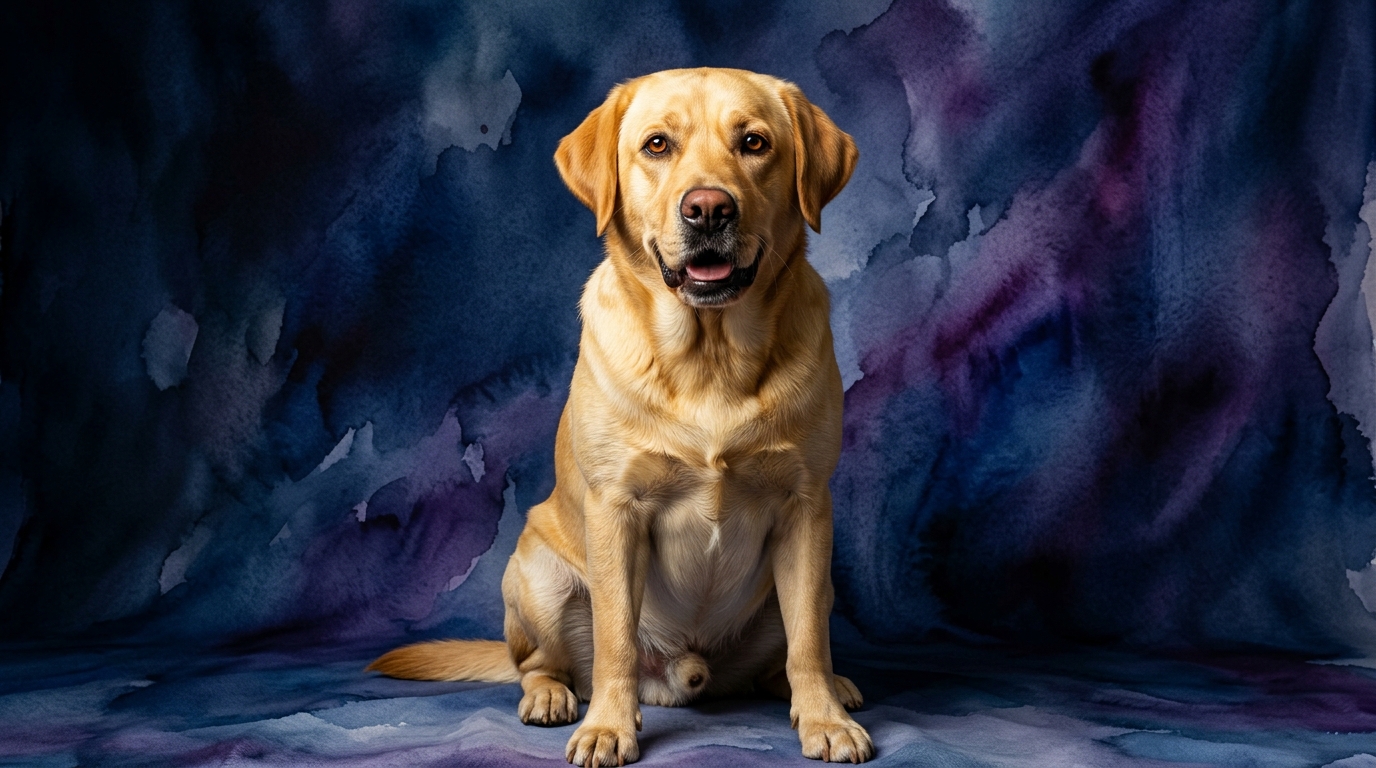
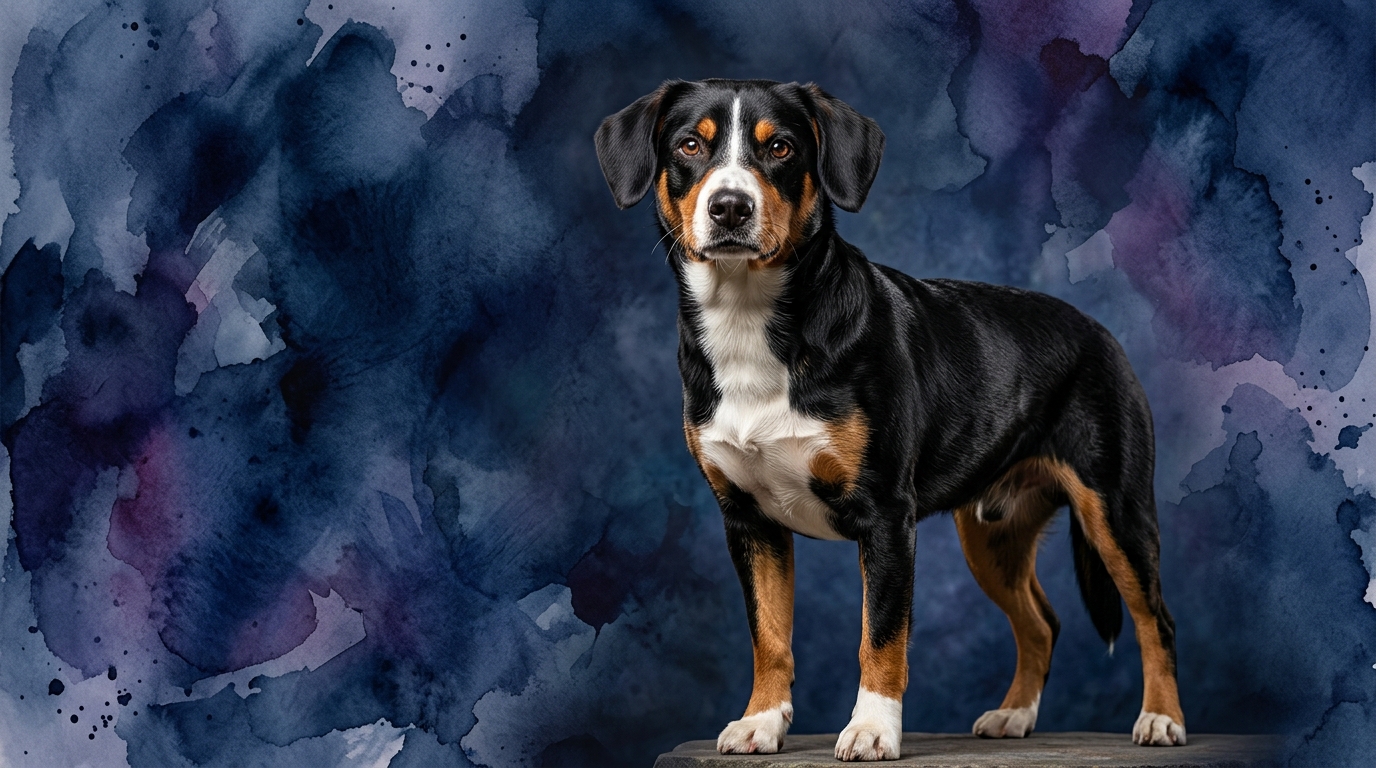
Side-by-Side IQ Profile: Labrador Retriever vs. Entlebucher Mountain Dog
At The Cosmic Pet Pet IQ Lab, we evaluate canine intelligence across five key dimensions to offer a comprehensive understanding of each breed's cognitive strengths. This framework moves beyond simple trainability, exploring how dogs process information, interact socially, and employ their natural instincts. Let's examine how the Labrador Retriever and Entlebucher Mountain Dog measure up.
The Labrador Retriever presents a profile geared towards cooperation and adaptability: their Problem Solving is rated 4/5, indicating strong resourcefulness in varied situations. Their Training Speed is an exceptional 5/5, reflecting a rapid grasp of new commands, while their Social Intelligence also scores 5/5, highlighting an outstanding ability to interpret human cues. Instinctive Drive, focused on retrieving and working alongside people, is 4/5, and their Memory for learned experiences stands at 4/5. This collective profile paints a picture of a dog built for collaborative engagement.
In contrast, the Entlebucher Mountain Dog displays a more uniform, practical cognitive profile, scoring 3/5 across all dimensions: Problem Solving, Training Speed, Social Intelligence, Instinctive Drive, and Memory. These scores suggest an intelligence that is effective and consistent, though perhaps less overtly expressive or generally adaptable than the Labrador's. The Entlebucher's cognitive strengths are deeply rooted in its heritage as a herding and guarding dog, emphasizing self-reliance and focused purpose.
Comparing these two profiles reveals distinct approaches to canine cognition. The Labrador's higher scores in areas like Training Speed and Social Intelligence point to a breed that is inherently more oriented towards human partnership and quick learning in diverse contexts. The Entlebucher's consistent 3/5 scores, while not indicating a lack of intelligence, suggest a dog whose intellect is more specifically tailored to its traditional roles, often requiring a different approach to engagement and training.
Where the Labrador Retriever Wins Cognitively
The Labrador Retriever's cognitive profile showcases a breed exceptionally well-suited for a wide array of human-centric activities. Their 5/5 Training Speed is a standout feature, allowing them to absorb and consistently execute new commands with remarkable alacrity. This rapid learning is profoundly supported by their 5/5 Social Intelligence, which grants them an acute understanding of human body language, vocal tones, and intentions. Labradors are masters at deciphering what their human companions want, making the communication loop during training remarkably efficient and rewarding.
Beyond quick learning, the Labrador's 4/5 Problem Solving ability means they are resourceful and adaptable, capable of navigating novel situations with confidence. Whether it's figuring out how to retrieve a dropped item from a tricky spot or adjusting to a new household routine, they demonstrate strong cognitive flexibility. Their 4/5 Memory ensures that these learned solutions and behaviors are retained reliably over time. Furthermore, their 4/5 Instinctive Drive, deeply rooted in retrieving and water work, means their natural inclinations often align perfectly with human-directed activities, making them enthusiastic partners in everything from field trials to assistance work. This combination of high social attunement, quick learning, and practical problem-solving makes the Labrador a highly versatile and cooperative companion.
Where the Entlebucher Mountain Dog Wins Cognitively
While the Entlebucher Mountain Dog's scores of 3/5 across all cognitive dimensions might appear modest compared to the Labrador, it's essential to understand that their intelligence is specialized and highly effective within its own context. The Entlebucher's cognitive strengths lie in its focused, independent, and practical application of intellect, traits honed by its history as a herding and guarding dog in the Swiss Alps. Their 3/5 Problem Solving capability shines brightest in real-world, task-oriented scenarios, such as managing livestock or patrolling a designated area. They are not typically driven by a desire to solve abstract puzzles for human entertainment, but rather to apply their intellect to purposeful, often self-initiated, tasks.
The Entlebucher's 3/5 Social Intelligence signifies a dog that understands human directives but possesses a stronger sense of self-reliance and judgment. This isn't a cognitive deficit; instead, it's a characteristic of a breed bred to make independent decisions while working, often at a distance from a handler. They observe, process information, and then act, sometimes requiring more deliberation than a breed eager to please at every turn. Their 3/5 Instinctive Drive manifests as a strong work ethic, a watchful nature, and territorial instincts, making them attentive guardians and diligent workers within their perceived domain. Coupled with a 3/5 Memory that reliably retains routines and essential tasks, the Entlebucher is a dog with a clear purpose and a consistent, albeit independent, approach to its responsibilities.
Which is Easier to Train and Why
Based on The Cosmic Pet Pet IQ Lab's metrics, the Labrador Retriever (Training Speed 5/5, Social Intelligence 5/5) is demonstrably easier to train for the average owner compared to the Entlebucher Mountain Dog (Training Speed 3/5, Social Intelligence 3/5). The Labrador's exceptional social intelligence means they are highly attuned to human desires and cues, making them eager and responsive participants in training sessions. Their strong desire to cooperate and the joy they derive from pleasing their human companions significantly accelerate the learning process, often leading to rapid acquisition of new commands and reliable performance in various contexts. This inherent willingness to collaborate makes them excellent candidates for everything from basic obedience to complex service dog tasks.
In contrast, the Entlebucher Mountain Dog's training journey demands more patience, consistency, and a nuanced approach. Their lower Training Speed and Social Intelligence scores reflect a breed that is more independent and less inherently driven by a constant need to please. Entlebuchers are intelligent, but their intellect is often channeled into observing and making their own judgments rather than immediately complying. Behavioral differences manifest as a stronger will; an Entlebucher might understand a command perfectly but may take a moment to process it or even choose not to execute it if it doesn't align with their current perceived priority, a trait common in many herding breeds. Successful Entlebucher training relies heavily on building a strong, respectful bond, employing consistent positive reinforcement, and understanding that their motivation often stems from purpose and partnership rather than simple compliance.
Which Suits Active Owners vs. Relaxed Owners
Both the Labrador Retriever and the Entlebucher Mountain Dog are energetic breeds that require significant physical and mental stimulation, but their suitability for different owner lifestyles varies due to their distinct cognitive profiles. The Labrador Retriever, with its high social intelligence (5/5) and cooperative instinctive drive (4/5), thrives with active owners who enjoy engaging their dog in shared activities. They are excellent partners for a wide range of pursuits, including hiking, swimming, retrieving games, and dog sports like agility or dock diving. Their desire for companionship means they integrate well into family life and are generally adaptable to various environments, provided their needs for exercise and mental engagement are consistently met. A 'relaxed' owner for a Labrador would still need to provide structured daily walks, interactive play sessions, and ongoing training to keep them happy and well-adjusted.
The Entlebucher Mountain Dog, while equally needing activity, requires a more specific kind of owner. Their lower social intelligence (3/5) and strong, independent herding/guarding instincts (3/5) mean they are best suited for very active, experienced owners who understand and appreciate a working dog's mindset. They excel in activities that engage both their mind and body, such as herding trials, advanced obedience, tracking, or protection work. A casual daily walk will not suffice; Entlebuchers need a 'job' or a challenging outlet for their energy and mental focus. Their independent nature means they might find their own (potentially undesirable) ways to stay occupied if not appropriately stimulated. Owners who enjoy structured training, consistent challenges, and a dog with a strong, self-assured personality will find the Entlebucher a rewarding companion, but they are not a match for a truly 'relaxed' or inexperienced owner.
The Verdict
Choose the Labrador Retriever if you seek a highly cooperative, socially attuned companion eager to learn and participate in a wide range of family activities, requiring less specialized training expertise.
Opt for the Entlebucher Mountain Dog if you are an experienced, very active owner prepared to provide consistent, stimulating work and structured training for a self-reliant, focused, and discerning canine partner.
🧠 Find Your Pet's IQ Score
Our Pet IQ Lab assessment covers 25+ tests across 5 cognitive dimensions — personalized to your breed.
Take the Full IQ Test →Frequently Asked Questions
Do Entlebucher Mountain Dogs bond well with their families despite their lower social intelligence score?
Yes, Entlebucher Mountain Dogs form deep, loyal bonds with their families, often being particularly devoted to one person. Their 3/5 social intelligence doesn't mean they're aloof; rather, they express affection and connection in a more reserved, discerning manner, valuing trust and consistency.
Is a Labrador Retriever too energetic for an apartment setting?
While Labradors possess significant energy, their high social intelligence and adaptability mean they can thrive in an apartment if their exercise needs are consistently met through daily vigorous walks, runs, or play sessions. Mental stimulation and training are equally crucial to prevent boredom and destructive behaviors.
How does a 'Coren rank' relate to The Cosmic Pet Pet IQ Lab's scores?
Stanley Coren's ranking primarily assesses 'working and obedience intelligence,' which aligns closely with our 'Training Speed' dimension. The Cosmic Pet Pet IQ Lab provides a broader, multi-dimensional view of canine cognition, encompassing problem-solving, social intelligence, instinctive drives, and memory, offering a more nuanced understanding beyond just trainability.