Side-by-Side Cognitive Profiles: Lab vs. Ibizan
At The Cosmic Pet Pet IQ Lab, we delve into the nuanced cognitive abilities that define each breed, moving beyond general perceptions. Our framework assesses five key dimensions: problem-solving, training speed, social intelligence, instinctive drive, and memory, providing a detailed understanding of how a dog's mind works in practice. We also consider their general placement on Stanley Coren's ranking of dog intelligence, where the Labrador Retriever sits impressively at #7, while the Ibizan Hound is found at #53.
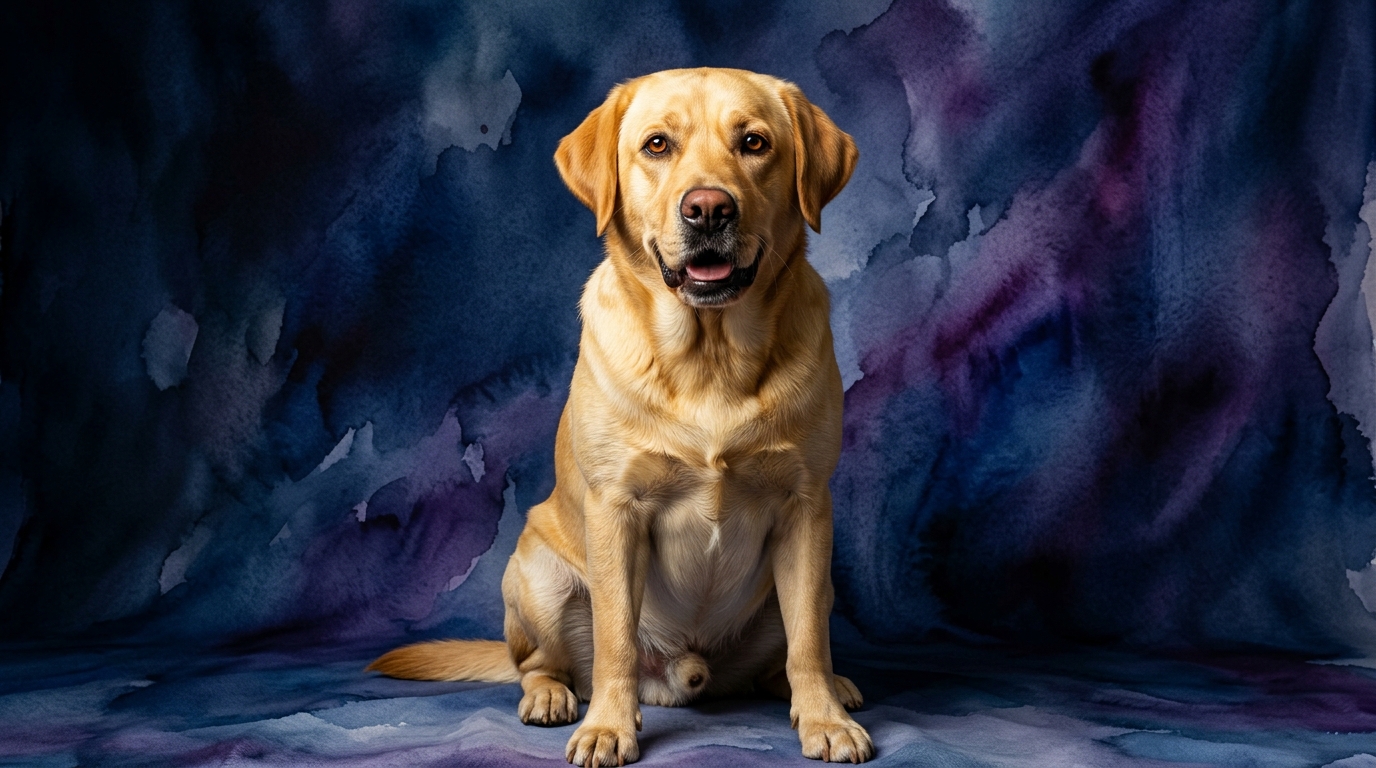
The Labrador Retriever, a stalwart of the Sporting group, exhibits a comprehensive cognitive profile: problem-solving 4/5, training speed 5/5, social intelligence 5/5, instinctive drive 4/5, and memory 4/5. These scores reflect a dog built for collaborative work, eager to engage with humans and quick to adapt to structured tasks. Their high social intelligence signifies a deep attunement to human cues and a strong desire for partnership.
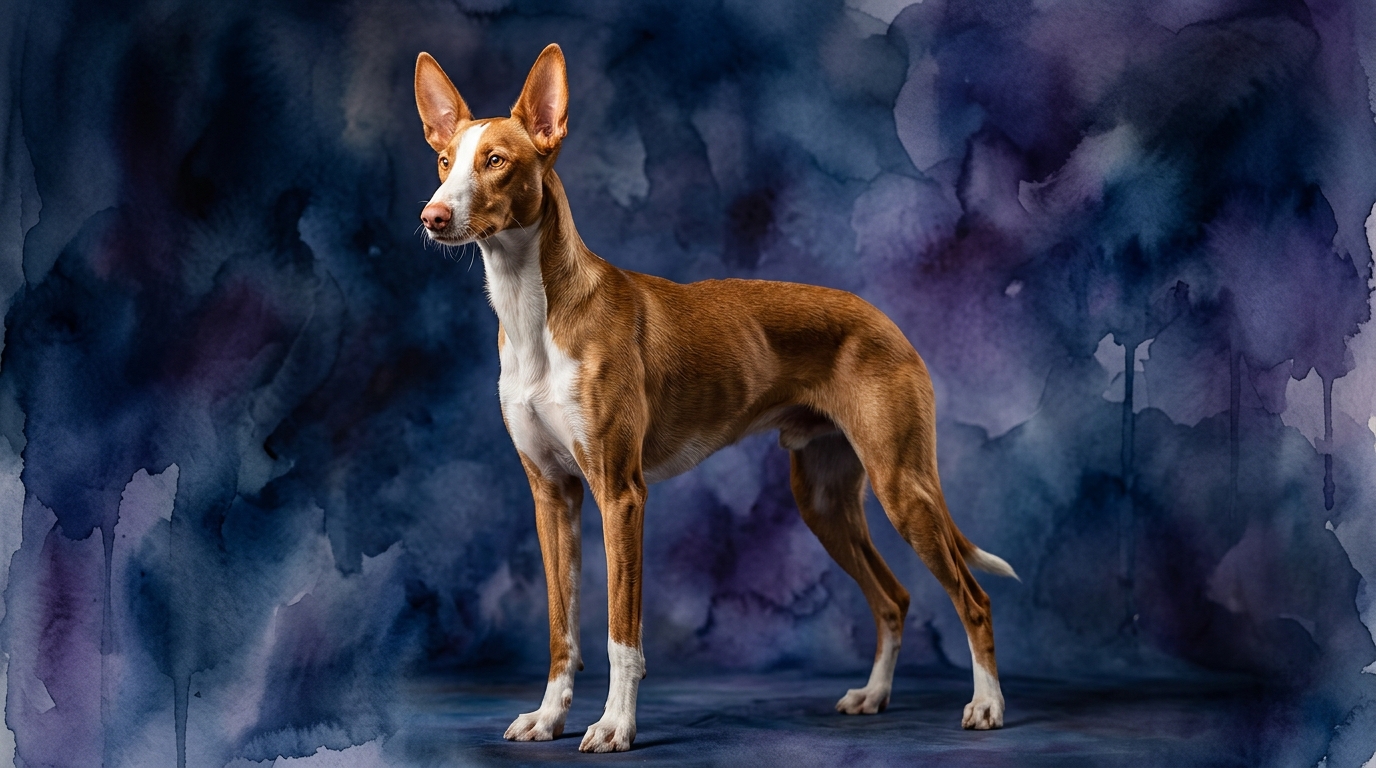
In contrast, the Ibizan Hound, a graceful member of the Hound group, presents a different cognitive blueprint: problem-solving 3/5, training speed 3/5, social intelligence 3/5, instinctive drive 3/5, and memory 3/5. These scores point to a more self-reliant thinker, whose cognitive strengths are honed for independent hunting rather than explicit human direction. Their moderate social intelligence suggests a dog that appreciates companionship but prioritizes its own sensory input and impulses.
Where the Labrador Retriever Shines Cognitively
The Labrador Retriever’s cognitive prowess is most evident in its exceptional training speed and social intelligence, both scoring a perfect 5/5. This breed possesses an innate desire to understand and cooperate with human partners, absorbing new commands and routines with remarkable efficiency. Their ability to read human body language and vocal tones, combined with a strong motivation to please, makes them incredibly receptive students in any learning environment, from basic obedience to complex service work.
Furthermore, the Labrador’s strong problem-solving (4/5) and memory (4/5) capabilities complement their trainability. They can strategize to overcome obstacles, such as figuring out how to retrieve an object from a difficult spot or navigating a complex scent trail. Their excellent memory ensures that once a lesson is learned or a task mastered, it is retained for the long term, allowing them to build a vast repertoire of skills and knowledge throughout their lives. This comprehensive cognitive package is a key reason for their high Coren rank.
Unpacking the Ibizan Hound's Unique Cognitive Strengths
While the Ibizan Hound's numerical scores appear lower across the board, it's crucial to understand that their cognitive strengths are simply channeled differently, reflecting their ancient purpose as independent hunters. Their problem-solving (3/5) is less about human-directed tasks and more about autonomous decision-making in the field. An Ibizan might independently devise a strategy to corner prey or navigate challenging terrain using keen senses, demonstrating a practical, self-sufficient form of intelligence.
Their instinctive drive (3/5), though not as high as some working breeds, is acutely focused on the chase and observation of prey, demanding a specific kind of cognitive processing. This involves quick visual assessment, memory of previous hunt patterns, and the ability to adapt tactics on the fly. Their moderate social intelligence (3/5) doesn't mean they lack affection, but rather that their primary focus often remains on their environment and sensory input, making them less inclined to seek constant human validation and more comfortable with their own thoughts.
Training Dynamics: Lab's Eagerness vs. Ibizan's Independence
Training a Labrador Retriever often feels like a highly collaborative effort, thanks to their 5/5 training speed and 5/5 social intelligence. They actively seek to engage with their trainer, viewing lessons as an opportunity to bond and earn praise. Labs respond enthusiastically to positive reinforcement, quickly connecting actions with rewards. Their eagerness to please and inherent focus on their human companions mean they typically thrive in structured training classes and excel at advanced obedience, making them a joy to guide through new skills.
The Ibizan Hound, conversely, approaches training with a more discerning and independent mindset, reflected in their 3/5 training speed and social intelligence. While capable of learning, they are not inherently driven by human approval in the same way a Lab is. Their strong instinctive drive (3/5), particularly for chasing, means distractions in the environment can easily override commands if the perceived reward isn't compelling enough. Successful training with an Ibizan requires immense patience, creativity, and making lessons feel like a game rather than a chore, often leveraging high-value treats and short, engaging sessions to capture their attention and sustain their interest. Repetition is often needed for complex tasks due to their 3/5 memory.
Lifestyle Match: Active Companionship vs. Independent Exploration
The Labrador Retriever is an ideal match for active owners who desire a highly engaged and enthusiastic partner for all of life's adventures. Their robust instinctive drive (4/5) and boundless energy, coupled with their desire for collaborative activities, make them excellent companions for hiking, swimming, retrieving games, and dog sports like agility or dock diving. They thrive on having a purpose and being deeply integrated into family life, offering constant companionship and a joyful presence.
The Ibizan Hound, with its more independent spirit and acute sighthound instincts, suits owners who appreciate a dog with a unique blend of athleticism and calm self-possession. They require significant bursts of high-speed exercise, ideally in a securely fenced area where they can safely express their chase drive. While they possess moderate instinctive drive (3/5), it is powerfully directed towards visual prey, necessitating careful management in unsecured environments. After their exercise, Ibizans are often content to relax quietly indoors, often observing their surroundings with a watchful eye, making them suitable for owners who enjoy a less 'velcro' dog but can commit to their specific exercise needs.
The Verdict
For those seeking a highly trainable, devoted companion eager for joint activities and collaborative learning, the Labrador Retriever is an outstanding choice.
If you value an elegant, independent spirit, appreciate a dog that thinks for itself, and can provide outlets for its unique sighthound instincts, the Ibizan Hound will be a captivating partner.
🧠 Find Your Pet's IQ Score
Our Pet IQ Lab assessment covers 25+ tests across 5 cognitive dimensions — personalized to your breed.
Take the Full IQ Test →Frequently Asked Questions
Are Ibizan Hounds difficult to train?
Ibizan Hounds aren't inherently 'difficult,' but their training requires patience and a deep understanding of their sighthound nature. They learn at a moderate pace (3/5 Training Speed) and are less motivated by pleasing humans, preferring to follow their own instincts. Success comes from making training engaging and highly rewarding.
Can Labrador Retrievers be good guard dogs?
While Labradors are alert and will often bark at strangers, their high social intelligence (5/5) means they are typically too friendly and welcoming to be effective guard dogs. They are more suited to roles where their collaborative nature and eagerness to please are assets, such as therapy or assistance work.
Do Ibizan Hounds need a lot of exercise?
Ibizan Hounds require significant exercise, specifically opportunities for high-speed running in a securely fenced area. As sighthounds, their instinctive drive (3/5) is geared towards chasing. While they enjoy bursts of intense activity, they are often calm indoors, but consistent physical outlets are crucial for their well-being.