
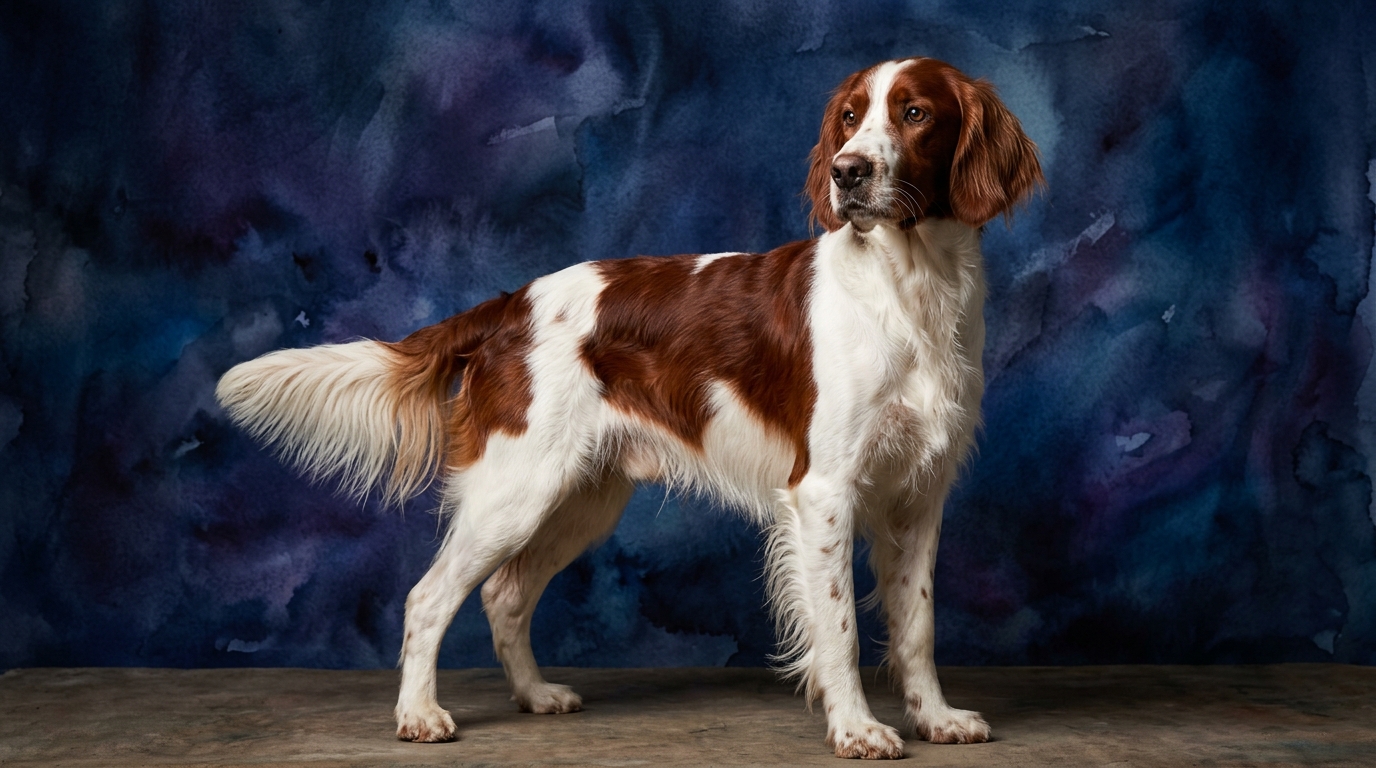
Side-by-Side IQ Profile: A Cognitive Blueprint
The Cosmic Pet Pet IQ Lab employs a multi-faceted approach to understanding canine intelligence, moving beyond simple obedience to encompass a spectrum of cognitive abilities. For the Labrador Retriever, a breed often celebrated for its working aptitude, our data reflects a strong Coren ranking of #7, placing it among the top echelons for obedience and working intelligence. Its Problem Solving is rated at 4/5, indicating a robust capacity to navigate novel situations and devise solutions. Training Speed achieves a perfect 5/5, suggesting rapid acquisition of new commands and routines. Social Intelligence also scores an impressive 5/5, highlighting its exceptional ability to interpret human cues and form strong bonds. Instinctive Drive, crucial for its retrieving heritage, stands at 4/5, while Memory, vital for complex tasks, is rated 4/5.
In contrast, the Irish Red and White Setter, while equally dedicated to its sporting role, presents a more moderate, yet equally effective, cognitive profile. It is not listed on Coren's traditional ranking, which often focuses on working obedience, but its IQ scores provide a detailed picture. Its Problem Solving capability is rated 3/5, indicating a competent, though perhaps less independently inventive, approach to challenges. Training Speed is 3/5, suggesting a steady learning pace that requires consistent, positive reinforcement. Social Intelligence is also 3/5, implying an affectionate nature that might be less overtly people-focused than a Labrador, valuing companionship without constant engagement. Instinctive Drive is 3/5, reflecting its focused, methodical approach to scent work and pointing, while Memory is also 3/5, sufficient for its field duties but perhaps less expansive than the Labrador's.
Where Labrador Retriever Wins Cognitively
The Labrador Retriever’s cognitive strengths are particularly evident in its rapid learning and profound social attunement. With a Training Speed of 5/5, Labs absorb new commands and complex sequences with remarkable efficiency, making them highly adaptable to various roles from assistance work to competitive obedience. This quick uptake is often coupled with their 5/5 Social Intelligence, enabling them to keenly read human intentions and emotional states, fostering an almost intuitive partnership. This translates into a dog that not only learns what you ask but also understands why you're asking it, leading to a profound eagerness to please.
Furthermore, its 4/5 Problem Solving score means a Labrador is often resourceful, capable of figuring out how to open a gate or retrieve a toy from a difficult spot. This isn't just about mischief; it's about an inherent mental flexibility that allows them to adapt to changing environments and unexpected situations, a trait invaluable in dynamic working scenarios. Their 4/5 Memory supports this, allowing them to retain complex patterns, routes, and command sequences over long periods, making them reliable partners for intricate tasks requiring recall and sustained focus. This combination of swift learning, social awareness, and practical problem-solving positions the Labrador as a highly versatile and responsive canine companion.
Where Irish Red and White Setter Wins Cognitively
While the Irish Red and White Setter’s IQ scores might appear lower than the Labrador's, its cognitive profile is uniquely suited to its specific historical purpose and offers a distinct set of advantages for the right owner. Its 3/5 Instinctive Drive, while not as high as a Lab's, is characterized by a focused, methodical approach to hunting. This isn't a frenetic energy but a deliberate, persistent drive for scent work and pointing, requiring sustained concentration rather than explosive retrieval. This specific type of drive means they excel in tasks requiring patience and a steady hand, rather than sheer speed.
Their 3/5 Social Intelligence, while not indicating the same level of human-centric focus as a Lab, can translate into a more independent, less demanding companionship. An Irish Red and White Setter forms deep bonds but might be content observing from a distance or engaging in less overt displays of affection, appealing to owners who appreciate a dog with a strong sense of self. This independence, combined with a 3/5 Problem Solving score, suggests a dog that approaches challenges with a practical, less overthinking mindset. They rely on their senses and ingrained patterns more, which can be a strength in predictable environments where consistency is valued over improvisation. Their moderate 3/5 Training Speed means they learn steadily and reliably, retaining information once it's thoroughly ingrained, making them excellent for owners who enjoy a patient, consistent training journey.
Which is Easier to Train and Why
The distinction in ease of training between these two breeds is quite pronounced, largely due to their differing scores in Training Speed and Social Intelligence. The Labrador Retriever, with its perfect 5/5 Training Speed and 5/5 Social Intelligence, is generally considered far easier to train. Their eagerness to please and exceptional ability to read human cues mean they pick up commands rapidly and are highly motivated by positive reinforcement and social interaction. A Labrador often anticipates commands and readily offers desired behaviors, simplifying the learning process significantly. Their robust memory (4/5) ensures retention of these lessons, making them reliable in varied environments.
The Irish Red and White Setter, with a 3/5 in both Training Speed and Social Intelligence, presents a different training experience. They are certainly trainable, but they require a more patient, consistent, and perhaps imaginative approach. Their learning pace is steady, not rapid, meaning repetitions and clear, concise instructions are key. Their moderate social intelligence suggests they might not be as intensely focused on human approval, requiring trainers to find alternative motivators, often involving their strong instinctive drive for scent work. They can be more independent thinkers, sometimes requiring more effort to convince them that a human-directed task is more rewarding than following their nose. This isn't a lack of ability, but a difference in motivational structure and inherent focus, making the training journey longer and more nuanced compared to the Labrador.
Which Suits Active Owners vs. Relaxed Owners
Understanding the cognitive profiles of these breeds also illuminates their suitability for different owner lifestyles. The Labrador Retriever, with its 4/5 Instinctive Drive and 4/5 Problem Solving, thrives with active owners who can channel its boundless energy and mental agility. This breed requires consistent physical exercise, such as retrieving games, swimming, or long hikes, but also significant mental stimulation through training, puzzle toys, and varied experiences. Their social intelligence means they genuinely enjoy being involved in family activities and can become bored or destructive if left under-stimulated or isolated. They are ideal for active families, outdoor enthusiasts, or those interested in dog sports like agility or obedience, where their quick learning and drive can shine.
The Irish Red and White Setter, while also a sporting breed requiring regular exercise, offers a different kind of companionship that might appeal to a slightly less frenetic owner, or one whose activity is more focused. Its 3/5 Instinctive Drive translates to a need for consistent, purposeful exercise, particularly opportunities for scent work and exploration. They are not necessarily "relaxed" dogs, but their energy is often expressed through sustained, graceful movement rather than explosive bursts, and their independence means they might be content with a long walk or run alongside their owner, rather than constant interactive play. They suit owners who appreciate long, steady outdoor adventures, perhaps hiking or field work, and who can provide a calm, consistent home environment. While they need activity, their moderate social intelligence means they might not demand constant human interaction in the same way a Labrador does, making them suitable for owners who appreciate a dog that is present and affectionate, but also self-sufficient.
The Verdict
Opt for a Labrador Retriever if you seek a highly adaptable, rapidly trainable companion deeply attuned to human social cues, perfect for active families and diverse working roles requiring quick learning and strong bonds.
Select an Irish Red and White Setter if you value a graceful, independent companion with a focused, persistent drive for outdoor exploration and a steady, patient approach to learning.
🧠 Find Your Pet's IQ Score
Our Pet IQ Lab assessment covers 25+ tests across 5 cognitive dimensions — personalized to your breed.
Take the Full IQ Test →Frequently Asked Questions
Does Coren's ranking fully capture a dog's intelligence?
Coren's ranking primarily assesses "obedience and working intelligence," reflecting a dog's ability to learn and follow human commands. While valuable, it doesn't encompass the full spectrum of canine cognition, such as problem-solving, social intelligence, or instinctive drives, which our Pet IQ Lab scores aim to provide.
Are Irish Red and White Setters difficult to train because they aren't Coren-ranked?
Not at all. The absence of a Coren ranking doesn't mean a breed is untrainable; it simply suggests their cognitive strengths may lie in areas beyond traditional obedience trials or that they require a different training approach. Irish Red and White Setters are trainable, but benefit from patience, consistency, and motivation tailored to their specific instincts.
What does "Instinctive Drive" mean for these breeds?
Instinctive Drive refers to the inherent motivation for behaviors like retrieving, scenting, or herding, stemming from their breed's original purpose. For Labradors, a 4/5 means a strong urge to retrieve. For Irish Red and White Setters, a 3/5 indicates a persistent, focused drive for scenting and pointing game, essential for their field work.