
Side-by-Side IQ Profile: Labrador Retriever vs. Kerry Blue Terrier
**Labrador Retriever:** Ranked 7th by Coren, the Labrador exhibits a strong inclination towards cooperative intelligence. Its Problem Solving is rated 4/5, reflecting an ability to grasp complex tasks, especially those involving human collaboration. Training Speed is exceptional at 5/5, indicating rapid acquisition of new commands and routines. Social Intelligence, also 5/5, underscores their deep understanding of human cues and desire to please. An Instinctive Drive of 4/5 speaks to their strong retrieving instincts and motivation for purpose-driven work, while Memory at 4/5 ensures they retain learned behaviors and associate outcomes with actions effectively.
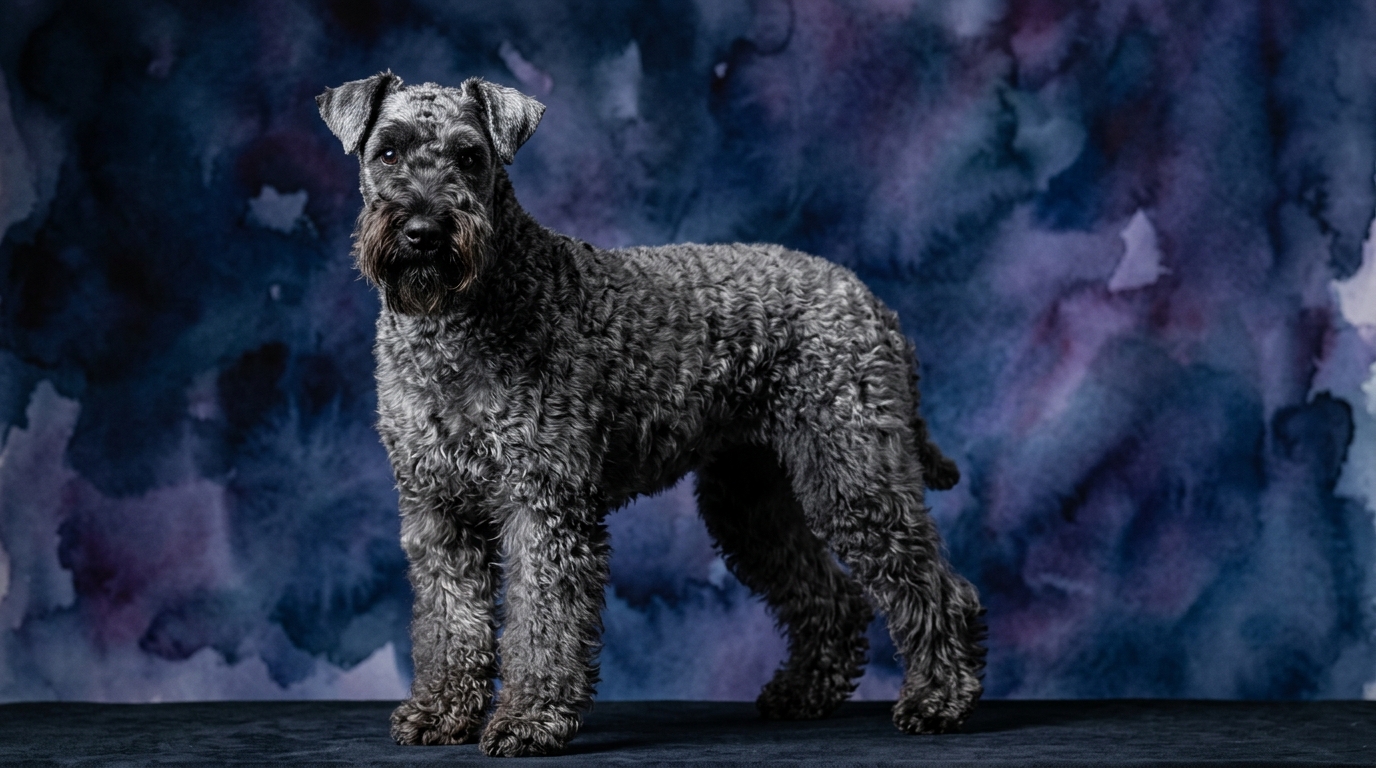
**Kerry Blue Terrier:** This breed, not Coren-ranked, presents a different cognitive blueprint. Its Problem Solving is rated 3/5, often geared towards independent navigation of challenges rather than human-directed tasks. Training Speed stands at 3/5, suggesting a more deliberate learning pace, sometimes influenced by their independent streak. Social Intelligence is 3/5, meaning while they form bonds, their primary motivation might not always be human approval. An Instinctive Drive of 3/5 reflects their strong terrier instincts for hunting and guarding, which can sometimes override other directives. Memory at 3/5 indicates they learn and remember, but perhaps with less emphasis on human-centric routines compared to the Labrador.
Where the Labrador Retriever Excels Cognitively
The Labrador Retriever's cognitive strengths shine in cooperative ventures, making them unparalleled partners for human-led activities. Their superior Training Speed (5/5) means they absorb new commands, intricate sequences, and behavioral modifications with remarkable alacrity. This isn't just about repetition; it's about a deep desire to understand and execute human requests. Their Social Intelligence (5/5) allows them to keenly read human body language, tone, and intent, anticipating needs and adjusting their behavior accordingly, invaluable in assistance roles or complex sporting events. For instance, a Labrador can quickly learn to differentiate between specific toys by name or perform multi-step tasks like retrieving a specific item, demonstrating a nuanced understanding of cause and effect within a social context.
Where the Kerry Blue Terrier Demonstrates Unique Cognitive Strengths
While the Kerry Blue Terrier's overall IQ scores appear lower in a cooperative framework, their cognitive profile offers distinct advantages in specific domains, particularly those valuing independence and tenacity. Their Problem Solving (3/5) is less about pleasing a human and more about self-directed strategy, excelling in tasks requiring persistence and cunning, such as tracking and cornering small prey or navigating complex scent trails independently. This breed's Instinctive Drive (3/5), though not as high as a retriever's, is intensely focused on terrier work – a relentless pursuit and eradication of vermin. This drive fuels a determined, self-motivated approach to challenges, where they might continue to work at a puzzle or a scent despite initial setbacks, demonstrating a unique form of cognitive resilience. Their memory (3/5) supports this by retaining effective independent strategies for overcoming obstacles or remembering where a scent was last strong, making them formidable in tasks where self-reliance is paramount.
Training Dynamics: Which Breed is Easier to Teach?
Without question, the Labrador Retriever generally presents a significantly easier training experience due to its intrinsically cooperative nature. Their exceptional Training Speed (5/5) means they quickly grasp and retain commands, often requiring fewer repetitions than many other breeds. This is amplified by their high Social Intelligence (5/5), which drives an eager-to-please attitude and a strong desire to work *with* their human companions. They actively seek positive reinforcement and respond enthusiastically to praise, making training a joyful, reciprocal process. A Labrador's strong retrieving instinct and memory also mean they readily learn to fetch specific items or perform complex sequences.
In contrast, the Kerry Blue Terrier, with its lower Training Speed (3/5) and Social Intelligence (3/5), often requires more patience and creative strategies. Their independent, often headstrong terrier temperament means they are less inherently motivated by human approval and may question the necessity of a command, especially if it conflicts with their strong instinctive drives. Training a Kerry Blue often involves convincing them that cooperation is *their* idea, demanding consistency, firm but fair leadership, and making training feel like a game rather than a chore. Their memory (3/5) will retain what they deem important, but their priorities might not always align with an owner's.
Matching Breeds to Owner Lifestyles: Active vs. Relaxed
Both the Labrador Retriever and the Kerry Blue Terrier are breeds that thrive with active engagement, yet their activity needs manifest differently. The Labrador Retriever, with its robust Instinctive Drive (4/5) and desire for purpose, suits active owners who seek a versatile partner for a wide array of activities. They excel in dog sports like agility, obedience, dock diving, and field trials, and are ideal companions for hiking, running, or extended games of fetch. Their biddable nature and high social intelligence make them adaptable family members, but they require consistent mental and physical outlets to prevent boredom and channel their energy constructively. While they can enjoy downtime, a truly "relaxed" owner who offers minimal daily structure or activity will likely find a Labrador restless and potentially destructive.
The Kerry Blue Terrier also demands an active owner but one who appreciates a more independent, spirited companion. Their tenacious Instinctive Drive (3/5) means they need outlets for their energy and prey drive, making them excellent candidates for earthdog trials, agility, or long, varied walks that engage their senses. They are not content to be couch potatoes; their intelligence and energy necessitate consistent mental stimulation and physical exercise to prevent boredom and channel their strong will. A "relaxed" owner, particularly one unprepared for a terrier's spirited independence and potential for mischief, would find the Kerry Blue Terrier challenging. Both breeds are high-energy, but the Labrador channels its energy into cooperative tasks, while the Kerry Blue often directs it towards independent exploration and pursuit.
The Verdict
Opt for a Labrador Retriever if you desire a highly cooperative, eager-to-please companion who excels in learning and forming deep social bonds, perfect for active families seeking a versatile partner in sports, work, or daily life.
Select a Kerry Blue Terrier if you admire a spirited, independent, and tenacious dog with a strong will, are prepared for consistent, engaging training, and appreciate a companion whose problem-solving leans towards self-reliance and determined pursuit.
🧠 Find Your Pet's IQ Score
Our Pet IQ Lab assessment covers 25+ tests across 5 cognitive dimensions — personalized to your breed.
Take the Full IQ Test →Frequently Asked Questions
Do Kerry Blue Terriers need a lot of exercise?
Yes, Kerry Blue Terriers are energetic dogs with a strong drive, requiring consistent daily exercise and mental stimulation to prevent boredom and channel their natural instincts. Long walks, playtime, and engaging activities are essential for their well-being.
Are Labrador Retrievers good with children?
Labrador Retrievers are generally excellent with children due to their high social intelligence and patient nature, often forming strong bonds with family members. However, their size and exuberance mean supervision is always recommended, especially with very young children.
Which breed is better for a first-time dog owner?
The Labrador Retriever is generally more suitable for a first-time dog owner due to its higher biddability, eagerness to please, and easier trainability. The Kerry Blue Terrier's independent nature and specific terrier traits can be more challenging for inexperienced owners.