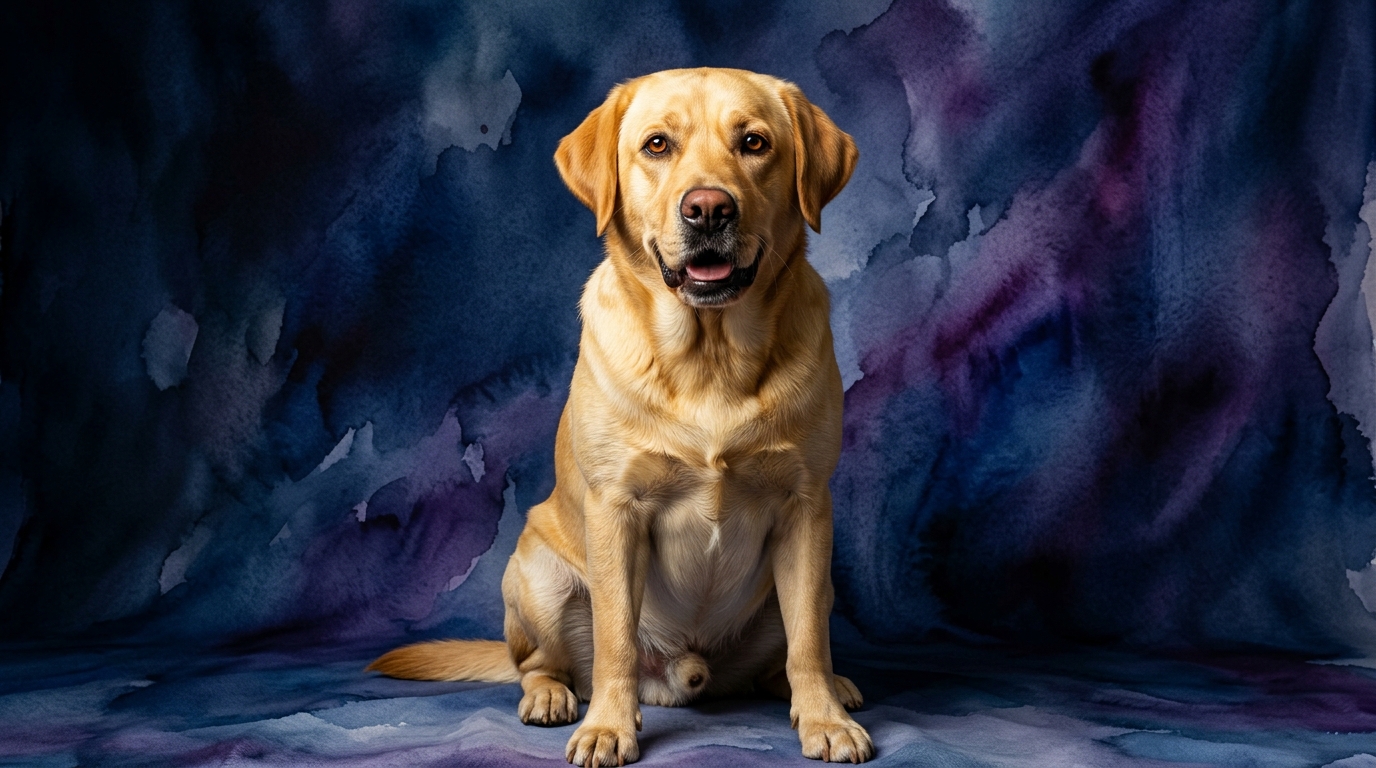
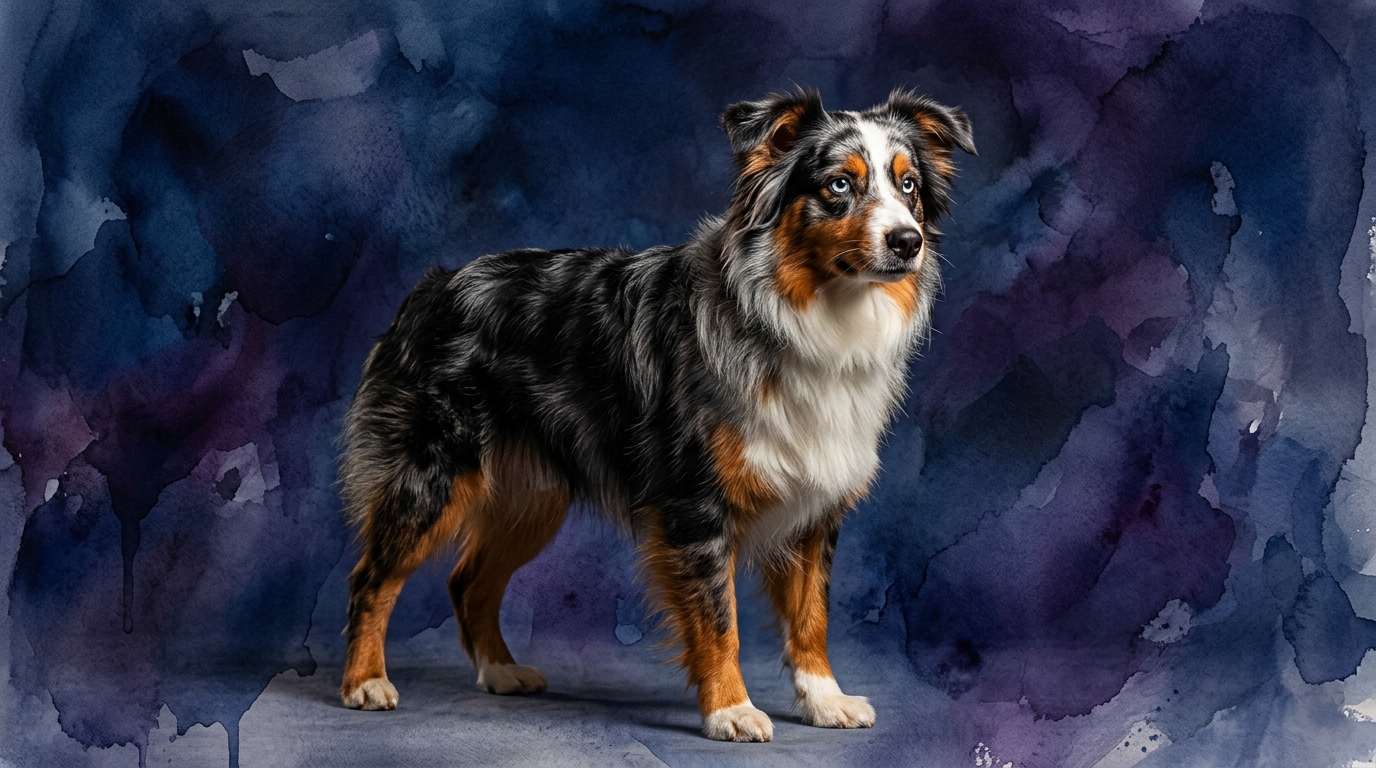
Side-by-Side Cognitive Profile: Labrador Retriever vs. Miniature American Shepherd
At The Cosmic Pet Pet IQ Lab, we evaluate canine intelligence across five key dimensions to provide a nuanced understanding of each breed's mental aptitudes. Here’s how the Labrador Retriever and Miniature American Shepherd compare:
Problem Solving: This dimension measures a dog’s capacity to navigate new situations, overcome obstacles, and devise solutions. The Labrador Retriever scores 4/5, demonstrating a strong aptitude for assessing novel challenges and devising effective strategies, often with a practical, goal-oriented approach. The Miniature American Shepherd scores 3/5, capable of independent thought and adapting to new problems, though perhaps with a more analytical or task-specific focus rather than broad generalization.
Training Speed: This metric assesses how quickly a dog grasps and retains new commands and behaviors. Labrador Retrievers are remarkably quick learners, scoring 5/5, absorbing new instructions with enthusiasm and consistency, making them highly receptive to structured training. Miniature American Shepherds score 3/5; while certainly trainable, they may require more repetition and a varied approach to keep them engaged, processing new information at a moderate pace.
Social Intelligence: This refers to the ability to understand and respond to human cues, interact appropriately with other animals, and navigate complex social dynamics. The Labrador Retriever excels in reading human intentions, forming strong bonds, and adapting their behavior to social contexts, earning a 5/5. The Miniature American Shepherd scores 3/5, possessing a functional understanding of social cues and capable of forming bonds, but might exhibit more independence or reserve compared to the Lab's overt sociability.
Instinctive Drive: This evaluates the strength of inherent breed-specific behaviors like retrieving, herding, guarding, or hunting. Driven by a powerful retrieving instinct, coupled with an eagerness to work alongside humans, Labrador Retrievers score 4/5, making them exceptional partners for tasks involving scent work or fetching. The Miniature American Shepherd scores 3/5, exhibiting a clear, focused herding drive, channeling their energy into managing and moving livestock or objects, often with precise movements and an attentive gaze.
Memory: This dimension measures the ability to recall learned behaviors, locations, and past experiences. Labrador Retrievers display excellent recall for commands and routines, remembering complex sequences and familiar environments over extended periods, scoring 4/5. Miniature American Shepherds score 3/5, capable of retaining information and learning from past experiences, though their recall might be more tied to specific tasks or environments rather than broad social contexts.
Where the Labrador Retriever Excels Cognitively
The Labrador Retriever consistently exhibits a cognitive edge across several dimensions, making them particularly adept at tasks requiring high levels of cooperation and adaptability. Their 5/5 Training Speed means they absorb new commands and complex routines with remarkable alacrity, often eager to please and quick to offer desired behaviors. This rapid learning curve is bolstered by their 5/5 Social Intelligence, enabling them to keenly interpret human body language, vocal tones, and intentions, forging a deeply responsive partnership. A Labrador’s 4/5 Problem Solving capacity allows them to creatively navigate novel situations, whether it's figuring out how to retrieve an object from a tricky spot or adapting to a new training challenge. Their 4/5 Memory ensures that once a lesson is learned, it tends to stick, allowing for the building of an extensive repertoire of skills. Furthermore, their powerful 4/5 Instinctive Drive, primarily focused on retrieving, means they possess an innate motivation for fetch games, scent work, and carrying items, which translates into a cognitive readiness for engagement and work that aligns beautifully with human-directed activities. This combination of quick learning, social attunement, and practical problem-solving makes the Labrador a standout for roles requiring consistent, cooperative intelligence.
Where the Miniature American Shepherd Shines Cognitively
While the Miniature American Shepherd's numerical scores may appear lower than the Labrador's in a broad comparison, their cognitive strengths lie in a different, highly specialized domain. Their 3/5 Instinctive Drive, specifically geared towards herding, represents a unique cognitive specialization that the Labrador does not share. This drive manifests as an acute spatial awareness, strategic thinking for controlling movement, and an innate understanding of group dynamics, making them exceptional at tasks involving precision and control over other animals or objects. Even with a 3/5 Problem Solving score, their intelligence is often applied with a keen focus on practical, independent task completion within their sphere of interest, rather than broad social problem-solving. They might independently assess a situation and devise a strategy to “herd” children away from a perceived danger or organize toys, demonstrating a different flavor of cognitive application. Their 3/5 Social Intelligence, while less overtly effusive, can translate into a more discerning and independent companion, capable of forming deep bonds without the constant need for human direction or validation that a higher social score might imply. For owners who value a dog with a distinct, task-oriented intellect and a degree of self-sufficiency, the Miniature American Shepherd's cognitive profile offers a compelling and specialized advantage.
Trainability: Which Breed Offers a Smoother Learning Curve?
When considering ease of training, the Labrador Retriever holds a distinct advantage, primarily due to its 5/5 Training Speed and 5/5 Social Intelligence. Labradors exhibit an almost unparalleled enthusiasm for learning new commands and routines, often grasping concepts after just a few repetitions. Their eagerness to please, coupled with their strong social attunement, means they are consistently looking to their human partners for guidance and approval, making them highly responsive to positive reinforcement. This intrinsic motivation to work cooperatively and their innate ability to read human cues streamlines the training process significantly.
In contrast, the Miniature American Shepherd, with a 3/5 Training Speed and 3/5 Social Intelligence, presents a different training dynamic. While capable and intelligent, they may require more patience, consistency, and varied training methods to keep them engaged. Their herding background fosters a degree of independence and a tendency to think for themselves, which can sometimes translate into a more deliberate approach to obeying commands, especially if they perceive a more efficient or “correct” way to do something from their own perspective. They are not less intelligent, but their intelligence is often applied with a more independent spirit. Training a Miniature American Shepherd often benefits from making tasks feel like a “job” or a puzzle, tapping into their instinctive drive rather than relying solely on social connection. Therefore, for a novice owner seeking a straightforward training experience, the Labrador Retriever generally proves to be the more forgiving and rapidly rewarding student.
Matching Canine Minds to Owner Lifestyles: Active vs. Relaxed
Both the Labrador Retriever and the Miniature American Shepherd are dogs with substantial energy and a need for mental engagement, meaning neither is ideally suited for a truly “relaxed” or sedentary lifestyle. However, their specific cognitive profiles and drives dictate different types of activity.
The Labrador Retriever, with its 4/5 Instinctive Drive for retrieving and high social intelligence, thrives with owners who can provide consistent, interactive engagement. They excel in activities like fetch, swimming, long walks, and dog sports such as agility or obedience where they can work closely with their human. Their problem-solving abilities (4/5) and memory (4/5) mean they enjoy learning complex tricks and tasks. Active owners who enjoy being out and about, incorporating their dog into family adventures, and providing regular mental challenges will find the Labrador an enthusiastic and devoted partner. Their need for social interaction means they prefer to be involved in household activities rather than left alone for extended periods.
The Miniature American Shepherd, while also energetic, channels its 3/5 Instinctive Drive into more focused, task-oriented work. This breed excels in activities that simulate their herding instincts, such as herding trials, flyball, agility, or advanced obedience. Their problem-solving (3/5) and memory (3/5) are well-suited to intricate patterns and independent decision-making within a structured activity. Owners who are “active” in the sense of being dedicated to dog sports, training for specific tasks, or who can provide a “job” for their dog will find the Miniature American Shepherd incredibly rewarding. They require mental stimulation that allows them to use their intellect and independent thinking. While they enjoy family time, their social intelligence (3/5) suggests they might be content with slightly less constant human interaction than a Labrador, provided their mental and physical needs are met through structured activities. A relaxed owner, in the sense of minimal daily activity or mental engagement, would likely find both breeds challenging, but the Labrador’s higher social needs might make it more visibly restless without sufficient interaction.
The Verdict
Choose the Labrador Retriever if you seek a highly cooperative, rapidly trainable companion eager to engage in social activities and family adventures, thriving on clear guidance and consistent interaction.
Opt for the Miniature American Shepherd if you are an experienced owner keen on channeling a dog's keen herding intelligence into structured tasks, dog sports, and appreciate a more independent yet devoted partner.
🧠 Find Your Pet's IQ Score
Our Pet IQ Lab assessment covers 25+ tests across 5 cognitive dimensions — personalized to your breed.
Take the Full IQ Test →Frequently Asked Questions
Is a Labrador Retriever or Miniature American Shepherd better for a first-time dog owner?
A Labrador Retriever is generally a more forgiving choice for first-time owners due to their high training speed and social intelligence, making them easier to guide and more adaptable to various household environments. The Miniature American Shepherd, while trainable, benefits from an owner experienced in channeling their independent, task-oriented intelligence.
Do Miniature American Shepherds require more mental stimulation than Labrador Retrievers?
Both breeds require substantial mental stimulation, but the type differs. Miniature American Shepherds often thrive on structured “jobs” that engage their herding instincts and independent problem-solving, whereas Labrador Retrievers excel with interactive games, cooperative training, and social engagement. Neither breed is content with minimal mental input.
How does the instinctive drive differ between these two breeds?
The Labrador Retriever possesses a strong 4/5 retrieving drive, manifesting as an eagerness for fetch and carrying objects, often in cooperation with humans. The Miniature American Shepherd has a 3/5 herding drive, which focuses on controlling movement, spatial awareness, and managing groups, often with more independent decision-making.