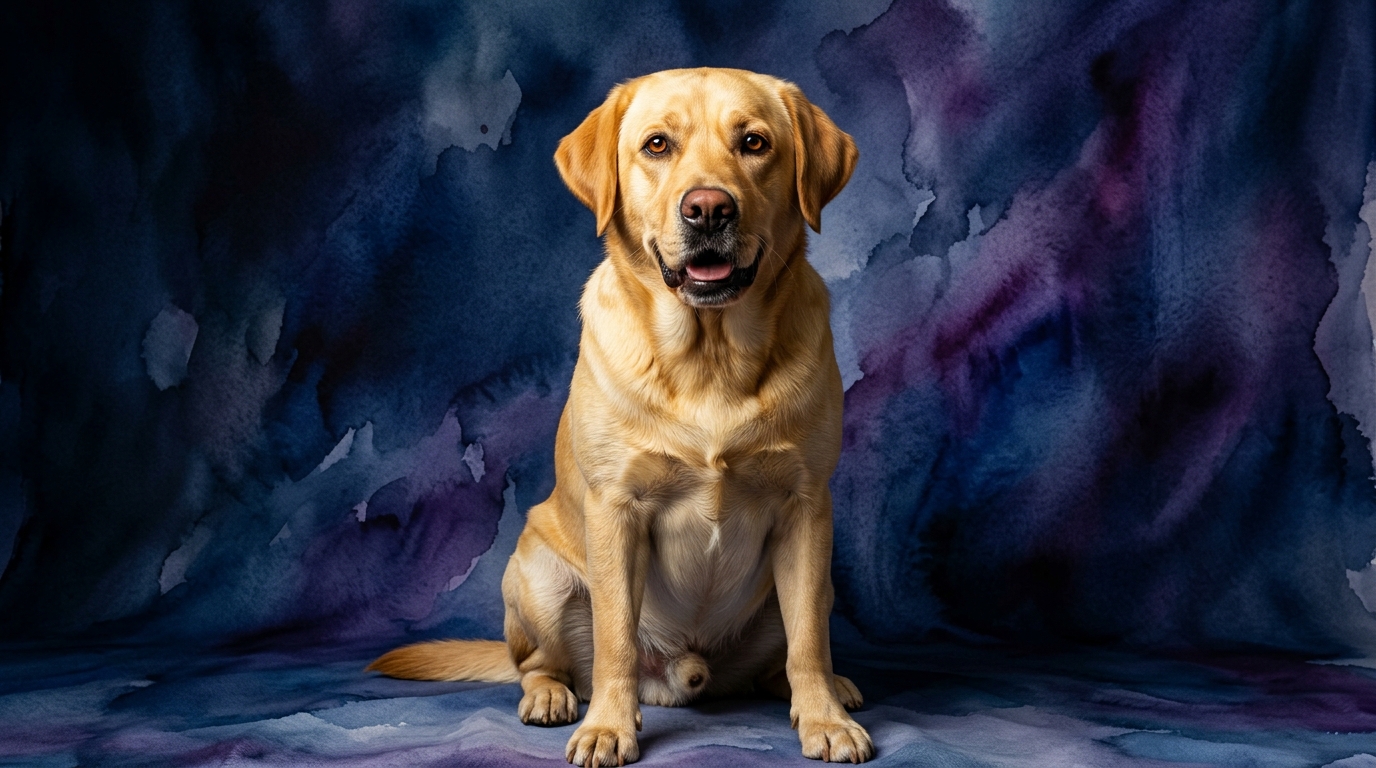

Side-by-Side Cognitive Profile: Labrador Retriever vs. Rottweiler
The Cosmic Pet Pet IQ Lab evaluates canine intelligence across five critical dimensions: Problem Solving, Training Speed, Social Intelligence, Instinctive Drive, and Memory. While both the Labrador Retriever (Coren Rank #7) and the Rottweiler (Coren Rank #9) demonstrate impressive cognitive capacities, their profiles highlight distinct strengths.
The Labrador Retriever, a Sporting group dog, exhibits a robust cognitive blueprint tailored for cooperative engagement. Their Problem Solving is rated 4/5, indicating an aptitude for navigating moderately complex environmental challenges, often employing trial-and-error strategies driven by their strong motivation for rewards. Training Speed is a standout at 5/5, reflecting an exceptional readiness to absorb new commands and behaviors, often requiring minimal repetitions to solidify understanding. This stems from their profound eagerness to please and potent food or toy drive. Their Social Intelligence scores 5/5, demonstrating a deep understanding of human cues, emotions, and intentions, allowing them to form strong bonds and adapt seamlessly to diverse social situations. Instinctive Drive, at 4/5, points to a natural inclination for tasks involving retrieving and carrying, with their prey drive typically channeled into enthusiastic play. Memory is rated 4/5, showing effective retention of learned behaviors, routes, and routines over time, though occasional refreshers for less practiced tasks may be beneficial.
The Rottweiler, a Working group dog, presents a cognitive profile geared towards purpose and protection. Their Problem Solving capability is rated 5/5, signifying superior analytical capabilities and an aptitude for devising solutions to complex environmental puzzles, often showing initiative and strategic thinking in novel situations. Training Speed is 4/5, indicating efficient learning of new commands and routines, though their motivation may require a more thoughtful, purpose-driven approach than a Labrador’s eagerness to please. Social Intelligence scores 4/5; while deeply bonded with their immediate family, they are typically more reserved and discerning in social interactions, excelling at reading their family's moods but extending warmth more selectively. Instinctive Drive is a powerful 5/5, encompassing a strong guardian and herding drive coupled with an inherent work ethic, making them naturally inclined to protect and perform tasks requiring strength, focus, and vigilance. Their Memory is exceptional at 5/5, displaying robust long-term retention of commands, experiences, and social interactions, with learned behaviors becoming deeply ingrained and rarely forgotten.
Where the Labrador Retriever Excels Cognitively
The Labrador Retriever’s cognitive strengths shine particularly in areas demanding rapid adaptability and profound social attunement. Their 5/5 Training Speed means they absorb new information with remarkable alacrity, making them exceptionally pliable for a wide range of roles, from assistance work to competitive obedience. This rapid acquisition of skills is often driven by their inherent desire to please their human companions, a trait that simplifies the training process for many owners. Furthermore, their 5/5 Social Intelligence allows them to navigate complex human social landscapes with ease, picking up on subtle emotional cues and adjusting their behavior accordingly. This makes them outstanding companions in family settings, therapy roles, and any situation where a dog needs to integrate seamlessly into diverse human interactions. Their problem-solving, while slightly lower than the Rottweiler’s, is often applied to tasks that involve cooperative effort and retrieving, demonstrating a focused persistence when motivated by positive reinforcement and engagement with their owner.
Where the Rottweiler Holds the Cognitive Edge
The Rottweiler’s cognitive prowess is most evident in domains requiring strategic thought, unwavering purpose, and robust recall. Their 5/5 Problem Solving capability means they are adept at tackling novel challenges with initiative, often analyzing situations and devising solutions rather than relying solely on learned responses. This makes them particularly suited for roles demanding independent decision-making, such as protection work or advanced search and rescue. Coupled with a powerful 5/5 Instinctive Drive for guarding and a strong work ethic, they thrive when given a defined purpose, channeling their formidable mental and physical energy into meaningful tasks. This isn't just about obedience; it's about understanding and executing a job. Additionally, their 5/5 Memory ensures that once a command, a boundary, or a specific expectation is established, it is deeply ingrained and rarely forgotten, contributing to their reliability and consistency in structured environments. This steadfast recall supports their role as dependable working dogs.
Training Dynamics: Which is Easier to Train?
For most novice owners, the Labrador Retriever will likely present as the easier breed to train due to their 5/5 Training Speed and 5/5 Social Intelligence. Their intrinsic desire to please, combined with their strong motivation for rewards like food, praise, and toys, makes them highly responsive and eager to cooperate. They are less prone to challenging authority and generally more forgiving of inconsistencies in training, quickly bouncing back and maintaining enthusiasm. Their lower Instinctive Drive (4/5) for guarding also means fewer potential behavioral challenges related to territoriality or suspicion of strangers, simplifying early socialization.
The Rottweiler, while possessing a high 4/5 Training Speed, often requires a more experienced and confident handler. They learn quickly, but their training is most effective when driven by a clear sense of purpose and consistent structure, rather than just pleasing. Their discerning 4/5 Social Intelligence means they form deep bonds but may not extend the same immediate enthusiasm to all interactions, requiring a trainer who understands how to motivate through trust and respect. Their superior 5/5 Problem Solving means they might test boundaries or attempt to outsmart their trainer if rules are not consistently enforced. Furthermore, their powerful 5/5 Instinctive Drive for guarding necessitates early, thorough, and ongoing socialization and training to ensure their protective instincts are channeled appropriately and safely.
Owner Suitability: Active vs. Relaxed Lifestyles
Both the Labrador Retriever and the Rottweiler are breeds that thrive with active engagement, though their ideal activities differ significantly. A Labrador Retriever is well-suited for owners who enjoy interactive play, fetching, and dog sports like agility or dock diving, which leverage their high energy and retrieve drive. They are excellent companions for families who want a dog enthusiastically involved in all aspects of their lives, requiring both physical exercise and mental stimulation through games, training, and social outings. While not requiring a highly rigid schedule, they need consistent interaction and opportunities to express their social nature.
The Rottweiler, conversely, thrives with owners who can provide consistent structure, clear leadership, and purpose-driven activities that engage their formidable intellect and strong work ethic. They excel in protection sports, advanced obedience, tracking, and roles where their problem-solving skills and instinctive drives are utilized. They need a confident, experienced owner who understands their need for clear boundaries, consistent training, and a 'job' to do. For owners seeking a truly 'relaxed' companion with minimal engagement, neither breed is an ideal fit. A bored or under-stimulated Labrador can become destructive, while a Rottweiler without proper structure and mental outlets can develop challenging behaviors due to their strong will and powerful instincts.
The Verdict
Choose the Labrador Retriever for a highly adaptable, socially intuitive companion eager to participate in daily life and respond rapidly to training with enthusiasm and a desire to please.
Opt for the Rottweiler if you are an experienced owner capable of providing consistent leadership, structure, and purposeful work that engages their profound problem-solving abilities and strong protective instincts.
🧠 Find Your Pet's IQ Score
Our Pet IQ Lab assessment covers 25+ tests across 5 cognitive dimensions — personalized to your breed.
Take the Full IQ Test →Frequently Asked Questions
Is a Labrador or Rottweiler better with children?
A Labrador's high social intelligence and gentle nature often make them naturally patient and playful with children, adapting well to family dynamics and thriving on interaction. A Rottweiler, while devoted to its family, requires careful socialization and supervision, as their protective instincts can be strong, necessitating clear boundaries for interaction with children.
Which breed requires more mental stimulation?
Both breeds benefit from mental stimulation, but Rottweilers, with their superior problem-solving and strong instinctive drive, often require more structured and purposeful cognitive challenges to prevent boredom or destructive behaviors. Labradors also need engagement, but their motivation is often simpler, focusing on play, retrieving, and positive reinforcement for learned tasks.
Can a first-time dog owner manage a Rottweiler?
While possible with immense dedication, a first-time dog owner would face a significant challenge with a Rottweiler. Their strong will, powerful protective instincts, and need for consistent, confident leadership demand an owner committed to extensive training and early, ongoing socialization. A Labrador, due to its higher training speed and social intelligence, is generally a more forgiving and adaptable choice for a novice.