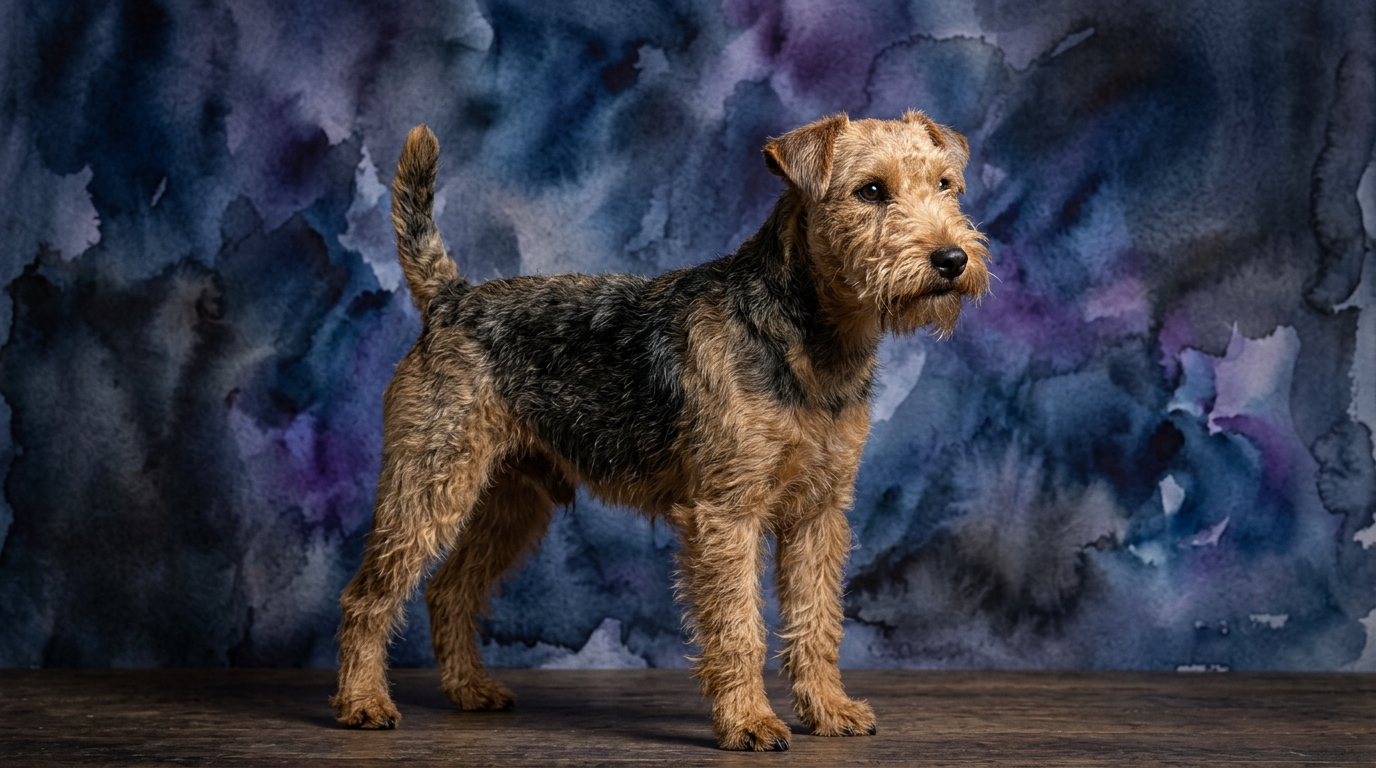

Side-by-Side IQ Profile: Lakeland Terrier vs. Irish Water Spaniel
The Pet IQ Lab framework provides a granular look at five key cognitive dimensions, helping us understand the intrinsic mental architecture of these two breeds. The Lakeland Terrier, a member of the Terrier group, presents a balanced yet tenacious cognitive profile across the board.
For the Lakeland Terrier, problem Solving registers at 3/5, indicating a competent ability to navigate challenges, often through independent thought rather than relying on handler cues. Their training Speed also stands at 3/5, suggesting they are capable of learning but might require consistent, engaging methods to maintain focus. Social Intelligence is rated 3/5, meaning they can form strong bonds with their primary family, yet might exhibit a reserved or discerning nature with strangers. Instinctive Drive, at 3/5, reflects their heritage as working terriers, with a moderate but present inclination towards tasks like digging or chasing. Finally, their memory score of 3/5 implies a solid capacity to retain commands and experiences over time, though perhaps not with the precision of some other breeds.
The Irish Water Spaniel, a Sporting group dog with a notable Coren rank of #24, demonstrates a more advanced cognitive toolkit in several areas. Their problem Solving score is an impressive 4/5, indicating a strong capacity for analytical thought and innovative solutions, particularly in task-oriented scenarios. Training Speed also earns a 4/5, underscoring their quick grasp of new concepts and commands, often displaying an eagerness to learn. Social Intelligence is 3/5, similar to the Lakeland, suggesting a good connection with their inner circle but potentially a watchful demeanor towards new acquaintances. Their Instinctive Drive is also 3/5, reflecting their heritage in retrieving and water work, though perhaps less intensely focused on prey drive than a terrier. Crucially, the Irish Water Spaniel's memory scores 4/5, pointing to an excellent ability to recall a vast repertoire of information, from complex sequences to specific locations.
Where the Lakeland Terrier Excels Cognitively
While the Irish Water Spaniel often scores higher in raw cognitive metrics, the Lakeland Terrier's unique blend of traits offers distinct advantages, particularly in situations demanding self-reliance and persistent focus. Their 3/5 in problem Solving, coupled with their terrier tenacity, means they are adept at figuring things out on their own terms. This isn't about speed, but about a determined, often creative approach to obstacles. For instance, a Lakeland might independently devise a way to access a hidden toy or navigate a complex scent trail, relying on their own wits rather than waiting for human direction.
The Lakeland's balanced 3/5 in instinctive Drive means they possess a robust, yet manageable, drive to explore and engage with their environment. This drive translates into an enduring enthusiasm for activities that tap into their natural instincts, such as earthdog trials or scent work, where their persistent nature becomes a significant asset. Their social intelligence, while not overtly effusive, allows for deep, loyal bonds within their family, fostering a profound, if sometimes subtly expressed, understanding of their human companions' routines and emotional states. This quiet perceptiveness can make them surprisingly attuned to the nuances of their home environment, often anticipating needs without grand displays.
Where the Irish Water Spaniel Shines Cognitively
The Irish Water Spaniel's cognitive strengths are particularly evident in their capacity for rapid learning, complex task execution, and superior recall. With a 4/5 in both problem Solving and training Speed, these dogs are quick studies, capable of grasping intricate commands and multi-step tasks with relative ease. This makes them exceptional candidates for advanced obedience, agility, or competitive retrieving, where their ability to process information and respond accurately is a distinct advantage. Their mental agility allows them to adapt quickly to new training scenarios and understand abstract concepts.
Their 4/5 memory score is a standout feature, enabling them to retain a vast array of commands, names, and routines over extended periods. This superior recall means an Irish Water Spaniel can remember a complex sequence of retrieves or a lengthy agility course with remarkable precision, even after a break. This memory, combined with their problem-solving prowess, makes them highly effective working partners, whether in field trials or service roles. While their instinctive Drive is a moderate 3/5, it is perfectly channeled for their traditional role: focused, persistent retrieving, often with an intuitive understanding of currents and terrain.
Training Dynamics: Which is Easier and Why?
When considering ease of training, the Irish Water Spaniel holds a clear advantage over the Lakeland Terrier, primarily due to its higher scores in training Speed (4/5) and problem Solving (4/5), coupled with its Coren ranking. Irish Water Spaniels typically exhibit a strong desire to please their handlers and possess a natural focus during training sessions. They quickly grasp new commands and concepts, often requiring fewer repetitions to achieve proficiency. Their superior memory also means that once a command is learned, it is retained effectively, leading to more consistent performance. This breed thrives on structured training and mental engagement, often finding joy in the process of learning and working alongside their human.
In contrast, the Lakeland Terrier's 3/5 scores in both training Speed and problem Solving suggest a different approach is necessary. Lakelands are intelligent, but their terrier independence can translate into a selective hearing or a tendency to prioritize their own instincts over handler commands. They might understand what you're asking but choose to evaluate if it aligns with their current interests. Training a Lakeland requires patience, creativity, and a strong understanding of positive reinforcement to keep them engaged. Their problem-solving often manifests as finding their own solutions rather than adhering strictly to taught methods, which can be challenging for novice trainers. While capable of learning a wide range of commands, their progress may be slower and require more consistent, varied reinforcement to prevent boredom and maintain cooperation.
Matching Breeds to Lifestyles: Active vs. Relaxed Owners
Understanding the cognitive and behavioral nuances of these breeds is crucial for matching them with the right owner lifestyle. For active owners, both breeds offer engaging companionship, but with different demands. An owner who enjoys extensive outdoor activities, especially those involving water or complex dog sports like agility, advanced obedience, or competitive retrieving, would find an exceptional partner in the Irish Water Spaniel. This breed thrives on having a 'job' and requires consistent physical exertion and mental stimulation to prevent boredom. Their quick minds and high energy are best channeled through regular, challenging activities that utilize their problem-solving and memory skills.
The Lakeland Terrier, while still requiring regular exercise and mental engagement, might suit an active owner whose definition of 'active' includes consistent walks, engaging puzzle toys, and perhaps earthdog trials or scent work rather than high-impact endurance sports. Their independent streak means they can be content with periods of self-directed play, but they still need outlets for their terrier instincts. They are less likely to be a couch potato and will demand interaction and mental challenges, but perhaps not with the relentless drive of a spaniel bred for retrieving.
For relaxed owners, neither breed is truly suited to a sedentary lifestyle without significant effort to meet their needs. However, if 'relaxed' implies an owner who enjoys consistent, moderate daily walks, engaging in interactive play, and providing a stimulating home environment, the Lakeland Terrier might be a slightly more manageable choice. Their independence means they might not constantly demand attention, but their intellectual and physical needs cannot be ignored. A relaxed owner considering an Irish Water Spaniel must be prepared to commit to significant daily exercise and mental challenges, as their higher cognitive demands and energy levels necessitate a more structured and active routine to prevent frustration or undesirable behaviors. They are not content with minimal engagement; their minds and bodies crave purpose and activity.
The Verdict
Choose the Lakeland Terrier if you appreciate a self-reliant companion with a tenacious spirit and are prepared for creative, patient training methods to channel their independent problem-solving.
Opt for the Irish Water Spaniel if you seek a highly trainable, quick-witted partner eager for complex tasks, water activities, and a structured, active lifestyle that fully engages their superior memory and problem-solving abilities.
🧠 Find Your Pet's IQ Score
Our Pet IQ Lab assessment covers 25+ tests across 5 cognitive dimensions — personalized to your breed.
Take the Full IQ Test →Frequently Asked Questions
Is the Lakeland Terrier difficult to train?
The Lakeland Terrier isn't 'difficult' but requires a specific approach due to their independent nature and terrier instincts. Their 3/5 training speed means consistent, engaging, and positive reinforcement-based methods are most effective to capture their attention and willingness to cooperate.
Do Irish Water Spaniels need a lot of exercise?
Yes, Irish Water Spaniels, with their sporting heritage and higher cognitive scores, require significant daily exercise and mental stimulation. Activities like swimming, retrieving, and dog sports are ideal to keep their bodies active and their intelligent minds engaged.
Which breed is better for a first-time dog owner?
For a first-time dog owner, the Irish Water Spaniel might be a more straightforward choice due to their higher training speed and eagerness to please, provided the owner is committed to meeting their substantial exercise and mental stimulation needs. The Lakeland Terrier's independence might prove more challenging for a novice seeking an easily compliant companion.