
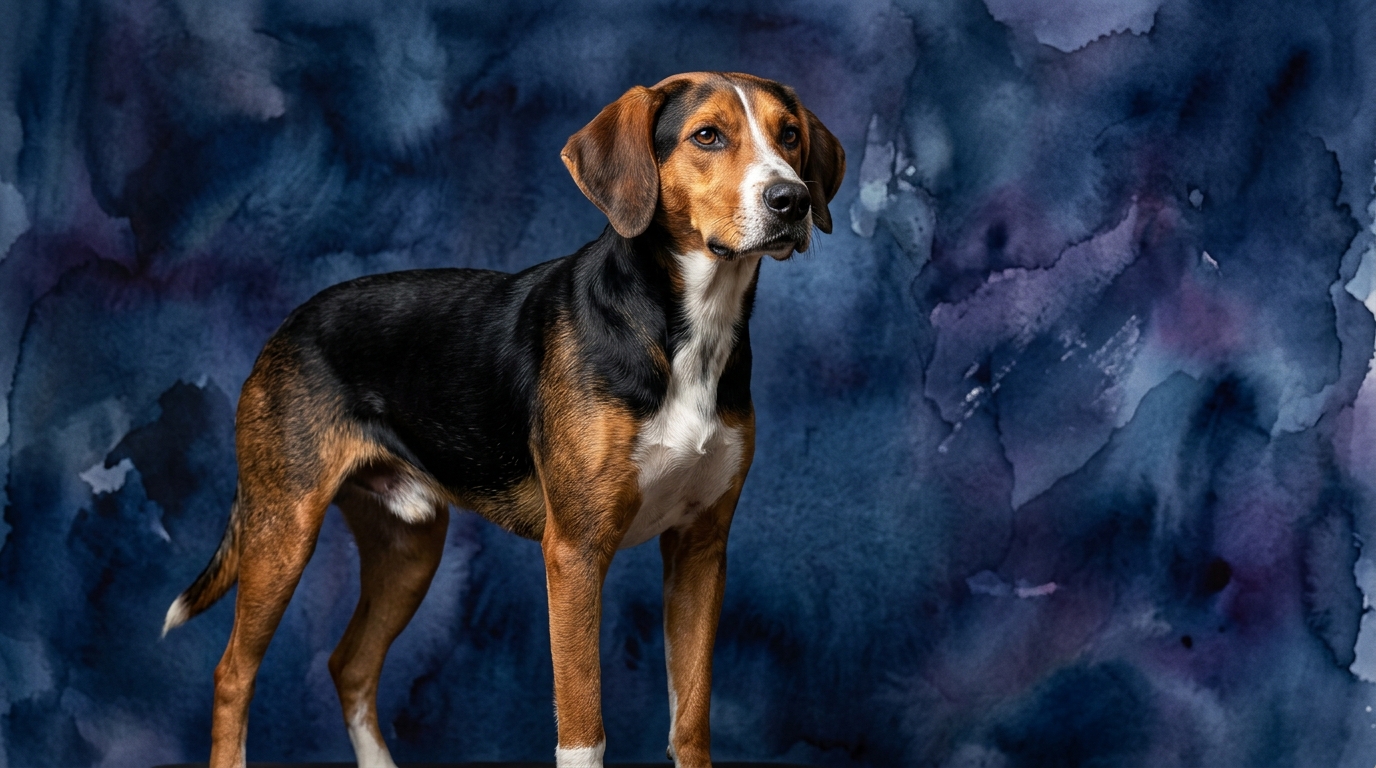
Side-by-Side IQ Profile: Leonberger vs. American Foxhound
The Cosmic Pet Pet IQ Lab assesses canine intelligence across five critical dimensions, providing a granular view of a breed's cognitive strengths. Both the Leonberger and the American Foxhound register a consistent 3/5 across all categories, suggesting a baseline of functional intelligence that, while not at the highest tier, is certainly capable and adaptable. However, the manifestation of these scores differs significantly due to their inherent breed purposes.
For Problem Solving (3/5), the Leonberger, a working breed, often exhibits this in understanding complex household routines, figuring out how to access desired objects, or discerning appropriate responses in novel domestic situations. Their solutions tend to be practical and often involve their physical presence or gentle manipulation. The American Foxhound, a hound breed, applies its 3/5 problem-solving primarily to tracking. This involves complex scent discrimination, navigating varied terrain, and making independent decisions during a long pursuit, often requiring sustained focus on a singular task.
Training Speed (3/5) for the Leonberger reflects a moderate pace of learning new commands, often driven by a desire to please their human companions and integrate into the family unit. While they absorb information, repetition and positive reinforcement are key to solidifying behaviors. The American Foxhound's 3/5 in training speed indicates they can learn, but their strong independent nature and powerful prey drive can often override immediate compliance. Their learning is often task-specific and may require more creative motivational strategies to overcome their innate instincts.
Social Intelligence (3/5) in a Leonberger typically manifests as a keen awareness of family dynamics, a gentle approach with children, and an ability to read human moods and intentions, often acting as a sensitive companion or guardian. They thrive on close human interaction and respond well to social cues within their immediate family. For the American Foxhound, social intelligence at 3/5 is more aligned with pack dynamics. They understand hierarchy, communicate effectively with other dogs through vocalizations and body language, and cooperate during a hunt, demonstrating a strong social drive within a canine group rather than solely focusing on human-centric interactions.
Instinctive Drive (3/5) for the Leonberger is rooted in its working heritage, encompassing a protective instinct towards its family and property, a desire to assist, and sometimes a strong affinity for water rescue. Their drives are often channeled into helpful, companionable behaviors. The American Foxhound's 3/5 instinctive drive is overwhelmingly dominated by its powerful scenting ability and prey drive. This instinct compels them to follow a trail relentlessly, often tuning out other stimuli, which is paramount for their hunting purpose. This drive is a core component of their identity and behavior.
Memory (3/5) in the Leonberger means they retain commands, routines, and experiences over time, contributing to their reliability as a family member. They remember positive and negative interactions, influencing future behavior. The American Foxhound’s 3/5 memory is crucial for recalling complex scent trails, remembering hunting routes, and identifying specific game. Their memory serves their primary function, allowing them to build a mental map of their environment and past experiences to aid in future pursuits.
Where the Leonberger Wins Cognitively
Despite identical scores, the Leonberger's cognitive strengths often shine brightest in a domestic, family-oriented environment. Their 3/5 in problem-solving often translates into a nuanced understanding of household rules and an ability to adapt to varying family schedules or new situations with relative ease. They are adept at discerning when a situation requires their protective presence versus when a gentle nudge is sufficient, showcasing a practical application of their social intelligence within a human context. Their memory allows them to quickly learn and adhere to complex household routines, making them predictable and reliable companions. This breed's working background fosters a cognitive inclination towards collaboration, making them more receptive to human guidance in solving everyday challenges, such as fetching specific items or learning specific household chores. Their cognitive profile is geared towards being an integral, thoughtful member of a human family.
Where the American Foxhound Wins Cognitively
The American Foxhound's cognitive prowess, while equally rated at 3/5, is fundamentally geared towards its specialized hunting role. Their exceptional problem-solving ability is evident in their capacity to meticulously follow intricate scent trails, navigating diverse terrains and overcoming obstacles with unwavering focus. This isn't about solving human-centric puzzles, but rather environmental ones, requiring sustained concentration and independent decision-making in complex natural settings. Their memory is particularly acute for recalling scent patterns and geographical layouts, crucial for effective tracking. The Foxhound's social intelligence, while not as overtly human-focused as the Leonberger's, is highly refined for pack dynamics, enabling seamless cooperation and communication with other dogs during a hunt. Their instinctive drive, honed over generations, allows them to process and prioritize olfactory information with remarkable speed and accuracy, making them unparalleled in their specific field of expertise.
Which is Easier to Train and Why
When considering trainability, the Leonberger generally presents an easier path for the average owner. Their 3/5 training speed is coupled with a deep-seated desire to please their human companions, a trait common in many working breeds. This intrinsic motivation to collaborate often means they are more attentive to commands and less prone to independent excursions. While they still require consistent, positive reinforcement, their inclination to form strong bonds and work alongside their people makes them more receptive to structured training sessions. Their social intelligence also helps them to quickly understand and respond to human expectations and emotional cues, which aids significantly in the learning process.
The American Foxhound, despite an identical 3/5 training speed, offers a different challenge. Their formidable instinctive drive, particularly their scent drive, often overrides their desire for human approval. Bred for independent hunting, they are programmed to follow a scent trail for miles, often to the exclusion of all else. This means that while they are capable of learning, their attention can be difficult to capture and maintain, especially outdoors. Training a Foxhound requires immense patience, creativity, and an understanding of their deep-seated instincts, often necessitating specialized techniques to channel their drive rather than suppress it. Their independence means they might learn a command, but choose to execute it only when it aligns with their immediate interest, making them a more demanding student for many.
Which Suits Active Owners vs. Relaxed Owners
The choice between a Leonberger and an American Foxhound largely depends on an owner's lifestyle and their capacity to meet specific cognitive and physical needs. A Leonberger, with its balanced cognitive profile and inclination towards companionship, suits owners who are moderately active but also appreciate a calm, gentle presence indoors. They require regular exercise, mental stimulation, and consistent social interaction, but their activities can be varied – from walks and hikes to therapy work or simply being a gentle family guardian. They thrive in homes where they are central to family life and can engage in activities that reinforce their bond with their humans. Their problem-solving and social intelligence make them adaptable to diverse family routines, fitting well with owners who enjoy a thoughtful, engaged canine partner.
Conversely, the American Foxhound is best suited for highly active owners who can provide ample outlets for their profound instinctive drive and stamina. Their cognitive strengths are tied to endurance, scent work, and independent action, meaning they require extensive daily exercise, preferably off-leash in secure areas where they can run and explore scents. Owners who enjoy long-distance running, hiking, or field sports will find a compatible partner. Relaxed owners might struggle with a Foxhound's boundless energy and unwavering drive to follow a scent, which can lead to frustration or destructive behaviors if not adequately channeled. They are ideal for individuals or families who understand and embrace the unique demands of a hound breed, providing opportunities for their innate cognitive abilities to flourish in an environment that respects their independent spirit and powerful instincts.
The Verdict
Choose a Leonberger if you seek a thoughtful, adaptable companion who integrates deeply into family life, offering gentle guardianship and a cooperative spirit in diverse domestic settings.
Opt for an American Foxhound if you are an active individual or family prepared to channel their intense prey drive and independent spirit into extensive outdoor activities and specialized training.
🧠 Find Your Pet's IQ Score
Our Pet IQ Lab assessment covers 25+ tests across 5 cognitive dimensions — personalized to your breed.
Take the Full IQ Test →Frequently Asked Questions
Do Leonbergers make good family dogs considering their social intelligence?
Yes, Leonbergers, with their 3/5 social intelligence, are often excellent family dogs. They typically demonstrate a keen awareness of family dynamics and are known for their gentle demeanor with children, making them sensitive and adaptable companions within a home environment.
How does the American Foxhound's instinctive drive affect its daily life?
The American Foxhound's strong 3/5 instinctive drive, primarily focused on scent, means they are perpetually driven to follow interesting odors. This can lead to them being easily distracted during walks and requiring secure, fenced areas to prevent them from wandering off on a scent trail.
Can both breeds excel in obedience training despite their similar training speed scores?
While both have a 3/5 training speed, their inherent motivations differ. Leonbergers often excel with consistent, positive reinforcement due to their desire to please. American Foxhounds can learn, but their independent nature and powerful prey drive mean owners must be exceptionally patient and creative, using high-value rewards to maintain focus during training.