Side-by-Side IQ Profile: Maltese vs. Bluetick Coonhound
The Cosmic Pet Pet IQ Lab evaluates canine intelligence across five key dimensions: Problem Solving, Training Speed, Social Intelligence, Instinctive Drive, and Memory. This framework allows us to delve beyond generalized notions, examining specific cognitive aptitudes shaped by centuries of purpose.
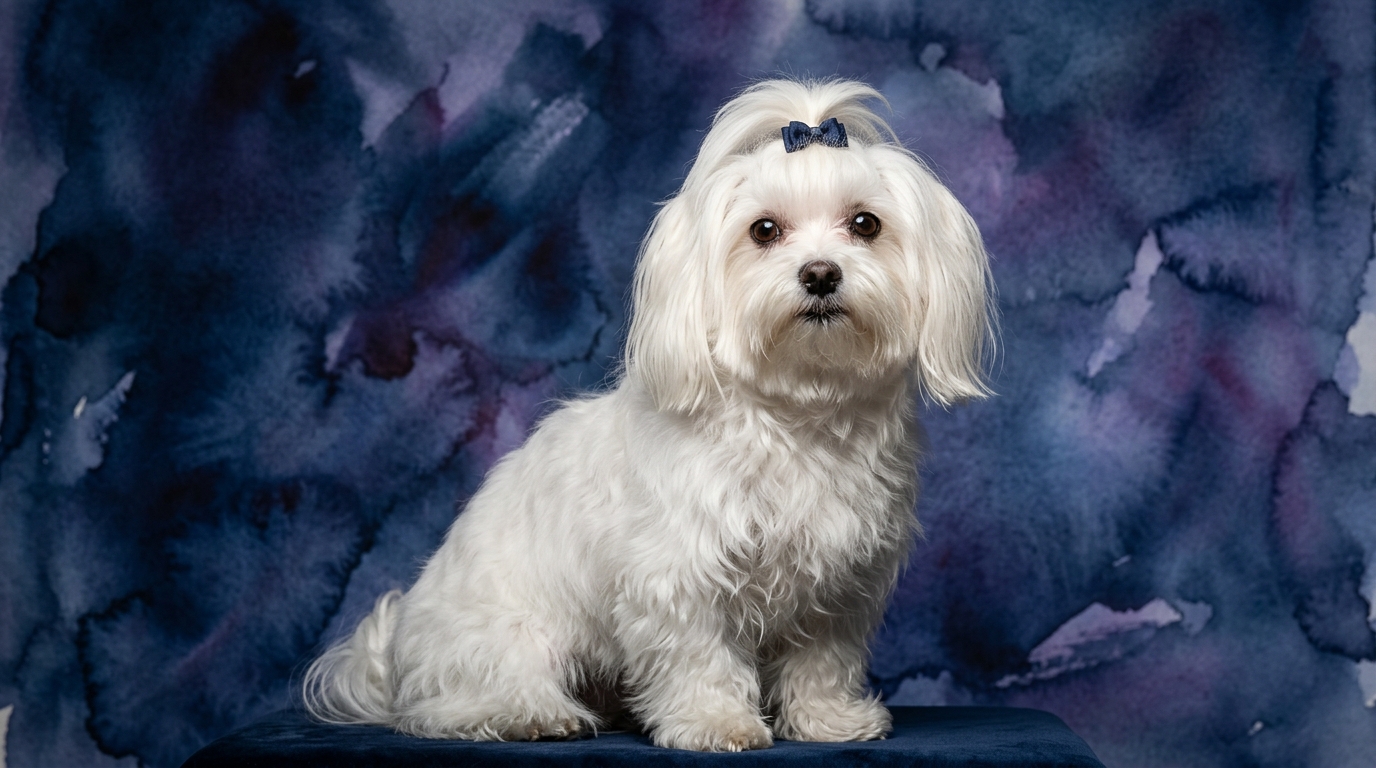
The Maltese, a cherished Toy breed, holds a Coren rank of #59, indicating a respectable capacity for learning within that obedience-focused framework. Our lab scores them 3/5 in Problem Solving, suggesting they navigate moderate cognitive challenges, often related to their domestic environment or human interaction. Their Training Speed is also 3/5, meaning they grasp new commands and routines at a moderate pace with consistent instruction. The Maltese truly excels in Social Intelligence, earning a perfect 5/5, reflecting an exceptional ability to interpret human cues, understand social dynamics, and form deep, responsive bonds. Their Instinctive Drive is a modest 2/5, indicating a lower predisposition for strong prey drive or independent working behaviors. Finally, their Memory score of 3/5 suggests they retain learned information and experiences reasonably well.
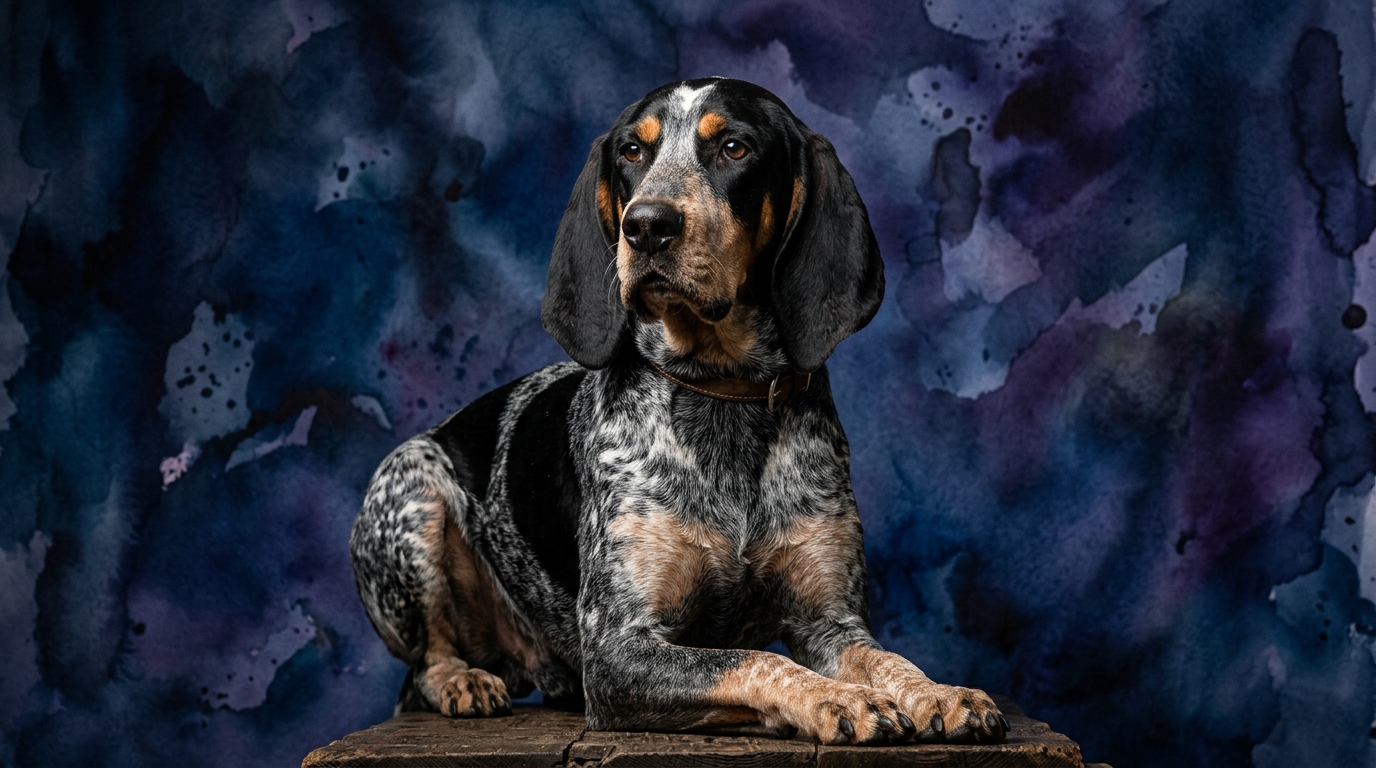
In contrast, the Bluetick Coonhound, a dedicated Hound breed, is not represented in the Coren ranking system, highlighting their specialized intelligence beyond obedience. The Bluetick scores a consistent 3/5 across Problem Solving, Training Speed, Social Intelligence, and Memory. Their 3/5 Problem Solving applies to environmental puzzles, particularly those involving scent or navigation. A 3/5 Training Speed indicates moderate learning, though motivation may differ from the Maltese. Their 3/5 Social Intelligence suggests they form bonds and understand cues, but with more independence. Memory at 3/5 allows recall of complex scent trails and learned behaviors effectively. Their Instinctive Drive, however, is a notable 3/5, reflecting a powerful, innate drive for tracking and hunting, a defining characteristic of the breed.
Where the Maltese Wins Cognitively
The Maltese's cognitive strengths are deeply rooted in their history as companion animals. Their unparalleled Social Intelligence, rated at 5/5, is a significant win. This isn't merely friendliness; it's a sophisticated ability to read subtle human body language, vocal inflections, and emotional states, allowing them to adapt behavior for harmonious cohabitation. They excel at understanding family dynamics, often becoming adept at responding to household moods. This acute social awareness makes them exceptionally responsive to praise and gentle correction, as they are intrinsically motivated to maintain positive relationships with their people.
Furthermore, the Maltese's lower Instinctive Drive (2/5) is a cognitive advantage for a pet in a modern home. Unlike breeds with strong prey drives, the Maltese is less prone to constant distraction by external stimuli like squirrels. This reduced internal distraction allows for greater focus on human-centric activities and training, making them naturally more attuned to owners' desires and less likely to pursue compelling scent trails into trouble. Their moderate problem-solving often manifests in clever ways to gain attention or comfort within their domestic sphere.
Where the Bluetick Coonhound Wins Cognitively
The Bluetick Coonhound's cognitive prowess is intrinsically linked to their ancestral role as tenacious hunters. Their Instinctive Drive, at 3/5, is a defining cognitive strength, manifesting as an exceptional drive to follow scents, track, and vocalize. While this presents training challenges in a pet context, it signifies a highly specialized intelligence: processing vast olfactory information, differentiating subtle nuances, and maintaining focus on a distant goal. Their Problem Solving, also 3/5, is often applied to complex spatial reasoning and navigation, interpreting scent maps to locate quarry, a skill far removed from domestic puzzles.
Their Memory, also 3/5, plays a crucial role in their working capabilities, allowing them to recall intricate scent patterns and terrain features over long distances and extended periods. This isn't just remembering a treat jar; it's navigational memory, reconstructing mental maps based on sensory input. While their Social Intelligence is a moderate 3/5, it's sufficient for working cooperatively with a handler. Their primary focus during a 'hunt' or scent game is the task at hand, driven by that powerful instinctive pull, showcasing a dedicated and task-oriented cognitive profile.
Which is Easier to Train and Why
Both breeds share a Training Speed score of 3/5, suggesting a similar moderate pace for grasping new concepts. However, the overall training experience differs significantly due to other cognitive attributes. The Maltese, with its 5/5 Social Intelligence and 2/5 Instinctive Drive, is generally more straightforward for household manners and companion-focused tasks. Their strong desire to please and deep connection with owners means they are highly motivated by positive reinforcement, praise, and interaction. Their lower instinctive drive minimizes distractions, allowing them to maintain focus on their human instructor more readily. They quickly learn behaviors that earn affection and comfort, making them responsive to cues in a typical home setting.
The Bluetick Coonhound, despite the same 3/5 Training Speed, presents a different challenge. Their 3/5 Instinctive Drive, specifically their powerful scenting ability, means their nose often dictates attention. A compelling scent can override learned commands, requiring a trainer to work against a fundamental, ingrained drive. Their 3/5 Social Intelligence means they form bonds but might be less intrinsically motivated solely by human approval. Training a Bluetick often demands a consistent, patient approach that leverages their drive, perhaps through scent work games, rather than attempting to suppress it. Their independence, common in hounds, means they often require more compelling reasons to comply, focusing on task satisfaction rather than just human happiness.
Which Suits Active Owners vs. Relaxed Owners
The lifestyle suitability of these breeds sharply diverges, reflecting their cognitive profiles and inherent drives. The Maltese, with its lower Instinctive Drive (2/5) and high Social Intelligence (5/5), is an ideal fit for relaxed owners. They thrive on companionship and indoor activities, content with moderate daily exercise like short walks or indoor play. Their cognitive engagement primarily revolves around social interaction, cuddle sessions, and mastering gentle tricks that strengthen bonds. Mental stimulation is often satisfied by being an integral part of family life, observing and participating in quiet domestic routines. Owners desiring a calm home and a highly responsive, affectionate companion will find the Maltese a perfect match.
Conversely, the Bluetick Coonhound, with its pronounced Instinctive Drive (3/5) and historical purpose, is best suited for active owners. These dogs possess significant stamina and a deep-seated need to use their nose and body. They require substantial daily exercise, including long walks, runs, or structured scent work that engages their formidable olfactory intelligence and problem-solving skills. An owner who can provide outlets for their natural tracking abilities, whether through hiking, dog sports, or dedicated scent games, will see the Bluetick flourish. Their independence and energy mean they are not content to be couch potatoes; they need a job or fulfilling activity to prevent boredom. Active, experienced owners appreciating a dog with a strong working ethic will find a loyal, capable partner.
The Verdict
Choose a Maltese if you seek a highly socially intelligent companion thriving on deep human connection, content with a relaxed indoor lifestyle, and requiring less intense physical activity.
Opt for a Bluetick Coonhound if you are an active owner prepared to provide substantial physical exercise and mental stimulation, especially through scent work, for a focused and independent working partner.
🧠 Find Your Pet's IQ Score
Our Pet IQ Lab assessment covers 25+ tests across 5 cognitive dimensions — personalized to your breed.
Take the Full IQ Test →Frequently Asked Questions
How does the Maltese's high social intelligence impact its behavior?
The Maltese's 5/5 Social Intelligence makes them exceptionally attuned to human emotions and cues. They often seek to please, respond well to positive reinforcement, and thrive on being an integrated, affectionate family member, frequently adapting their behavior to household moods.
What does the Bluetick Coonhound's Instinctive Drive mean for its owner?
The Bluetick's 3/5 Instinctive Drive signifies a powerful, innate urge to track and follow scents. This means owners must provide ample opportunities for their dog to engage in scent work or strenuous exercise to prevent boredom and potential destructive behaviors, as their nose will often lead them.
Given their similar training speed, what makes one breed easier to train than the other?
While both have a 3/5 Training Speed, the Maltese's higher social intelligence and lower instinctive drive make them generally easier for companion tasks, as they are highly motivated by human approval and less distracted. The Bluetick's strong scent drive and independence require more consistent, task-oriented training that leverages their natural instincts.