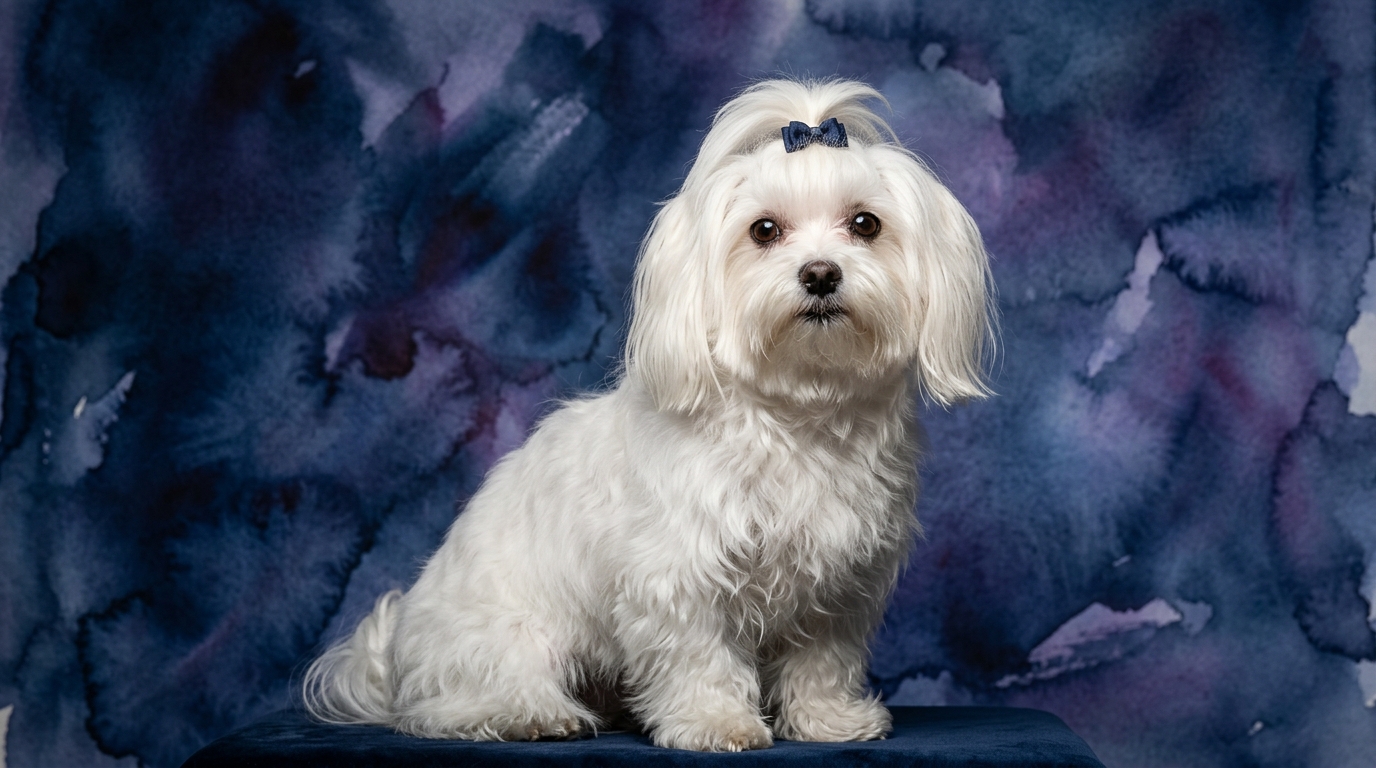

Side-by-Side Cognitive Profiles
The Cosmic Pet Pet IQ Lab employs five key dimensions to evaluate canine intelligence, offering a nuanced perspective beyond simple rankings. For the Maltese, a Toy breed ranked #59 by Coren, and the Canaan Dog, a Herding breed at #43, these dimensions illuminate their distinct cognitive strengths and predispositions.
The Maltese exhibits a Problem Solving score of 3/5, adept at navigating their immediate environment, often solving problems related to gaining attention or accessing comforts within a domestic setting, frequently through social manipulation. Their Training Speed is also 3/5, indicating a moderate pace of learning commands, particularly when motivated by praise and treats. Where the Maltese truly excels is in Social Intelligence, scoring a perfect 5/5. This reflects an exceptional ability to read human emotions, intentions, and subtle social cues, fostering deep bonds and clear communication of their needs. Their Instinctive Drive is low at 2/5, meaning their mental energy is rarely diverted by strong urges to hunt or guard. Finally, their Memory is 3/5, allowing them to retain learned routines, commands, and familiar faces consistently.
The Canaan Dog, conversely, shares a Problem Solving score of 3/5, but their approach is often more self-directed and utilitarian, related to navigating varied terrain, identifying threats, or finding resources. Their Training Speed also stands at 3/5, but this is tempered by an independent streak that requires consistent, logical, and engaging methods. Their Social Intelligence is 3/5, allowing for functional understanding of pack dynamics and human leadership, but their interactions are typically more reserved, focusing on mutual respect rather than constant appeasement. The Canaan Dog's Instinctive Drive is 3/5, reflecting a notable territoriality, guarding instinct, and a strong sense of self-preservation rooted in their pariah dog heritage. Their Memory is a strong 4/5, demonstrating an impressive capacity to recall places, routines, and past experiences, particularly those related to survival or perceived threats.
Where the Maltese Wins Cognitively
The Maltese’s most pronounced cognitive advantage lies in its unparalleled social intelligence, rated at a perfect 5/5. This isn't merely about being affectionate; it's a sophisticated ability to interpret subtle human emotional states, vocal inflections, and body language. A Maltese can often anticipate an owner's mood or needs, offering comfort or soliciting attention with remarkable precision. This acute social awareness allows them to integrate seamlessly into human families, becoming intuitive companions who seem to understand their people on a profound level. Their relatively low instinctive drive (2/5) further amplifies this, as their mental faculties are primarily directed towards observing and engaging with their human environment, rather than being preoccupied with external stimuli or independent tasks. This specialized cognitive focus makes them masterful at forming deep, empathic connections, often appearing to 'read minds' due to their finely tuned social perception. Their problem-solving (3/5), while moderate, frequently manifests within this social sphere, such as figuring out the precise moment to nudge a hand for a pet or how to strategically position themselves for maximum comfort and interaction.
Where the Canaan Dog Wins Cognitively
The Canaan Dog's cognitive strengths are deeply rooted in its evolutionary history as a resilient, independent survivor. Their superior Memory, rated at 4/5, is a significant advantage. This robust capacity allows them to retain detailed information about environments, past events, and learned lessons, which is crucial for navigating complex terrains and recalling potential dangers or resources. This strong memory contributes to their characteristic wariness with strangers and their ability to adapt to new situations based on prior experiences. Additionally, their Instinctive Drive (3/5) is a cognitive asset, manifesting as keen environmental awareness, a strong territorial instinct, and a self-preservation mindset. While their problem-solving (3/5) matches the Maltese numerically, it's often applied to practical, independent challenges in the physical world, such as assessing a new situation with caution or finding their way back to a familiar spot. Their cognitive profile leans towards self-reliance, situational awareness, and a considered approach to their surroundings, making them adept at sensing changes and reacting with deliberate intelligence rather than impulsive action.
Which is Easier to Train and Why
Both Maltese and Canaan Dogs share a 3/5 Training Speed, but the perceived ease of training differs substantially due to their underlying cognitive architecture and motivations. The Maltese, with its exceptional social intelligence (5/5) and lower instinctive drive (2/5), is generally considered easier to train in a domestic setting. Their profound desire to please and bond with their human companions serves as a powerful motivator. They are highly responsive to praise, affection, and positive reinforcement from their owner, eager to engage in cooperative learning. Their mental energy is channeled into understanding and responding to human cues, making them receptive to consistent, gentle guidance, even if they sometimes use their social acumen to strategically 'train' their humans for treats. Their primary drive is connection, which smooths the training journey for many owners.
The Canaan Dog, by contrast, brings a more independent and discerning cognitive profile to training. While they also learn at a moderate pace, their 3/5 training speed is coupled with a strong instinctive drive (3/5) and robust memory (4/5) that makes them constantly assess their environment and the perceived value of commands. They are not inherently driven to please in the same way a Maltese is; instead, they respond best to training that is logical, fair, and consistent, often questioning commands if they don't understand the purpose or if the handler isn't a clear, respected leader. Training a Canaan Dog requires patience, respect, and a deep understanding of their independent mindset, focusing on building trust and demonstrating consistent leadership rather than relying solely on effusive praise. Therefore, while both breeds are capable of learning, the Maltese's innate cooperativeness often makes the training experience feel more straightforward and less challenging for the average owner.
Suitability for Active vs. Relaxed Owners
The choice between a Maltese and a Canaan Dog is largely dictated by an owner's lifestyle and their preferred level of physical and cognitive engagement with a canine companion. The Maltese, with its profound social intelligence (5/5) and lower instinctive drive (2/5), is an ideal match for relaxed owners seeking a devoted, low-key presence. Their exercise requirements are modest, easily met with indoor play and short, leisurely walks. Their primary cognitive need is social interaction and companionship, thriving in environments where they are central to family life and receive ample attention and emotional connection. For individuals who appreciate a dog deeply attuned to their moods and content with a less physically demanding routine, the Maltese offers an unparalleled bond and a serene presence.
Conversely, the Canaan Dog is better suited for active owners who value an independent, resilient, and watchful companion. Their instinctive drive (3/5) and strong memory (4/5) mean they require significant physical exercise coupled with consistent mental stimulation and a sense of purpose. Long walks, hikes, scent work, or participation in dog sports like agility or herding trials are essential to satisfy their cognitive and physical needs. They are not content to be mere lap dogs; they need a 'job' or a perceived role within the family, often adopting a watchful, protective stance. Owners who enjoy outdoor activities, have experience with independent breeds, and are committed to consistent training and boundary setting will find the Canaan Dog a rewarding, albeit more demanding, partner who thrives on engagement and purposeful activity.
The Verdict
Choose a Maltese if you seek an emotionally astute, low-maintenance companion thriving on deep social bonds and a relaxed home environment.
Opt for a Canaan Dog if you desire an independent, watchful partner for an active lifestyle, valuing purpose and mental engagement.
🧠 Find Your Pet's IQ Score
Our Pet IQ Lab assessment covers 25+ tests across 5 cognitive dimensions — personalized to your breed.
Take the Full IQ Test →Frequently Asked Questions
Is a Maltese difficult to train due to its size?
No, despite their small stature, Maltese are quite capable of learning, largely due to their high social intelligence and desire to please their owners. Consistent, positive reinforcement training works well with them.
Do Canaan Dogs make good family pets despite their independence?
Yes, Canaan Dogs can be excellent family pets, forming strong bonds with their immediate family. However, their independent nature and wariness of strangers mean they require early socialization and consistent leadership.
Which breed is more prone to separation anxiety?
The Maltese, with its profound social intelligence and strong attachment to humans, can be more prone to separation anxiety if not properly conditioned. Canaan Dogs, being more independent, typically handle solitude better, provided their needs for exercise and mental stimulation are met.