
Side-by-Side IQ Profile: Maltese vs. Dogo Argentino
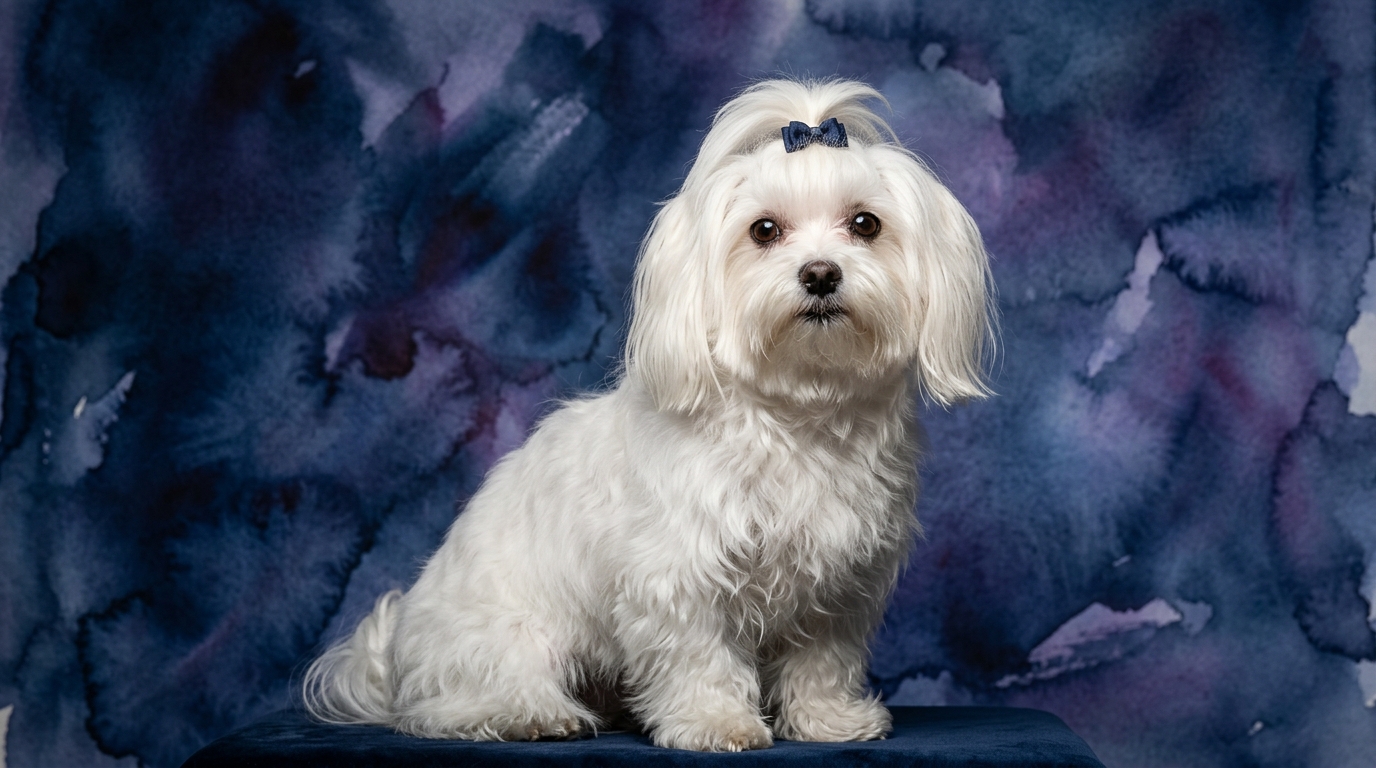
The Cosmic Pet Pet IQ Lab employs a multi-dimensional framework to assess canine cognition, moving beyond simplistic notions of 'smartness.' For the diminutive Maltese, a Toy Group breed with a Coren ranking of #59, we observe a balanced cognitive profile. Their problem-solving capacity registers at a moderate 3 out of 5, indicating an ability to navigate straightforward challenges. Training speed also sits at a 3 out of 5, suggesting they grasp new commands steadily. Where the Maltese truly shines is in social intelligence, scoring an impressive 5 out of 5, reflecting a profound capacity for understanding human cues and forming strong bonds. Their instinctive drive is lower at 2 out of 5, meaning less intrinsic motivation for primal tasks. Memory for the Maltese is a solid 3 out of 5, allowing effective retention of learned behaviors.
In stark contrast, the powerful Dogo Argentino, a Working Group breed not included in Coren's traditional ranking, presents a different cognitive landscape. Their problem-solving skills, like the Maltese, are rated at 3 out of 5, suggesting a similar ability to tackle moderate challenges. Training speed also mirrors the Maltese at 3 out of 5, indicating a comparable rate of learning. The primary divergence appears in social intelligence, where the Dogo Argentino scores a 3 out of 5, suggesting a more independent nature compared to the Maltese's exceptional social acumen. Their instinctive drive, at 3 out of 5, is notably higher than the Maltese, reflecting their heritage as a guardian and hunting breed. Memory for the Dogo Argentino aligns with the Maltese at 3 out of 5, demonstrating reliable recall for established patterns.
Where the Maltese Wins Cognitively
The Maltese undeniably holds an advantage in social intelligence, scoring a perfect 5 out of 5. This signifies an exceptional ability to interpret human emotions, body language, and vocal inflections. This isn't merely about affection; it's a deep-seated capacity for nuanced social engagement. A Maltese can often anticipate an owner's mood, offering comfort or seeking play based on subtle cues. This acute social awareness makes them highly attuned companions, thriving when intimately involved in family activities. Their predisposition to form robust, reciprocal bonds is a direct result of this cognitive strength, making them intuitive partners in daily life and highly responsive to positive reinforcement.
Where the Dogo Argentino Wins Cognitively
The Dogo Argentino's cognitive strengths lean into their working heritage, particularly evident in their higher instinctive drive, rated at 3 out of 5 compared to the Maltese's 2 out of 5. This elevated drive translates into a greater inherent motivation for purposeful activity, whether tracking or guarding. Their cognitive processing is geared towards focus and perseverance in the face of a goal, making them less likely to be deterred by distractions once engaged. This breed possesses a robust mental fortitude, enabling them to maintain concentration and execute complex actions requiring sustained effort. This cognitive resilience allows them to excel in roles demanding dedication, adeptly applying their abilities to real-world challenges with unwavering resolve.
Which is Easier to Train, and Why?
Assessing 'easier' to train requires looking beyond identical 3/5 training speed scores. The Maltese, with its superior 5/5 social intelligence, often proves easier for companion-based behaviors. Their innate desire to please and acute sensitivity to human feedback make them highly motivated by praise and close interaction. A Maltese thrives on positive reinforcement, readily repeating behaviors that elicit human approval. Their lower instinctive drive also means fewer distractions from primal urges, allowing focused attention on human-directed tasks in domestic settings, making indoor training particularly smooth.
The Dogo Argentino, despite similar training speed, presents a different dynamic. Their 3/5 social intelligence isn't as acutely attuned to subtle human emotional shifts. Instead, their higher 3/5 instinctive drive means they respond well to training that taps into their natural working tendencies. Training a Dogo requires a more structured, consistent approach, utilizing clear commands. While eager to learn, their motivation may stem more from task completion or engaging their energy than solely human approval. Their stronger drive can also mean more distraction by environmental stimuli, requiring a trainer to manage focus. Therefore, the Maltese's social attunement often makes them more intuitively responsive to typical companion training, while the Dogo Argentino benefits from a trainer who channels their drive into productive learning.
Which Suits Active Owners vs. Relaxed Owners?
The choice between breeds depends significantly on an owner's lifestyle and capacity for physical and cognitive stimulation. For the relaxed owner, or one with a less physically demanding routine, the Maltese is often a more fitting companion. Their lower instinctive drive (2/5) and smaller stature mean modest exercise requirements. Short walks, indoor play, and plenty of human interaction suffice. Cognitively, they are stimulated by social engagement and learning new tricks. Their high social intelligence means mental well-being is deeply intertwined with human companionship, making them ideal for owners who enjoy a close, interactive bond without needing high-intensity outdoor adventures. They thrive on being a constant presence, content with a lap and gentle play.
Conversely, the Dogo Argentino is unequivocally suited for active owners prepared for significant commitment to physical exertion and consistent mental engagement. Their working dog heritage and higher instinctive drive (3/5) demand substantial daily exercise. This breed needs more than simple walks; they require outlets for their energy and mental focus, such as long runs, hikes, or dog sports. An owner who understands how to channel their problem-solving ability (3/5) and drive into constructive activities will find a Dogo Argentino a highly engaged partner. Without sufficient stimulation, their cognitive capacity can manifest as undesirable behaviors. A Dogo Argentino flourishes with an owner dedicated to providing consistent, stimulating outlets for their inherent capabilities.
The Verdict
Choose a Maltese if you seek a highly socially intelligent, deeply attuned companion for a relaxed household, valuing close emotional bonds and moderate activity.
Opt for a Dogo Argentino if you lead an active lifestyle, are experienced with working breeds, and can commit to channeling their strong instinctive drive and robust cognitive focus.
🧠 Find Your Pet's IQ Score
Our Pet IQ Lab assessment covers 25+ tests across 5 cognitive dimensions — personalized to your breed.
Take the Full IQ Test →Frequently Asked Questions
Does the Maltese's Coren rank of #59 indicate lower intelligence than a Dogo Argentino?
Coren's ranking primarily assesses obedience and working intelligence, which heavily favors breeds developed for complex tasks. While the Maltese is #59, the Dogo Argentino is not Coren-ranked, making a direct comparison difficult. Our Pet IQ Lab scores provide a more nuanced, multi-dimensional view of each breed's specific cognitive strengths, independent of a single obedience metric.
Given their equal problem-solving scores, are both breeds equally capable of learning complex tricks?
While both breeds score 3/5 in problem-solving, their motivation and context for learning complex tricks may differ. The Maltese, with higher social intelligence, might be more motivated by human interaction, while the Dogo Argentino's higher instinctive drive might make them excel at tasks aligning with their working nature. Success depends on the specific trick and training approach.
How does the Dogo Argentino's higher instinctive drive impact their behavior in a family setting compared to a Maltese?
The Dogo Argentino's 3/5 instinctive drive means they have a stronger innate inclination for activities like guarding or tracking, requiring consistent training and appropriate outlets to manage this energy constructively within a family. The Maltese's 2/5 instinctive drive means they are generally less driven by these primal urges, often resulting in a more placid and less demanding presence in a home, making them content with primarily social interaction.