
A Side-by-Side Look at Cognitive Profiles
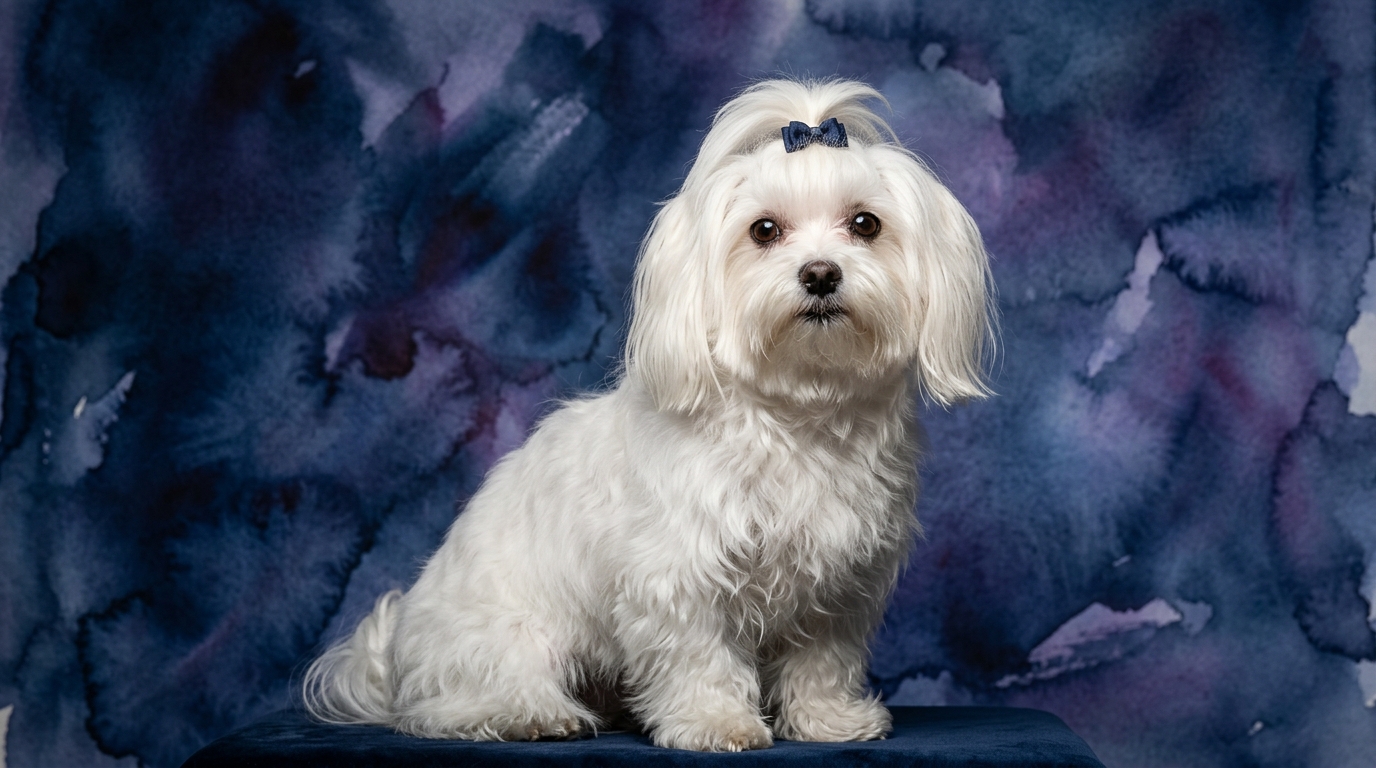
The Maltese, a breed with a Coren ranking of #59, presents a compelling cognitive profile marked by specific strengths and moderate aptitudes. Their Problem Solving score of 3/5 suggests a capacity for navigating moderately complex mental tasks, such as figuring out simple puzzle toys or adapting to new household routines, without exhibiting exceptional ingenuity or persistent independent strategizing. Training Speed, also at 3/5, indicates they can grasp new commands at an average pace, requiring consistent, positive reinforcement to solidify learning rather than rapid, one-off lessons. Where the Maltese truly shines is in Social Intelligence, scoring a remarkable 5/5; this reflects an acute sensitivity to human emotions, a profound desire for interaction, and an exceptional ability to form deep, reciprocal bonds, often anticipating their owner's moods and needs. Their Instinctive Drive, rated at a low 2/5, means they possess minimal inherent urges for activities like hunting, herding, or guarding, making them less prone to behaviors driven by primal instincts. Finally, their Memory at 3/5 suggests they retain learned information and experiences at an average rate, remembering commands and routines reliably over time, though perhaps not with photographic recall for every past event.
In contrast, the English Toy Spaniel, while not featured in Stanley Coren's traditional ranking, offers a distinct, yet equally engaging, cognitive blueprint. Their Problem Solving ability matches the Maltese at 3/5, indicating a similar aptitude for handling moderate mental challenges, perhaps enjoying exploration within familiar environments rather than complex problem-solving. Training Speed also mirrors the Maltese at 3/5, implying they learn at a steady, consistent pace, responding well to patient, positive reinforcement and clear instruction. A key difference emerges in Social Intelligence, where the English Toy Spaniel scores 3/5; this suggests they are affectionate and enjoy companionship, but may not exhibit the same profound, almost intuitive attunement to human emotional states or the same intense drive for constant social engagement as the Maltese. Their Instinctive Drive, at 3/5, is slightly higher than the Maltese, hinting at a moderate inclination towards behaviors like chasing small objects or showing a mild territorial awareness, though still far from a high-drive working breed. Their Memory, like the Maltese, is rated at 3/5, meaning they retain information and routines effectively, making them reliable in remembering learned behaviors and daily schedules.
Where the Maltese Excels Cognitively
The most pronounced cognitive advantage for the Maltese lies unequivocally in their exceptional Social Intelligence, scoring a perfect 5/5 compared to the English Toy Spaniel's 3/5. This isn't merely about being affectionate; it signifies a deep, almost empathetic understanding of human social cues and emotional states. A Maltese will often seem to anticipate an owner's mood, offering comfort when sensing sadness or engaging playfully when detecting joy, demonstrating a profound capacity for emotional reciprocity. They excel at reading micro-expressions and subtle body language, quickly learning to adapt their behavior to elicit desired responses from their human companions, making them incredibly intuitive partners in emotional co-regulation. This superior social acumen also translates into an almost innate ability to integrate seamlessly into family dynamics, understanding their place within the social hierarchy and forming strong, specific bonds with individual family members, often becoming a shadow to their preferred person. Their high social drive means they thrive on constant interaction and connection, making them remarkably attuned to the nuances of human companionship.
This heightened social intelligence also influences their overall approach to daily life and interaction. While both breeds score similarly in Problem Solving and Training Speed, the Maltese's strong social drive can sometimes act as a powerful motivator. They may be more inclined to “solve” a problem, such as figuring out how to get closer to their owner or how to initiate play, driven by their desire for social engagement rather than pure intellectual curiosity. This intense connection means they are often highly responsive to praise and human attention, which can indirectly enhance their perceived trainability and willingness to cooperate, even if their inherent learning speed is average. Their low Instinctive Drive further complements this social focus, as they are less distracted by environmental stimuli that might pull other breeds away from human interaction, allowing them to remain deeply present and connected in social settings. This combination fosters a dog deeply intertwined with the emotional fabric of its human family.
Where the English Toy Spaniel Shows Unique Strengths
While the English Toy Spaniel shares similar scores with the Maltese in Problem Solving, Training Speed, and Memory, its distinct strength lies in a slightly higher Instinctive Drive, rated at 3/5 compared to the Maltese's 2/5. This moderate drive means the English Toy Spaniel possesses a slightly more pronounced innate curiosity about its environment and a greater inclination towards exploring and engaging with its surroundings independently. This manifests as a subtle yet significant cognitive difference; they may be more inclined to follow interesting scents, investigate new objects in their territory, or engage in short bursts of chasing small, moving toys with a bit more enthusiasm stemming from a natural predatory instinct, albeit a gentle one. This isn't to say they are high-drive hunters, but rather that their cognitive focus isn't solely on social interaction; they have a balanced internal drive that encourages a broader engagement with the physical world around them.
This moderate instinctive drive also contributes to a slightly more independent cognitive posture. While still highly affectionate, an English Toy Spaniel might be content to observe its surroundings from a comfortable perch or engage in self-directed play with a toy for longer periods, rather than constantly seeking human interaction as a primary cognitive driver. This subtle independence can be a strength for owners who appreciate a dog that is present and loving but also capable of entertaining itself or exploring its immediate environment without constant human direction. Their 3/5 Social Intelligence means they are still very much companion animals, but their cognitive framework allows for a slightly wider range of internal motivations beyond pure human connection, giving them a quiet self-sufficiency that can be quite charming. This blend of moderate social engagement and a touch more environmental curiosity shapes a distinct cognitive experience.
Trainability: Behavioral Differences and Ease of Learning
On paper, both the Maltese and the English Toy Spaniel possess a Training Speed score of 3/5, suggesting they both learn new commands at an average pace, requiring consistent repetition and positive reinforcement to establish reliable behaviors. However, the perceived ease of training can differ significantly due to their other cognitive dimensions. The Maltese, with its towering Social Intelligence of 5/5, often appears more eager to please and more responsive to its owner's emotional cues during training sessions. They are profoundly motivated by praise, attention, and the desire to maintain a harmonious bond, which can make them highly cooperative pupils. Their low Instinctive Drive (2/5) further assists in training by minimizing distractions; they are less likely to be sidetracked by interesting smells or the urge to chase a squirrel, allowing them to remain focused on the task at hand and their human instructor. This intense focus on the human-dog bond can make the training process feel more like a collaborative effort, as the Maltese actively seeks to understand and comply.
Conversely, while the English Toy Spaniel also learns at a 3/5 pace, its 3/5 Social Intelligence means it may not possess the same intense, almost intuitive drive to anticipate and fulfill human desires during training. They are affectionate and willing, but perhaps less urgently driven by the nuances of human emotional feedback. Their slightly higher Instinctive Drive (3/5) means they might occasionally be more prone to mild environmental distractions, such as investigating a new sound or a particularly intriguing scent during a training session, requiring the handler to recapture their attention more frequently. While they respond well to positive reinforcement, their motivation might be more evenly split between pleasing their owner and engaging with their immediate surroundings. Therefore, while both breeds are capable of learning a wide range of commands, the Maltese's profound social attunement often makes the training journey feel smoother and more intrinsically rewarding for the owner, as the dog's focus remains steadfastly on the human connection.
Ideal Companions: Active vs. Relaxed Lifestyles
Considering their distinct cognitive profiles, the Maltese and English Toy Spaniel naturally align with different owner lifestyles. The Maltese, with its exceptional Social Intelligence (5/5) and low Instinctive Drive (2/5), is an ideal companion for owners who lead a more relaxed lifestyle but crave profound, constant social and emotional connection. These dogs thrive in environments where they are the center of human attention, deeply embedded in daily family activities, and where their primary “job” is to provide companionship. They are less driven by strenuous physical activity or complex outdoor exploration and more by the intimate dynamics of the home. Their mental stimulation comes primarily from social interaction, gentle play with their owners, and observing the rhythms of household life. Owners who work from home, retirees, or those who can include their dog in many daily errands without expecting independent exploration will find the Maltese an incredibly fulfilling, emotionally resonant partner.
The English Toy Spaniel, while also a loving companion, aligns well with owners who appreciate a slightly more balanced approach to interaction and a touch more independent engagement. Their 3/5 Social Intelligence means they are affectionate and enjoy companionship, but might not demand the same intense, unbroken focus as a Maltese. The 3/5 Instinctive Drive suggests they appreciate moderate opportunities for gentle exploration, a quiet sniff around the garden, or engaging with a toy independently. They are suitable for owners who enjoy calm indoor life but also appreciate a dog that can amuse itself for periods, perhaps observing the world from a comfortable window perch, or engaging in a short, gentle walk where they can investigate their surroundings without being overly driven by external stimuli. For owners who value a sweet, gentle presence that is attentive but not constantly demanding emotional reciprocity, and who can offer a quiet, consistent routine with mild opportunities for environmental engagement, the English Toy Spaniel offers a wonderfully serene companionship.
The Verdict
Choose a Maltese if you seek a canine companion offering unparalleled emotional attunement and a profound, constant social connection, thriving on being deeply integrated into your daily life as a highly responsive, affectionate shadow.
Opt for an English Toy Spaniel if you desire a gentle, loving presence that appreciates companionship but also possesses a quiet self-sufficiency, content with moderate social interaction and a subtle curiosity for its immediate, familiar environment.
🧠 Find Your Pet's IQ Score
Our Pet IQ Lab assessment covers 25+ tests across 5 cognitive dimensions — personalized to your breed.
Take the Full IQ Test →Frequently Asked Questions
Does a Maltese's high social intelligence make it easier to train for obedience?
While both breeds have similar training speed, the Maltese's exceptional social intelligence (5/5) often makes training feel easier due to their strong desire to please and deep attunement to human cues. This motivation for connection can translate into greater cooperation and focus during learning sessions, even if the raw cognitive processing speed is average.
How does the Instinctive Drive difference impact daily life for these two breeds?
The Maltese's lower instinctive drive (2/5) means they are less prone to behaviors like chasing or intense exploration, making them primarily focused on human interaction. The English Toy Spaniel's moderate drive (3/5) allows for a gentle curiosity about their surroundings, meaning they might enjoy quiet exploration or self-directed play more readily, offering a slightly more independent presence.
Are either of these breeds recommended for complex puzzle toys or advanced trick training?
Both breeds share a Problem Solving score of 3/5 and a Training Speed of 3/5, indicating they can handle moderate challenges and learn tricks with consistent effort. While they might enjoy simpler puzzle toys, neither breed is particularly predisposed to excelling in highly complex, independent problem-solving tasks or rapid-fire advanced trick training without significant owner dedication and patience.