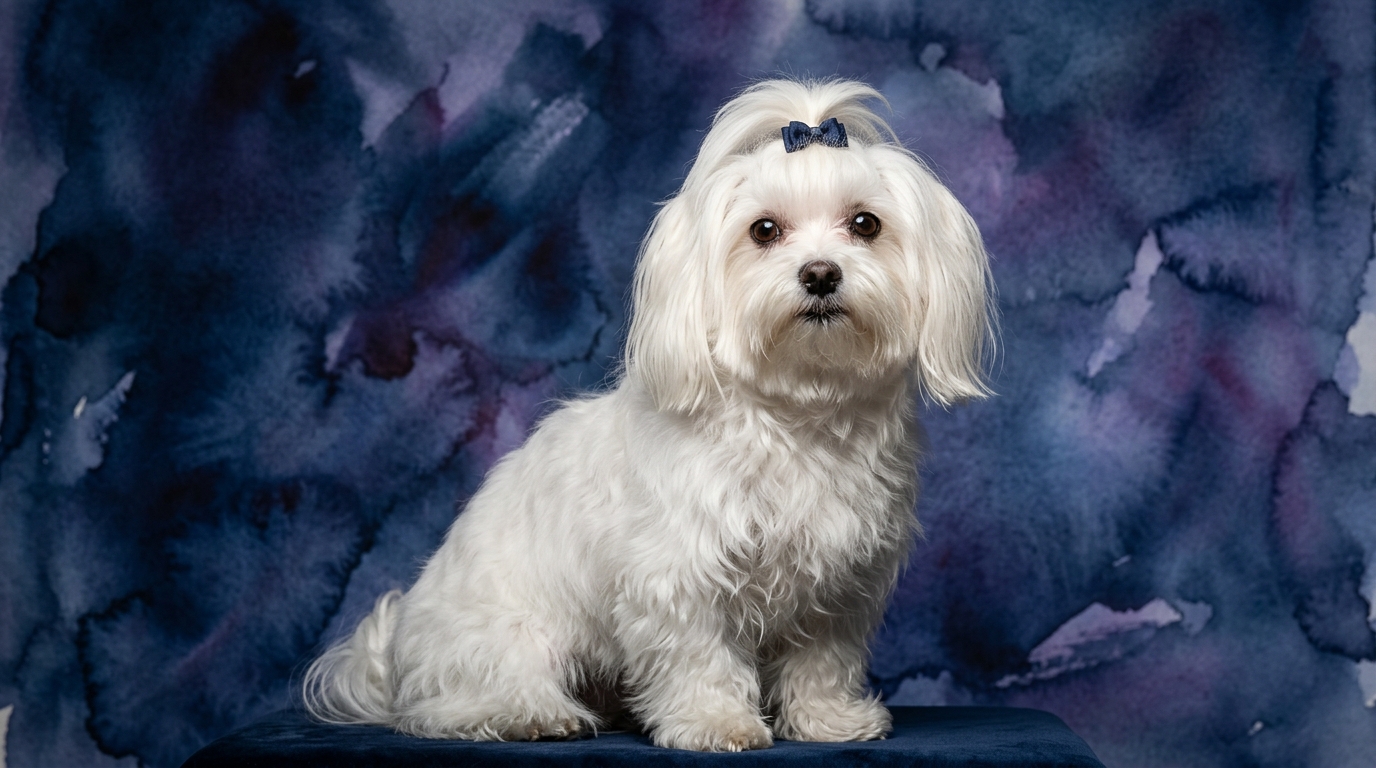

Side-by-Side Cognitive Profiles: Maltese vs. Redbone Coonhound
The Maltese, a breed meticulously cultivated for companionship, exhibits a Problem Solving score of 3/5, indicating an average yet practical aptitude for navigating common household scenarios, such as discerning which toy offers the most reward or manipulating simple puzzle feeders. Their Training Speed also registers at 3/5, signifying that they acquire new commands and routines at a moderate pace, responding best to consistent, positive reinforcement methods that leverage their desire for human approval. A defining cognitive strength is their exceptional Social Intelligence, rated 5/5; this reflects an unparalleled capacity to interpret subtle human emotional states, vocal inflections, and body language, allowing them to form remarkably attuned bonds with their families. Conversely, their Instinctive Drive is notably low at 2/5, meaning they possess minimal inherent inclination for independent hunting, tracking, or strong prey pursuit, making them less prone to wandering off on a scent. Their Memory, at 3/5, is reliable for recalling familiar people, established routines, and previously learned commands, contributing to their adaptability within a domestic setting.
The Redbone Coonhound, purpose-bred for the demanding work of tracking game, shares a Problem Solving score of 3/5 with the Maltese, demonstrating an ability to figure out environmental challenges pertinent to their work, such as unraveling complex, faint scent trails across varied terrain. Their Training Speed is also 3/5; while they are certainly capable of learning new commands at an average rate, their progress can often be significantly influenced and sometimes temporarily hindered by the overwhelming allure of their powerful olfactory world. The Redbone's Social Intelligence is rated 3/5, indicating they are affectionate and capable of deep bonds with their human family, but generally exhibit a more independent and less overtly people-pleasing demeanor compared to the highly socially attuned Maltese. Their Instinctive Drive, a robust 3/5, is a central cognitive feature, embodying a tenacious, persistent urge to track and follow scents for extended periods, a deeply ingrained trait that frequently takes precedence over other stimuli or directives. Memory, like the Maltese, is 3/5, enabling them to recall specific scent profiles, familiar routes, and basic commands, though their memory for abstract concepts might be less pronounced than their recall for sensory information.
Where the Maltese Wins Cognitively
The Maltese unequivocally demonstrates superior cognitive prowess in the domain of Social Intelligence, where their exceptional 5/5 score significantly surpasses the Redbone Coonhound's 3/5. This isn't just about being a cuddly companion; it signifies a highly developed cognitive ability to interpret nuanced human emotional states, subtle shifts in body language, and variations in vocal tone with remarkable precision. A Maltese often appears to anticipate their owner's needs or moods, offering comfort during distress or initiating playful interaction based on barely perceptible cues. This profound social attunement allows them to integrate seamlessly into complex family dynamics, adapting their behavior to fit household routines and thriving on reciprocal emotional connection. Their capacity for empathy and their desire to maintain harmonious social bonds make them extraordinarily perceptive and responsive companions, a cognitive strength deeply rooted in centuries of selective breeding for close human interaction.
Where the Redbone Coonhound Wins Cognitively
While the numerical difference in Instinctive Drive between the Redbone Coonhound (3/5) and the Maltese (2/5) might seem modest, this distinction represents a profound cognitive advantage for the Redbone in a highly specialized area: olfactory processing and sustained pursuit. This drive manifests as an extraordinary capacity for scent discrimination, the ability to follow a specific, often faint, scent trail over vast distances and varied terrain, and an unwavering persistence in the face of obstacles. A Redbone's brain is meticulously wired to analyze, categorize, and retain an immense library of scent profiles, distinguishing between target scents and environmental distractions with remarkable accuracy. This isn't merely a physical act of tracking; it involves complex cognitive processes such as spatial memory for the trail, problem-solving when a scent is lost, and an almost singular focus that can last for hours. This specialized intelligence for navigation, detection, and relentless pursuit, honed over generations for practical hunting purposes, is a cognitive domain where the companion-focused Maltese simply does not compete.
Which is Easier to Train and Why
Despite both breeds scoring an average 3/5 for Training Speed, the Maltese generally proves to be a more straightforward and responsive student for typical companion dog training, largely due to their superior Social Intelligence and significantly lower Instinctive Drive. The Maltese's inherent desire to please their human companions, coupled with their natural inclination to remain physically and emotionally connected, makes them highly motivated by praise, positive attention, and interactive rewards. They are attentive learners in structured training environments, less prone to external distractions because their drives are primarily focused on human interaction rather than independent exploration. In contrast, the Redbone Coonhound's powerful Instinctive Drive, particularly their intense focus on scent, can present substantial challenges during training sessions. While they possess the cognitive capacity to learn commands, their innate drive to track often overrides learned behaviors when a compelling scent stimulus is present. This requires immense patience, creative, high-value rewards, and specialized training methods that either incorporate their scent drive or work diligently to redirect their focus from olfactory stimuli back to human directives. Their independent nature, while valuable in the field, can be perceived as stubbornness in a traditional training context.
Which Suits Active Owners vs. Relaxed Owners
The suitability of these two breeds for an owner's lifestyle is starkly different. The Maltese, with its inherently moderate exercise requirements and profound need for close human interaction, is an ideal canine companion for more relaxed or less physically active owners who prioritize indoor companionship and gentle engagement. They thrive on consistent human presence, short daily walks, indoor play sessions, and ample lap time, deriving immense satisfaction from emotional connection rather than strenuous physical exertion. Their high social intelligence means they are often content simply being near their family, observing the household activities. Conversely, the Redbone Coonhound is unequivocally best suited for highly active and experienced owners who can consistently provide substantial daily physical exercise and robust mental stimulation. Their robust instinctive drive and formidable physical stamina demand long, vigorous walks, secure off-leash running opportunities in fenced areas, and engaging scent work or tracking activities that tap into their innate abilities. Owners who are unable to meet these significant needs may find their Redbone developing problematic behaviors such as destructive chewing, excessive barking, or an inability to settle, all stemming from boredom, frustration, or pent-up energy, making them a profoundly poor match for a sedentary or inexperienced household.
The Verdict
Opt for a Maltese if you seek an exceptionally socially intelligent, deeply affectionate companion who thrives on close human interaction and has moderate exercise requirements, fitting seamlessly into a more relaxed household.
Select a Redbone Coonhound if you are an active, experienced owner prepared to engage with a dog possessing a strong independent streak, a powerful instinct for scent work, and a significant need for outdoor activity and mental challenge.
🧠 Find Your Pet's IQ Score
Our Pet IQ Lab assessment covers 25+ tests across 5 cognitive dimensions — personalized to your breed.
Take the Full IQ Test →Frequently Asked Questions
Are Maltese good with other pets?
Yes, generally, due to their high social intelligence, Maltese can coexist peacefully with other pets, often adapting well to a multi-animal household. However, their small size means supervision is always wise, especially with larger, more boisterous dogs, to prevent accidental injury.
Do Redbone Coonhounds bark a lot?
Redbone Coonhounds can be quite vocal, employing a distinctive baying bark, especially when they are on a scent trail, excited, or experiencing boredom. This characteristic vocalization is an integral part of their hound heritage and can be a significant consideration for prospective owners, particularly those in close living quarters.
What kind of mental stimulation do these breeds need?
Maltese thrive on mental engagement through interactive games, learning new tricks, and consistent social interaction with their humans, which satisfies their high social intelligence. Redbone Coonhounds, however, require extensive mental stimulation centered around their powerful olfactory senses, such as scent work, tracking games, puzzle toys that dispense treats, and ample opportunities for exploration on long walks.