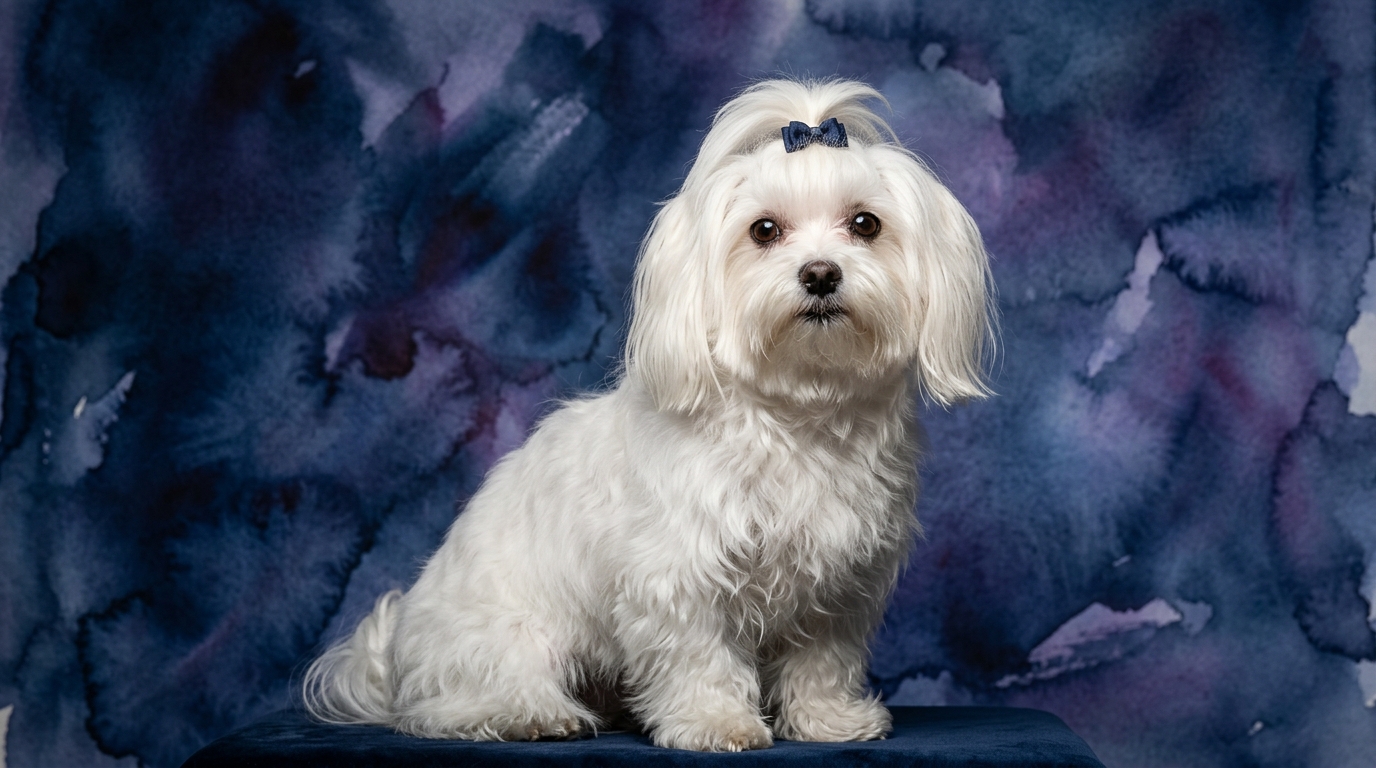
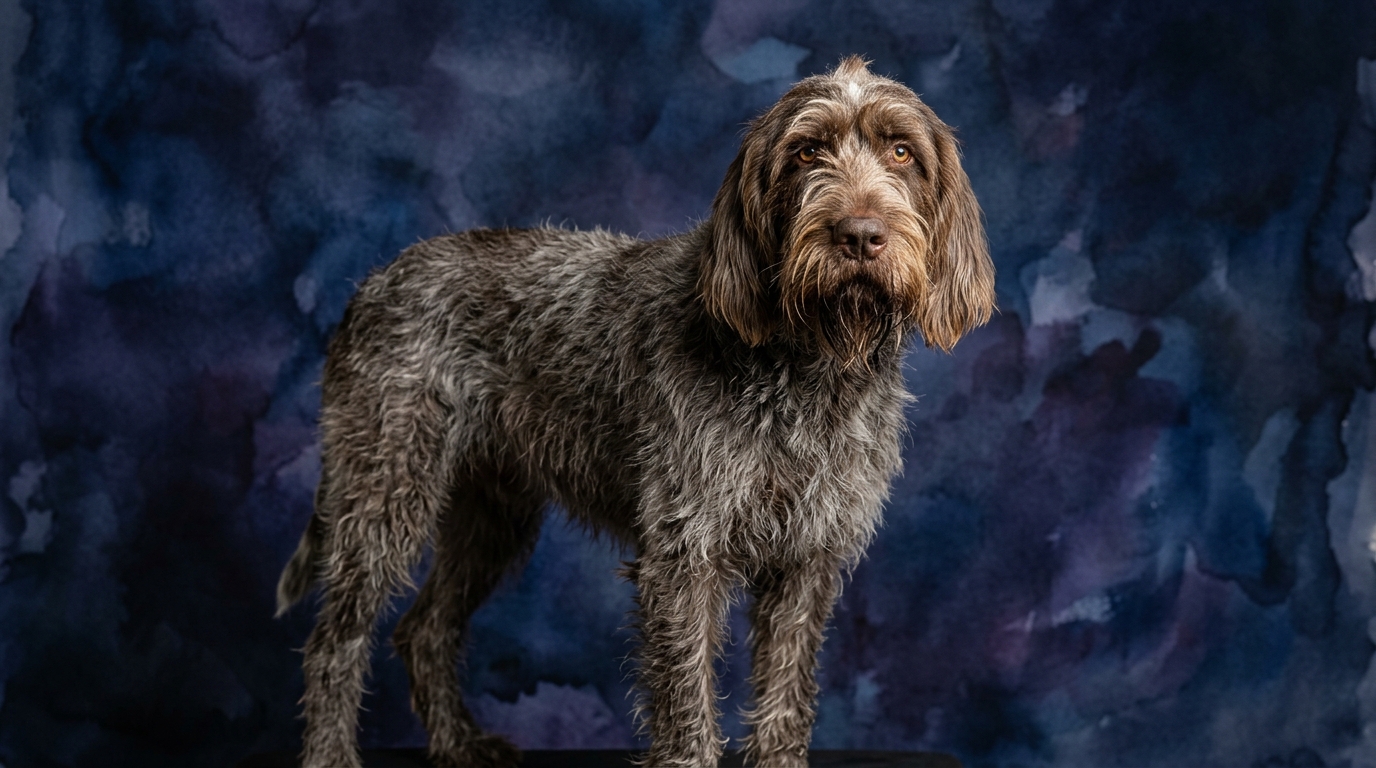
Side-by-Side IQ Profile: Maltese vs. Spinone Italiano
The Maltese, a cherished member of the Toy group and holding a respectable Coren rank of #59, presents a fascinating cognitive blend. In problem-solving, they demonstrate a moderate capacity, scoring 3 out of 5, indicating an ability to navigate simple challenges but perhaps not complex, multi-step tasks independently. Their training speed also registers a 3 out of 5, suggesting they grasp new commands at an average pace, responsive to consistent, positive reinforcement. Where the Maltese truly distinguishes itself is in social intelligence, achieving an impressive 5 out of 5. This score reflects an exceptional aptitude for reading human emotions, understanding social cues, and forming deep, responsive bonds, making them highly attuned companions. Their instinctive drive, however, is relatively low at 2 out of 5, meaning they possess less inherent motivation for traditional working tasks like hunting or herding. Memory for the Maltese is a solid 3 out of 5, allowing them to recall learned behaviors and routines effectively.
The Spinone Italiano, a robust Sporting breed, though not included in the Coren ranking, provides a different cognitive blueprint. Across problem-solving, training speed, social intelligence, instinctive drive, and memory, the Spinone consistently scores 3 out of 5. This consistent scoring suggests a well-rounded but perhaps less specialized cognitive profile compared to the Maltese. Their 3 out of 5 in problem-solving indicates a capable mind for navigating environmental challenges or figuring out how to achieve a goal. A training speed of 3 out of 5 means they learn at a steady rate, generally cooperative but perhaps requiring patience and clear instruction. Their social intelligence, at 3 out of 5, suggests they are friendly and able to form connections, though perhaps not with the same nuanced emotional sensitivity as a Maltese. The Spinone's instinctive drive of 3 out of 5 is noteworthy, reflecting their heritage as a versatile gun dog with a natural inclination for scent work and retrieving. Finally, a memory score of 3 out of 5 ensures they retain learned skills and experiences adequately.
Where the Maltese Wins Cognitively
The Maltese's undeniable cognitive strength lies in their exceptional social intelligence, scoring a perfect 5 out of 5. This isn't merely about being affectionate; it signifies a profound capacity to interpret human vocal tones, body language, and moods, allowing them to adapt their behavior to better align with their human companion's emotional state. This heightened social acumen makes them adept at anticipating needs and responding with empathy, fostering an incredibly close and communicative bond. For owners seeking a dog that truly 'gets' them on an emotional level, the Maltese's ability to read and react to subtle human cues is a significant cognitive advantage, facilitating harmonious cohabitation and a deep sense of companionship.
Their superior social understanding also contributes to their adaptability within a home environment. A Maltese can quickly learn household routines, understand social boundaries, and even mimic certain behaviors if they perceive it will garner positive human attention. This isn't rote memorization but rather an understanding of social cause and effect within their human family unit. While their problem-solving and training speed are average, their high social intelligence means they are often motivated by the desire to please and connect, which can sometimes make them appear more amenable to training when the reward is social interaction or approval.
Where the Spinone Italiano Wins Cognitively
The Spinone Italiano's cognitive edge is most apparent in its instinctive drive, scoring 3 out of 5, which is notably higher than the Maltese's 2 out of 5. This reflects their heritage as a robust sporting dog, possessing an innate drive for scent work, tracking, and retrieving. While a 3 out of 5 isn't extraordinarily high, it indicates a reliable, inherent motivation to engage with tasks that tap into these natural predispositions. This drive translates into a willingness to explore, investigate, and persist in outdoor environments, making them well-suited for activities requiring sustained focus and physical exertion.
Furthermore, the Spinone's consistent 3 out of 5 across all cognitive dimensions – problem-solving, training speed, social intelligence, instinctive drive, and memory – suggests a balanced and resilient mental constitution. Unlike the Maltese's specialized social acumen, the Spinone offers a more generalized competence that can be applied across various scenarios, particularly those demanding physical and mental stamina. Their average problem-solving ability, combined with their instinctive drive, means they are capable of figuring out practical solutions in a hunting or field context, demonstrating a different kind of functional intelligence focused on purpose-driven tasks rather than purely social interaction.
Which is Easier to Train and Why
When considering ease of training, both the Maltese and Spinone Italiano share a training speed score of 3 out of 5, indicating they learn at a moderate pace. However, the 'why' behind their trainability differs significantly due to their other cognitive strengths. The Maltese, with their exceptional social intelligence (5/5), often responds very well to training methods that emphasize connection and positive reinforcement, particularly praise and attention from their owner. They are highly attuned to human feedback, making them eager to please and quick to understand what is expected in a social context. Their lower instinctive drive (2/5) means they are less likely to be distracted by external environmental stimuli during training, making indoor or focused sessions potentially smoother.
The Spinone Italiano, while also possessing a 3/5 training speed, benefits from its 3/5 instinctive drive. This means they are often motivated by tasks that engage their natural hunting and retrieving instincts. Training a Spinone might involve more structured, purpose-driven exercises that appeal to their desire to work. While their social intelligence is a moderate 3/5, they are generally cooperative and form good bonds, but they might require a handler who understands how to harness their working dog tendencies. They might also be more prone to following a scent or investigating a sound during outdoor training, requiring consistent redirection. Ultimately, both breeds are trainable, but the Maltese's social motivation might make them feel 'easier' for an owner seeking a highly responsive companion, while the Spinone might require a more task-oriented approach to training.
Which Suits Active Owners vs. Relaxed Owners
The choice between a Maltese and a Spinone Italiano largely hinges on an owner's lifestyle and activity level, deeply intertwined with their cognitive profiles. A Maltese, with its lower instinctive drive (2/5) and smaller stature, is an excellent fit for more relaxed owners or those living in smaller spaces. Their primary cognitive need is social interaction and companionship, thriving on close proximity to their human family. While they enjoy short walks and playtime, they do not possess an inherent drive for extensive physical activity or complex outdoor tasks. Their high social intelligence means they are content to be a devoted lap companion, observing household activities and offering emotional support, making them ideal for individuals or families seeking a gentle, indoor-centric pet.
Conversely, the Spinone Italiano, a Sporting breed with a 3/5 instinctive drive and a robust build, is far better suited for active owners. This breed requires consistent physical and mental engagement to truly thrive. Their cognitive makeup, particularly their problem-solving and instinctive drive scores, means they benefit from activities like long hikes, scent work, retrieving games, or even participation in dog sports. An owner who enjoys spending significant time outdoors and can provide structured activities to channel the Spinone's natural working inclinations will find them a highly rewarding companion. Without sufficient mental and physical outlets, a Spinone might become bored, which could manifest in less desirable behaviors, highlighting the importance of matching their cognitive needs with an owner's lifestyle.
The Verdict
Choose a Maltese if you prioritize an emotionally attuned companion with exceptional social intelligence, suitable for a more relaxed, indoor-focused lifestyle where close human connection is paramount.
Choose a Spinone Italiano if you are an active individual or family seeking a versatile, robust dog with a balanced cognitive profile and a good instinctive drive for outdoor activities and engaging tasks.
🧠 Find Your Pet's IQ Score
Our Pet IQ Lab assessment covers 25+ tests across 5 cognitive dimensions — personalized to your breed.
Take the Full IQ Test →Frequently Asked Questions
Does the Maltese's high social intelligence make them prone to separation anxiety?
The Maltese's profound social intelligence (5/5) means they form exceptionally strong bonds, and while this fosters deep companionship, it can indeed predispose them to separation distress if not managed with early training. Teaching independence and providing enrichment during alone time are crucial to prevent anxiety.
Is a Spinone Italiano's 3/5 instinctive drive enough for actual hunting or field work?
Yes, a 3/5 instinctive drive for a Spinone Italiano is certainly sufficient for actual hunting or field work, as it reflects a natural inclination and motivation for scenting and retrieving tasks. While not the highest possible score, it indicates a reliable drive that can be effectively channeled and refined through training for practical application in the field.
How does the 'not Coren-ranked' status of the Spinone Italiano affect understanding its intelligence?
The 'not Coren-ranked' status for the Spinone Italiano simply means it wasn't included in that specific study, not that it lacks intelligence. It implies its cognitive strengths might be more specialized towards its working heritage, requiring different metrics to fully appreciate its problem-solving and instinctive capabilities beyond general obedience.