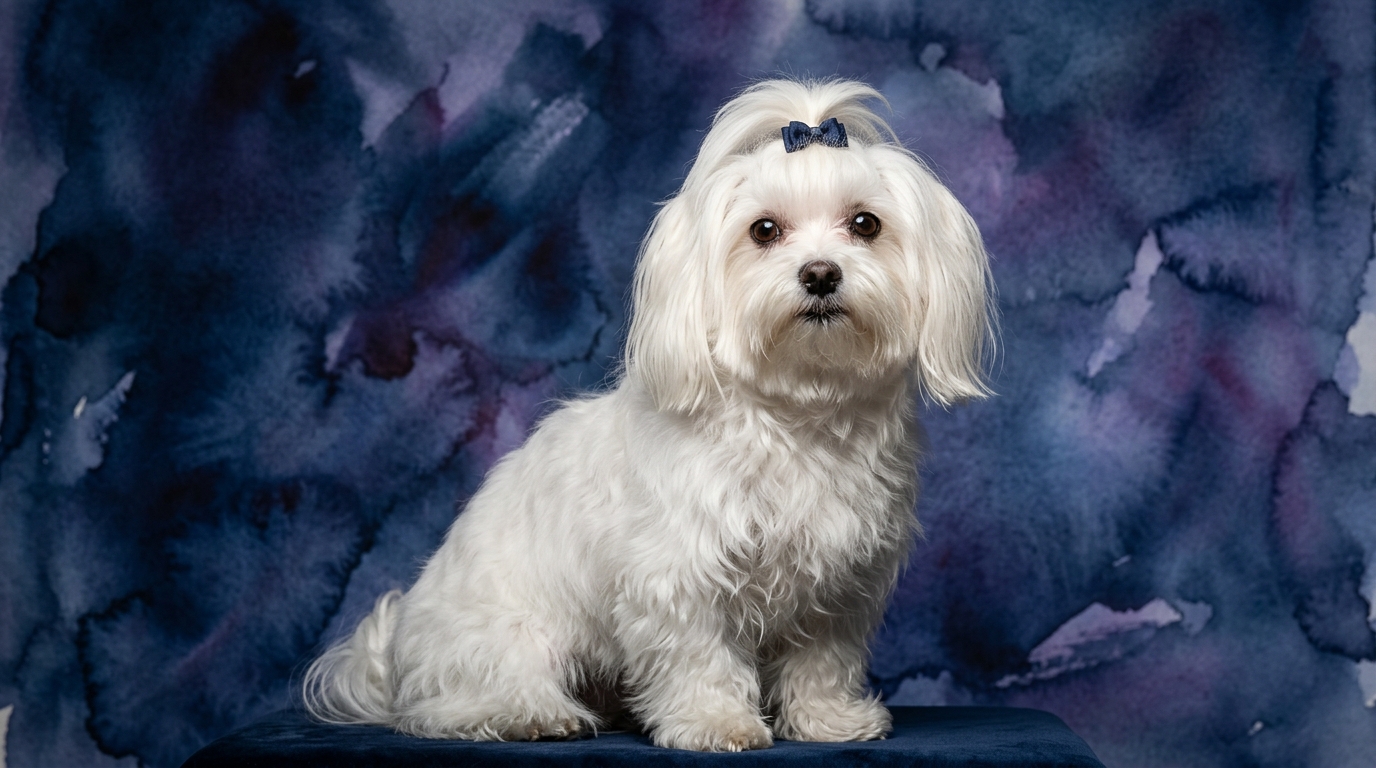

Side-by-Side IQ Profile: Maltese vs. Toy Fox Terrier
At The Cosmic Pet Pet IQ Lab, we assess canine intelligence across five key dimensions. Understanding these specific scores offers a clearer picture of each breed's inherent cognitive strengths and predispositions. Let's break down the mental makeup of the Maltese and the Toy Fox Terrier.
The Maltese, with a Coren ranking of #59, presents a profile centered around social attunement. Their Problem Solving is rated at 3/5, indicating a moderate capacity to figure out tasks, often relying on observation and seeking human assistance for complex challenges. Training Speed is also 3/5; they learn new commands at an average pace, typically requiring 25-40 repetitions for reliable understanding, responding best to gentle, consistent methods. Their paramount strength is Social Intelligence at a perfect 5/5, showcasing an exceptional ability to read and respond to human emotions and cues, forming deep, empathetic bonds. Instinctive Drive is low at 2/5, meaning minimal prey drive or independent working tendencies, preferring companionship over task-oriented work. Memory stands at 3/5, allowing them to retain learned commands and routines effectively, remembering familiar faces and places well.
The Toy Fox Terrier, while not formally Coren-ranked, offers a different cognitive blueprint. Their Problem Solving mirrors the Maltese at 3/5, demonstrating an average capacity for figuring out challenges, often with a quick-witted and persistent approach to achieve their goals. Training Speed is also 3/5, indicating they grasp new commands at a moderate rate (25-40 repetitions), though their terrier nature can sometimes lead to distractions. Social Intelligence is 3/5; they form bonds and understand human cues but are more independent than the Maltese, less overtly people-pleasing, and may prioritize their own interests. Instinctive Drive is moderate at 3/5, reflecting their terrier heritage with a notable prey drive, curiosity, and inclination for exploration. Memory is rated 3/5, showing an average retention for commands, routines, and experiences, recalling familiar people and places effectively.
Where the Maltese Wins Cognitively
The Maltese stands out remarkably in the realm of social intelligence, scoring a perfect 5/5 compared to the Toy Fox Terrier's 3/5. This isn't just about being friendly; it reflects a profound capacity to interpret human emotions, intentions, and subtle non-verbal cues with exquisite sensitivity. A Maltese often seems to anticipate their owner's needs or moods, offering comfort during distress or mirroring a joyous spirit. For instance, they might subtly nudge a hand when sensing sadness or bring a toy to initiate play when happiness is perceived. Their high social attunement means they excel at reciprocal communication, making them exceptionally responsive companions who thrive on deep, empathetic connections and effortlessly navigate complex household social dynamics.
Where the Toy Fox Terrier Wins Cognitively
The Toy Fox Terrier's cognitive advantage lies in its instinctive drive, rated 3/5 versus the Maltese's 2/5. This higher drive is a direct echo of their terrier lineage, manifesting as a more pronounced curiosity, tenacity, and a moderate prey drive. They possess an inherent inclination to explore, investigate, and engage with their environment in a more active, independent manner. This drive can translate into a greater enthusiasm for games involving chasing and retrieving, and a natural inclination towards problem-solving that involves physical manipulation or exploration, such as figuring out how to reach a high-value toy or persistently digging at an interesting scent. While not a traditional working dog, their elevated drive provides a cognitive edge in tasks requiring persistence and a self-motivated approach to discovery.
Which Is Easier to Train and Why
When considering ease of training, both the Maltese and the Toy Fox Terrier share an average training speed score of 3/5, meaning they both grasp new commands at a moderate pace. However, their distinct cognitive profiles lead to different training experiences. The Maltese, with its exceptional 5/5 social intelligence, often proves easier to motivate through praise and social interaction. They are inherently eager to please their human companions and highly attuned to their owner's reactions, making positive reinforcement incredibly effective. Their lower instinctive drive also means fewer internal distractions, allowing them to focus more intently on the task at hand and the bond with their trainer. For example, a Maltese is less likely to abandon a 'stay' command because of a squirrel passing by. In contrast, the Toy Fox Terrier's 3/5 social intelligence means they are less solely driven by a desire to please and more by their own internal motivations and environmental stimuli. Their 3/5 instinctive drive, including a moderate prey drive, means they can be more easily distracted by movement or interesting scents. Training a Toy Fox Terrier often requires more creativity to maintain engagement, using games, varied rewards, and shorter, more dynamic sessions to tap into their independent spirit and keep their attention. While both are capable learners, the Maltese's intrinsic desire for connection often makes the training journey feel more cooperative and less challenging in terms of maintaining consistent focus and motivation.
Cognitive Fit: Active Owners vs. Relaxed Owners
The cognitive makeup of these breeds significantly influences their suitability for different lifestyles. The Maltese, with its lower instinctive drive (2/5) and unparalleled social intelligence (5/5), is an ideal companion for relaxed owners who prioritize close companionship and emotional connection. They are content with moderate indoor activity, such as short play sessions and leisurely strolls, and thrive on being an integral, affectionate part of their human's daily life, often preferring lap-time and quiet cuddles over intense outdoor adventures. Their cognitive strengths are best appreciated in a calm, consistent environment where their sensitivity and deep social bonds can flourish, making them excellent companions for those seeking a devoted, emotionally responsive presence. The Toy Fox Terrier, on the other hand, with its moderate instinctive drive (3/5) and slightly more independent social intelligence (3/5), is better suited for active owners. They appreciate engaging play, short bursts of outdoor exploration, and mental stimulation that taps into their terrier curiosity, such as puzzle toys or scent games. While they enjoy companionship, they also possess a self-motivated spirit that enjoys independent investigation and playful challenges. Owners who enjoy interactive games, brisk walks, and can provide consistent mental and physical engagement will find the Toy Fox Terrier's cognitive profile a better match, as their energy and drive require outlets to prevent boredom.
The Verdict
Opt for a Maltese if you seek a deeply emotionally connected companion who will intuitively understand your moods and thrive on constant, affectionate interaction within a calm home environment. Their exceptional social intelligence makes them unparalleled in providing comfort and reciprocal emotional support.
Choose a Toy Fox Terrier if you desire a spirited, playful, and independently curious companion who enjoys interactive games, short bursts of activity, and an owner who can channel their moderate instinctive drives into engaging mental and physical outlets.
🧠 Find Your Pet's IQ Score
Our Pet IQ Lab assessment covers 25+ tests across 5 cognitive dimensions — personalized to your breed.
Take the Full IQ Test →Frequently Asked Questions
Does the Maltese's high social intelligence make them clingy?
While Maltese dogs thrive on connection and are deeply affectionate, their high social intelligence means they are also adept at reading cues and understanding boundaries. A well-socialized Maltese can learn to be comfortable alone for reasonable periods, especially if their emotional needs for interaction and companionship are consistently met when their owner is present.
Can a Toy Fox Terrier be trained for agility despite not being Coren-ranked?
Absolutely. Despite not being formally Coren-ranked, the Toy Fox Terrier's moderate instinctive drive, problem-solving abilities, and inherent quickness make them exceptionally well-suited for activities like agility. Their natural curiosity and energy can be channeled effectively into canine sports with consistent, engaging, and reward-based training.
How does Coren's ranking relate to the IQ scores provided?
Coren's ranking primarily assesses "working and obedience intelligence," which largely correlates with a dog's "training speed" and aspects of "problem-solving" in a structured context. Our IQ Lab provides a more granular breakdown across five distinct cognitive dimensions—problem-solving, training speed, social intelligence, instinctive drive, and memory—offering a broader, more nuanced perspective on a breed's overall mental abilities beyond just obedience learning.