
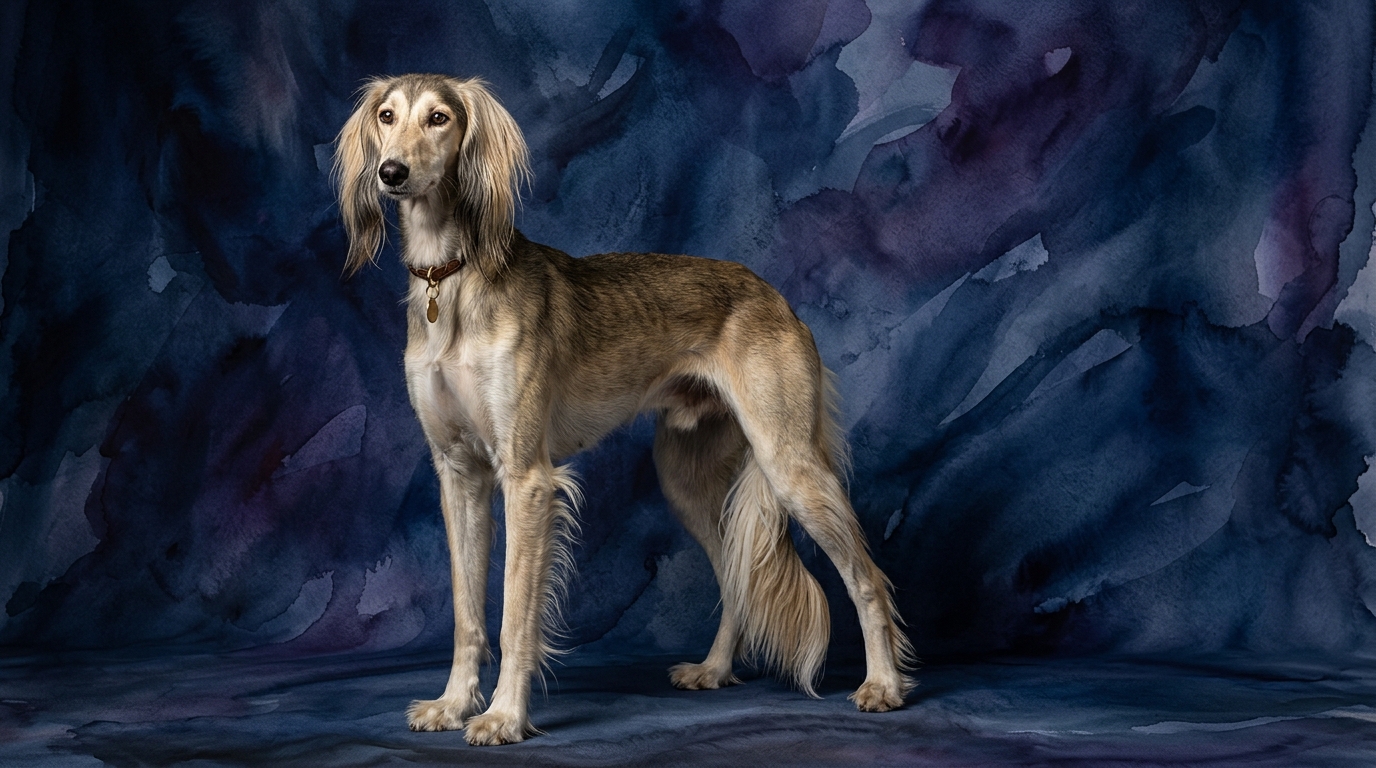
Side-by-Side IQ Profile: Identical Scores, Distinct Manifestations
At first glance, both the Manchester Terrier and the Saluki register identical scores across all five dimensions of our Pet IQ Lab assessment: Problem Solving 3/5, Training Speed 3/5, Social Intelligence 3/5, Instinctive Drive 3/5, and Memory 3/5. This perfect alignment doesn't mean their minds work identically, but rather that their cognitive capacities are comparable in strength, manifesting uniquely through the lens of their breed-specific roles and temperaments.
A 3/5 in problem solving indicates a competent ability to navigate challenges and figure out solutions, without necessarily demonstrating exceptional ingenuity or complex strategic thinking. For the Manchester Terrier, this often translates to resourcefulness in confined spaces, such as finding ways to access perceived pests or manipulate objects to reach a desired outcome, relying on quick, direct actions. The Saluki's 3/5 problem-solving manifests more in spatial awareness and strategic pursuit; they excel at navigating varied terrain and predicting prey movements over long distances, demonstrating a practical intelligence geared towards their sighthound heritage rather than object manipulation.
A 3/5 training speed suggests a moderate capacity for learning new commands and routines, neither exceptionally quick nor particularly slow, requiring consistent and engaging methods. The Manchester Terrier, with its terrier drive, typically learns commands readily when motivated by interaction and reward, though their independent streak means they may choose to 'hear' rather than 'obey' if the incentive isn't compelling. The Saluki also processes information at a moderate pace, but their independent sighthound nature means they often learn best when training feels like a game or is intrinsically rewarding, rather than simply pleasing a handler, making consistent focus on repetitive tasks a potential challenge.
A 3/5 in social intelligence points to a solid understanding of social cues and interactions within their environment, capable of forming bonds and interpreting moods without being overly sensitive or universally gregarious. Manchester Terriers generally exhibit this by forming strong bonds with their primary caregivers, reading household dynamics, and often being alert to strangers, discerning friend from foe with a confident demeanor. Salukis display their social intelligence through a more reserved but deeply affectionate connection with their chosen family, often observing social interactions from a slight distance before engaging, showing a nuanced understanding of social boundaries and emotional states.
A 3/5 instinctive drive indicates a noticeable but manageable inclination towards innate behaviors, requiring appropriate outlets and guidance. For the Manchester Terrier, this score strongly reflects their heritage as ratters; they possess a keen prey drive for small, fast-moving objects, coupled with a vigilant nature that makes them excellent watchdogs. The Saluki's 3/5 instinctive drive is almost entirely channeled into their sighthound pursuit instinct; they possess an intense desire to chase anything that moves quickly and at a distance, a drive deeply ingrained for thousands of years of hunting in open landscapes.
A 3/5 in memory signifies a reliable ability to retain learned commands, routines, and experiences over time, though perhaps not with photographic recall for every detail. The Manchester Terrier's memory allows them to quickly recall training cues and household rules, often remembering specific locations where exciting events (like finding a dropped crumb) occurred. The Saluki demonstrates their memory through remembering complex running routes, the location of favored resting spots, and the patterns of daily routines, applying their recall to practical elements of their environment and independent activities.
Where the Manchester Terrier's Cognition Excels
Despite both breeds scoring a 3/5 across the board, the Manchester Terrier's cognitive strengths often shine brighter in environments demanding quick, direct engagement and a certain level of handler-centric problem-solving. Their problem-solving at 3/5 often manifests as a more hands-on, investigative approach to puzzles or tasks within a confined space, reflecting their history of rooting out vermin. This makes them particularly adept at interactive puzzle toys that require manipulation or figuring out mechanisms to retrieve treats. Their 3/5 instinctive drive, coupled with their alert nature, also means they excel at tasks requiring vigilance and quick reactions to novel stimuli within a home environment, often being the first to 'solve' the problem of an approaching visitor by alerting their family. Furthermore, their social intelligence, while a 3/5, often leads to a more overt eagerness to participate in family activities and a desire to understand and respond to human cues, making them seem more 'tuned in' to their immediate social circle's expectations for a given task or interaction. This directness and focus on immediate surroundings give the Manchester Terrier a distinct cognitive edge in scenarios requiring rapid, focused attention and a clear interactive loop with their human companions.
Where the Saluki's Cognition is Particularly Potent
Conversely, the Saluki's 3/5 cognitive scores reveal strengths that flourish in different, often more expansive, settings. Their problem-solving (3/5) is uniquely geared towards navigating complex outdoor environments and executing strategic pursuits. This means they might not excel at intricate puzzle toys designed for object manipulation, but they demonstrate remarkable spatial reasoning when calculating the optimal path to intercept a distant moving object or remembering the safest routes across varied terrain. Their instinctive drive (3/5) is a profound asset in tasks requiring sustained focus on a distant target; they are unparalleled in their ability to detect and track motion across vast distances, making split-second decisions based on visual cues. This ability to process and react to visual information from afar is a distinct cognitive advantage. Furthermore, their memory (3/5) is often applied to recalling large-scale spatial layouts and the patterns of movement of potential 'prey' or interesting scents, allowing them to navigate and explore effectively with a sense of purpose. The Saluki's cognitive architecture, while equally rated, is optimized for independent, long-range observation and action, giving them a unique advantage in environments that reward self-directed exploration and visual acuity.
Which is Easier to Train, and Why Behavioral Differences Matter
Given both breeds score a 3/5 in training speed, the perception of which is 'easier' to train often boils down to motivation and owner expectation rather than raw learning capacity. The Manchester Terrier, with its terrier temperament, tends to be more handler-focused and enjoys interactive engagement. While they possess an independent streak, their 3/5 training speed is often readily harnessed for obedience and trick training, especially when positive reinforcement involves play or exciting rewards. They learn quickly when they perceive a direct benefit from cooperating with their human, making them generally responsive to structured lessons. In contrast, the Saluki's 3/5 training speed, combined with their profound independence and sighthound heritage, means they learn efficiently but often on their own terms. They excel at tasks that align with their natural instincts, like lure coursing, but may find repetitive obedience drills tedious or irrelevant. Their motivation often stems from intrinsic rewards or the joy of the activity itself, rather than solely pleasing a handler. Therefore, while both learn at a moderate pace, the Manchester Terrier is generally perceived as easier for conventional obedience due to their higher willingness to engage directly with human-led tasks, whereas the Saluki requires a more patient, creative, and highly motivational approach that respects their self-directed nature.
Matching Breeds to Lifestyles: Active Engagement vs. Independent Spirit
The choice between these two breeds also hinges significantly on an owner's lifestyle and their approach to canine companionship. The Manchester Terrier, with its moderate instinctive drive and social intelligence, thrives with owners who enjoy consistent interaction, engaging play, and structured training. They are active dogs who require regular mental stimulation and physical exercise, making them ideal for individuals or families who are active participants in their dog's daily life, perhaps enjoying dog sports, long walks, or interactive games in a secure yard. Their alert nature means they are often 'on duty,' observing their surroundings and engaging with household dynamics. The Saluki, while possessing an equally active nature, expresses it differently. Their 3/5 instinctive drive demands bursts of intense, high-speed running in a securely fenced area or on a leash where appropriate. However, once their exercise needs are met, they are often content to be elegant, quiet companions, enjoying long periods of lounging. They suit owners who appreciate a more independent companion, capable of self-amusement and observation, and who can provide the necessary outlets for their unique running needs without demanding constant interactive play, making them suitable for owners who are active in specific ways but also value periods of quiet companionship.
The Verdict
Choose the Manchester Terrier if you seek an engaging, vigilant companion eager to participate in daily activities and training, thriving on consistent interaction and mental challenges within a family setting.
Opt for the Saluki if you appreciate an independent, elegant dog with a need for high-speed exercise, offering quiet companionship and a deep bond to those who respect their unique sighthound nature.
🧠 Find Your Pet's IQ Score
Our Pet IQ Lab assessment covers 25+ tests across 5 cognitive dimensions — personalized to your breed.
Take the Full IQ Test →Frequently Asked Questions
Do Manchester Terriers and Salukis have similar exercise requirements?
While both are active breeds, their exercise needs differ in manifestation. Manchester Terriers require consistent interactive play and walks, enjoying mental engagement. Salukis need opportunities for intense, high-speed running in a secure, expansive area, followed by periods of rest and relaxation.
How do their problem-solving skills differ despite identical scores?
A Manchester Terrier's 3/5 problem-solving often involves direct, manipulative actions to solve puzzles or address immediate stimuli. A Saluki's 3/5 problem-solving is more focused on spatial reasoning and strategic pursuit over distances, reflecting their sighthound heritage in navigating open environments.
Which breed is better for a first-time dog owner?
The Manchester Terrier might be a more manageable choice for a first-time owner due to their eagerness for interaction and responsiveness to training cues, though their terrier tenacity requires consistency. Salukis, with their independence and specific exercise needs, often benefit from owners experienced with sighthound characteristics.