Side-by-Side Cognitive Profile: Mastiff vs. American Staffordshire Terrier
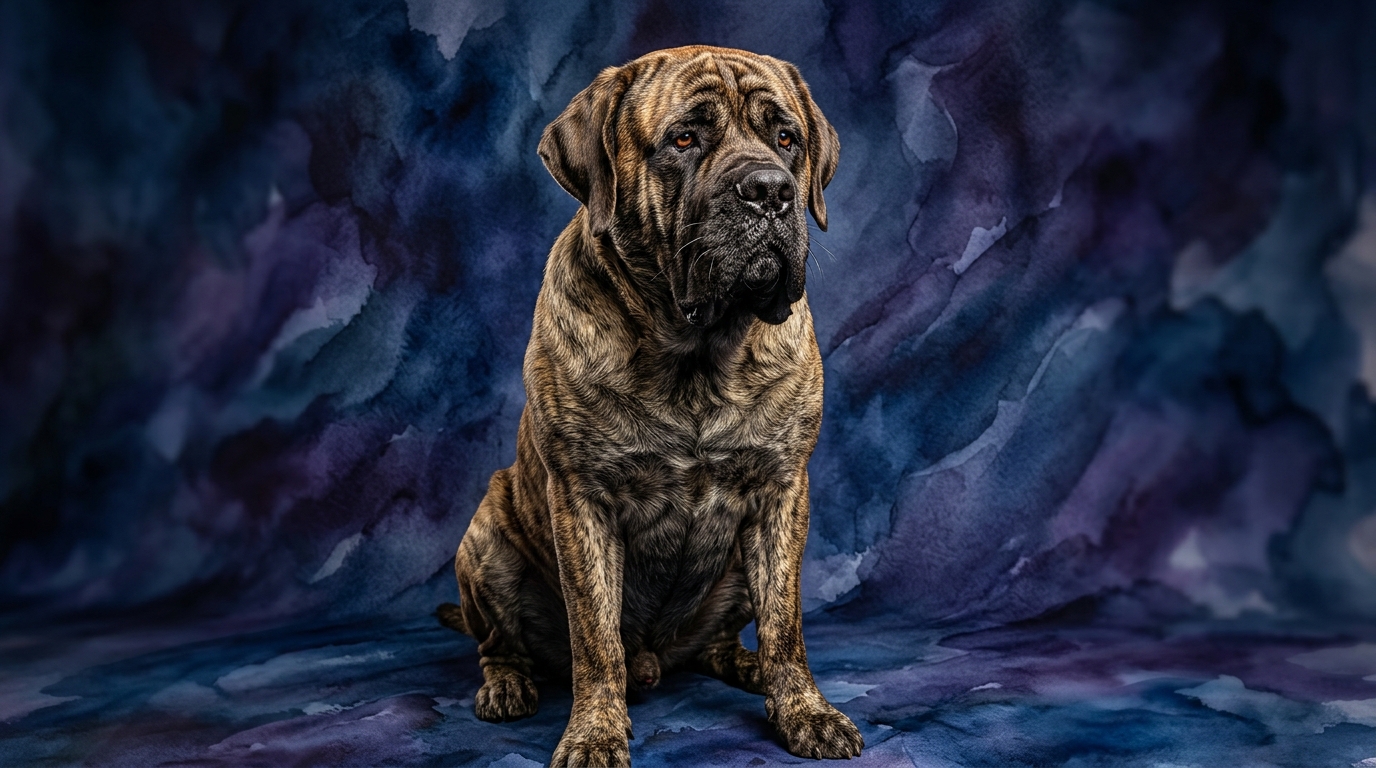
The Mastiff, a distinguished Working breed, demonstrates a steady and deliberate cognitive style. In problem-solving, rated 3/5, they are capable of navigating routine challenges and understanding established patterns, preferring consistency over novel solutions. Their training speed, also 3/5, indicates they absorb commands and routines at a moderate pace, requiring patient, consistent methods that respect their independent spirit rather than demanding instantaneous compliance. Social intelligence, at 3/5, allows them to read familiar human cues and family dynamics with loyalty, though they often maintain a reserved posture towards strangers. Their instinctive drive, 3/5, is centered on protection and territoriality, a legacy of their guarding roles, manifesting as a watchful presence rather than an intense drive for complex tasks. Memory, scoring 3/5, means they retain learned information and established routines reliably, remembering people and places important to their quiet world.
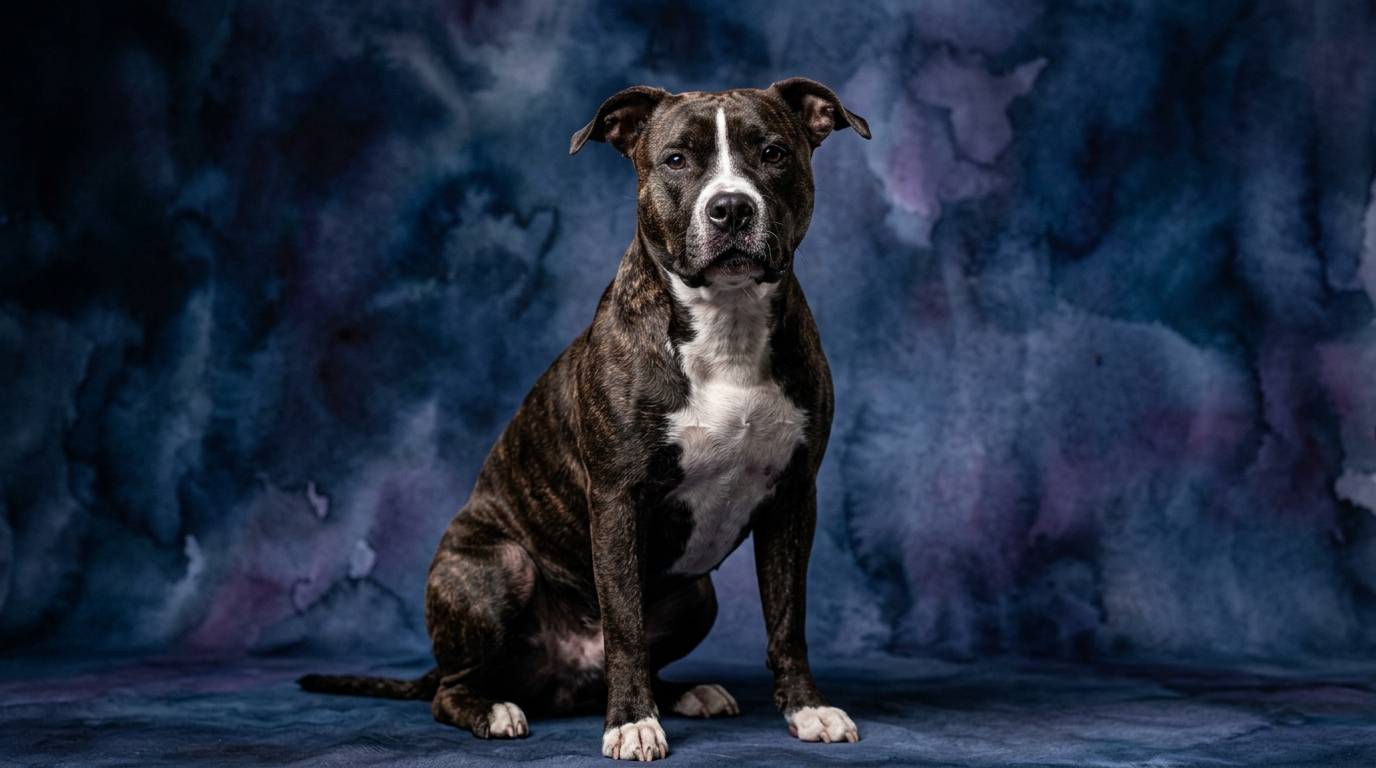
Conversely, the American Staffordshire Terrier, a vigorous Terrier breed, exhibits a more dynamic cognitive approach. Their problem-solving ability, rated 3/5, shows resourcefulness in practical situations and a knack for overcoming physical obstacles, often applying their intelligence to interactive play or navigating their environment. With a training speed of 3/5, they are also moderate learners, readily absorbing new behaviors when engaged with consistent, reward-based methods, often showing a keenness to participate. Their social intelligence, 3/5, highlights their adaptability in various social settings, often keen to interact and capable of reading human emotions, forming strong bonds within their trusted circle. An instinctive drive of 3/5 points to their inherent desire for engagement and activity, often manifesting as enthusiasm for play, exploration, or physical challenges, reflecting their terrier heritage. Where the AmStaff truly distinguishes itself is in memory, scoring 4/5, indicating a more robust capacity for recalling commands, routines, and experiences over time, allowing them to build on past learning with greater retention and precision.
Where the Mastiff Excels Cognitively
The Mastiff's cognitive strengths are rooted in their calm, deliberate nature and their profound capacity for consistent, watchful guardianship. While their individual scores might not seem to outshine the AmStaff in any single dimension, their combined cognitive profile creates a unique advantage in environments demanding steady, reliable presence. Their social intelligence, at 3/5, coupled with their instinctive drive for protection (3/5), allows them to excel in understanding and maintaining the emotional and physical equilibrium of their home. They are adept at recognizing subtle shifts in their environment or human demeanor that might signal a need for their protective, yet usually non-aggressive, presence. This breed’s cognitive processing is geared towards a deep-seated understanding of their territory and family, making them dependable in predictable environments where their steady discernment is valued over rapid, complex responses. Their strength lies in their unwavering loyalty and the quiet, consistent application of their intellect to their primary role as a family guardian.
Where the American Staffordshire Terrier Excels Cognitively
The American Staffordshire Terrier shines with a cognitive profile that emphasizes adaptability and retention, particularly evident in their superior memory score of 4/5 compared to the Mastiff's 3/5. This enhanced memory is a significant asset, allowing AmStaffs to recall and build upon learned commands, routines, and experiences with greater efficiency and precision over time. This means they can progress through more complex training sequences and retain a larger repertoire of behaviors, making them exceptional candidates for various canine activities that demand cumulative learning. Their problem-solving ability (3/5), combined with an active and engaging nature, means they frequently apply their intellect dynamically to physical challenges, interactive games, or agility tasks. They are often keen observers of their human companions, leveraging their social intelligence (3/5) to understand cues and engage in reciprocal interactions. This blend of strong memory and practical intelligence makes the AmStaff particularly adept at navigating and mastering new situations through learned experience.
Which is Easier to Train and Why?
Considering both breeds’ Coren ranks and our IQ dimensions, the American Staffordshire Terrier generally presents as the easier breed to train. The AmStaff ranks #48 in Coren's list, indicating a higher working and obedience intelligence compared to the Mastiff at #72. This difference is largely supported by the AmStaff’s superior memory score (4/5) compared to the Mastiff (3/5). A better memory means they retain commands and desired behaviors more effectively, allowing for faster progression in training sessions. AmStaffs often exhibit a greater eagerness to engage and please their handlers, which, combined with their robust memory, translates into a more responsive and less repetitive training experience. They tend to be more motivated by interactive play and rewards, making them highly receptive to positive reinforcement.
Mastiffs, while certainly trainable, require more patience and consistency. Their Coren rank suggests they need more repetitions to grasp new commands and a longer period to solidify them. Their deliberate nature and moderate training speed (3/5) mean they process information at a slower pace and may not respond with the same immediate enthusiasm as an AmStaff. While loyal, they possess an independent streak that means they often need to understand the 'why' behind a command or simply require a firm, consistent hand to encourage compliance. Training a Mastiff is about building a steady partnership based on respect and clear communication, rather than expecting rapid mastery of complex tasks.
Cognitive Suitability: Active vs. Relaxed Owners
For owners seeking an active and engaging companion, the American Staffordshire Terrier is often the more suitable choice. Their instinctive drive (3/5) for activity and their higher memory (4/5) make them thrive on consistent mental and physical stimulation. They excel with owners who can provide regular training sessions, participate in dog sports like agility or obedience, or simply enjoy extended periods of interactive play and exploration. Their cognitive profile benefits from structured challenges and opportunities to apply their problem-solving skills and robust memory, making them ideal for individuals or families with an energetic lifestyle and a commitment to ongoing engagement.
Conversely, the Mastiff is better suited for relaxed owners who appreciate a calm, watchful presence and a predictable routine. Their moderate instinctive drive (3/5) and steady cognitive pace mean they don't demand intense daily mental or physical exertion. While they enjoy their daily walks and companionship, their cognitive strengths are best leveraged in a stable home environment where their social intelligence (3/5) and protective instincts can be applied calmly and consistently. Owners who prefer a less demanding activity schedule and value a loyal, serene companion will find the Mastiff's deliberate cognitive approach aligns perfectly with a more tranquil lifestyle.
The Verdict
Choose the Mastiff if you seek a calm, steadfast companion content with a predictable routine and a watchful, protective presence, valuing quiet loyalty over dynamic engagement.
Choose the American Staffordshire Terrier if you desire an engaging, active partner who thrives on consistent training, interactive challenges, and opportunities to apply their sharp memory and adaptable intelligence.
🧠 Find Your Pet's IQ Score
Our Pet IQ Lab assessment covers 25+ tests across 5 cognitive dimensions — personalized to your breed.
Take the Full IQ Test →Frequently Asked Questions
Do Mastiffs understand complex commands?
Mastiffs, with a problem-solving score of 3/5 and moderate training speed, can learn complex commands, but it requires significant patience and repetition. They process information steadily, so breaking down commands into smaller, consistent steps is key for their success.
How does the AmStaff's memory benefit training?
The American Staffordshire Terrier's higher memory score (4/5) significantly benefits training by allowing them to retain learned behaviors and commands more effectively. This means they can build on previous lessons more quickly and recall a larger repertoire of actions over time, accelerating their learning curve.
Are both breeds good at reading human emotions?
Both breeds score 3/5 in social intelligence, indicating a good capacity for reading familiar human cues and emotions within their trusted circle. Mastiffs often express this through calm, watchful loyalty, while AmStaffs might show it through a more interactive and engaging responsiveness to their human companions.