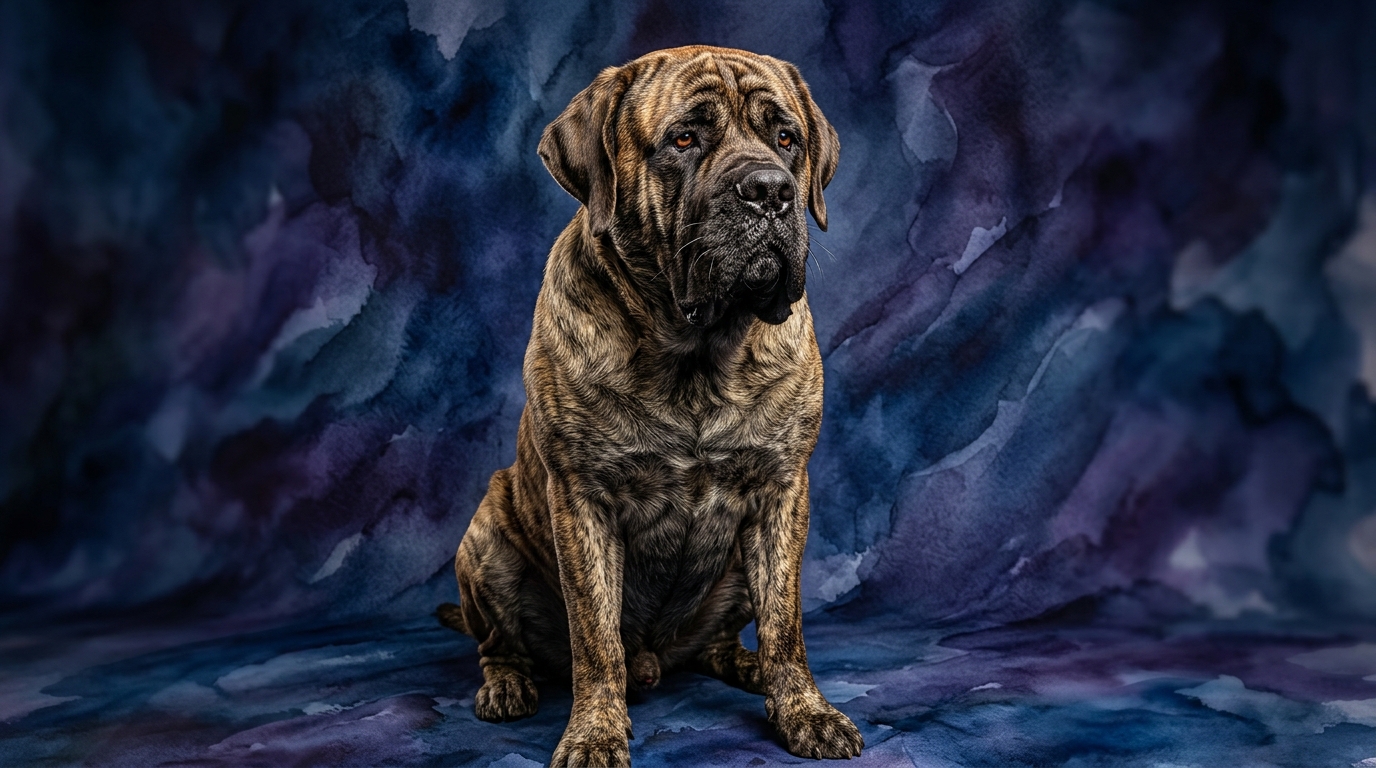
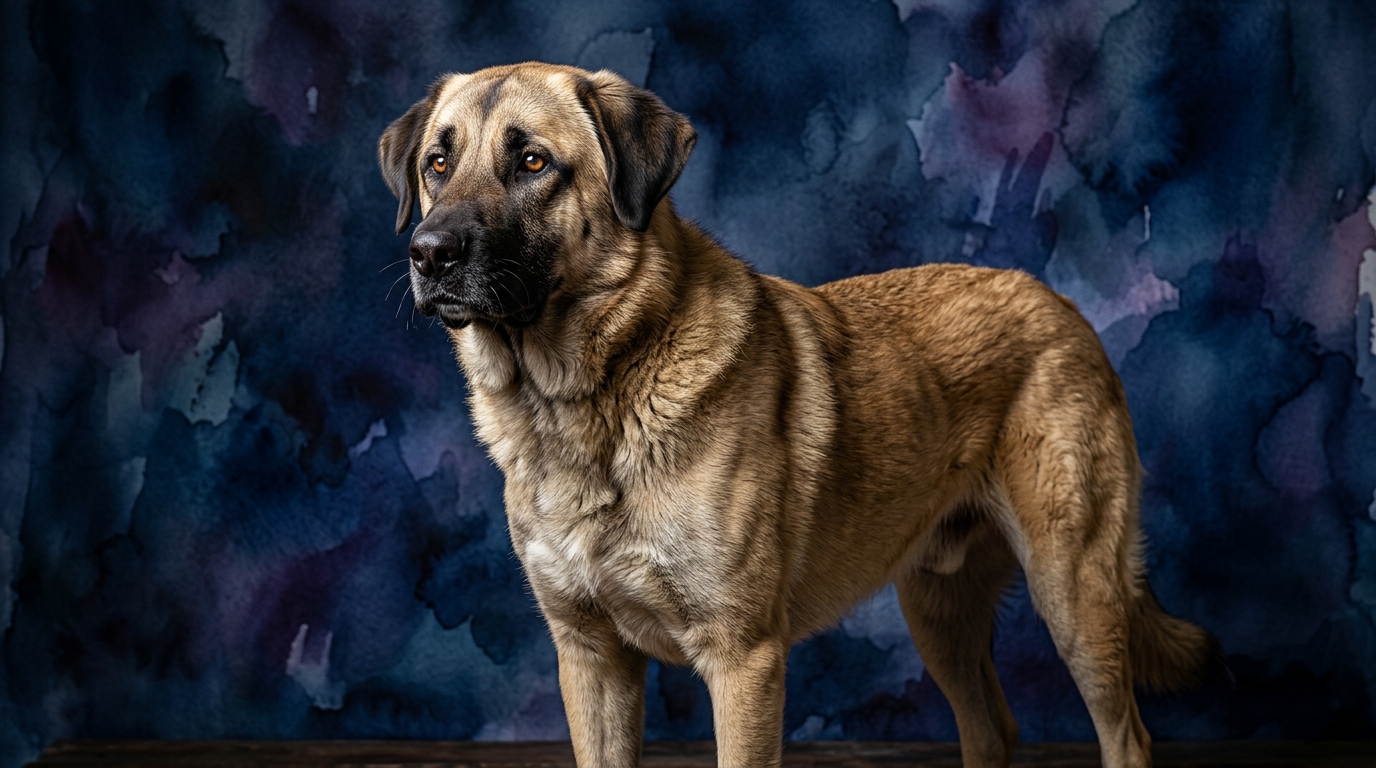
Side-by-Side Cognitive Profiles
At The Cosmic Pet Pet IQ Lab, we evaluate canine intelligence across five key dimensions. Both the Mastiff and the Anatolian Shepherd Dog score a consistent 3/5 in each category, yet the application of these cognitive abilities varies significantly, reflecting their divergent historical purposes. The Mastiff, ranked #72 by Coren, demonstrates a more human-centric application of its intellect, while the Anatolian Shepherd Dog, not Coren-ranked due to its specialized role, showcases profound independent problem-solving.
For Problem Solving (3/5), the Mastiff exhibits a capacity for understanding and navigating domestic environments, figuring out how to gain access to family members or desired objects within a home setting. Its solutions often involve observation and learned associations. The Anatolian Shepherd Dog, conversely, applies its problem-solving prowess to dynamic, often outdoor scenarios, such as assessing threats to livestock, identifying optimal patrol routes, or strategizing to deter predators without direct human intervention. Its problem-solving is intrinsically linked to its guardian role.
In Training Speed (3/5), the Mastiff is generally responsive to consistent, positive reinforcement, often demonstrating a willingness to comply due to its bond with its family. It absorbs commands and routines effectively when motivated by praise or treats, reflecting its desire to be a cooperative companion. The Anatolian Shepherd Dog can also learn commands efficiently, but its strong independent streak means it often evaluates the necessity or relevance of a command before compliance. Its 'speed' is less about eager execution and more about a deliberate understanding, necessitating a partnership-based training approach.
Social Intelligence (3/5) in the Mastiff is deeply attuned to human emotions and household dynamics. They form strong, empathetic bonds with their families, understanding subtle cues and maintaining harmonious interactions within their human pack. The Anatolian Shepherd Dog's social intelligence is primarily directed towards its charges, whether livestock or family. It reads subtle behaviors in animals, discerns intentions in strangers, and understands the social hierarchy of its flock or family unit, prioritizing protection above all else.
The Instinctive Drive (3/5) of the Mastiff manifests as a vigilant, protective presence for its family and home, typically expressed through watchful observation and deterrent barking. It acts as a gentle, imposing guardian within its established territory. The Anatolian Shepherd Dog possesses a powerful, deeply ingrained instinctive drive to guard and protect its territory and charges from perceived threats. This manifests as constant vigilance, territorial patrolling, and a readiness to intervene independently, making decisions based on its assessment of the situation.
Finally, Memory (3/5) in the Mastiff is robust for retaining learned commands, daily routines, and familiar people and places. They reliably recall past interactions and training. The Anatolian Shepherd Dog demonstrates excellent memory for its vast territory, the individual members of its flock or family, and significant past threats or events. This recall is crucial for effective, long-term guardianship, allowing it to remember specific areas of vulnerability and patterns of behavior in its environment.
Where the Mastiff Shines Cognitively
The Mastiff's cognitive strengths are particularly evident in its ability to integrate seamlessly into a human household and understand complex social nuances within a family structure. While its Coren ranking suggests it isn't the fastest in obedience, its desire to please its human companions allows it to excel in tasks requiring close collaboration and a deep understanding of human expectations. A Mastiff's intelligence is often expressed through its sensitive responsiveness to its owner's mood and its capacity for forming intricate, empathetic bonds. They are adept at learning household rules and routines, often anticipating needs or desires based on established patterns.
Their problem-solving in a domestic context can involve subtle manipulation, like figuring out how to get a specific toy from a shelf or how to nudge a hand for attention without being overtly demanding. This requires an understanding of cause-and-effect within their immediate environment and an ability to adapt their behavior to achieve a desired outcome from their human family. The Mastiff's memory for routines and commands, combined with its social intelligence, makes it a highly adaptable companion in a structured home setting, capable of learning and retaining a wide array of behaviors that contribute to a peaceful coexistence.
Where the Anatolian Shepherd Dog Excels Cognitively
The Anatolian Shepherd Dog's cognitive superiority lies in its profound capacity for independent judgment and self-directed problem-solving, particularly in expansive, dynamic environments. Bred to protect livestock autonomously in vast, often isolated landscapes, this breed's intelligence is geared towards vigilance, strategic assessment of threats, and making critical decisions without direct human command. Their problem-solving involves evaluating complex situations, such as identifying a subtle change in the environment that signals a predator, or determining the best course of action to protect their charges.
Their social intelligence extends beyond human interaction to an acute understanding of flock dynamics and animal behavior, allowing them to manage and protect livestock effectively. The Anatolian's memory is exceptional for terrain, boundaries, and the movements of both their charges and potential threats, enabling them to patrol and secure their territory with remarkable efficiency. This breed's cognitive strengths are rooted in its self-reliance and its ability to process vast amounts of environmental information, making intelligent, proactive choices that are vital for its guardian role.
Training: Biddable Companion vs. Independent Guardian
When considering ease of training, the Mastiff generally presents a more straightforward path for the average owner. Their inherent desire to please their family, coupled with a typically lower energy level after puppyhood, makes them more amenable to traditional positive reinforcement techniques. They respond well to food rewards, praise, and consistent, gentle guidance. While they can exhibit a stubborn streak characteristic of many large breeds, their willingness to engage with their owner and their capacity to learn complex routines, like polite leash walking or advanced obedience, usually makes the training process rewarding for both dog and handler. Patience is still key, but their motivation often aligns with human goals.
The Anatolian Shepherd Dog, by contrast, presents a greater training challenge due to its profound independence and strong guarding instincts. This is not to say they are untrainable; rather, their motivation stems from their inherent purpose, not necessarily a desire to please. An Anatolian will often assess whether a command aligns with its understanding of its role or territory before complying. Training an Anatolian requires immense patience, a deep understanding of their breed-specific drives, and a relationship built on mutual respect rather than strict command-and-control. Early, extensive socialization and consistent, fair leadership are paramount, as forcing compliance can lead to resistance. Owners must be prepared to work with, rather than against, their natural instincts, making training a nuanced, ongoing dialogue.
Owner Suitability: Relaxed Companionship vs. Active Management
For owners seeking a more relaxed, companion-focused lifestyle, the Mastiff often proves to be an excellent fit. After their boisterous puppy stage, Mastiffs typically mature into calm, gentle giants who are content with moderate daily exercise, such as leisurely walks, and ample time spent lounging with their family. Their mental stimulation often comes from simply being part of the household, observing activities, and receiving affection. They thrive in environments where they are central to family life and can offer a quiet, reassuring presence. An owner who values a loyal, observant, and relatively low-energy canine friend will find immense satisfaction with a Mastiff, provided they can accommodate its substantial size.
The Anatolian Shepherd Dog, while not necessarily requiring constant high-impact physical exercise, demands a more 'active' owner in terms of mental engagement, management, and understanding of its specific needs. This breed thrives when it has a perceived purpose, often benefiting from a large, securely fenced property where it can patrol and fulfill its natural guarding instincts. Owners must be prepared for a dog that is highly independent, vigilant, and will make its own decisions regarding its territory and charges. They are not suited for apartment living or owners who cannot provide consistent mental stimulation and a clear, confident leadership. An Anatolian is best for experienced owners who appreciate and can accommodate a dog with a strong, self-reliant personality, capable of significant independent thought and action, even if it means less traditional 'play' and more purposeful engagement.
The Verdict: Choosing Your Canine Companion
The Verdict
Choose a Mastiff if you desire a loyal, observant companion who integrates deeply into family life, offering gentle protection and a calm, reassuring presence within a domestic environment. They are ideal for owners seeking a biddable partner for a more relaxed lifestyle.
Opt for an Anatolian Shepherd Dog if you are an experienced owner seeking an independent, self-reliant guardian with a strong sense of purpose, capable of making decisions without constant oversight, particularly in spacious or rural settings where their instincts can be fulfilled.
🧠 Find Your Pet's IQ Score
Our Pet IQ Lab assessment covers 25+ tests across 5 cognitive dimensions — personalized to your breed.
Take the Full IQ Test →Frequently Asked Questions
Are Mastiffs good family dogs?
Yes, Mastiffs generally exhibit a calm and gentle demeanor, forming strong bonds with their human families. They are typically patient with children and can be very protective, making them suitable family companions in appropriate, spacious environments.
Do Anatolian Shepherd Dogs need a lot of exercise?
While not excessively high-energy for continuous running, Anatolian Shepherd Dogs require consistent mental and physical engagement. They benefit from large, secure spaces to patrol and fulfill their guarding instincts, rather than intense, structured exercise sessions.
How do the guarding styles differ between the two breeds?
Mastiffs typically guard through presence and deterrence, often staying close to their family and relying on their imposing size and watchful demeanor. Anatolian Shepherds exhibit a more independent and active guarding style, patrolling territories and making proactive decisions to protect their charges without direct human command.