
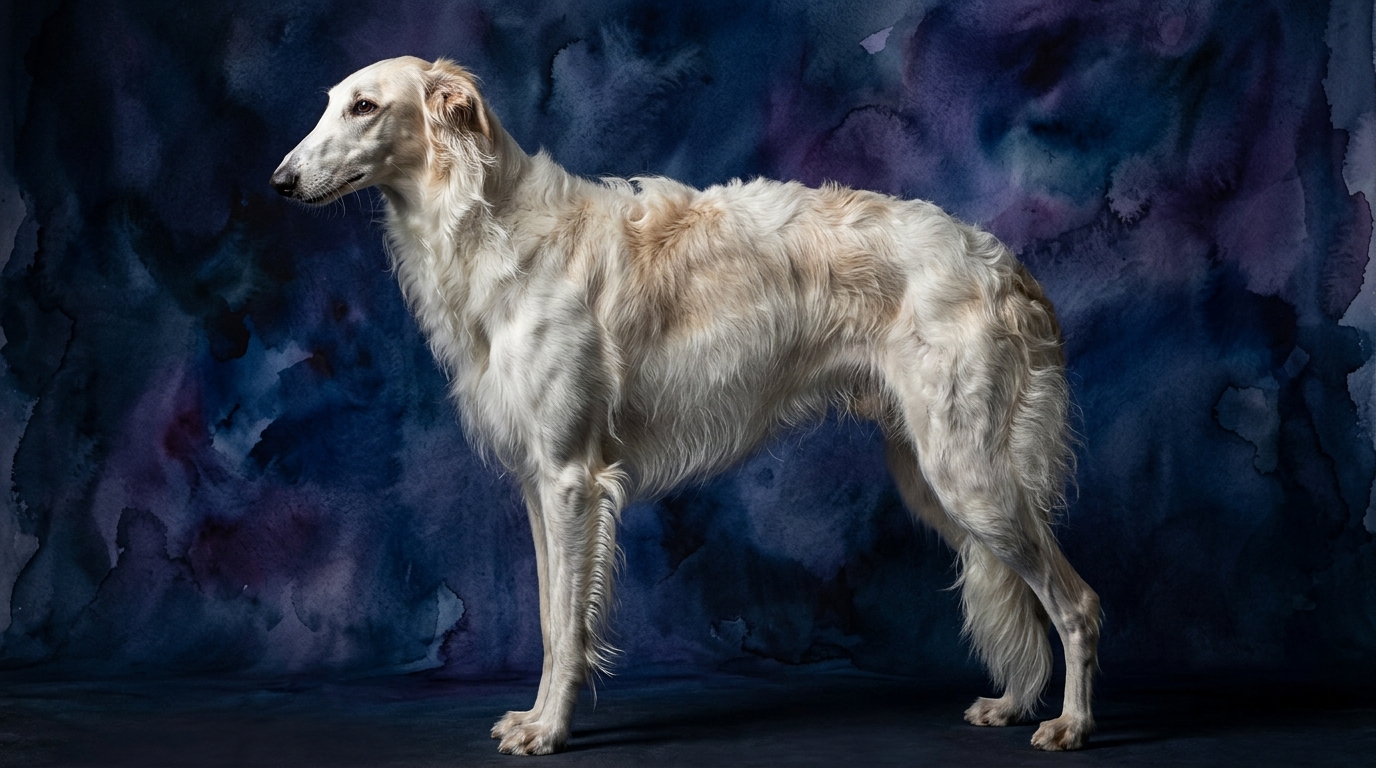
Side-by-Side IQ Profile: Mastiff vs. Borzoi
**Mastiff (Working Group, Coren rank #72)**
**Problem Solving (3/5):** A Mastiff’s problem-solving often manifests in practical, deliberate ways, enabling them to navigate household obstacles or understand complex routines for comfort. Their approach is typically direct and methodical, reflecting their historical role as guardians rather than master manipulators.
**Training Speed (3/5):** While not instantly picking up novel commands, Mastiffs demonstrate a steady learning curve with consistent, positive reinforcement. They thrive on clear expectations, meaning once a behavior is learned, it tends to be deeply ingrained, though initial acquisition might require patience.
**Social Intelligence (3/5):** Mastiffs exhibit a profound understanding of their human family’s moods and intentions. Their social intelligence is often expressed through protective instincts and a discerning nature, forming deep bonds and being highly attuned to emotional shifts within their trusted circle, though reserved with strangers.
**Instinctive Drive (3/5):** The Mastiff’s instinctive drive is rooted in guardianship and companionship, translating to a natural inclination to observe and protect their home and family. This drive is expressed as a calm, watchful presence, ready to act if a perceived threat arises, rather than seeking high-octane pursuits.
**Memory (3/5):** Mastiffs possess a robust memory for routines, commands, and the people they encounter. They retain training cues and household schedules with consistency, and tend to remember positive and negative associations with individuals or environments over long periods, contributing to their reliable and steadfast nature.
**Borzoi (Hound Group, Coren rank #75)**
**Problem Solving (3/5):** A Borzoi’s problem-solving is often driven by keen senses and independence, particularly visual stimuli. They skillfully navigate complex outdoor environments, finding efficient paths during a chase or bypassing obstacles, though their solutions are usually self-serving or instinct-driven rather than aimed at pleasing a handler.
**Training Speed (3/5):** Borzoi can learn commands at a respectable pace, especially if training is engaging and incorporates their natural drives like chase. However, their independent hound temperament means they might not always see the immediate value in performing a command, requiring patient and creative approaches from their handler.
**Social Intelligence (3/5):** Borzoi display a nuanced social intelligence, characterized by refined sensitivity rather than overt demonstrativeness. They are observant of human emotions and social cues, forming deep, though sometimes reserved, bonds with their chosen family. Interactions with strangers tend to be polite but aloof, reflecting a discerning social style.
**Instinctive Drive (3/5):** The Borzoi’s instinctive drive is powerfully centered on pursuit and sight-hunting, translating to an intense desire to chase moving objects. While this drive is potent, it is specific, meaning other drives like territoriality might be less pronounced, defining their unique cognitive focus.
**Memory (3/5):** Borzoi possess a good memory, particularly for people, places, and experiences with strong emotional or instinctual resonance. They remember training cues and household rules, though their independent streak might sometimes lead to selective adherence. Their memory is particularly sharp for locations where they’ve experienced exhilarating runs.
Where the Mastiff Wins Cognitively
The Mastiff’s cognitive strengths shine in areas demanding calm persistence and a deep understanding of social hierarchy within their family unit. Their problem-solving, while not flashy, excels in predictable environments where routine and steady application of learned behaviors are key. For instance, a Mastiff is more likely to reliably understand and adhere to complex multi-step household routines, like waiting patiently for specific cues before entering a room or accepting guests with a measured calm, reflecting their developed social intelligence geared towards maintaining familial order. Their memory serves them well in retaining these established protocols, making them steadfast companions in a structured home.
Where the Borzoi Wins Cognitively
Conversely, the Borzoi demonstrates a distinct cognitive advantage in scenarios requiring rapid, independent decision-making driven by sensory input. Their problem-solving aptitude often manifests in their ability to quickly assess and navigate open spaces, making split-second judgments during a chase, such as adjusting their path to intercept a moving lure. This quick processing of visual information, coupled with their potent instinctive drive, allows them to excel in tasks demanding swift, autonomous action rather than direct human instruction. Their memory is particularly adept at recalling the spatial layout of environments conducive to these activities, like a favored field for running.
Which is Easier to Train and Why
Between the two, the Mastiff generally presents as easier to train for conventional obedience and household manners. Their Working group heritage instills a desire to cooperate and a capacity for sustained attention during training sessions. While their training speed is rated 3/5, their willingness to engage with their handler and capacity to internalize routines means consistent positive reinforcement yields reliable results, making them amenable to learning a wide range of commands and boundaries. Their social intelligence also plays a role, as they often seek to understand and please their human companions, making them responsive to guidance.
The Borzoi, while certainly trainable, can pose more of a challenge for owners seeking unwavering obedience, largely due to their independent Hound temperament. Their 3/5 training speed is coupled with a discerning nature; they are less motivated by pleasing a handler if a task doesn't intrinsically appeal to them or align with their strong chase drive. Training a Borzoi often requires more creativity, patience, and finding ways to make lessons rewarding from their perspective, such as incorporating games that mimic hunting or allowing for independent exploration as a reward. Their problem-solving often prioritizes their own interests, meaning they might 'selectively hear' commands if a more enticing stimulus is present.
Which Suits Active Owners vs. Relaxed Owners
For the more relaxed owner who appreciates a calm, dignified presence indoors, the Mastiff is often a more suitable choice. Despite their enormous size, Mastiffs are generally content with moderate exercise, such as daily walks and supervised yard time. Their inherent guardianship drive means they are often content observing their surroundings from a comfortable spot, requiring less constant physical engagement to satisfy their cognitive and physical needs, provided their social bonds are strong and consistent. They integrate seamlessly into a quiet household rhythm, valuing comfort and companionship over constant activity.
The Borzoi, with its powerful instinctive drive for pursuit, is undeniably better suited for active owners who can provide ample opportunities for running and vigorous exercise in a safe, enclosed space. While they are often calm and elegant indoors, their need to stretch their legs and fulfill their chase instinct is profound. Owners who enjoy activities like lure coursing, long hikes, or have access to securely fenced large properties will find the Borzoi thrives. Their cognitive needs are met through these physically demanding outlets, channeling their problem-solving and memory into exhilarating bursts of speed and agility.
The Verdict
Choose the Mastiff if you seek a steadfast, predictable companion who thrives on routine and forms deep, protective bonds, fitting well into a calmer household with consistent guidance.
Opt for the Borzoi if you appreciate an independent, graceful companion with a powerful athletic drive, and are prepared to provide significant opportunities for secure, open-field running to satisfy their unique cognitive and physical needs.
🧠 Find Your Pet's IQ Score
Our Pet IQ Lab assessment covers 25+ tests across 5 cognitive dimensions — personalized to your breed.
Take the Full IQ Test →Frequently Asked Questions
Do Mastiffs require a lot of mental stimulation?
Mastiffs benefit from consistent mental engagement through routine and basic obedience training, which reinforces their understanding of household structure. While they don't typically demand complex puzzle toys, opportunities for social interaction and understanding new concepts within their familiar environment help keep their minds active and prevent boredom.
Are Borzoi difficult to train off-leash due to their prey drive?
Borzoi possess a very strong instinctive drive for pursuit, making reliable off-leash recall challenging in unenclosed areas with potential prey. Their problem-solving and memory are highly attuned to visual stimuli, so even well-trained Borzoi may prioritize a moving target over a command, requiring owners to use secure, fenced environments for off-leash exercise.
How do the social intelligence scores of 3/5 manifest differently in these breeds?
For the Mastiff, a 3/5 social intelligence often means a deep, protective bond with their family, expressed through calm vigilance and responsiveness to familiar emotions. The Borzoi's 3/5 social intelligence typically presents as a more discerning, sometimes reserved, connection, where they are observant and sensitive but may not be overtly demonstrative, especially with those outside their immediate circle.