
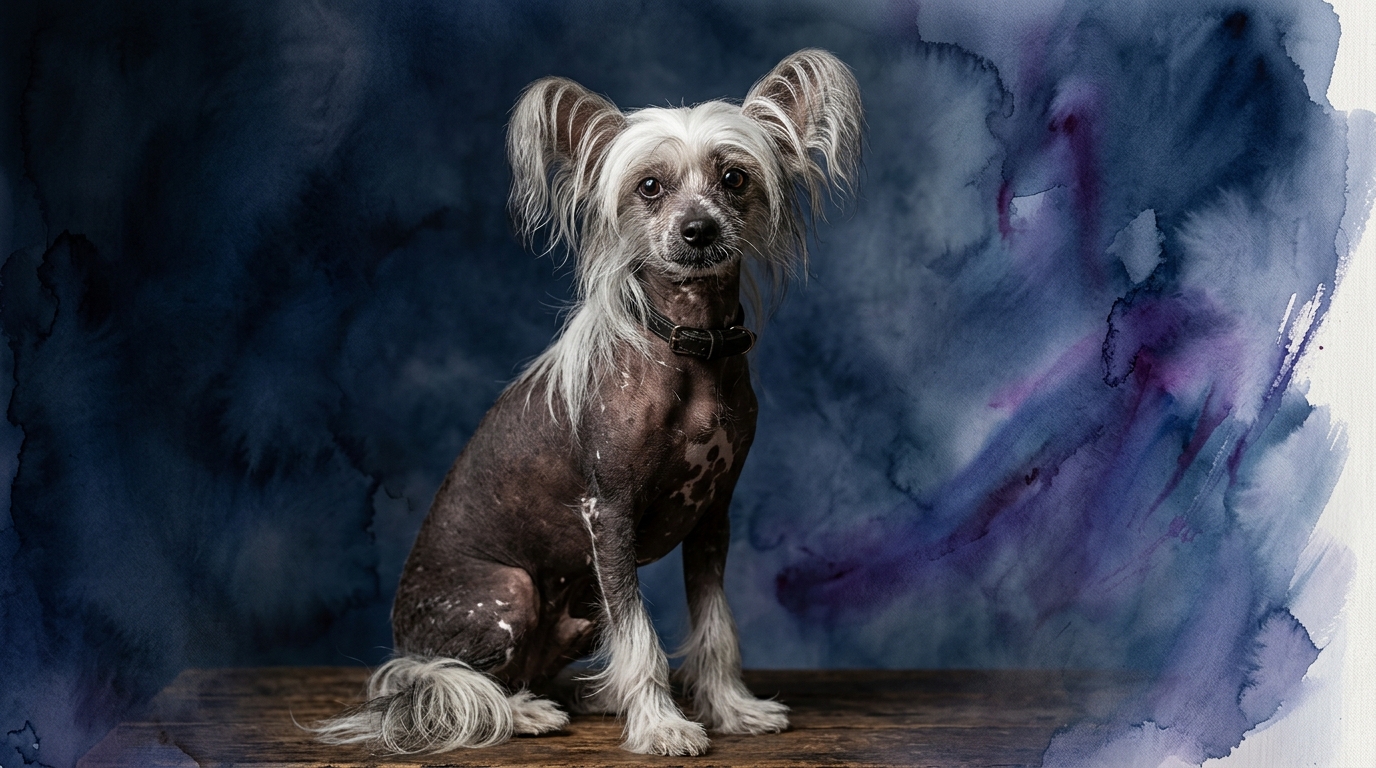
Side-by-Side IQ Profile: Mastiff vs. Chinese Crested
When we delve into the cognitive landscapes of the Mastiff and the Chinese Crested, The Cosmic Pet Pet IQ Lab provides a fascinating baseline: both breeds score 3 out of 5 across all five measured dimensions of intelligence. This uniform scoring, especially for breeds so physically disparate, invites a nuanced understanding of what a '3' signifies for each.
For Problem Solving (3/5), the Mastiff, ranked #72 by Coren, typically exhibits a deliberate, methodical approach. Their solutions often involve careful observation and then a measured response, particularly when assessing perceived threats or navigating familiar environments. A Mastiff might figure out how to open a gate not through frantic attempts, but by patiently nudging the latch. The Chinese Crested, in contrast, often ties its problem-solving to social interaction or comfort. They might quickly learn which family member is most likely to share a treat or how to manipulate a toy to gain attention, their solutions often agile and driven by social cues rather than physical challenges.
Training Speed (3/5) indicates a moderate learning curve for both, demanding consistent, positive reinforcement. For the Mastiff, their sheer size and inherent independence mean that while they comprehend commands, their response might not be immediate or demonstrative. Training a Mastiff requires patience and an understanding of their motivation, which is frequently rooted in pleasing their family or maintaining household order. The Chinese Crested, physically nimble and often sensitive, can be easily distracted. While they may pick up tricks quickly due to their eagerness to engage, retaining complex sequences requires repetition and making the training process consistently fun and rewarding.
Social Intelligence (3/5) highlights both breeds' capacity for understanding and responding to social cues. Mastiffs are renowned for their reserved yet protective nature; they adeptly read body language and tone, discerning friend from potential intruder with quiet discernment. Their social intelligence is often expressed through unwavering loyalty and their ability to integrate into family dynamics while maintaining a watchful presence. The Chinese Crested's social intelligence shines in its deep bond with primary caregivers. They are highly attuned to human emotions, often acting as sensitive barometers of their owner's mood, seeking to comfort or engage as needed, thriving on companionship and adept at communicating their desires through subtle cues.
Instinctive Drive (3/5) manifests differently for each. The Mastiff's drive is heavily weighted towards guardianship and protection. This isn't a frantic, high-energy drive but a deep-seated instinct to monitor and defend their family and territory, possessing an inherent understanding of boundaries and a measured response to perceived intrusions. For the Chinese Crested, their instinctive drive leans towards companionship and perhaps a surprising prey drive for small scurrying creatures. They instinctively seek warmth, comfort, and human connection, often displaying an almost cat-like agility and curiosity for small movements, a remnant of their past as ratters.
Finally, Memory (3/5) indicates both breeds will recall commands, routines, and experiences with reasonable consistency. The Mastiff's memory contributes to their reliability as guardians; they recall who belongs and who doesn't, and remember past interactions and routines, providing a sense of stability. The Chinese Crested's memory helps them recall tricks, preferred walking routes, and the habits of their family members, influencing their social interactions and willingness to engage in certain activities.
Where the Mastiff Wins Cognitively
The Mastiff's cognitive strengths manifest uniquely, particularly in situations demanding gravitas and a measured response. Their sheer physical presence, coupled with their calm problem-solving ability, makes them unparalleled in assessing and deterring potential threats without unnecessary aggression. A Mastiff’s cognitive process for territory management involves a deep understanding of their environment, remembering regular visitors versus strangers, and discerning intent based on subtle cues. They excel in what could be termed 'strategic patience,' observing a situation before committing to action. Their substantial memory (3/5) is crucial here, allowing them to build a comprehensive mental map of their domain and the individuals within it, contributing to their reliability as a discerning protector rather than a reactive one. This deliberate cognitive style means they aren't easily flustered by novel situations but rather process them through a lens of quiet assessment, making them exceptionally stable and thoughtful companions.
Where the Chinese Crested Wins Cognitively
The Chinese Crested, despite its smaller stature, demonstrates a distinct set of cognitive advantages, particularly in adaptability and emotional attunement. Their problem-solving (3/5) often involves clever manipulation of their environment or their human companions to achieve comfort or attention, such as strategically placing themselves for maximum sun exposure or nudging a hand for a pet. Their social intelligence (3/5) is remarkably acute, allowing them to quickly gauge human moods and react with comforting presence or playful antics. This sensitivity makes them exceptional emotional support companions, as they seem to instinctively understand and respond to subtle shifts in human emotion. Furthermore, their moderate memory (3/5) enables them to quickly learn complex routines and a wide array of tricks, often performed with a theatrical flair, making them highly engaging and entertaining companions. Their cognitive nimbleness allows them to thrive in diverse living situations, from bustling city apartments to quiet suburban homes, adjusting their behavior to suit the environment.
Which is Easier to Train and Why
Assessing which breed is 'easier' to train, despite their identical 3/5 training speed, requires considering their fundamental behavioral differences and physical attributes. The Chinese Crested, with its smaller size and eagerness to please, often appears to pick up basic commands and tricks more quickly. Their motivation is frequently tied to social interaction and positive reinforcement, making them responsive to playful training sessions. However, their sensitivity means harsh corrections can be counterproductive, potentially leading to shut-down or anxiety. They require consistent, gentle methods and can sometimes be prone to distraction due to their curiosity, demanding engaging and varied approaches.
The Mastiff, while possessing the same training speed score, presents a different challenge due to its immense size and independent nature. A Mastiff's 'no' often means 'I'll think about it,' and physically managing a reluctant Mastiff is a significant undertaking. Their motivations are often less about constant engagement and more about respecting their human leader and understanding the purpose of a command. Training a Mastiff demands unwavering consistency, strong leadership, and an understanding that their responses, while potentially slower to emerge, are typically solid once ingrained. Therefore, while a Crested might offer quicker initial progress in simple tasks, a Mastiff's training requires more physical management and a deeper commitment to long-term, patient instruction to shape desirable behaviors effectively and safely.
Which Suits Active Owners vs. Relaxed Owners
The Mastiff generally aligns better with relaxed owners who appreciate a calm, watchful presence and a predictable routine. While they benefit from regular, moderate exercise—like a leisurely walk or time in a securely fenced yard—they are not built for sustained high-impact activities. Their cognitive needs are met through their role as a family guardian and by engaging in low-key mental stimulation, such as puzzle toys or scent work within their territory. Owners who enjoy quiet companionship, are prepared for a large dog's physical demands, and value a dog that observes rather than constantly acts, will find a Mastiff a fitting match, thriving on stability and a calm home.
Conversely, the Chinese Crested, despite its small size, can surprise owners with its moderate energy levels and desire for engagement. They thrive with owners who enjoy interactive play, teach tricks, and include their dog in daily activities. While they can adapt to relaxed periods, they also appreciate opportunities for agility, short bursts of running, or engaging in canine sports. Their cognitive profile benefits from varied mental stimulation and consistent social interaction, keeping their agile minds occupied. Therefore, owners who are moderately active, enjoy teaching new things, and want a highly interactive companion will find the Chinese Crested a more suitable partner, enjoying their spirited and affectionate nature.
The Verdict
Opt for a Mastiff if you desire a serene, protective giant who provides a calming, watchful presence and whose cognitive strengths lie in deliberate assessment and unwavering loyalty within a stable, predictable home environment.
Choose a Chinese Crested if you prefer an adaptable, emotionally attuned companion who thrives on close interaction, enjoys learning new tricks, and brings a lively, engaging presence to a moderately active household.
🧠 Find Your Pet's IQ Score
Our Pet IQ Lab assessment covers 25+ tests across 5 cognitive dimensions — personalized to your breed.
Take the Full IQ Test →Frequently Asked Questions
Do Mastiffs and Chinese Cresteds have similar intelligence levels?
The Cosmic Pet Pet IQ Lab assigns both Mastiffs and Chinese Cresteds identical scores across five cognitive dimensions: problem-solving, training speed, social intelligence, instinctive drive, and memory, all rated 3/5. This suggests they possess comparable underlying cognitive capacity, though how these abilities manifest in behavior differs greatly due to their breed-specific roles and physical attributes.
What does a 3/5 score for 'training speed' mean for these breeds?
A 3/5 training speed indicates a moderate learning curve, meaning both breeds require consistent, positive reinforcement to grasp and retain commands effectively. For the Mastiff, this translates to patient, firm instruction to overcome their independent nature, while for the Chinese Crested, it means engaging their sensitive, often distractible nature with fun and rewarding sessions.
How do their 'instinctive drives' differ despite the same 3/5 score?
Both breeds have a 3/5 instinctive drive, but its direction varies significantly. The Mastiff's drive is primarily geared towards guardianship and protection of its family and territory, manifesting as a watchful, measured presence. The Chinese Crested's drive leans towards intense companionship and social interaction, alongside a surprising agility and curiosity that can translate into a mild prey drive for small objects.