
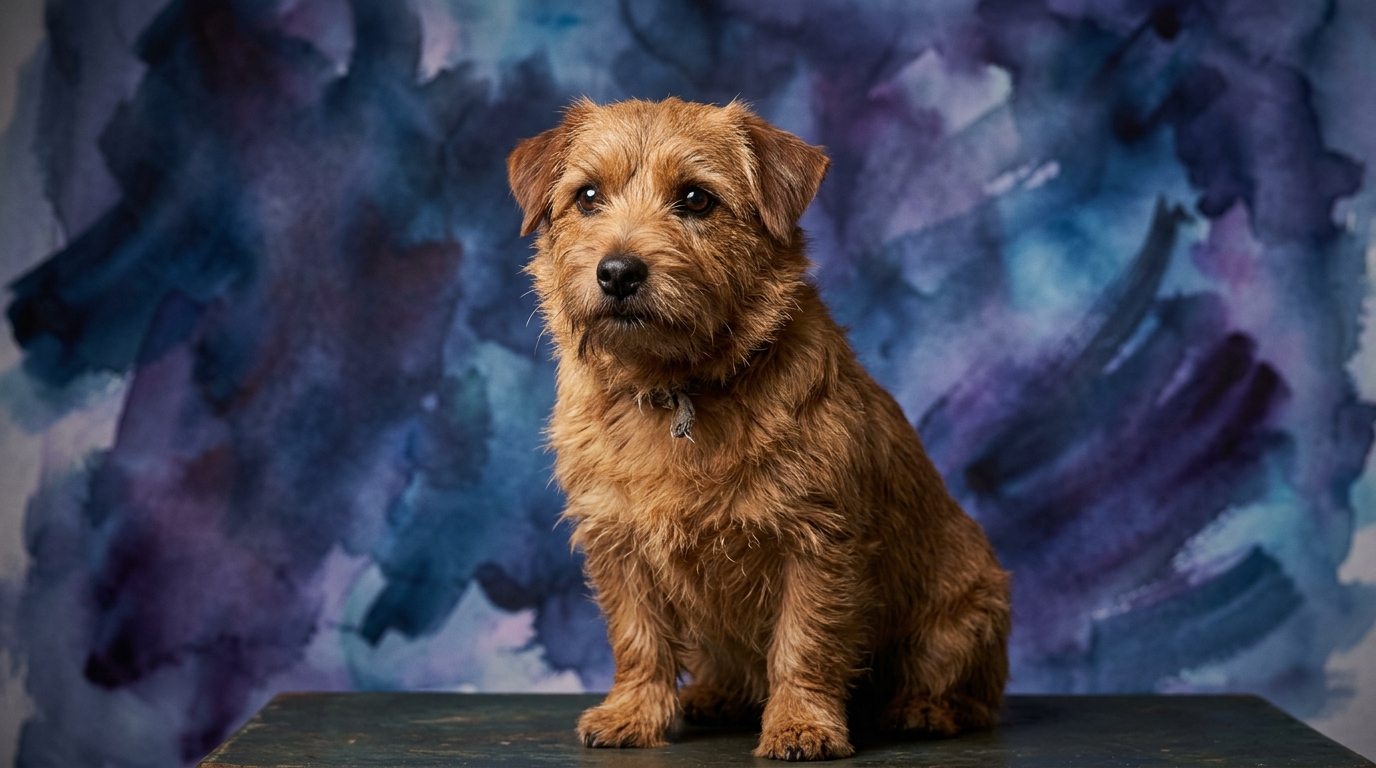
Side-by-Side IQ Profile: Mastiff vs. Norfolk Terrier
The Cosmic Pet Pet IQ Lab assesses canine intelligence across five key dimensions, providing a framework to understand each breed's unique mental landscape. While both the Mastiff and the Norfolk Terrier register a consistent 3/5 across all categories, their breed-specific applications of these scores paint very different pictures.
The Mastiff, a distinguished member of the Working Group with a Coren ranking of #72, embodies a thoughtful, deliberate intelligence tailored for guardianship. Their Problem Solving (3/5) manifests as a methodical assessment of their environment, evaluating situations with calm deliberation rather than impulsive action, often related to territory and family safety. Training Speed (3/5) for a Mastiff means they learn effectively with patience and consistency, absorbing commands reliably once understood, favoring gentle, clear guidance. Their Social Intelligence (3/5) is characterized by a discerning, watchful nature, excelling at understanding household dynamics and reacting appropriately to strangers with reserved observation. The Instinctive Drive (3/5) in a Mastiff centers on guardianship and protection, making them acutely aware of their surroundings and potential threats. Finally, their Memory (3/5) is solid, retaining commands, routines, and past interactions, contributing to their consistent, steadfast demeanor.
The Norfolk Terrier, belonging to the Terrier Group and not Coren-ranked, showcases a vibrant, tenacious intelligence, perfectly suited for its historical role. Their Problem Solving (3/5), while numerically identical, involves a more rapid, exploratory approach, adept at navigating complex spaces or outsmarting small prey with tenacity and cleverness. Training Speed (3/5) for a Norfolk Terrier means they absorb new information readily when engaged, but their independent streak requires consistency, fun, and rewards to maintain focus and compliance. Their Social Intelligence (3/5) is marked by an outgoing, engaging personality, keenly aware of human moods and eager to participate in activities, often expressing opinions vocally. The Instinctive Drive (3/5) is profoundly rooted in their terrier heritage: a strong prey drive, a desire to dig, and a tendency to bark, fueling their curiosity and adventurous spirit. Their Memory (3/5) is good, recalling commands, routines, and the locations of interesting scents or "prey" with notable consistency.
Where the Mastiff Wins Cognitively
Despite identical numerical scores, the Mastiff's cognitive strengths distinctly shine in areas requiring calm deliberation and a profound sense of responsibility. Their 3/5 problem-solving manifests as a methodical assessment of their environment, allowing them to make measured decisions regarding territory and family safety, often without direct human instruction. This is a crucial difference from a terrier's quick, often impulsive, problem-solving. Furthermore, their 3/5 social intelligence leans towards a deep, quiet understanding of household dynamics, providing a stable, protective presence that anticipates needs rather than demanding attention, a subtle yet powerful cognitive advantage in a guardian role.
Where the Norfolk Terrier Wins Cognitively
The Norfolk Terrier's 3/5 cognitive scores translate into a distinct advantage in adaptability and agile responsiveness, particularly in dynamic, novel situations. Their problem-solving, while rated the same, involves a more rapid, exploratory approach, crucial for navigating varied terrains or outsmarting small prey, a stark contrast to the Mastiff's deliberate assessment. Their instinctive drive, focused on hunting and exploration, combined with their memory, makes them exceptionally good at remembering specific locations of interest or pathways to investigate, fostering a quick-witted resourcefulness that excels in active engagement and discovery.
Which is Easier to Train and Why
While both breeds share a 3/5 training speed, the *ease* of training hinges significantly on their inherent motivations and temperaments. The Mastiff, with its profound loyalty and desire to please its family, often responds well to consistent, gentle training. Their large size necessitates early and thorough socialization and obedience, which they absorb reliably due to their steady memory and social intelligence that values harmony. Challenges with Mastiffs typically stem from their occasional independent streak or their sheer physical presence, requiring patience but generally yielding a cooperative learner.
The Norfolk Terrier, conversely, presents a different training landscape. Their independent terrier spirit and strong instinctive drives mean that while they are capable learners, they often require more creative and engaging training methods to maintain focus and compliance. Their problem-solving and memory are geared towards self-directed exploration, which can translate into selective hearing if a more exciting scent or activity presents itself. Owners must be consistent, firm, and make training a fun, rewarding game to channel their vivacious energy and overcome their natural inclination to follow their own agenda, making them potentially more challenging for a novice owner to consistently motivate.
Which Suits Active Owners vs. Relaxed Owners
The vast differences in physical needs and temperament, despite similar cognitive ratings, clearly separate these breeds for different lifestyles. The Mastiff, once past puppyhood, generally suits more relaxed owners who appreciate a calm, watchful companion. While they benefit from regular, moderate exercise, their immense size means they aren't built for high-impact activities or extensive endurance. Their cognitive strength lies in observation and quiet companionship, making them ideal for owners who enjoy a serene home environment and value a majestic, protective presence without demanding constant physical engagement.
The Norfolk Terrier is unequivocally better suited for active owners, or at least those prepared to provide consistent mental and physical stimulation. Their small size belies a robust energy level and an inquisitive mind that thrives on activity, exploration, and engagement. They need regular walks, playtime, and opportunities to use their problem-solving skills in interactive games or learning new tricks. A relaxed owner who cannot meet their intrinsic need for activity will likely find their Norfolk resorting to self-entertainment, which might involve digging, barking, or other behaviors driven by their strong instinctive drives and problem-solving ingenuity.
The Verdict
Select a Mastiff if you seek a calm, majestic companion for a relaxed household, valuing a quiet, protective presence and a dog that excels in consistent, deliberate learning within a stable routine.
Opt for a Norfolk Terrier if you are an active owner who can provide consistent mental and physical engagement, appreciating a spirited, curious companion with a tenacious problem-solving approach and a lively personality.
🧠 Find Your Pet's IQ Score
Our Pet IQ Lab assessment covers 25+ tests across 5 cognitive dimensions — personalized to your breed.
Take the Full IQ Test →Frequently Asked Questions
Do Mastiffs and Norfolk Terriers learn at the same pace?
Both breeds have a 3/5 training speed, indicating a moderate learning capacity. However, the *application* of this speed differs; Mastiffs learn reliably with patience, while Norfolk Terriers learn quickly but require more engaging methods to maintain their focus due to their independent nature.
Which breed is better for apartment living, considering their cognitive traits?
The Norfolk Terrier is generally better suited for apartment living due to its small size and adaptability, provided its cognitive need for stimulation and activity is met through regular outings and interactive play. A Mastiff's sheer size and need for space, even if calm, make apartment living more challenging, irrespective of its cognitive scores.
How do their social intelligence scores of 3/5 manifest differently in a family setting?
A Mastiff's 3/5 social intelligence manifests as a calm, observant protector, understanding family dynamics subtly and offering a steady, reassuring presence. A Norfolk Terrier's 3/5 social intelligence presents as an engaging, eager participant, highly attuned to human emotions and keen to interact playfully or vocally, making them a more outwardly expressive companion.