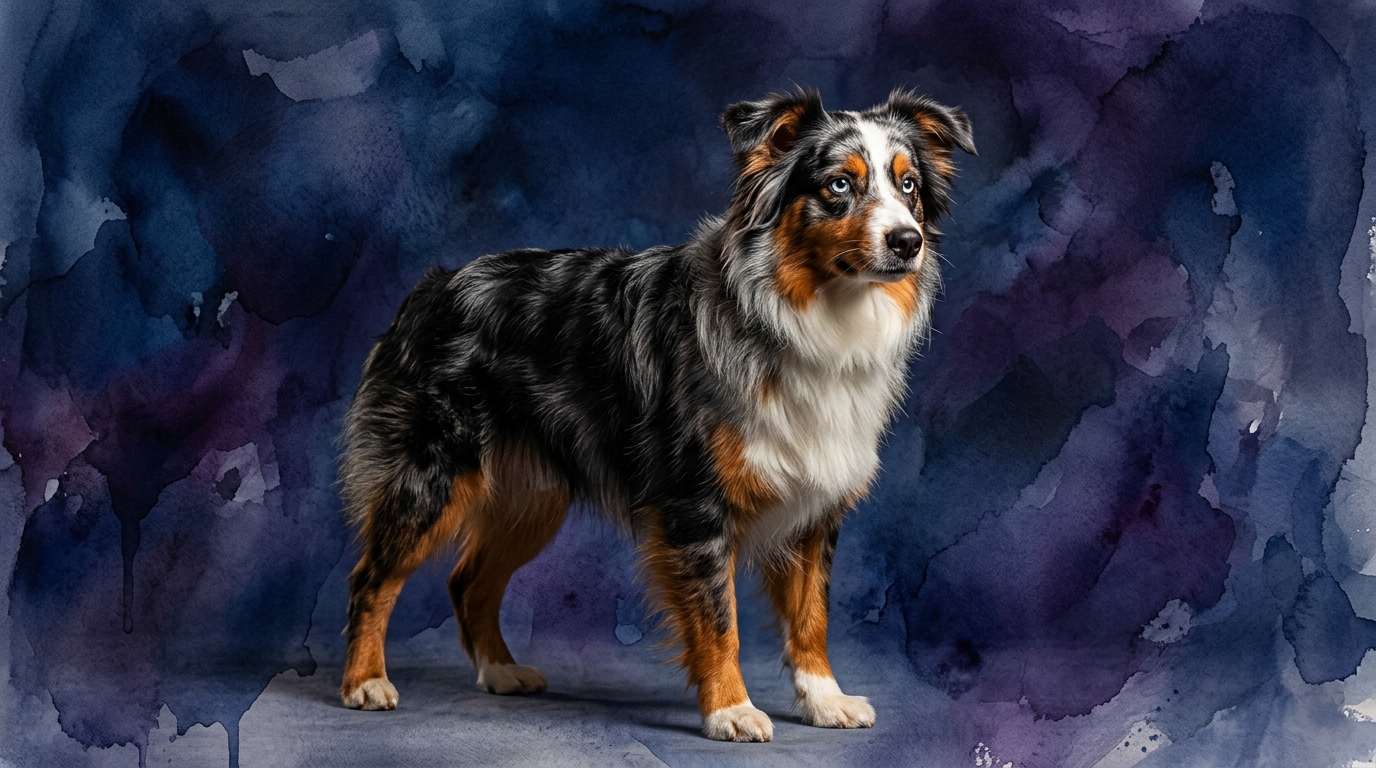
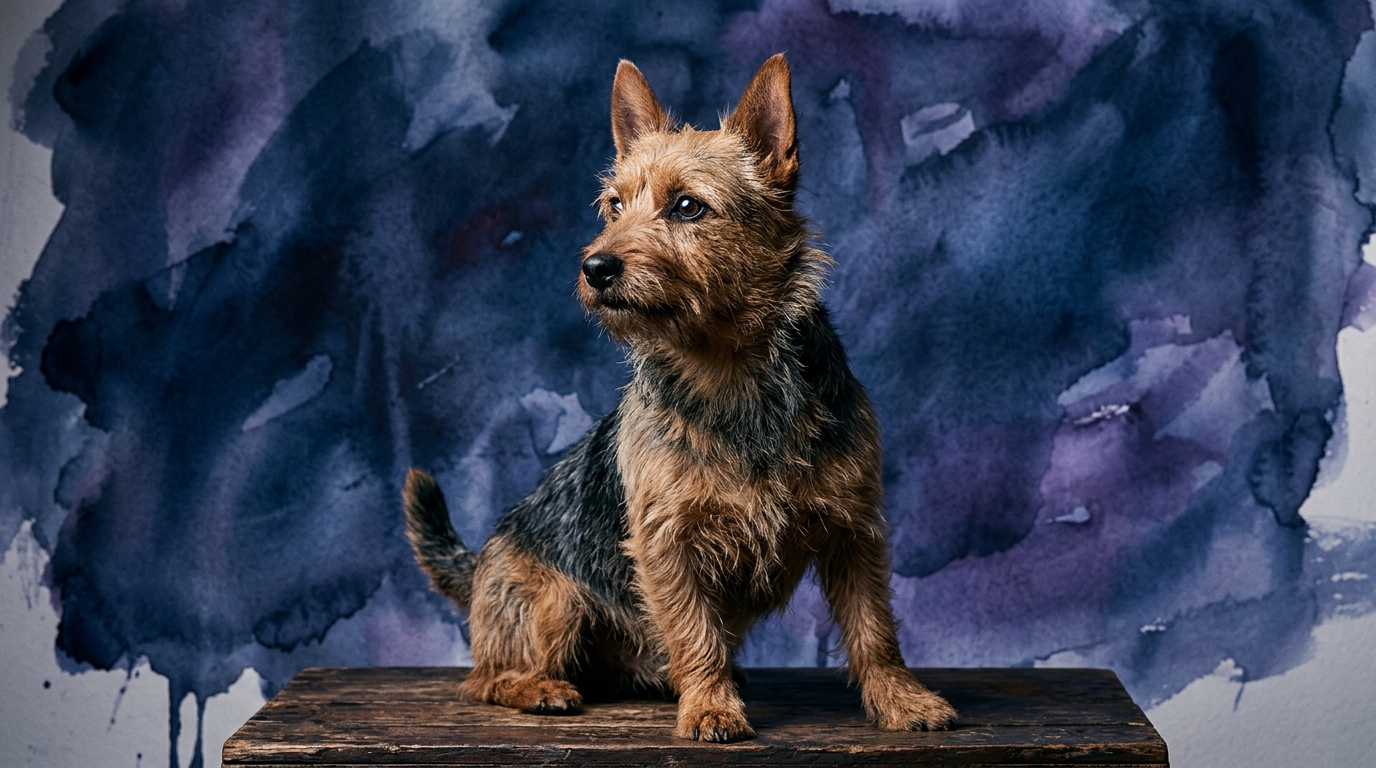
Side-by-Side IQ Profile: Herding vs. Terrier Minds
A score of 3/5 indicates a dog capable of navigating moderately complex situations and finding solutions, often through observation and trial-and-error. For the Miniature American Shepherd, this typically translates to figuring out how to direct a flock, anticipate livestock movement, or strategize in agility courses, using their intellect for coordination. The Australian Terrier's 3/5 problem-solving often shines in independent scenarios, such as locating hidden toys, discovering escape routes, or devising methods to reach a desired object, frequently employing cleverness and tenacity.
A 3/5 in training speed suggests these breeds grasp new commands and routines at a good pace, requiring consistent, clear instruction. Miniature American Shepherds generally absorb complex sequences quickly, especially when tasks involve working alongside their handler and mimicking herding behaviors, showing a strong desire to cooperate. Australian Terriers, while equally capable of learning at this speed, often require training methods that cater to their independent spirit, making tasks engaging and rewarding to maintain their focus and enthusiasm.
A 3/5 score in social intelligence means these dogs are adept at reading cues from humans and other animals, adapting their behavior accordingly. The Miniature American Shepherd excels at interpreting subtle handler signals, understanding pack dynamics within a family, and responding appropriately to the nuances of livestock behavior. Australian Terriers demonstrate their social intelligence by understanding human routines, manipulating situations to their advantage, and often displaying a keen awareness of their position within the household hierarchy or their interactions with other dogs.
This 3/5 indicates a moderate but present genetic predisposition for specific behaviors, requiring appropriate outlets. For the Miniature American Shepherd, this is primarily a strong herding instinct, a desire to gather, control, and move things, often expressed through circling, nudging, or 'managing' family members. The Australian Terrier's 3/5 instinctive drive manifests as a robust prey drive, an urge to chase, dig, and investigate small critters, making them persistent in their pursuits and curious about their environment.
A 3/5 memory score suggests these breeds can retain learned commands, routines, and specific locations or experiences over time. Miniature American Shepherds often display excellent recall for complex routes, multi-step commands, and the specific characteristics of individuals within their 'flock' or family group. Australian Terriers exhibit their memory through remembering where they buried a prized possession, recalling specific scent trails, or mastering a repertoire of tricks and problem-solving strategies, often with remarkable consistency.
Where the Miniature American Shepherd Wins Cognitively
The Miniature American Shepherd's cognitive strengths, while numerically identical to the Australian Terrier, are distinctly geared towards cooperative problem-solving and nuanced communication within a working partnership. Their 3/5 problem-solving manifests as a strategic approach to tasks requiring foresight and coordination, such as anticipating the movement of a frisbee in flight or navigating an intricate agility course with precision. Their 3/5 social intelligence shines in their exceptional ability to interpret subtle human cues and adjust their actions accordingly, making them highly responsive to even slight changes in tone or body language during complex tasks. This cooperative drive, rooted in their herding heritage, means their memory for multi-step commands and routines is often reinforced by a strong desire to work *with* their handler, leading to seamless execution of intricate sequences. Their instinctive drive, focused on gathering and controlling, provides a structured motivation that can be readily channeled into productive and engaging activities, making their cognitive application highly efficient in team-oriented settings.
Where the Australian Terrier Wins Cognitively
The Australian Terrier, despite identical raw IQ scores, excels in areas demanding independent thought, tenacity, and a keen focus on self-directed tasks. Their 3/5 problem-solving is often expressed through clever, persistent strategies for overcoming obstacles or achieving a desired outcome, such as figuring out how to open a cabinet or outmaneuver a squeaky toy. This breed's 3/5 instinctive drive, centered on hunting and digging, fuels a remarkable single-mindedness when pursuing a scent or investigating a potential burrow, demonstrating a focused mental energy that can be difficult to deter. Their 3/5 memory is particularly robust for spatial awareness and specific locations of interest, allowing them to recall where a treat was hidden days ago or remember the most efficient path to their favorite sunbathing spot. Furthermore, their 3/5 social intelligence often manifests as a shrewd understanding of household dynamics, enabling them to 'train' their humans through charming persistence or clever antics to get what they want. The Australian Terrier's cognitive strengths are particularly suited for environments where independent decision-making and a spirited pursuit of personal objectives are valued.
Training Dynamics: Which is Easier to Train and Why?
While both breeds possess a 3/5 training speed, the Miniature American Shepherd generally presents as the “easier” dog to train due to fundamental differences in temperament and motivational drivers. Miniature American Shepherds were selectively bred to work closely with humans, demonstrating an inherent desire to please and a strong work ethic; their 3/5 training speed is amplified by this cooperative spirit, making them highly receptive to instruction and eager to participate in learning sessions. They thrive on positive reinforcement and consistent guidance, quickly understanding what is expected of them and performing tasks with enthusiasm, especially when those tasks involve direction and purpose. The Australian Terrier, conversely, while equally capable of learning at a 3/5 pace, often approaches training with a more independent and sometimes stubborn mindset, characteristic of the terrier group. Their strong prey drive and self-reliant nature mean they are more likely to follow their nose or pursue an interesting distraction than to immediately comply with a command, particularly if they don't perceive an immediate benefit. Training an Australian Terrier requires extra creativity, patience, and making the learning process feel like a fun challenge rather than a chore, often needing more repetition and higher-value rewards to maintain their focus against competing instincts.
Lifestyle Match: Active Owners vs. Relaxed Owners
Both the Miniature American Shepherd and the Australian Terrier demand owners who are prepared to be active and engaged, though the *nature* of that engagement differs. The Miniature American Shepherd is an ideal companion for truly active owners who enjoy structured activities like dog sports (agility, obedience, flyball), hiking, or even exploring the possibility of herding trials. Their combination of 3/5 instinctive drive and 3/5 memory means they thrive on having a 'job' and require significant mental and physical stimulation daily; they are not content to be couch potatoes without appropriate outlets for their energy and cooperative intelligence. A relaxed owner who cannot provide these outlets may find a Miniature American Shepherd becomes bored and potentially destructive. The Australian Terrier also requires an active owner, but their activity often leans more towards vigorous daily walks, interactive play sessions, and opportunities to explore and sniff. While they may not demand the same level of structured 'work' as a MAS, their 3/5 instinctive drive for chasing and digging means they need consistent opportunities to burn off energy and satisfy their natural curiosities. A relaxed owner for an Australian Terrier must still be committed to regular, stimulating outdoor adventures, but might find them more amenable to curling up on the sofa once their daily needs are met, provided those needs are consistently addressed.
The Verdict
Choose the Miniature American Shepherd if you seek a highly cooperative, responsive partner for structured activities and dog sports, thriving on a shared sense of purpose and eager to work alongside you.
Opt for the Australian Terrier if you appreciate a spirited, independent companion who excels at clever problem-solving and tenacious pursuits, offering boundless personality and a lively approach to life's adventures.
🧠 Find Your Pet's IQ Score
Our Pet IQ Lab assessment covers 25+ tests across 5 cognitive dimensions — personalized to your breed.
Take the Full IQ Test →Frequently Asked Questions
Do Miniature American Shepherds and Australian Terriers get along with other pets?
Miniature American Shepherds, with their 3/5 social intelligence and herding instincts, often integrate well into multi-pet households, especially if socialized early, though they may try to 'herd' smaller animals. Australian Terriers, due to their 3/5 prey drive, might require more careful introductions with smaller, non-canine pets, but generally coexist peacefully with other dogs if properly socialized.
What kind of mental stimulation do these breeds need daily?
Both breeds with 3/5 problem-solving and memory benefit from daily mental challenges. Miniature American Shepherds thrive on puzzle toys, learning new tricks, and practicing obedience routines, engaging their cooperative intelligence. Australian Terriers enjoy scent work, hide-and-seek games, and toys that challenge their tenacity and independent problem-solving skills.
Are these breeds suitable for first-time dog owners?
Both breeds can be suitable for dedicated first-time owners, but their distinct cognitive profiles mean different challenges. A first-time owner choosing a Miniature American Shepherd should be prepared for their significant exercise and training needs, focusing on consistent, positive reinforcement. A first-time owner considering an Australian Terrier must be ready to manage their independent nature and strong prey drive with patience and creative, engaging training methods.