Side-by-Side Cognitive Profiles: Decoding Identical Scores
Both the Miniature American Shepherd and the Finnish Spitz register a consistent 3/5 across problem solving, training speed, social intelligence, instinctive drive, and memory. This uniform scoring suggests that while neither breed is at the extreme ends of the cognitive spectrum, they are capable, adaptable, and possess a solid foundation for learning and interaction. The key lies in understanding how their ancestral roles shape the application of these abilities, rather than the raw capacity itself.
For Problem Solving (3/5), both breeds can navigate moderate challenges. A Miniature American Shepherd might figure out how to open a moderately secure treat puzzle, while a Finnish Spitz could independently devise a route to track a scent in a complex environment. Their solutions are generally practical and goal-oriented. Training Speed (3/5) indicates they absorb new commands and routines at a respectable pace, but may require consistent, engaging methods to maintain focus and motivation; they aren't 'one-and-done' learners, nor are they excessively stubborn. Social Intelligence (3/5) means they can read and respond to cues from humans and other animals, though the nature of these interactions will differ. An MAS might be more attuned to a handler's subtle body language, while a Finnish Spitz might be more perceptive of environmental changes or the presence of prey. Their Instinctive Drive (3/5) is robust, but channeled differently: the MAS has a moderate herding instinct, while the Finnish Spitz exhibits a pronounced hunting and alerting drive. Finally, Memory (3/5) suggests they retain learned behaviors and routines well, remembering specific locations or sequences of events, though complex, multi-step tasks introduced infrequently might require refreshers.
Where the Miniature American Shepherd Cognitively Excels
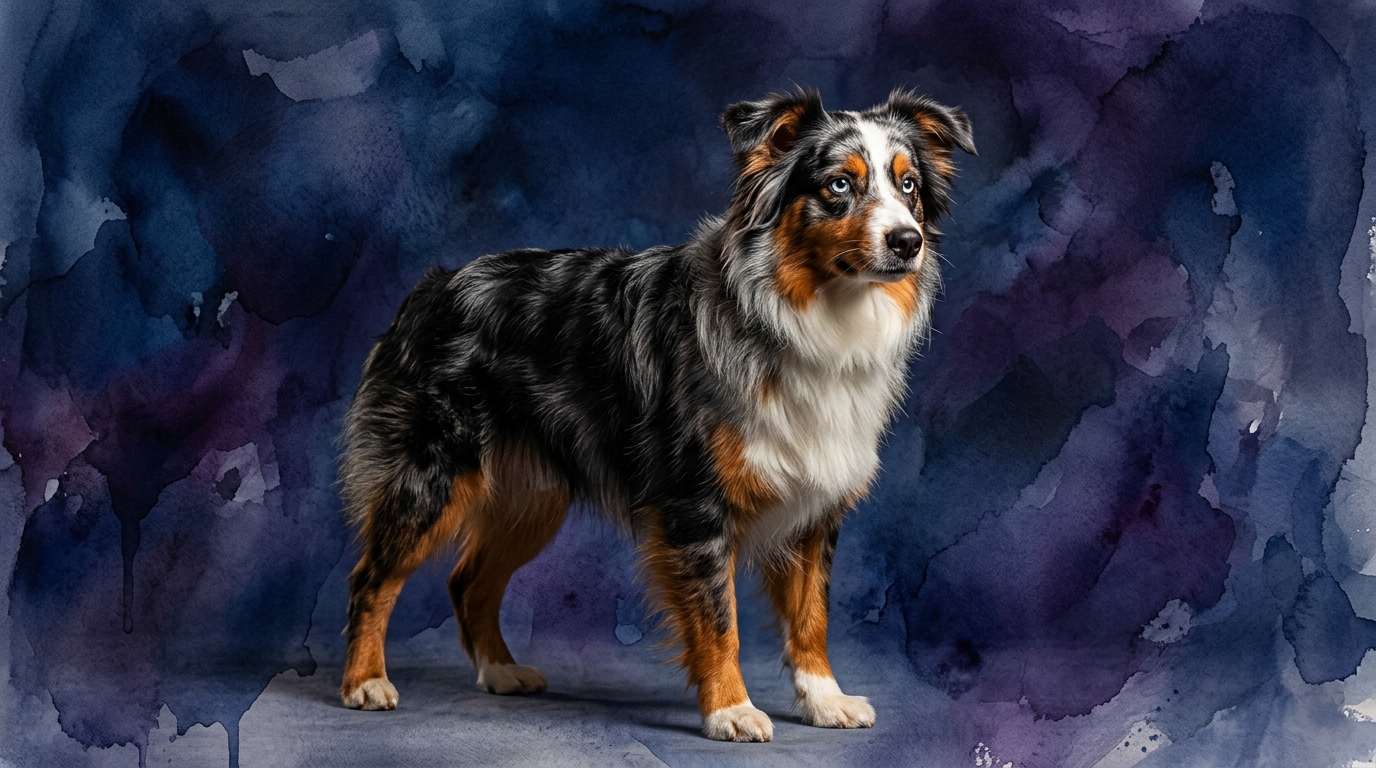
Despite sharing a 3/5 in every category, the Miniature American Shepherd's herding heritage gives it a distinct edge in cooperative problem-solving and responsiveness to human direction. Its social intelligence, while rated 3/5, is often oriented towards understanding and anticipating its handler's wishes, a crucial trait for working livestock. This translates into a dog that can more readily interpret complex sequences of commands and adapt its behavior to achieve a shared goal with a human partner. Their 'instinctive drive' to gather and control manifests as a desire for structure and a tendency to keep their 'flock' (human family) together, making them naturally attentive companions.
Their problem-solving ability, also 3/5, is often applied within a framework of partnership. For instance, an MAS might not just figure out how to get a toy, but how to 'work' its human to retrieve it or engage in a game. This breed's memory (3/5) is particularly strong for routines and learned tasks that involve interaction and collaboration, making them adept at canine sports like agility or obedience where precise, remembered sequences are paramount. Their moderate training speed (3/5) is amplified by their eagerness to engage and their inherent biddability, meaning they are often perceived as quicker to 'click' with a handler's instructions.
Where the Finnish Spitz Cognitively Excels
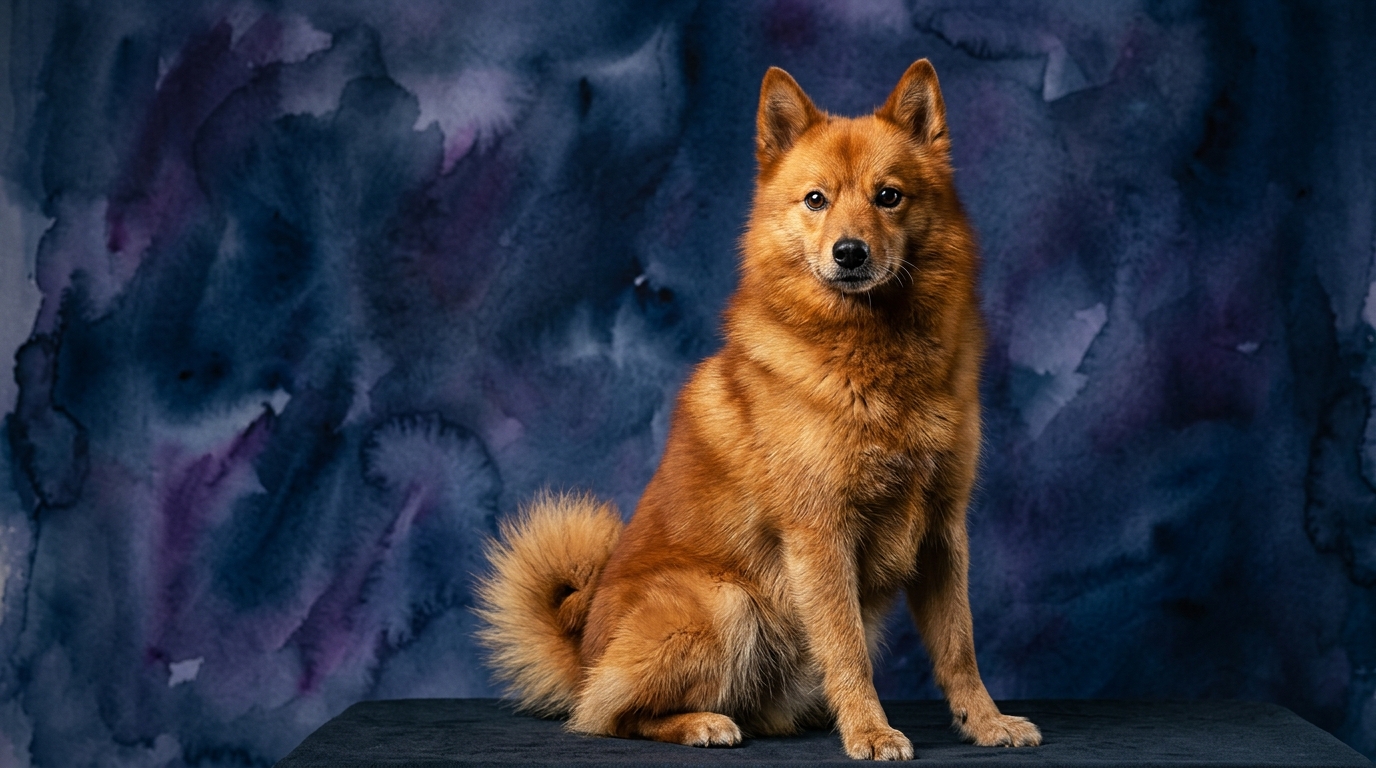
The Finnish Spitz, with its identical 3/5 scores, demonstrates its cognitive strengths through a lens of independence and keen environmental awareness, a legacy of its role as a hunting dog. Its problem-solving capacity (3/5) often shines in navigating challenging outdoor environments, tracking scents, or employing clever strategies to locate and 'point' game. This is a dog that thinks for itself in pursuit of a goal, rather than primarily waiting for human instruction. Their social intelligence (3/5) is geared more towards understanding the nuances of their surroundings and communicating effectively through their distinctive 'yodel' or bark, alerting their human companions to changes or discoveries.
The Finnish Spitz's instinctive drive (3/5) is heavily focused on hunting and alerting, providing a powerful internal motivation for exploration and vigilance. This drive fuels their independent problem-solving, such as finding a way around an obstacle to follow a scent trail. Their memory (3/5) is particularly good for spatial awareness and recalling specific locations where interesting scents or events occurred. While their training speed is 3/5, their independent nature means that motivation often needs to appeal to their innate drives rather than purely a desire to please, making them exceptionally clever at manipulating situations to their advantage if not properly engaged.
Trainability: Cooperation vs. Independence
While both breeds score 3/5 in training speed, the Miniature American Shepherd is generally perceived as easier to train due to its deeply ingrained desire for partnership and its herding instinct to work closely with a handler. Their attention is more naturally directed towards their human, and they often find intrinsic reward in pleasing and collaborating. This means they are often more forgiving of handler mistakes and more consistent in their responses, making the training process feel smoother and more progressive for many owners. Their social intelligence is often expressed as a willingness to adapt to human-led routines.
The Finnish Spitz, on the other hand, while equally capable of learning, presents a different training dynamic. Its independent hunting background means it often prioritizes its own instincts and environmental stimuli over human commands. This can translate into a need for more creative, highly motivating training methods and a greater degree of patience. Their problem-solving and memory are excellent, but they are more likely to apply these to their own agenda, such as exploring a scent trail, rather than strictly adhering to a 'sit-stay' in the face of distraction. Owners must understand that a Finnish Spitz's '3/5 training speed' means they learn, but their '3/5 instinctive drive' means they might choose when and how to apply that learning based on their internal motivations.
Suitability for Active vs. Relaxed Owners
The Miniature American Shepherd is an excellent fit for active owners who relish a highly engaged and cooperative canine partner. Their moderate instinctive drive (herding) and social intelligence make them thrive in environments where they have a 'job' to do, whether it's agility, obedience, herding trials, or simply being a constant, interactive companion on hikes and adventures. Owners who enjoy consistent training, mental enrichment puzzles, and a dog that seeks out interaction will find the MAS's cognitive profile aligns perfectly with their lifestyle. They require significant mental and physical exercise to prevent boredom and channeling their problem-solving and memory into constructive activities.
The Finnish Spitz, while also requiring regular exercise and mental stimulation, suits owners who appreciate a more independent and observant companion. Their strong instinctive drive (hunting/alerting) means they need outlets for their sniffing and vocalization tendencies. They are less likely to be 'velcro dogs' and may prefer to explore their environment or observe from a vantage point. Owners who are relaxed about a dog that isn't always 'on command' but values a keen, vocal alert system and a dog with a strong sense of self will appreciate the Finnish Spitz. They are ideal for those who enjoy outdoor activities where the dog can engage its senses, such as tracking or scent work, and who understand that their 'social intelligence' often includes interpreting the world around them for the benefit of their human 'pack'.
The Verdict
Choose the Miniature American Shepherd if you seek a highly engaged, cooperative partner for training, dog sports, and daily interactive companionship, thriving on a shared purpose and consistent direction.
Opt for the Finnish Spitz if you appreciate an independent, observant, and vocal companion with a strong sense of self, excelling in activities that engage its natural hunting and alerting instincts.
🧠 Find Your Pet's IQ Score
Our Pet IQ Lab assessment covers 25+ tests across 5 cognitive dimensions — personalized to your breed.
Take the Full IQ Test →Frequently Asked Questions
Do Miniature American Shepherds bark a lot?
Miniature American Shepherds can be vocal, especially if bored or not properly exercised, as their herding instinct often includes using their voice to direct. Consistent training and mental stimulation can help manage their barking habits, channeling their communication into appropriate contexts.
Are Finnish Spitz dogs good off-leash?
Finnish Spitz dogs possess a strong hunting drive and independence, making off-leash reliability challenging, particularly in areas with distractions like wildlife. While they can be trained, their instinct to follow a scent or chase can override commands, so a secure environment or long-line is often recommended.
Which breed is better for first-time dog owners?
The Miniature American Shepherd is generally a more suitable choice for first-time dog owners due to its greater biddability and eagerness to please, making training more straightforward. The Finnish Spitz's independent nature and strong vocalization tendencies can be more challenging for those new to dog ownership.