
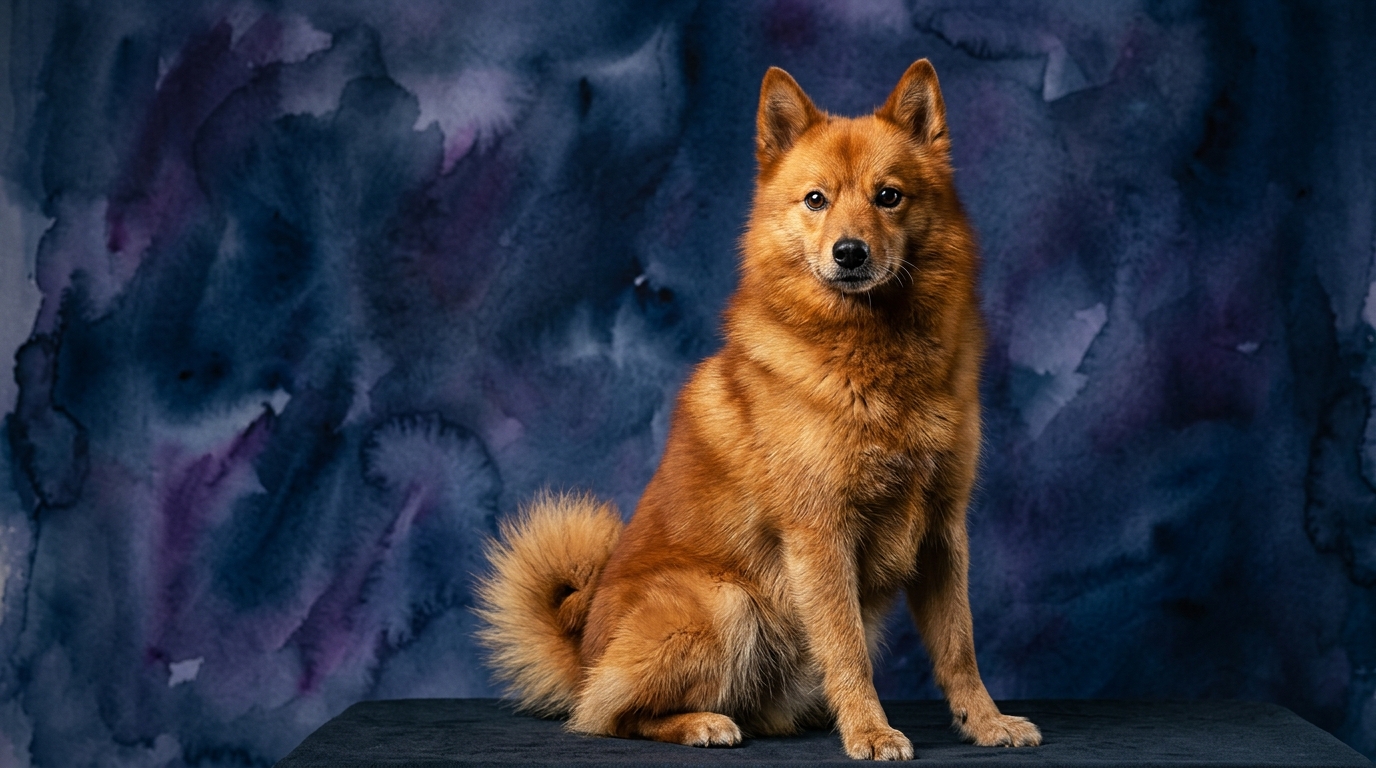
Side-by-Side IQ Profile
The Cosmic Pet Pet IQ Lab employs five key dimensions to evaluate canine intelligence, offering a nuanced understanding of each breed's mental landscape. Here’s how the Standard Poodle and Finnish Spitz compare across these critical cognitive metrics.
For the Standard Poodle:
Problem Solving (5/5): This breed consistently demonstrates an exceptional capacity for navigating complex scenarios, from intricate puzzle toys to understanding multi-step commands. Their approach often involves trial-and-error combined with rapid learning from outcomes, allowing them to quickly grasp cause-and-effect relationships.
Training Speed (5/5): Standard Poodles absorb new commands and routines with remarkable efficiency. They require minimal repetitions to internalize a behavior, making advanced obedience, agility, and even specialized service tasks well within their grasp. This rapid acquisition is a hallmark of their learning style.
Social Intelligence (5/5): Standard Poodles excel at interpreting human communication, including subtle body language, vocal inflections, and emotional states. They often adjust their behavior to suit social contexts, displaying a nuanced understanding of their human companions' needs and moods, fostering strong, responsive bonds.
Instinctive Drive (4/5): While not primarily bred for intense prey drive, Standard Poodles possess a well-developed set of instincts, particularly for retrieving and water work. This drive is often channeled into structured activities, providing an excellent foundation for canine sports and active companionship without overwhelming independence.
Memory (5/5): The recall capabilities of a Standard Poodle are outstanding. They retain learned commands, routines, and associations over extended periods, even after breaks in training. This robust memory contributes significantly to their reliability and consistency in various roles.
For the Finnish Spitz:
Problem Solving (3/5): The Finnish Spitz approaches problem-solving with a practical, direct mindset. They are proficient at tasks requiring immediate, tangible solutions, particularly those related to their ancestral role in hunting. However, they may require more guidance or simplification for abstract or multi-layered challenges.
Training Speed (3/5): Finnish Spitz dogs learn at a moderate pace, typically requiring consistent, patient repetition to solidify new behaviors. While capable of mastering a wide range of commands, their learning curve is more gradual, emphasizing the importance of positive reinforcement and clear communication over quick acquisition.
Social Intelligence (3/5): Finnish Spitz dogs demonstrate a functional understanding of social cues, forming strong bonds with their primary caregivers. Their social interactions tend to be more straightforward and less overtly deferential than some breeds, reflecting their independent nature. They appreciate connection but often prefer to engage on their own terms.
Instinctive Drive (3/5): The instinctive drive of a Finnish Spitz is primarily focused on its heritage as a barking bird dog. This manifests as alert barking and an interest in its surroundings, which can be channeled. While present, this drive is typically less generalized for diverse tasks compared to breeds with broader working backgrounds.
Memory (3/5): Finnish Spitz dogs possess a solid memory for important routines and commands, especially those reinforced positively. They retain information effectively, though occasional refreshers or consistent practice might be beneficial to maintain peak performance, particularly for less frequently used cues.
Where Poodle (Standard) Wins Cognitively
The Standard Poodle's cognitive strengths are evident across nearly every dimension, positioning it as a highly adaptable and versatile companion. Their 5/5 score in Problem Solving means they don't just follow commands; they actively figure out how to achieve desired outcomes, like opening complex latches or retrieving specific items from a group without prior direct instruction. This is a dog that can quickly adapt to new environments and learn novel tasks, such as navigating an unfamiliar agility course or learning the sequence for a service task. Their 5/5 Social Intelligence allows them to read subtle shifts in human mood or intention, often preempting needs or offering comfort without direct prompting, demonstrating a deep empathetic connection. Furthermore, their 5/5 Memory ensures that once a behavior or association is learned, it tends to stick, making them exceptionally reliable in performance over time, even after extended breaks from training or specific activities.
Where Finnish Spitz Wins Cognitively
While the Finnish Spitz's IQ scores might appear lower across the board, their cognitive profile is perfectly attuned to their historical purpose, where they exhibit a unique form of specialized practical intelligence. Their 3/5 Instinctive Drive, specifically for barking at game, is not a deficit but a highly refined, purpose-driven cognitive function. They possess an exceptional ability to locate birds, track their movements, and communicate their presence with a distinctive 'yodel-like' bark, a complex sequence of observation, decision-making, and vocalization. This requires focused attention and persistent dedication to a specific task, showcasing a practical problem-solving ability within their domain. Their moderate Social Intelligence and Memory contribute to a self-reliant nature, allowing them to operate effectively and independently in the field while still forming strong, albeit often less overtly demonstrative, bonds with their human partners. They excel in environments where focused, independent work is valued over constant human direction.
Which Is Easier to Train and Why
Comparing training ease between these two breeds reveals significant behavioral differences rooted in their cognitive profiles. The Standard Poodle, with its 5/5 Training Speed and high Social Intelligence, is notably easier to train for a wide array of tasks. They eagerly seek to understand and comply, often requiring only a few repetitions to grasp a new command. This responsiveness stems from their strong desire to engage with and please their human companions, coupled with an excellent capacity for interpreting cues and remembering sequences. For instance, teaching a Poodle to retrieve a specific item by name often progresses rapidly because of their ability to generalize learning and strong memory. In contrast, the Finnish Spitz, with its 3/5 Training Speed and more independent Instinctive Drive, requires a different approach. They will learn, but often at a slower pace, demanding greater consistency, patience, and motivational reinforcement from the trainer. Their independence means they might question the 'why' behind a command or prioritize their own immediate interests, such as scanning for interesting scents, over immediate compliance. Training a Finnish Spitz effectively means understanding their self-reliant nature and making training sessions rewarding and engaging to maintain their focus.
Which Suits Active Owners vs Relaxed Owners
The cognitive profiles of the Standard Poodle and Finnish Spitz suggest suitability for different owner lifestyles. Standard Poodles, with their high Problem Solving and Instinctive Drive, thrive with active owners who enjoy engaging their dog's mind and body. They excel in activities like agility, obedience trials, advanced trick training, or even service work, where their cognitive prowess can be fully utilized. An owner who enjoys teaching new skills and providing varied mental enrichment will find a Poodle a highly rewarding partner. Their strong social intelligence also means they generally prefer to be involved in family activities and can become bored or anxious if left without sufficient interaction or mental stimulation. The Finnish Spitz, on the other hand, while still requiring regular exercise, might suit an owner who appreciates a more independent companion and values specific outdoor activities. Their instinctive drive for scanning and barking makes them excellent companions for owners who enjoy hiking or spending time in nature, where the dog can utilize its natural senses. While they form deep bonds, their moderate social intelligence means they can be content with less constant direct interaction than a Poodle, making them suitable for owners who might appreciate a dog that is present but not always demanding direct, complex engagement, as long as their physical and environmental needs are met.
The Verdict
The Standard Poodle is an exceptional choice for owners seeking a highly responsive, adaptable, and deeply engaged companion eager for diverse mental and physical challenges.
Opt for the Finnish Spitz if you appreciate a more independent, focused, and self-reliant dog whose unique specialized intelligence shines in specific environmental pursuits, particularly those involving keen observation and vocal communication.
🧠 Find Your Pet's IQ Score
Our Pet IQ Lab assessment covers 25+ tests across 5 cognitive dimensions — personalized to your breed.
Take the Full IQ Test →Frequently Asked Questions
Can a Finnish Spitz be trained for complex tasks like a Poodle?
A Finnish Spitz can certainly learn complex tasks, but it will typically require more time, patience, and consistent, highly motivating reinforcement compared to a Standard Poodle. Their learning style prioritizes practical application and self-reliance, so breaking tasks into smaller, rewarding steps is key.
Does a Standard Poodle's high social intelligence mean it's prone to separation anxiety?
While a Standard Poodle's high social intelligence fosters deep bonds, it doesn't automatically equate to separation anxiety. However, their strong need for engagement and companionship means they thrive on interaction; prolonged periods of isolation without mental or physical outlets can lead to distress or boredom behaviors.
How does the instinctive drive differ between these breeds in a home environment?
A Standard Poodle's instinctive drive (4/5) often manifests as a desire to retrieve or engage in interactive play, easily channeled into structured games. A Finnish Spitz's instinctive drive (3/5) is more focused on its 'barking bird dog' heritage, meaning they are more prone to alert barking at perceived novelties outside, requiring management to prevent excessive noise.