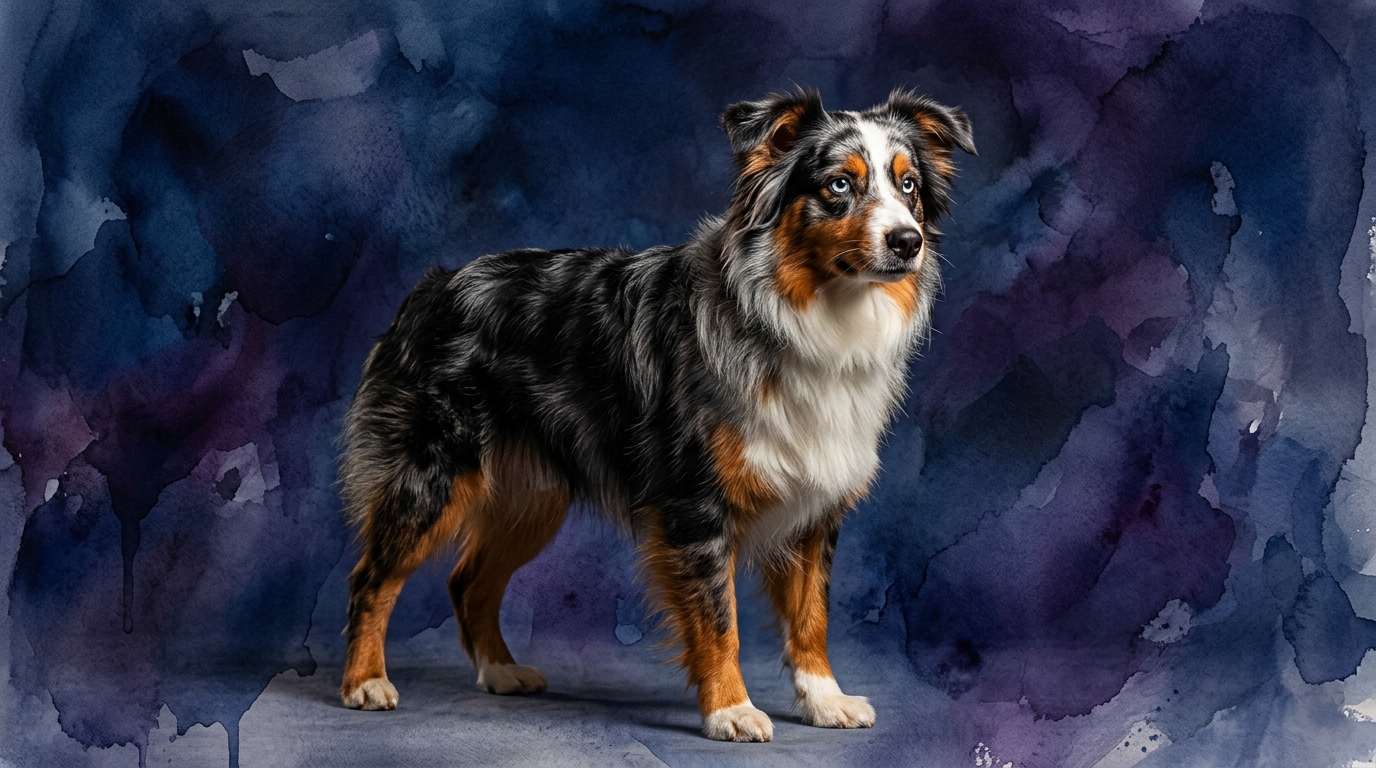
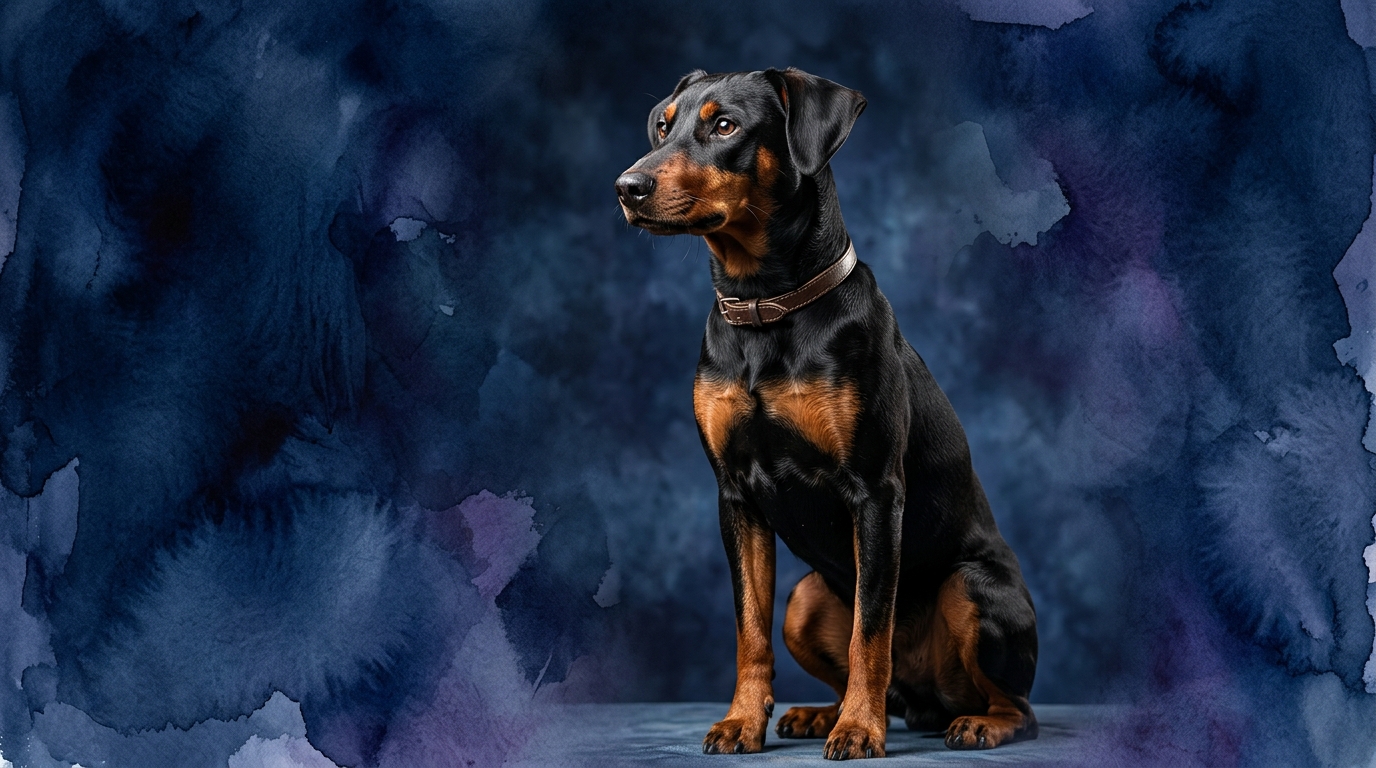
Side-by-Side IQ Profile: Miniature American Shepherd vs. German Pinscher
At first glance, the Miniature American Shepherd (MAS) and the German Pinscher (GP) present identical scores across The Cosmic Pet Pet IQ Lab's five dimensions: Problem Solving (3/5), Training Speed (3/5), Social Intelligence (3/5), Instinctive Drive (3/5), and Memory (3/5). However, understanding these scores requires looking through the lens of their breed origins and intended functions, as a '3/5' in a herding breed often manifests differently than in a working breed.
For the Miniature American Shepherd, a Herding group member, their Problem Solving at 3/5 is often expressed in their ability to strategically manage livestock, anticipating movements and adjusting their approach dynamically. Their Training Speed, also 3/5, benefits from a strong desire to collaborate with their handler, making them receptive, though they may require consistent reinforcement for precision in complex tasks. Social Intelligence at 3/5 means they are attuned to human emotions and pack dynamics, using this awareness to form close bonds and react appropriately to social cues. Their Instinctive Drive, a 3/5, is powerfully geared towards herding, exhibiting a natural propensity to gather and control, which can translate into intense focus in other activities. Finally, their Memory at 3/5 enables them to recall intricate sequences of commands and learned behaviors, essential for advanced obedience or agility courses.
The German Pinscher, hailing from the Working group, applies its 3/5 Problem Solving skills to tasks involving vigilance and territorial defense, adept at assessing situations quickly to determine threats or opportunities, such as outsmarting vermin. Their Training Speed of 3/5 means they grasp concepts readily, but their independent nature often necessitates engaging and consistent methods to maintain their interest and compliance. Social Intelligence at 3/5 for the GP manifests as keen observation of their environment and discerning interactions with strangers, while being deeply devoted to their chosen family members. Their Instinctive Drive, also 3/5, is rooted in their historical role as guardians and vermin hunters, giving them a determined and often assertive demeanor. A Memory score of 3/5 ensures they retain boundaries, routines, and specific protective behaviors, contributing to their reliability as watchdogs and companions.
Where the Miniature American Shepherd Wins Cognitively
While their numerical scores are identical, the Miniature American Shepherd often exhibits a nuanced edge in cognitive functions related to collaborative problem-solving and emotional attunement. Their Herding background imbues them with a unique capacity to interpret and respond to subtle environmental cues, especially those from humans and other animals. This translates into a sophisticated form of social intelligence, where they can anticipate a handler's next move or a child's mood with remarkable accuracy, making them highly intuitive partners in activities requiring close teamwork.
Furthermore, the MAS's problem-solving often involves multi-tasking and adaptability within dynamic, real-time scenarios, such as managing a scattered flock. This cognitive agility allows them to process multiple streams of information simultaneously—visual, auditory, and kinesthetic—and adjust their actions accordingly. While a German Pinscher might excel at a single-minded pursuit, the MAS's strength lies in its ability to orchestrate complex interactions, making them particularly adept at sports like agility or competitive obedience where quick, precise, and varied responses are required.
Where the German Pinscher Wins Cognitively
The German Pinscher, with its Working breed heritage, often demonstrates a distinct cognitive advantage in independent problem-solving and environmental awareness, particularly in scenarios requiring self-reliance and decisive action. Their problem-solving at 3/5 is frequently applied to tasks demanding ingenuity and persistence, such as navigating complex physical spaces to locate a target or figuring out how to bypass an obstacle. This isn't about working in tandem as much as it is about individual initiative and strategic thinking.
The GP's instinctive drive, also 3/5, manifests as a robust territorial and protective instinct, which requires a specific type of social intelligence focused on discernment and vigilance. They excel at quickly assessing strangers and new situations, relying on their memory to recall patterns and potential threats. This acute awareness of their surroundings, combined with their determined nature, gives them an edge in tasks requiring independent judgment and a strong sense of purpose, such as guarding or advanced scent work where they must follow a trail without constant handler input.
Which is Easier to Train and Why?
When it comes to ease of training, the Miniature American Shepherd generally presents a more straightforward experience for the average owner, primarily due to their intrinsic biddability and desire to work alongside their human. Their herding background fosters a strong 'pack' mentality and an eagerness to please, meaning they often respond well to positive reinforcement and clear directives. While their training speed is rated 3/5, their cooperative nature means they are generally highly motivated by handler interaction and praise, making them persistent learners even when tasks are challenging. They thrive on having a 'job' and excel in activities that engage both their bodies and minds in partnership with their owner.
The German Pinscher, despite having the same 3/5 training speed, can be more challenging for novice trainers due to their independent and often assertive temperament. Their working heritage instilled a need for self-reliance, meaning they are less inherently inclined to simply 'obey' without understanding the purpose or receiving adequate motivation. They require a confident, consistent handler who can establish clear boundaries and provide engaging, varied training sessions to prevent boredom. While they are capable learners, their training journey demands more patience, creativity, and a firm but fair approach to navigate their strong-willed personality and ensure their attention remains focused on the task at hand.
Which Suits Active Owners vs. Relaxed Owners?
For active owners seeking a dynamic partner, both breeds offer considerable appeal, but with different nuances. The Miniature American Shepherd is an excellent fit for owners who enjoy a wide variety of activities, from agility and obedience to hiking and dog sports. Their high instinctive drive (3/5) and collaborative nature mean they thrive on consistent physical and mental engagement, often excelling in structured, high-energy tasks that involve working closely with their human. They require significant daily exercise and mental stimulation to prevent boredom and channel their herding instincts constructively.
The German Pinscher also suits active owners, particularly those who appreciate a dog with a strong will and a need for purpose. They excel in activities that tap into their problem-solving (3/5) and instinctive drive (3/5) for hunting or guarding, such as scent work, protection sports, or robust walks in varied environments. While they need ample physical activity, their independent streak means they can sometimes be content with exploring their surroundings or engaging in solitary play, though they still benefit greatly from structured exercise and mental challenges provided by their owner. Neither breed is suited for truly relaxed owners who prefer minimal interaction or exercise, as both possess a 3/5 instinctive drive that demands an outlet.
The Verdict: When to Choose Each Breed
The Verdict
Choose the Miniature American Shepherd if you seek a highly collaborative, intuitive, and versatile canine partner eager to engage in a wide array of activities alongside you, thriving on teamwork and emotional connection.
Opt for the German Pinscher if you appreciate an independent, discerning, and protective companion who excels at purposeful tasks, requiring a confident handler to channel their strong will and sharp intellect.
🧠 Find Your Pet's IQ Score
Our Pet IQ Lab assessment covers 25+ tests across 5 cognitive dimensions — personalized to your breed.
Take the Full IQ Test →Frequently Asked Questions
Are Miniature American Shepherds good family dogs?
Yes, Miniature American Shepherds are generally excellent family dogs, forming strong bonds and being very loyal. Their social intelligence (3/5) helps them integrate well, though early socialization and consistent training are crucial to ensure they are comfortable with children and other pets.
Do German Pinschers get along with other pets?
German Pinschers can coexist with other pets, especially if raised with them from a young age. However, their strong instinctive drive (3/5) for vermin control means they might have a higher prey drive towards smaller animals, requiring careful introductions and supervision.
Which breed is better for apartment living?
Neither breed is ideally suited for apartment living without significant daily effort. Both the Miniature American Shepherd and German Pinscher have a 3/5 instinctive drive and require substantial physical and mental stimulation. If apartment living is the only option, owners must commit to multiple long walks, training sessions, and engaging activities daily to meet their needs.