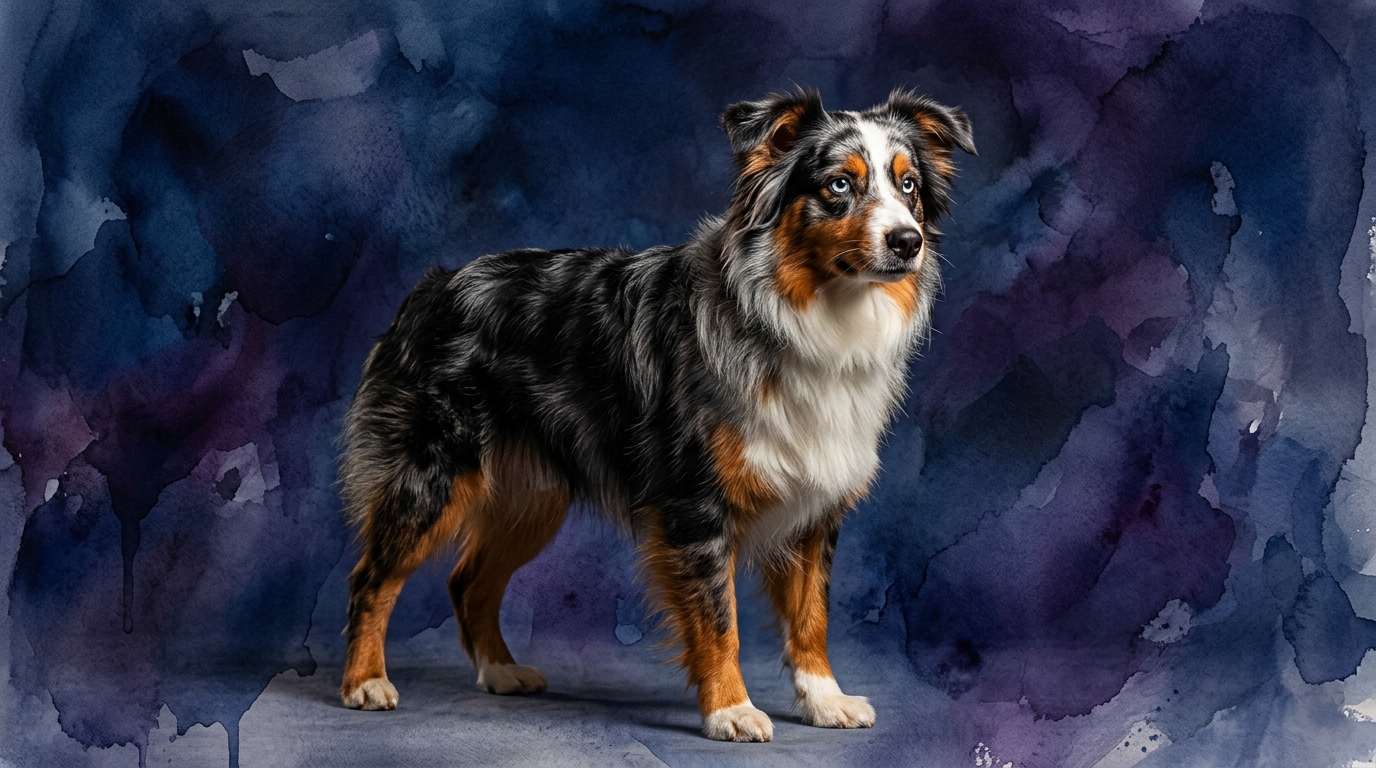
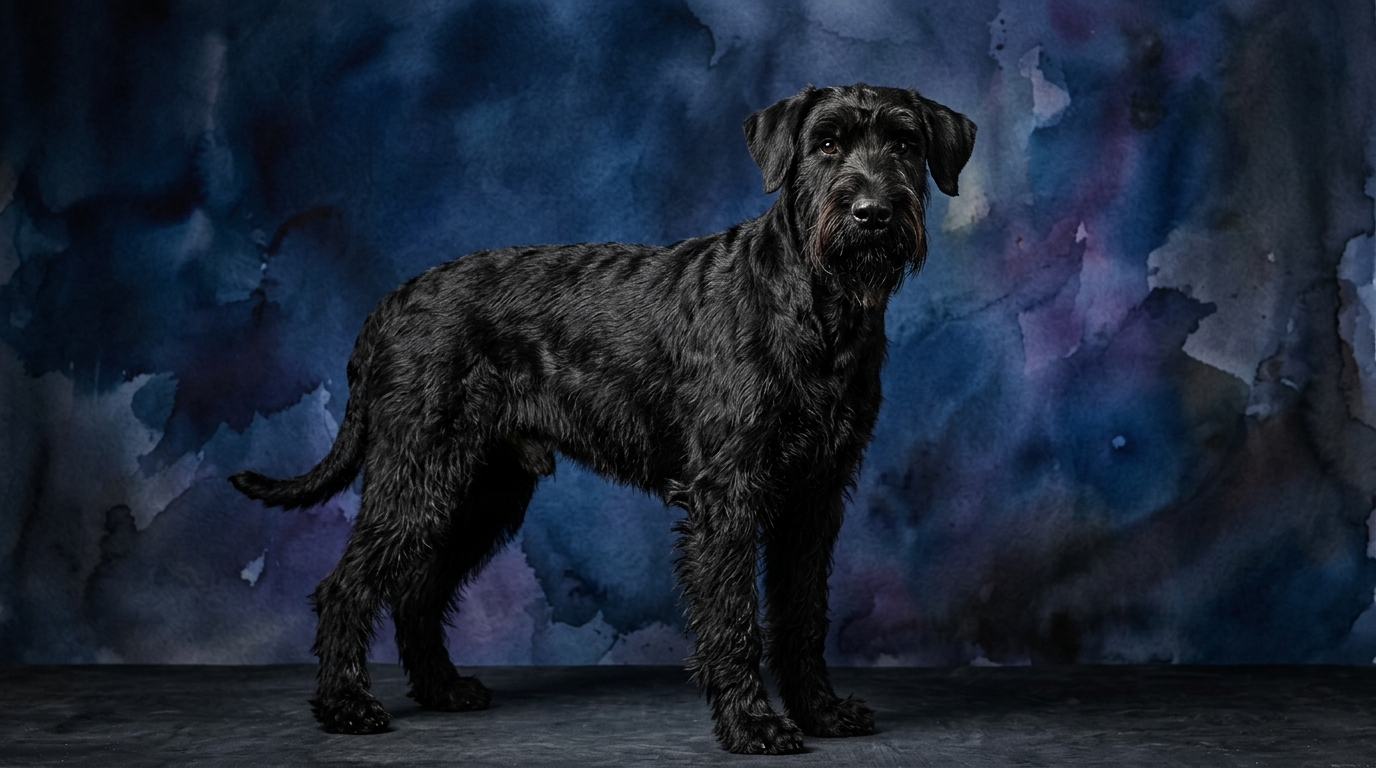
Side-by-Side Cognitive Profile: Miniature American Shepherd vs. Giant Schnauzer
The Cosmic Pet Pet IQ Lab provides a standardized framework for evaluating canine cognition across five key dimensions. Let's apply this lens to understand the Miniature American Shepherd and the Giant Schnauzer.
For the Miniature American Shepherd (MAS), their cognitive scores are consistently balanced. Problem Solving is rated at 3/5, indicating a practical aptitude for navigating challenges, often relying on learned patterns and cues to resolve situations rather than abstract reasoning. Their problem-solving typically shines in tasks related to their herding heritage, like figuring out how to move objects or animals. Training Speed also stands at 3/5; these herding dogs generally grasp new commands and routines at a steady pace, responding well to consistent, positive reinforcement, which aids in efficient learning over time. Social Intelligence is 3/5, meaning the MAS exhibits a balanced understanding of social cues, both canine and human, contributing to harmonious interactions within their family unit and with familiar individuals. Their Instinctive Drive is also 3/5, manifesting as a desire to gather, chase, and control movement, which requires appropriate outlets. Lastly, Memory is 3/5, showing a solid capacity for recalling past experiences, learned commands, and familiar routes, aiding in retaining complex sequences and long-term behavioral patterns.
The Giant Schnauzer (GS), a working breed, presents a distinct cognitive profile with several elevated scores. Their Problem Solving capability is rated at 4/5, signifying a notable capacity for independent thought and strategic planning, making them adept at figuring out solutions to novel situations and manipulating their environment to achieve goals. Training Speed is also 4/5; these dogs absorb new information and commands with impressive swiftness, with their focus and eagerness to engage in structured learning making them rapid learners, often excelling in advanced obedience and specialized tasks. Social Intelligence is 3/5, similar to the MAS, indicating they understand and respond to the nuances of social interactions, forming strong bonds with primary caregivers while being discerning in new social settings. Instinctive Drive is 3/5, reflecting a robust working drive from their history as livestock drivers and guard dogs, manifesting as a desire for purpose, vigilance, and a strong protective instinct. Finally, Memory for the Giant Schnauzer is 4/5, signifying a strong ability to retain vast amounts of information, complex sequences of behaviors, and detailed spatial layouts, which is a significant asset in their training and daily life.
Where the Miniature American Shepherd Shines Cognitively
While the Giant Schnauzer edges ahead in certain metrics, the Miniature American Shepherd's cognitive profile is uniquely suited for specific roles and environments. Their 3/5 rating in Problem Solving reflects a practical, adaptive intelligence rooted in their herding heritage, rather than abstract conceptualization. This means they are particularly adept at understanding and executing tasks that involve movement, spatial awareness, and managing groups, even if those groups are just toys or family members. Their balanced social intelligence at 3/5 ensures they integrate smoothly into family dynamics, capable of subtle communication without demanding constant attention or exhibiting overbearing dominance. This makes them excellent at reading the emotional states of their handlers and responding with appropriate behaviors, fostering a strong, cooperative bond rather than a purely task-driven one. Their consistent 3/5 across all categories points to a well-rounded, reliable cognitive makeup, making them adaptable companions who can excel in various activities from agility to therapy work, where consistency and responsiveness are key.
Where the Giant Schnauzer Holds a Cognitive Edge
The Giant Schnauzer's cognitive strengths are pronounced, particularly in areas demanding independent thought and rapid acquisition of skills. Their 4/5 score in Problem Solving indicates a dog that isn't just following commands but actively strategizing to achieve objectives, often displaying ingenuity in navigating obstacles or figuring out how to access desired items. This makes them formidable partners in complex tasks requiring initiative. Coupled with a 4/5 in Training Speed, the Giant Schnauzer absorbs new commands and intricate routines with impressive efficiency, often requiring fewer repetitions than many other breeds. This quick learning curve allows them to advance rapidly in disciplines like obedience, protection work, or search and rescue. Furthermore, their 4/5 Memory score means they retain these learned behaviors and solutions over extended periods, making their training durable and their skill sets robust. This combination of superior problem-solving, rapid learning, and strong recall positions them as highly capable working dogs, excelling in roles that demand both mental acuity and consistent performance.
Training Dynamics: MAS vs. Giant Schnauzer
When it comes to training, the core difference lies in the pace of learning and the depth of problem-solving. The Giant Schnauzer, with its 4/5 Training Speed, will generally pick up new commands and routines more quickly than the Miniature American Shepherd (3/5). This means a GS might master a complex sequence in fewer sessions, allowing for faster progression to advanced skills. For an owner, this translates into a potentially more efficient training process, where the GS is often eager to engage and thrives on mental challenges that quickly build upon previous knowledge. Their superior Problem Solving (4/5) also means a GS is more likely to generalize learned concepts to novel situations and figure out solutions independently, which can be both a blessing and a challenge—they might outsmart an inexperienced handler. The MAS, while slightly slower at 3/5 Training Speed, is still a willing and capable student. Their training requires more consistent repetition and patience, but their desire to please and their balanced social intelligence (3/5) ensure they are highly responsive to positive reinforcement. Behavioral differences often stem from their drives: the GS's strong working drive means they need a 'job' to focus their energy, otherwise, their problem-solving might be directed towards undesirable activities. The MAS's herding drive, while present, is typically less intense and more easily channeled into structured activities like agility or rally, making them less prone to inventing their own 'tasks' if left undirected.
Suitability for Active vs. Relaxed Lifestyles
Both the Miniature American Shepherd and the Giant Schnauzer are breeds that thrive with active engagement, making neither truly suited for a relaxed, sedentary lifestyle. However, the nature of their activity needs differs. The Giant Schnauzer, with its robust working drive (3/5) and high cognitive capacity (4/5 Problem Solving, 4/5 Memory), demands significant mental and physical exertion. They need structured activities that challenge their intellect and provide a sense of purpose, such as advanced obedience, protection sports, or extensive hiking. An owner who enjoys consistent, high-level training and outdoor adventures will find the GS a formidable and rewarding partner. Without sufficient mental and physical outlets, a GS can become bored, potentially leading to destructive behaviors or excessive vigilance. The Miniature American Shepherd, while also active, often finds fulfillment in a slightly different rhythm. Their herding drive (3/5) means they enjoy activities like agility, flyball, or long walks with opportunities for off-leash exploration and 'herding' toys. They require daily exercise and mental stimulation, but perhaps with a bit more flexibility in the intensity of the activity compared to the GS. They can adapt to a moderately active family life, enjoying varied activities that provide engagement without necessarily demanding the same level of rigorous, structured work as a Giant Schnauzer. Therefore, a truly 'relaxed' owner would likely struggle with either breed, but an active owner seeking a consistent, challenging training partner might lean towards the GS, while one desiring a versatile, engaged companion for varied activities might prefer the MAS.
The Verdict
Choose the Miniature American Shepherd if you seek a versatile, adaptable companion who excels with consistent, positive training and thrives in a moderately active household that enjoys varied, engaging activities.
Opt for the Giant Schnauzer if you are an experienced, highly active owner committed to providing rigorous mental and physical challenges, seeking a formidable and exceptionally quick-learning working partner.
🧠 Find Your Pet's IQ Score
Our Pet IQ Lab assessment covers 25+ tests across 5 cognitive dimensions — personalized to your breed.
Take the Full IQ Test →Frequently Asked Questions
Do Miniature American Shepherds need a 'job' like Giant Schnauzers?
Miniature American Shepherds benefit greatly from having structured activities, often fulfilling their herding instincts through dog sports like agility or rally. While their drive isn't typically as intense as a Giant Schnauzer's working drive, regular mental and physical engagement is crucial to prevent boredom and ensure a well-adjusted companion.
Are Giant Schnauzers good for first-time dog owners?
Giant Schnauzers are generally not recommended for first-time dog owners due to their high cognitive demands, strong working drive, and need for consistent, experienced handling. Their problem-solving abilities and rapid learning mean they can quickly learn undesirable behaviors if not properly guided.
How do their social intelligence scores impact family life?
Both breeds score 3/5 in social intelligence, indicating a balanced ability to understand social cues. This means both can integrate well into family life, forming strong bonds and responding appropriately to human interactions, though the Giant Schnauzer's protective instincts might require more careful socialization with strangers.