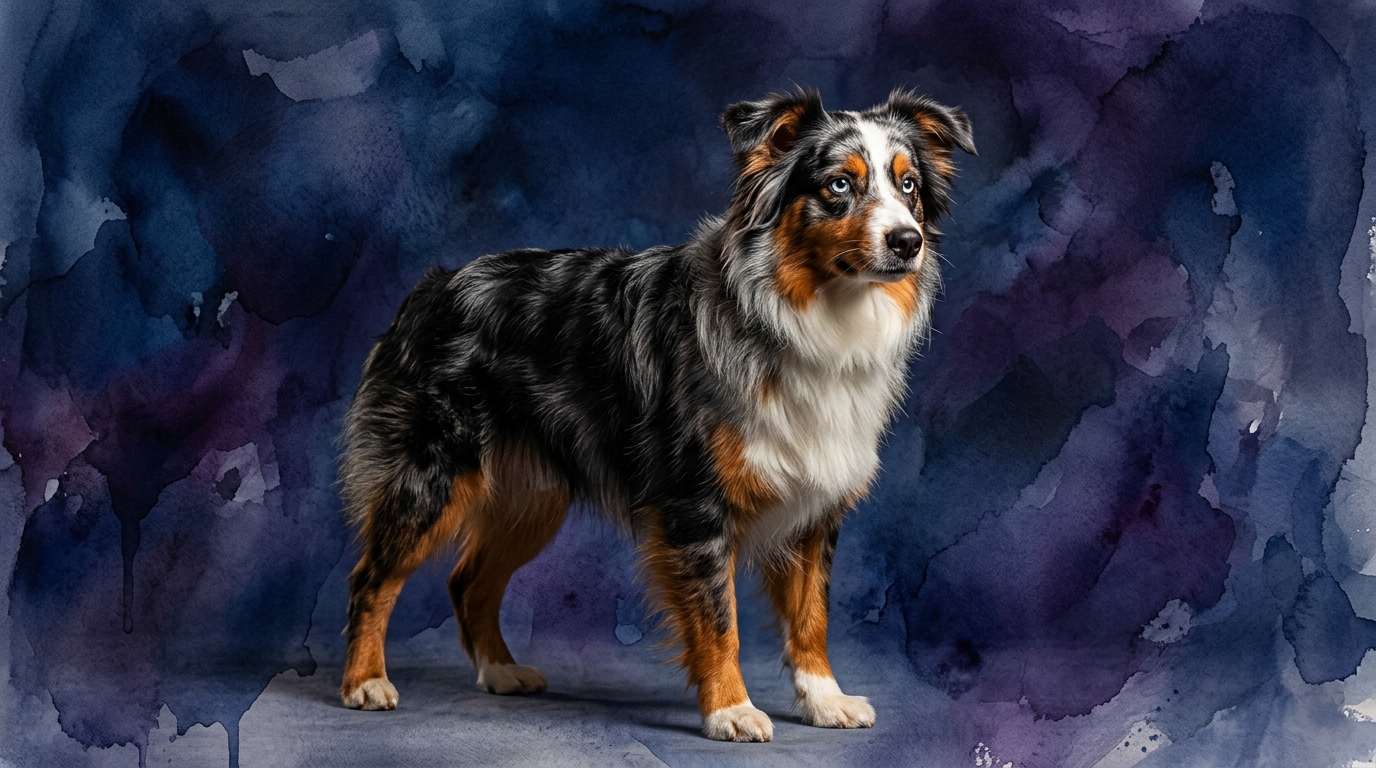
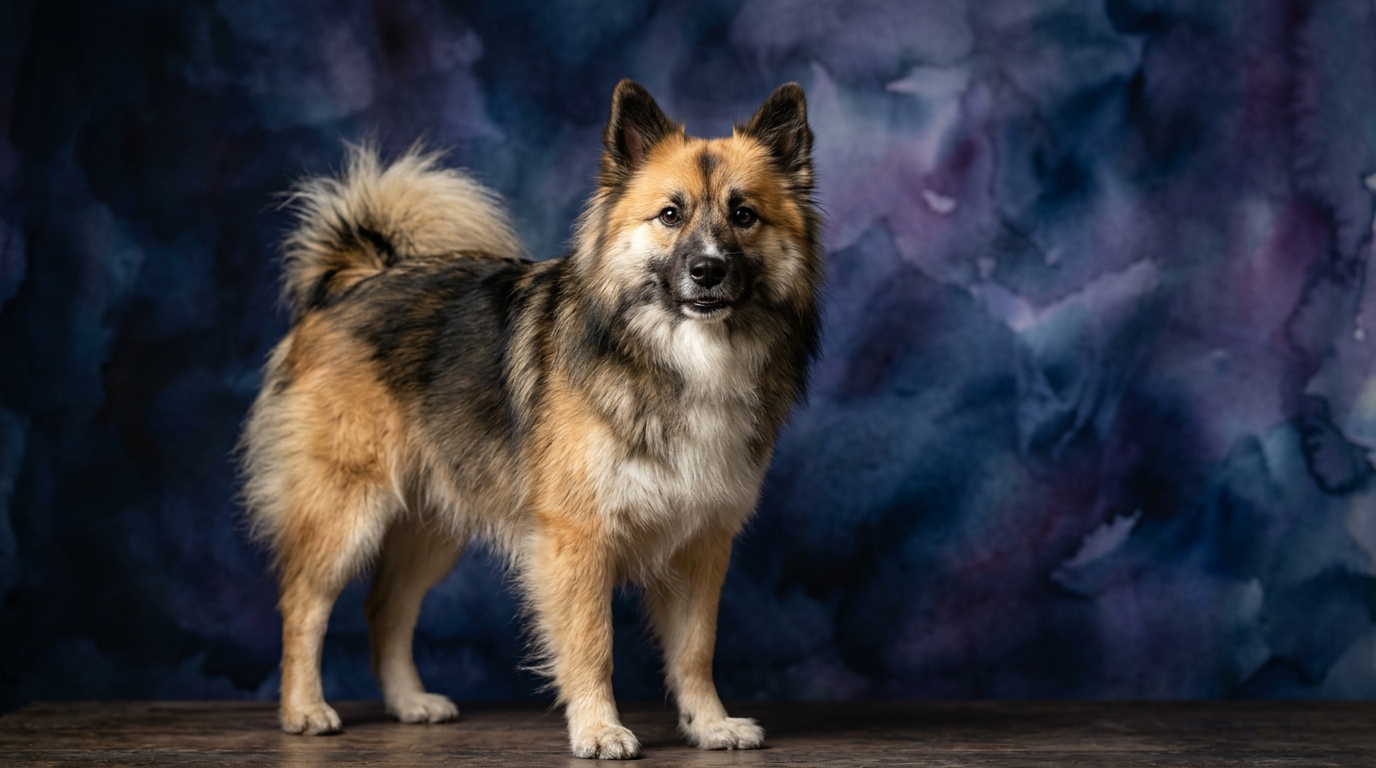
Side-by-Side IQ Profile: Miniature American Shepherd vs. Icelandic Sheepdog
At The Cosmic Pet Pet IQ Lab, our assessment of both the Miniature American Shepherd and the Icelandic Sheepdog reveals an intriguing parity across five key cognitive dimensions, each scoring a solid 3 out of 5. This identical numerical ranking doesn't imply identical mental processes, but rather a similar level of capability expressed through different temperamental lenses and historical roles. Understanding these nuances is key to appreciating their individual brilliance.
For the Miniature American Shepherd, a 3/5 in Problem Solving reflects their aptitude for deciphering handler cues and navigating structured tasks, often demonstrating creative solutions within a defined framework. Their Training Speed, also at 3/5, benefits from an eager-to-please disposition and a strong desire to collaborate, allowing them to grasp new commands with consistent reinforcement. Social Intelligence, at 3/5, underscores their deep bond with their immediate family, exhibiting sensitivity to human emotions and intentions, though they can be reserved with strangers. An Instinctive Drive of 3/5 points to a persistent but often controlled herding impulse, channeled effectively in various dog sports. Finally, their Memory at 3/5 allows them to retain complex sequences and routines, making them reliable partners in repeated activities.
The Icelandic Sheepdog, also scoring 3/5 in Problem Solving, often applies this skill in more independent, environmental contexts, such as locating sheep in varied terrains or finding their way back to a flock. Their Training Speed, while a 3/5, can be influenced by a more independent thought process; they learn quickly but might require a handler to make training engaging and relevant to their natural drives. Social Intelligence, at 3/5, manifests as a profound connection to their human “flock,” often expressed through vocalizations and a desire to be involved in family activities, typically friendly with most. An Instinctive Drive of 3/5 highlights their traditional “bark and gather” herding style, a strong predisposition to alert and manage livestock through vocal cues and movement. Their Memory, also 3/5, is particularly adept at recalling locations, routes, and the identities of their charges, crucial for their historical role.
Where the Miniature American Shepherd Wins Cognitively
The Miniature American Shepherd often exhibits a cognitive edge in scenarios demanding focused partnership and precise execution. Their problem-solving, while equally rated, leans more towards understanding and fulfilling human-initiated tasks. This means they excel in environments where the 'problem' is presented by a handler, such as navigating an agility course with complex obstacles or learning intricate freestyle routines. Their biddability and inherent desire to work with a person translate into a quicker uptake of specific cues and a more refined response to subtle body language from their human counterpart.
Furthermore, their social intelligence, while equally scored, often presents as a more direct and unwavering focus on their primary caregiver. This intense attention can lead to a more synchronized working relationship, where the dog anticipates commands and reacts with minimal hesitation. This cognitive strength makes them particularly adept at competitive obedience or rally, where consistency and rapid, accurate responses to a series of commands are paramount. They seem to derive significant mental satisfaction from mastering a task presented by their human partner.
Where the Icelandic Sheepdog Wins Cognitively
Conversely, the Icelandic Sheepdog frequently showcases a cognitive advantage in situations requiring independent initiative and environmental awareness. Their problem-solving, though equally rated, often involves assessing a situation and devising a solution without constant human direction, reflecting their history of working semi-autonomously on rugged landscapes. This might manifest as figuring out how to retrieve a toy from an unusual spot or navigating a complex off-leash trail using their own judgment. They possess a strong spatial memory and an innate understanding of their surroundings, making them excellent at exploration and wayfinding.
Their distinctive instinctive drive, characterized by a “bark and gather” approach, also highlights a unique cognitive strength. This involves not just moving livestock, but actively using vocalization as a problem-solving tool to manage and communicate with their charges, or even to alert their human companions. Their social intelligence often extends to a broader awareness of their “flock” – human or animal – and a proactive role in maintaining its cohesion, which might involve barking to alert family members to newcomers or potential disturbances. This blend of independent thought, environmental mastery, and vocal communication represents a nuanced cognitive superiority in specific contexts.
Which Is Easier to Train and Why
When considering ease of training, the Miniature American Shepherd often presents a more straightforward path for the average owner, largely due to their temperament and working preferences. Their strong desire to please and inherent biddability mean they are typically highly receptive to positive reinforcement methods. They thrive on clear direction and consistent feedback, eager to perform tasks correctly to earn praise and rewards. Their focus on the handler makes them less prone to distraction in structured training environments, allowing for a quicker acquisition of new skills and a more reliable response to commands.
The Icelandic Sheepdog, while equally capable of learning with a 3/5 training speed, can require a more nuanced approach. Their independent problem-solving nature means they may question the why behind a command, or seek to find their own, potentially more efficient, way of doing things. This isn't stubbornness, but rather a reflection of their historical role where independent decision-making was vital. Training an Icelandic Sheepdog often benefits from making tasks feel like a collaborative game or a valuable contribution to the “flock,” appealing to their innate drives rather than simply enforcing commands. Therefore, while both learn, the MAS often appears “easier” due to their more direct, handler-oriented learning style.
Which Suits Active Owners vs. Relaxed Owners
Neither the Miniature American Shepherd nor the Icelandic Sheepdog are suitable companions for truly relaxed or sedentary owners. Both breeds possess a robust energy level and a cognitive need for engagement that demands an active lifestyle. However, the type of activity they thrive on offers a point of distinction. The Miniature American Shepherd generally flourishes with structured activities that involve their human partner, such as agility, obedience trials, flyball, or long, brisk walks and hikes where they can practice recall and heel work. Their cognitive satisfaction comes from collaborative effort and mastering tasks with their person, requiring an owner who enjoys directed training and competitive outlets.
The Icelandic Sheepdog, while equally active, often benefits from more free-ranging, exploratory activities. They relish opportunities to investigate their surroundings, patrol their yard, or engage in off-leash exploration in secure areas where their keen senses and independent problem-solving can be utilized. While they enjoy walks and play, their cognitive fulfillment often comes from having a “job” that allows for some self-direction, such as supervising the household, playing herding games, or simply accompanying their owner on adventures where they can observe and react to the environment. An owner who enjoys less structured, more organic outdoor adventures and can provide mental stimulation through environmental enrichment would find a rewarding partnership with an Icelandic Sheepdog.
The Verdict
Choose the Miniature American Shepherd if you seek a highly biddable, handler-focused partner eager to excel in structured activities like dog sports and obedience, thriving on clear direction and collaborative tasks.
Opt for the Icelandic Sheepdog if you appreciate an independent thinker with strong environmental awareness, a vocal nature, and a desire for more self-directed exploration and family involvement.
🧠 Find Your Pet's IQ Score
Our Pet IQ Lab assessment covers 25+ tests across 5 cognitive dimensions — personalized to your breed.
Take the Full IQ Test →Frequently Asked Questions
Do Miniature American Shepherds bark a lot?
Miniature American Shepherds can be vocal, especially when alerting their family to strangers or during play. However, their barking is generally less frequent and less of a primary communication tool compared to the Icelandic Sheepdog, often responding more to specific triggers. Consistent training from a young age can help manage their vocal tendencies effectively.
Are Icelandic Sheepdogs good with children?
Icelandic Sheepdogs are typically gentle and patient with children, often viewing them as part of their 'flock' to be watched over. Their friendly and playful nature makes them good family companions, though supervision is always recommended with any dog and child interaction. They thrive in a busy family environment where they feel included.
How much exercise do these breeds need daily?
Both breeds require significant daily exercise, typically 60-90 minutes of vigorous activity. The Miniature American Shepherd benefits from structured exercise like running, hiking, or dog sports, while the Icelandic Sheepdog enjoys a mix of structured activity and free exploration, utilizing their natural curiosity and herding instincts. Mental stimulation is equally crucial for both.