Side-by-Side Cognitive Profile: Herding vs. Hunting Minds
At The Cosmic Pet Pet IQ Lab, we evaluate canine cognition across five key dimensions, and both the Miniature American Shepherd and the Parson Russell Terrier consistently score 3 out of 5 in each category, suggesting capable and adaptable minds. However, this identical numerical rating belies significant differences in how their cognitive functions are expressed, deeply rooted in their breed origins.
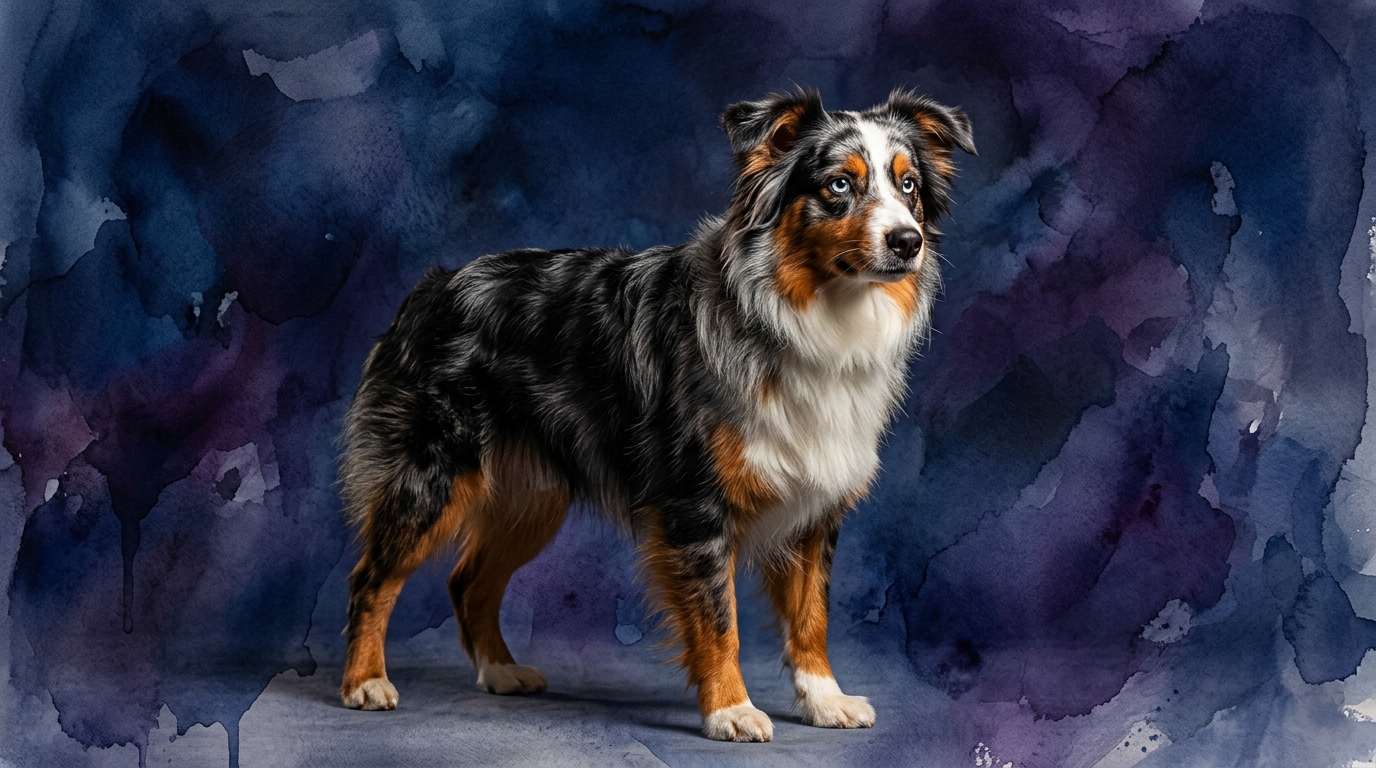
The Miniature American Shepherd, developed from the Australian Shepherd, embodies the herding dog's mental landscape. Their Problem Solving at 3/5 often involves complex tasks like anticipating livestock movement, navigating obstacles to guide a flock, or strategically positioning themselves to control a group. This problem-solving is typically collaborative, requiring them to interpret human cues and adapt their strategy in real-time. Their Training Speed, also 3/5, reflects their eagerness to engage with handlers and absorb multi-step commands, essential for intricate herding patterns. Social Intelligence at 3/5 for the MAS means a keen awareness of their handler's intentions and the dynamics within a 'flock' – be it sheep or family members – often expressed through attentive eye contact and responsive body language. Their Instinctive Drive, 3/5, is a powerful impulse to gather and control, manifesting as a desire to keep their 'pack' together. Finally, their Memory, 3/5, is often seen in their ability to recall complex sequences of commands, remember specific routes, and retain detailed information about their working environment and routines.
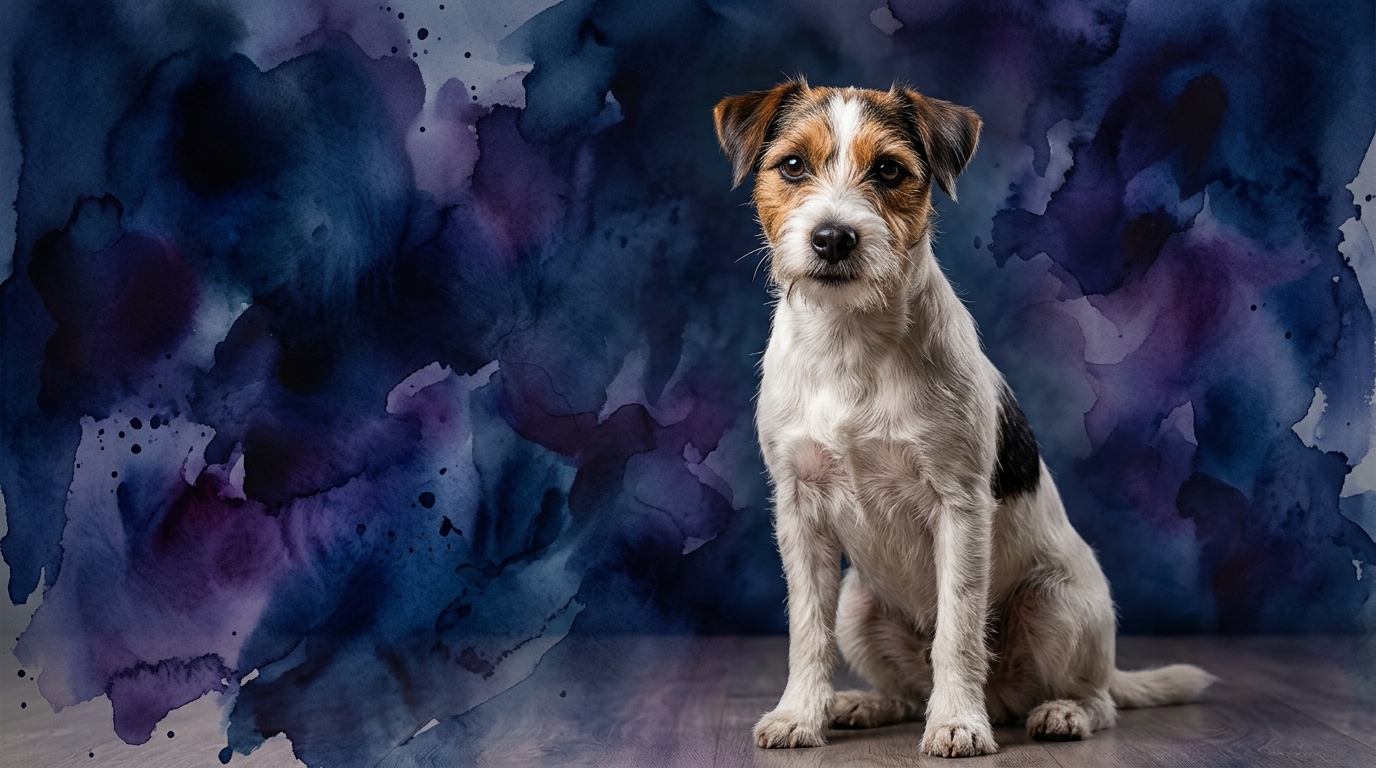
In contrast, the Parson Russell Terrier, a breed honed for fox hunting, showcases a different type of 3/5 cognitive profile. Their Problem Solving at 3/5 is typically independent and tenacious, focused on finding and flushing quarry. This might involve intricate navigation of underground tunnels, figuring out how to bypass obstacles to reach a scent, or outsmarting a cunning fox. Their Training Speed, while also 3/5, often requires a different approach; they learn quickly but can be selective in their compliance, prioritizing their strong innate drives over immediate obedience. Social Intelligence at 3/5 for the PRT involves reading the subtle cues of prey, understanding the intentions of their human hunting companions, and asserting themselves within a pack structure. Their Instinctive Drive, 3/5, is a profound and unyielding prey drive, manifesting as an intense desire to chase, dig, and investigate. Their Memory, 3/5, is often characterized by their ability to recall scent trails, remember the locations of dens or past encounters, and retain effective hunting strategies over time.
Where the Miniature American Shepherd Wins Cognitively
While both breeds are cognitively capable, the Miniature American Shepherd often demonstrates a distinct advantage in areas requiring sustained focus on a human partner and the execution of multi-step, sequential tasks. Their herding heritage has refined their capacity for 'programmatic' intelligence: learning and performing a series of actions in a specific order, often with precise timing and spatial awareness. This makes them particularly adept at advanced obedience, agility courses with complex patterns, or even learning intricate tricks that build upon previous commands.
Furthermore, the MAS tends to excel in tasks demanding a nuanced understanding of social dynamics within a group, whether it's a family or a competitive team. Their social intelligence is geared towards collaboration and reading subtle human signals, allowing them to anticipate requests and respond with impressive alacrity. This handler-centric problem-solving, where they actively seek input and direction, gives them an edge in environments where a strong partnership and precise execution are paramount. Their memory for routines and command sequences is particularly robust, allowing them to perform reliably even after periods of inactivity, a testament to their ingrained work ethic and desire to please.
Where the Parson Russell Terrier Wins Cognitively
The Parson Russell Terrier's cognitive strengths shine brightest in scenarios demanding independent thought, relentless persistence, and keen sensory perception. Their problem-solving abilities are less about following a human's detailed instructions and more about finding creative, often self-directed solutions to reach a goal, particularly if that goal involves a scent or a perceived 'quarry.' This makes them exceptional at scent work, earthdog trials, or any activity that requires independent investigation and determination.
Their instinctive drive, while rated similarly to the MAS, manifests as an unshakeable resolve to pursue. This tenacity translates into a cognitive advantage in tasks that require sustained effort and a refusal to give up, even when faced with frustrating obstacles. A PRT's memory is particularly potent for spatial information related to their environment and for recalling specific sensory details, like the unique scent of a particular animal or the layout of a familiar hunting ground. Their social intelligence, while perhaps less focused on human emotional nuance than the MAS, is acutely tuned to the 'game,' making them quick to understand the rules and objectives of activities like fetch or hide-and-seek, and relentless in their pursuit of success.
Which is Easier to Train and Why?
When considering ease of training, the distinction between these two breeds becomes quite apparent, even with identical 3/5 training speed ratings. The Miniature American Shepherd is generally perceived as more straightforward to train for formal obedience and complex tasks due to their inherent biddability and strong desire to work collaboratively with their human. Their herding background has instilled a deep-seated need for direction and a focus on their handler, making them receptive to commands and eager to please. They thrive on structured learning and positive reinforcement, quickly grasping new concepts and performing with precision.
The Parson Russell Terrier, while certainly capable of learning swiftly, presents a different training challenge. Their powerful independent problem-solving skills and intense instinctive drives mean they often prioritize their own agenda – following a compelling scent, chasing a movement – over immediate compliance with a command. Training a PRT requires immense patience, consistency, and creativity to channel their innate drive into desired behaviors. They respond best to engaging, varied training sessions that appeal to their hunting instincts, often requiring trainers to make 'working with me' more rewarding than their independent pursuits. While they learn quickly, their execution can be more selective, demanding a persistent and inventive approach from their owner.
Which Suits Active Owners vs. Relaxed Owners
Both the Miniature American Shepherd and the Parson Russell Terrier are breeds that demand significant physical and mental engagement, making them unsuitable for truly relaxed, sedentary owners. However, the *type* of activity they thrive on differs. The Miniature American Shepherd is an excellent fit for active owners who enjoy structured activities like dog sports (agility, obedience, flyball), long hikes, or even dabbling in herding. They require consistent mental stimulation through training and tasks that engage their problem-solving and social intelligence in a cooperative manner. An owner who enjoys teaching new commands and working as a team will find the MAS a fulfilling companion.
The Parson Russell Terrier, with its boundless energy and independent spirit, is best suited for owners who are not only active but also embrace a more rugged, adventurous lifestyle. They thrive on activities that allow them to utilize their hunting instincts: extensive off-leash exploration in safe, contained areas, earthdog trials, scent work, or vigorous games of fetch and tug. While they can participate in dog sports, their independent nature means they often approach them with a terrier's characteristic self-reliance. Owners who appreciate a dog with a strong will and a tireless zest for independent exploration will find a PRT exhilarating, but those seeking a placid companion for quiet evenings will likely find both breeds overwhelming.
The Verdict: When to Choose Each Breed
Choosing between a Miniature American Shepherd and a Parson Russell Terrier hinges on your lifestyle, training philosophy, and what kind of canine partnership you envision. Both breeds offer substantial cognitive engagement and companionship, but their unique profiles cater to different human preferences and environments.
The Verdict
Choose the Miniature American Shepherd if you seek a highly trainable, cooperative partner for structured activities and thrive on a strong, communicative bond, valuing a dog that looks to you for direction and purpose. Their eager-to-please nature and capacity for complex learning make them ideal for various dog sports and active family life.
Opt for the Parson Russell Terrier if you admire independent problem-solving, relentless tenacity, and a dog with a profound instinctual drive for adventure, and are prepared for a consistent, creative training approach. They are best suited for owners who enjoy rugged outdoor activities and can provide outlets for their hunting heritage.
🧠 Find Your Pet's IQ Score
Our Pet IQ Lab assessment covers 25+ tests across 5 cognitive dimensions — personalized to your breed.
Take the Full IQ Test →Frequently Asked Questions
Are Miniature American Shepherds good with children?
Miniature American Shepherds can be wonderful with respectful children, often displaying their herding instinct by gently 'gathering' them. Early socialization and training are crucial to ensure they understand appropriate interactions and prevent nipping at heels, common in herding breeds.
Do Parson Russell Terriers bark a lot?
Parson Russell Terriers can be vocal, using their bark to alert, express excitement, or signal interest in something they've detected, especially scents. Consistent training from a young age is essential to manage excessive barking and teach them when it is appropriate to be quiet.
Which breed requires more grooming?
The Miniature American Shepherd, with its medium-length double coat, requires more regular grooming, typically brushing several times a week to prevent mats and manage shedding. The Parson Russell Terrier, depending on its coat type (smooth or broken), generally needs less intensive grooming, though broken coats may require occasional hand-stripping to maintain texture.