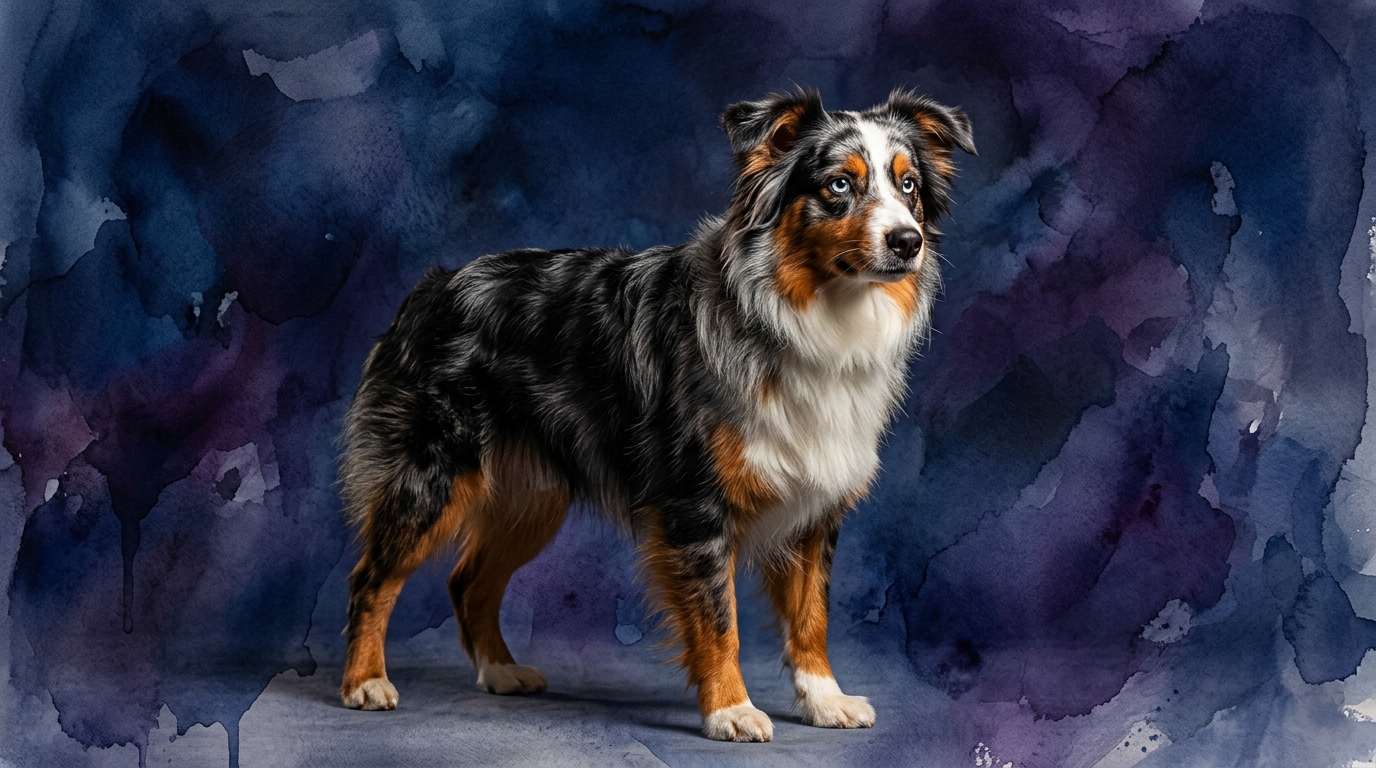

Side-by-Side IQ Profile: Miniature American Shepherd vs. Rat Terrier
While both the Miniature American Shepherd and the Rat Terrier register a consistent 3 out of 5 across our five cognitive dimensions, the *application* of these scores differs significantly due to their distinct breed histories and inherent drives. It's not about which breed possesses more raw brainpower, but rather how that cognitive capacity is directed and expressed.
The Miniature American Shepherd, originating from a herding lineage, approaches intelligence with a focus on cooperation and task completion within a group dynamic. Their cognitive attributes are finely tuned for understanding and responding to human directives, making them adept partners in various activities. This breed thrives on having a purpose and excels when given tasks that engage their natural instincts to gather and control.
In contrast, the Rat Terrier, a breed developed for pest control and independent hunting, exhibits intelligence through cunning, resourcefulness, and a strong sense of self-preservation. Their cognitive strengths are geared towards autonomous problem-solving and navigating environments to achieve their own objectives, often with less reliance on direct human guidance. This terrier spirit means they can be incredibly clever in pursuit of their interests, which might sometimes diverge from their owner's plans.
For the Miniature American Shepherd, **Problem Solving (3/5)** often manifests as figuring out complex agility courses, strategizing how to move a group of ducks (or toys), or understanding multi-step commands. Their solutions tend to be methodical and often involve seeking human input or approval. **Training Speed (3/5)** is characterized by their eagerness to learn and their ability to quickly grasp new concepts when a clear reward or purpose is presented. They absorb information efficiently, especially when training is consistent and engaging. Their **Social Intelligence (3/5)** shines in their ability to read human emotions and intentions, adapting their behavior to maintain harmony within their family unit. They are often deeply attuned to their owner's mood and body language. The **Instinctive Drive (3/5)** is predominantly herding, leading them to round up family members, chase moving objects with a desire to control, or patrol their perceived territory. This drive is a powerful motivator for many of their actions. Finally, their **Memory (3/5)** allows them to recall extensive repertoires of commands, routines, and the locations of favored items, making them reliable in established patterns.
The Rat Terrier's **Problem Solving (3/5)** is typically expressed through ingenious methods of getting to forbidden treats, finding weaknesses in fences, or outsmarting small prey. Their solutions are often independent and highly practical for their own immediate goals. Their **Training Speed (3/5)** is notable, but often paired with a strong independent streak; they learn quickly but require motivation that aligns with their inherent drives, otherwise, they might choose not to comply. **Social Intelligence (3/5)** for a Rat Terrier involves keen observation of their environment and companions, often picking up on subtle cues, but they might be less inclined to overtly seek constant human validation, preferring to engage on their own terms. Their **Instinctive Drive (3/5)** is undeniably a strong prey drive, manifesting as an intense desire to chase, dig, and investigate small creatures or movements. This drive is a central component of their personality and can be a powerful, sometimes challenging, motivator. Their **Memory (3/5)** is robust for remembering where interesting smells were found, the patterns of squirrels in the yard, or past experiences, both positive and negative, that influence their future choices.
Where the Miniature American Shepherd Excels Cognitively
The Miniature American Shepherd's cognitive strengths truly stand out in scenarios requiring collaborative problem-solving and a strong desire to work alongside a human partner. Their herding background imbues them with an innate understanding of systems and order, making them particularly adept at tasks that involve organization or following sequences. For instance, they might be quicker to understand the rules of a complex dog sport like obedience or rally, where precision and sequential actions are key. Their social intelligence, while rated similarly, manifests as a deeper emotional connection and responsiveness to their handler's subtle cues, allowing for a more fluid and intuitive partnership in training and daily life. This breed often anticipates their owner's next move, demonstrating a predictive intelligence that benefits from their strong desire to please and their memory for established routines. They excel in environments where their role is clearly defined and valued, leveraging their problem-solving skills to achieve goals that benefit the team.
Where the Rat Terrier Shines Cognitively
The Rat Terrier's cognitive prowess is most evident in situations demanding independent thought, tenacity, and a resourcefulness born from their hunting heritage. They are masters of creative problem-solving when it comes to achieving their own objectives, such as finding a way to access a favorite toy or escaping a perceived confinement. Their instinctive drive, while rated identically, translates into an unparalleled focus and determination when tracking or pursuing a scent, making them exceptional at scent work or earthdog trials. This breed often demonstrates a remarkable ability to learn from experience, quickly adapting their strategies if an initial attempt to get what they want fails. Their social intelligence, though perhaps less overtly 'eager to please,' allows them to keenly observe and manipulate their environment to their advantage, often picking up on subtle changes or opportunities that others might miss. They thrive in situations where their natural curiosity and investigative nature are encouraged, using their memory to recall past successes and failures in their independent endeavors.
Training Dynamics: Miniature American Shepherd vs. Rat Terrier
When considering ease of training, the behavioral differences between these two breeds, despite identical training speed scores, become quite apparent. The Miniature American Shepherd generally presents as more straightforward to train due to their strong inclination to work cooperatively and their inherent desire to please their handler. Their herding instinct makes them naturally attentive and responsive to direction, viewing training as a shared task. They tend to maintain focus for longer periods when engaged, and their social intelligence allows them to quickly understand and internalize what their human wants. While they learn at a moderate pace, their consistency and eagerness make the training process feel smoother and more rewarding for many owners. They are typically motivated by praise, play, and food, and respond well to positive reinforcement techniques.
The Rat Terrier, conversely, while equally capable of learning new commands quickly, often brings a unique set of challenges to the training arena. Their terrier independence and strong prey drive mean that their focus can be fleeting, easily diverted by an interesting scent or movement. They are intelligent, but their problem-solving skills are often applied to figuring out how to get their own way, rather than strictly adhering to human directives. Training a Rat Terrier requires creativity, consistency, and a deep understanding of their motivations. Owners must make training fun, varied, and highly rewarding to keep their interest. While they can learn complex tricks and commands, their compliance might be more selective, especially if they perceive a more enticing alternative. This means that while they learn at a similar *speed*, the *effort* required to achieve consistent, reliable obedience can be higher due to their spirited and often self-directed nature.
Matching Canine Companions to Lifestyles
Understanding the distinct cognitive and behavioral tendencies of the Miniature American Shepherd and the Rat Terrier is crucial for matching them to an owner's lifestyle. For active owners seeking a highly engaged and cooperative partner, the Miniature American Shepherd often proves to be an ideal fit. Their herding drive and social intelligence make them eager participants in dog sports like agility, obedience, or flyball, where working as a team is paramount. They thrive on having a job to do and require consistent mental and physical stimulation to prevent boredom. An active owner who enjoys structured activities, long hikes, or even farm work will find their Mini American Shepherd a loyal and enthusiastic companion, always ready for the next adventure and eager to learn new skills. Their need for purpose aligns well with owners who can provide consistent engagement and leadership.
Relaxed owners, or those seeking a more independent yet affectionate companion, might find the Rat Terrier's personality more suitable, provided they appreciate the terrier spirit. While they are energetic and require regular exercise to satisfy their physical needs and instinctive drives, their cognitive approach is often more self-directed. They enjoy exploring, scent tracking, and independent play, making them suitable for owners who appreciate a dog with a strong personality and a knack for self-entertainment, perhaps with a good puzzle toy or a secure yard for sniffing expeditions. They can certainly be active companions, enjoying walks and games, but their engagement in highly structured, cooperative tasks might require more effort from the owner. A relaxed owner who enjoys a dog's independent quirks, can provide outlets for their prey drive (like flirt poles or supervised digging areas), and doesn't demand constant, intense interaction will likely find a deep connection with a Rat Terrier.
The Verdict: When to Choose Each Breed
Choosing between a Miniature American Shepherd and a Rat Terrier ultimately comes down to an owner's lifestyle, training philosophy, and what they seek in a canine partner's cognitive and emotional engagement. Both breeds possess commendable intellectual capacities, but their application of these abilities is shaped by their heritage and inherent drives.
The Miniature American Shepherd's cognitive profile makes them an excellent choice for owners who desire a highly trainable, cooperative, and emotionally attuned dog eager to participate in structured activities and family life. They thrive with consistent guidance and a clear purpose, making them a rewarding partner for active individuals or families committed to engagement and mental stimulation. Their intelligence is best utilized in a partnership where communication is clear and tasks are shared.
The Rat Terrier, with their independent problem-solving and strong instinctive drive, is better suited for owners who appreciate a resourceful, spirited, and often witty companion. They need an owner who understands and can channel their terrier instincts, providing outlets for their prey drive and independent nature, while also being patient and creative in training. They are a wonderful choice for those who value a dog with a big personality and a clever mind, even if it means a bit more negotiation in daily interactions.
The Verdict
Choose the Miniature American Shepherd if you seek a highly cooperative, emotionally sensitive partner eager for structured activities and a strong working relationship. They thrive on clear guidance and shared tasks, making them ideal for competitive dog sports or an engaged family life.
Opt for the Rat Terrier if you appreciate a resourceful, independent, and spirited companion with a knack for clever, self-directed problem-solving. They suit owners who can provide outlets for their strong prey drive and enjoy a dog with a distinct personality, even if it requires creative training approaches.
🧠 Find Your Pet's IQ Score
Our Pet IQ Lab assessment covers 25+ tests across 5 cognitive dimensions — personalized to your breed.
Take the Full IQ Test →Frequently Asked Questions
Are Miniature American Shepherds good for first-time dog owners?
Miniature American Shepherds can be suitable for first-time owners who are prepared for an intelligent and energetic dog that requires consistent training and mental stimulation. Their eagerness to please makes them responsive, but their herding instincts necessitate early socialization and clear boundaries to prevent unwanted behaviors like nipping at heels.
Do Rat Terriers get along with other pets?
Rat Terriers can coexist with other pets, especially if introduced and socialized from a young age, but their strong prey drive means care must be taken around smaller, non-canine animals. With proper training and supervision, they can form strong bonds with other dogs in the household, though their independent nature might lead to occasional squabbles over resources.
What kind of exercise do these breeds need?
Both breeds require regular, vigorous exercise to remain healthy and well-behaved. Miniature American Shepherds thrive on activities that engage both their body and mind, such as agility, long walks, or herding games. Rat Terriers also need daily exercise, including walks, play sessions, and opportunities for sniffing and digging, to satisfy their energetic and inquisitive nature.