Side-by-Side IQ Profile: A Cognitive Blueprint
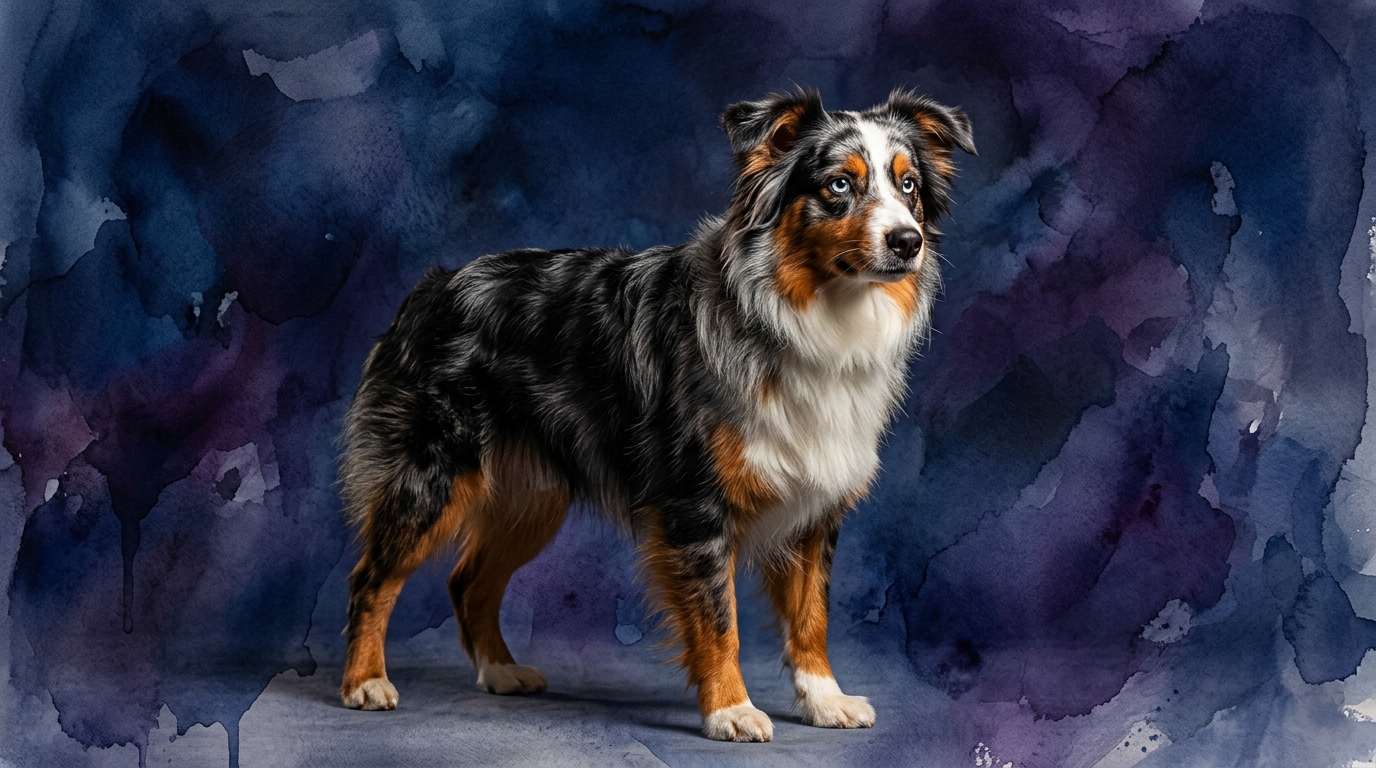
The Cosmic Pet Pet IQ Lab employs a five-dimensional framework to assess cognitive abilities, offering a detailed look at how different breeds process information and interact with their world. For the Miniature American Shepherd, we observe a consistently balanced cognitive profile, reflecting its heritage as a versatile herding dog.
The Miniature American Shepherd scores 3/5 in Problem Solving, indicating an aptitude for moderate challenges and a capacity to figure out solutions when presented with familiar obstacles. Its Training Speed also stands at 3/5, suggesting it learns new commands and routines at a steady, reliable pace, requiring consistent but not excessive repetition. Social Intelligence is rated 3/5, meaning these dogs possess a good grasp of human emotions and social cues, fostering strong bonds within their family units. Their Instinctive Drive, at 3/5, points to a moderate inherent inclination towards their ancestral herding tasks, which can be channeled into various activities. Finally, Memory is also 3/5, indicating a solid ability to recall commands, routines, and experiences over time.
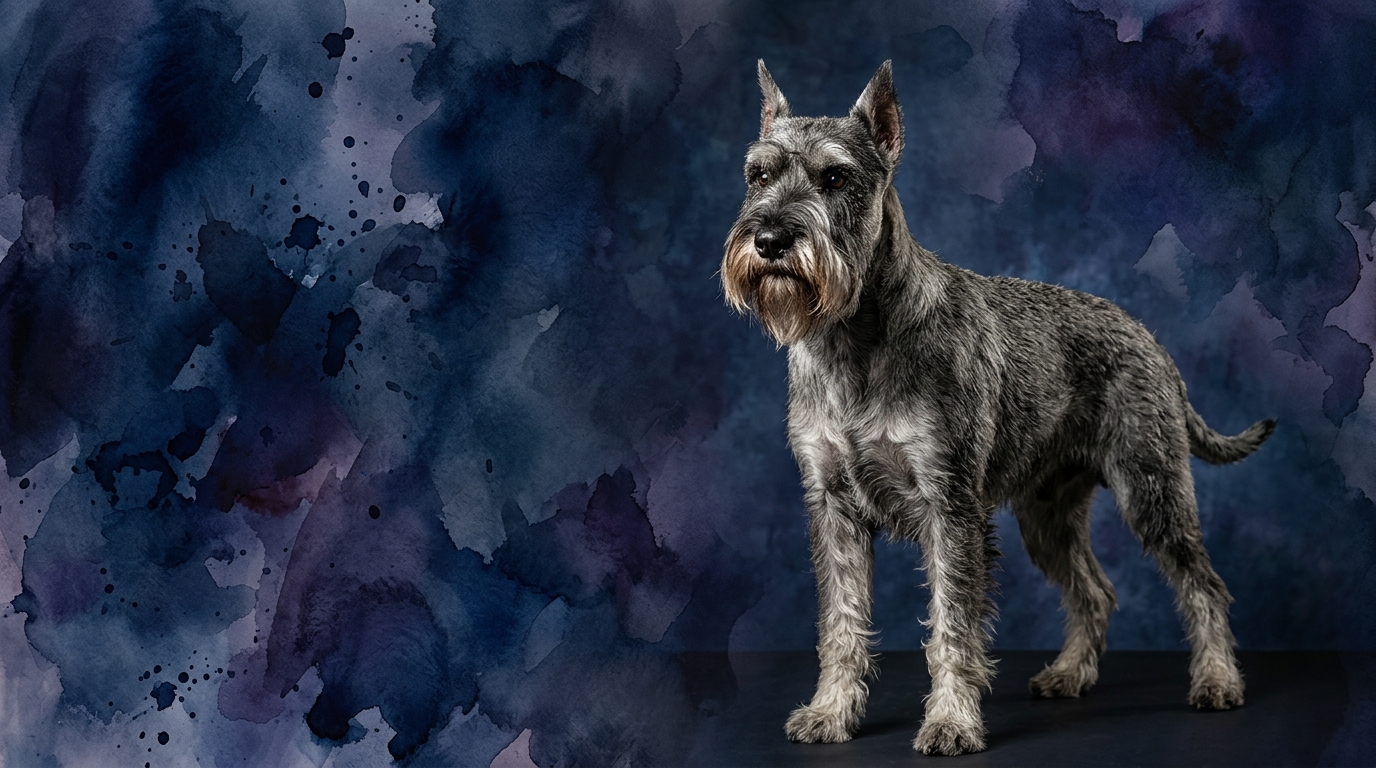
In contrast, the Standard Schnauzer, a breed from the Working group, presents a profile marked by several higher scores, particularly in areas related to learning and adaptive intelligence. This breed holds a notable Coren rank of #22, placing it among breeds that demonstrate a strong capacity for obedience and working intelligence.
The Standard Schnauzer achieves a 4/5 in Problem Solving, showcasing a greater capacity for tackling complex puzzles and navigating novel situations with ingenuity. Its Training Speed is also 4/5, signifying a quicker uptake of new commands and a rapid understanding of desired behaviors. Social Intelligence aligns with the Miniature American Shepherd at 3/5, indicating a similar level of understanding human and canine social dynamics. Instinctive Drive is likewise 3/5, reflecting a moderate but persistent drive to perform tasks and engage in activity. Crucially, the Standard Schnauzer's Memory is rated 4/5, suggesting superior retention of learned information and past experiences, which contributes significantly to its trainability and reliability.
Where the Miniature American Shepherd Excels Cognitively
While the Miniature American Shepherd's individual scores might not reach the peaks of the Standard Schnauzer in certain categories, its balanced cognitive profile across all five dimensions is a distinct advantage. A consistent 3/5 in Problem Solving, Training Speed, Social Intelligence, Instinctive Drive, and Memory means it lacks significant weaknesses in any single area, making it an incredibly adaptable and well-rounded companion.
Its strength lies in its harmonious blend of abilities, allowing it to excel in roles requiring a broad spectrum of cognitive engagement rather than specialized prowess. For instance, its 3/5 Instinctive Drive, coupled with its balanced social intelligence, makes it particularly adept at nuanced tasks like agility or herding trials where understanding subtle handler cues and anticipating movement are paramount, often requiring a more intuitive, less rigid approach than pure problem-solving.
The Miniature American Shepherd's cognitive balance means it can adapt to various living situations and training methodologies without significant frustration for either dog or owner. It's a breed that thinks 'with' its handler, offering a partnership built on mutual understanding, where its moderate memory ensures consistent recall of past lessons without being overly rigid, allowing for flexibility in new situations.
Where the Standard Schnauzer Shows Cognitive Superiority
The Standard Schnauzer's cognitive strengths are particularly evident in its higher scores for Problem Solving (4/5), Training Speed (4/5), and Memory (4/5). These elevated ratings, reinforced by its Coren rank of #22, point to a dog that learns quickly, retains information effectively, and applies that knowledge to solve new challenges.
Its superior problem-solving ability means a Standard Schnauzer is more likely to figure out how to open a gate, manipulate puzzle toys, or devise strategies to achieve a desired outcome, often requiring less direct instruction. This cognitive ingenuity makes them excellent candidates for complex tasks such as scent work, tracking, or advanced obedience, where independent thought and persistent effort are rewarded.
The combination of faster Training Speed and stronger Memory ensures that a Standard Schnauzer will pick up new commands with fewer repetitions and retain those lessons for longer periods. This translates into a more efficient training process and a dog that is generally more reliable in executing learned behaviors, even after a break in practice. Owners seeking a dog for competitive dog sports or demanding working roles will find these traits incredibly valuable.
Which Is Easier to Train and Why
Based on their IQ profiles, the Standard Schnauzer generally presents as the easier breed to train due to its higher scores in Training Speed (4/5) and Memory (4/5). A Standard Schnauzer will typically grasp new commands and concepts more quickly, requiring fewer repetitions to solidify a behavior. Their superior memory means they retain these lessons for longer periods, leading to a more consistent and reliable performance in obedience and task execution.
For instance, teaching a new trick or a multi-step routine might see a Standard Schnauzer master it in fewer sessions compared to a Miniature American Shepherd. While Miniature American Shepherds are certainly trainable with a 3/5 in Training Speed, they may require more patience and varied approaches to keep them engaged, and their 3/5 memory might necessitate more frequent refreshers to maintain sharp recall of less-practiced commands.
The Standard Schnauzer's robust problem-solving (4/5) also contributes to easier training, as they are more likely to understand the 'why' behind a command or to generalize a learned behavior to new situations. While Miniature American Shepherds are eager to please, their moderate instinctive drive and problem-solving skills mean training might focus more on channeling their natural herding instincts rather than purely intellectual challenges, making their training experience different rather than inherently harder, just potentially slower in pure command acquisition.
Which Suits Active Owners vs. Relaxed Owners
Both the Miniature American Shepherd and the Standard Schnauzer are breeds that thrive with active engagement, but the nature of that activity differs, making them suitable for different types of energetic owners. The Miniature American Shepherd, with its balanced 3/5 Instinctive Drive and Social Intelligence, is best suited for active owners who enjoy a variety of activities and appreciate a dog that is highly attuned to their presence.
These dogs excel in activities like agility, obedience, rally, and even herding trials, where they can utilize their natural instincts and work closely with their handler. They require consistent mental stimulation and physical exercise to prevent boredom, but their cognitive balance allows them to adapt to diverse forms of engagement. A relaxed owner, however, would likely find the Miniature American Shepherd's need for consistent interaction and mental work overwhelming, as their intelligence demands an outlet.
The Standard Schnauzer, with its higher problem-solving and memory, also demands an active lifestyle, but perhaps one that is more structured and mentally demanding. Owners who enjoy competitive dog sports like Schutzhund, tracking, or advanced obedience, which require significant mental fortitude and rapid learning, would find the Standard Schnauzer a highly rewarding partner. Their higher drive for mental challenges means they can become bored or destructive if not adequately stimulated.
For a relaxed owner, neither breed is a good fit. Both dogs possess significant mental and physical energy that needs a constructive outlet. The Standard Schnauzer, in particular, with its strong will and quick intellect, requires an owner who is prepared to provide consistent training, engaging mental puzzles, and ample exercise to keep their keen minds occupied and prevent undesirable behaviors stemming from boredom.
The Verdict
Choose the Miniature American Shepherd if you seek a balanced, adaptable partner for varied activities, valuing a dog that thinks with you and thrives on nuanced interaction. This breed offers a harmonious blend of cognitive skills for a well-rounded companion.
Opt for the Standard Schnauzer if you desire a quick-learning, astute problem-solver for structured and demanding activities, appreciating a dog that excels in complex tasks and retains information readily. Its robust intellect makes it ideal for competitive dog sports or working roles.
🧠 Find Your Pet's IQ Score
Our Pet IQ Lab assessment covers 25+ tests across 5 cognitive dimensions — personalized to your breed.
Take the Full IQ Test →Frequently Asked Questions
Do Miniature American Shepherds have strong herding instincts?
Yes, Miniature American Shepherds possess a moderate instinctive drive, rated 3/5, which includes their innate herding abilities. This drive means they often enjoy activities that mimic herding, like chasing balls or participating in supervised herding trials, and may attempt to 'herd' family members or other pets if not directed.
Are Standard Schnauzers prone to stubbornness?
Standard Schnauzers, while possessing high training speed and problem-solving abilities, can exhibit a strong will, which some owners might perceive as stubbornness. This trait often stems from their confidence and independent thinking; they are not always quick to obey if they don't see the immediate value, but once convinced, they are highly reliable.
Which breed is better for a first-time dog owner?
Neither breed is ideal for a truly relaxed, first-time dog owner due to their significant needs for mental and physical stimulation. However, if a first-time owner is committed to consistent training and active engagement, the Miniature American Shepherd's balanced temperament and moderate drives might be slightly more forgiving than the Standard Schnauzer's more intense and independent cognitive profile.