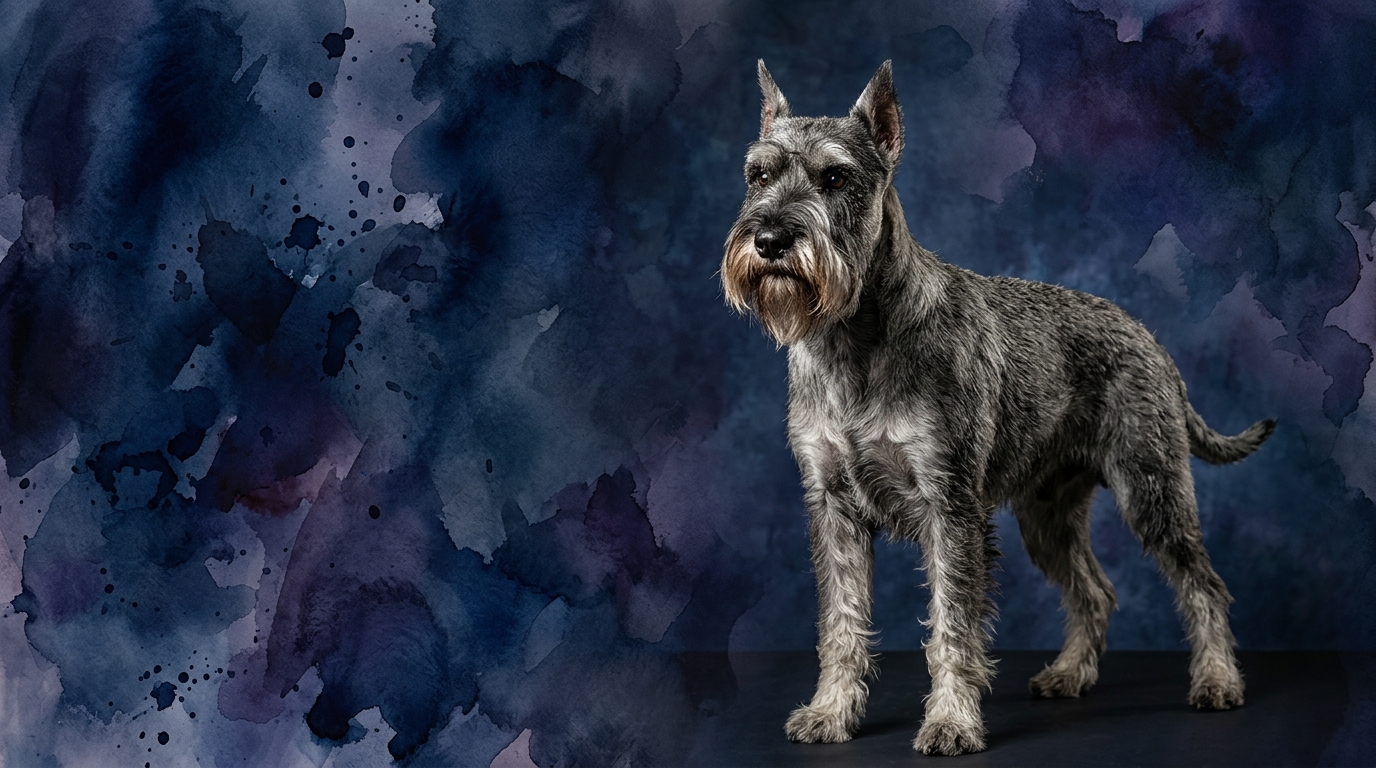
Standard Schnauzer at a glance
| IQ Rank / Score | #22 |
|---|---|
| Trainability | ★★★★☆ (4/5) |
| Social Intelligence | ★★★☆☆ (3/5) |
| Lifespan | 11-14 years |
| Shedding | Low to moderate |
| Exercise Needs | Moderate (30-45 min/day) |
| Origin | Germany |
The Astute, Purpose-Driven Schnauzer Mind
The Standard Schnauzer’s intelligence is uniquely characterized by its versatile, purpose-driven problem-solving capabilities, deeply rooted in a keen protective instinct and an inherent desire for meaningful work. They are not simply quick learners; rather, they apply their intellect with proactive observation, strategic thinking, and an impressive ability to anticipate events, adapting solutions to novel challenges. This breed thrives on having a 'job' to do, whether it's guarding their family, mastering complex training routines, or engaging with intricate puzzle toys, demonstrating a cognitive prowess that combines alertness with thoughtful execution. Their intelligence is less about blind obedience and more about a collaborative partnership, where they seek to understand the 'why' behind a command.
This discerning nature means that Standard Schnauzers require consistent mental stimulation to prevent boredom and channel their sharp minds constructively. Owners often describe them as 'thinking dogs' who observe their surroundings with intense focus, constantly processing information. This cognitive depth contributes to their excellent watchdog abilities, as they are quick to discern unusual activity and react appropriately, showcasing a balanced blend of instinct and intelligent decision-making. Their adaptability to various tasks, from pest control to police work, historically underscores their exceptional cognitive flexibility and capacity for advanced learning.
A Surprising History of Sharp Wits and Service
Beyond their well-known historical role as robust farm dogs and expert ratters, a surprising facet of the Standard Schnauzer's cognition and history lies in their early adoption by German police and military forces. While other breeds are more commonly associated with these roles today, Standard Schnauzers were among the very first breeds specifically utilized for police work in Germany. This role demanded far more than simple obedience; it required them to navigate complex urban and rural environments, perform messenger duties, and make independent decisions under pressure. Such tasks highlighted a sophisticated level of cognitive ability, including advanced spatial reasoning, problem-solving, and a high degree of trainability for intricate, multi-step operations. Their capacity for vigilance, combined with their strong nerves and discerning intelligence, made them invaluable assets in demanding service contexts. This historical depth reveals a breed whose intelligence was recognized and harnessed for complex, real-world applications, showcasing a cognitive versatility that extends well beyond their original farm duties. Their keen observation and ability to distinguish friend from foe were critical, demonstrating an early form of social intelligence in high-stakes environments.
Unpacking the Standard Schnauzer IQ Scores
Our assessment of the Standard Schnauzer's intelligence provides a detailed snapshot of their cognitive strengths, reflecting their heritage and unique mental makeup. With a problemSolving score of 4, they excel at figuring things out, particularly when presented with challenges that have a clear purpose or reward. This high score is evident in their ability to manipulate objects, navigate obstacles, and find creative solutions. Their trainingSpeed, also rated at 4, aligns perfectly with their #22 ranking in Stanley Coren's obedience intelligence, signifying their rapid grasp of new commands and routines when properly motivated and engaged. This breed isn't just fast; they're thorough learners who internalize lessons effectively.
A socialIntelligence score of 3 indicates they are discerning and observant of human and canine social cues, though they can be reserved with strangers, showcasing a thoughtful approach to new interactions rather than an overtly gregarious one. Their strong instinctiveDrive, scoring 4, highlights their powerful protective instincts, keen prey drive, and innate desire for a 'job,' which forms the bedrock of their motivation and engagement. Finally, their memory, also at 4, is excellent; they remember commands, routines, and experiences with remarkable clarity, which contributes significantly to their high trainability and consistent performance over time. This comprehensive profile underscores a breed that is intelligent, capable, and driven by purpose.
Maximizing the Standard Schnauzer's Cognitive Potential
To truly unlock and nurture the Standard Schnauzer's impressive cognitive abilities, a structured and varied approach to mental enrichment is essential. Their problem-solving prowess and desire for a job mean they thrive on activities that require thought and initiative, moving beyond repetitive drills. Incorporating advanced obedience, agility, rally, or scent work can provide outlets for their sharp minds and energetic bodies. These dogs excel when they understand the purpose behind their actions, so positive reinforcement and clear, consistent communication are paramount. Challenge them with multi-step commands and puzzles that require sequential thinking.
Furthermore, their social intelligence benefits from early and ongoing socialization in controlled environments. While naturally wary of strangers, careful exposure helps them develop appropriate discernment rather than fear or aggression. Encourage interaction with various people and dogs, always ensuring positive experiences. The Standard Schnauzer's memory allows them to build upon past lessons, making long-term training goals achievable. Regular 'refresher' sessions and the introduction of novel variations to familiar tasks will keep their minds engaged and prevent boredom, ensuring they remain well-adjusted, confident, and mentally stimulated companions.
3 At-Home Tests to Measure Your Standard Schnauzer's IQ
These tests are adapted from peer-reviewed ethology research. No equipment is needed beyond items you have at home. Run each test 5–10 times for reliable results.
The Myth: "Standard Schnauzers are too stubborn or difficult to train due to their independent nature."
✅ While they possess an independent spirit, Standard Schnauzers are exceptionally intelligent and highly trainable, ranking #22 in obedience. They thrive on consistent, positive reinforcement, clear leadership, and varied training methods that challenge their minds and provide a sense of purpose, quickly mastering complex tasks when engaged.
Standard Schnauzer vs. Similar Breeds
🧠 What's Your Dog's IQ Score?
Our full Pet IQ Lab assessment includes 12+ tests across 5 cognitive dimensions, calibrated for Standard Schnauzers specifically.
Take the Full IQ Test →Frequently Asked Questions
How smart is a Standard Schnauzer?
Our Pet IQ Lab framework scores cognition across five dimensions (max 25). The Standard Schnauzer totals 18/25 — high for a domestic dog. The full article breaks down each dimension with at-home tests.
Are Standard Schnauzers easy to train?
Standard Schnauzers are generally easy to train when you use consistent, reward-based sessions. They score 4/5 on Training Speed in our breed profile.
Are Standard Schnauzers good with children and other pets?
Standard Schnauzers can live well with families when socialized early. Their Social Intelligence scores 3/5, so supervise interactions with small children and introduce new pets gradually.
Do Standard Schnauzers need a lot of mental stimulation?
Standard Schnauzers benefit from 10-15 minutes of focused enrichment a day: food puzzles, short training drills, or novel toys rotated weekly.
How much exercise does a Standard Schnauzer need?
Standard Schnauzers do well with 20-40 minutes of daily walks and play plus a few short training moments.
How good is a Standard Schnauzer's memory?
Standard Schnauzers score 5/5 on memory. They remember routines, hiding spots, and learned cues for months, sometimes years.
What is the typical lifespan of a Standard Schnauzer?
Expect a lifespan of 11-14 years for a healthy Standard Schnauzer.
The Standard Schnauzer is a breed of exceptional, purpose-driven intelligence, a true thinking dog that thrives on engagement and collaboration. Understanding their unique cognitive profile is key to nurturing a loyal, well-adjusted, and endlessly fascinating companion.