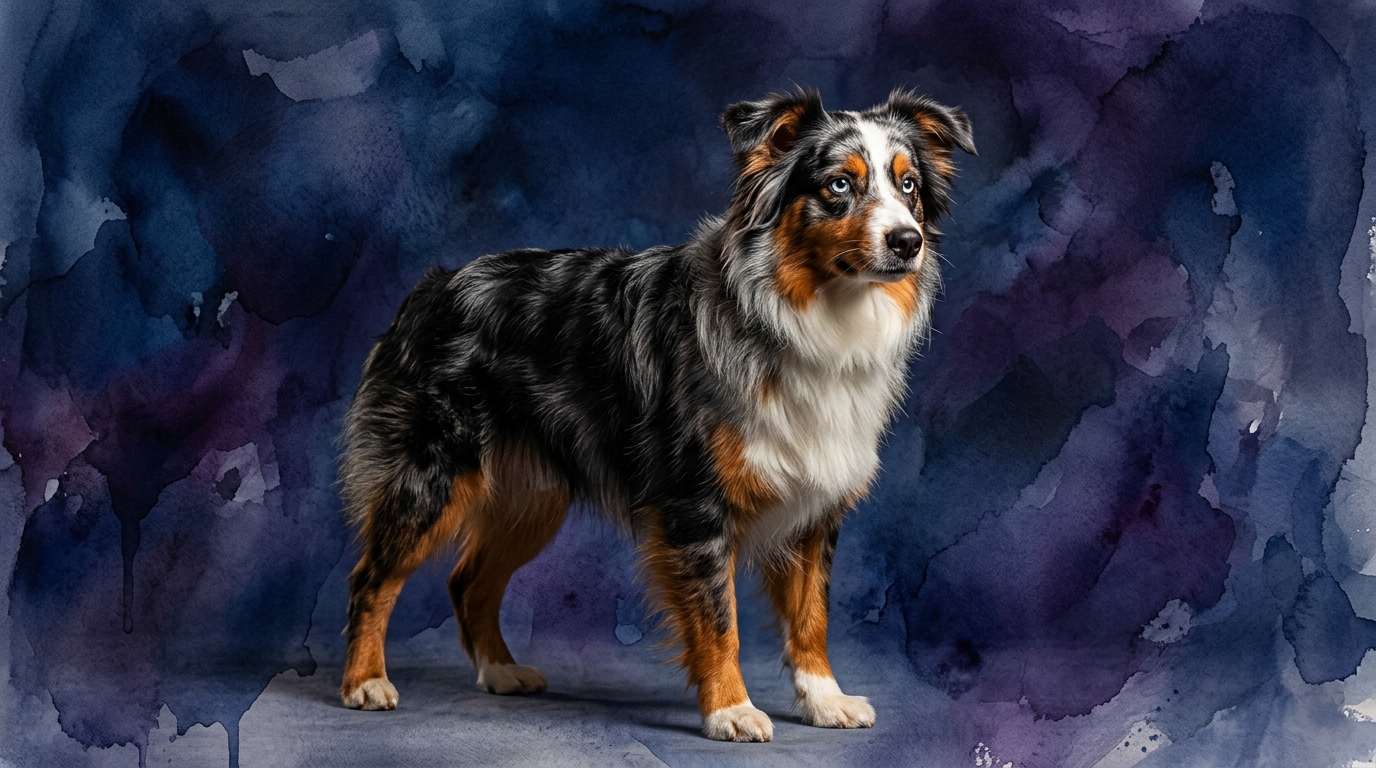
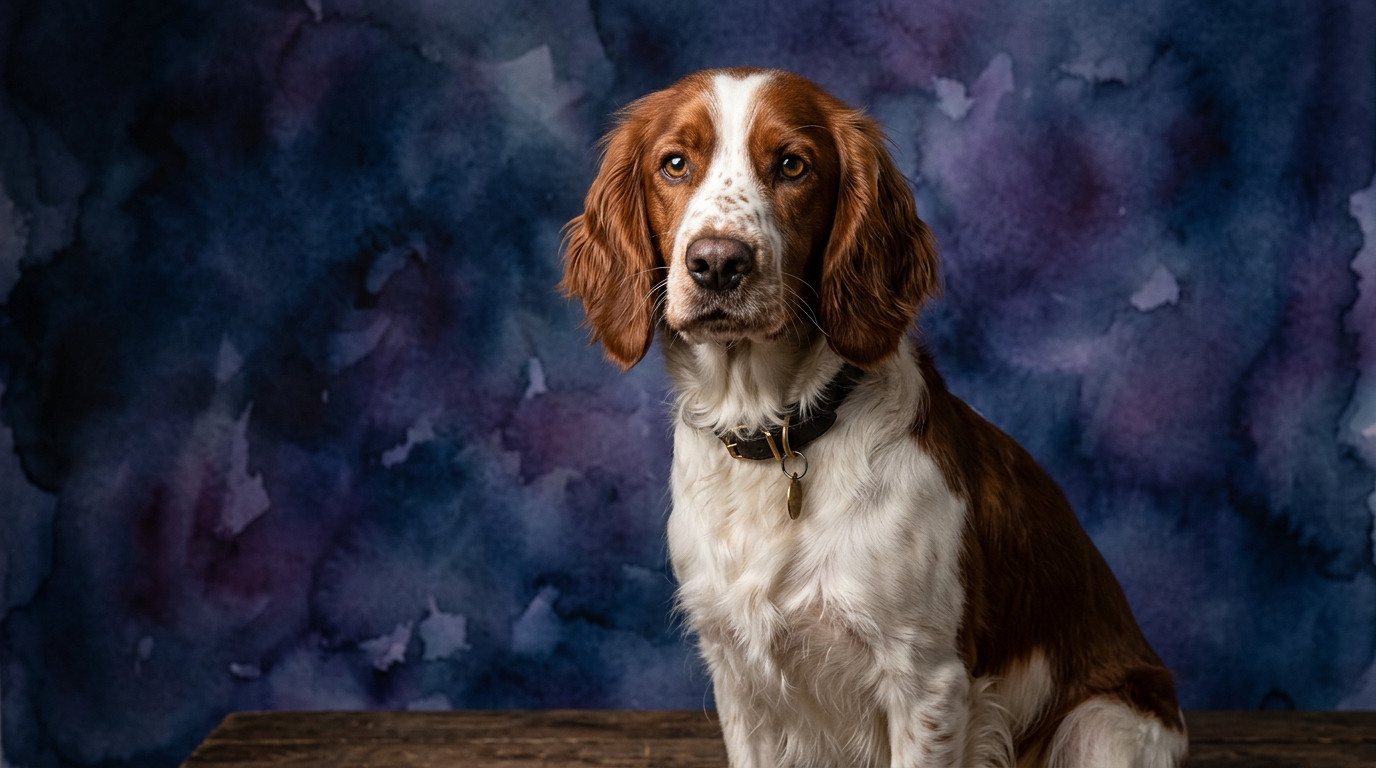
Side-by-Side IQ Profile: Miniature American Shepherd vs. Welsh Springer Spaniel
The Miniature American Shepherd's cognitive profile presents a balanced yet specific set of aptitudes. With Problem Solving rated at 3/5, they demonstrate a capacity for moderate challenges, often relying on learned patterns rather than seeking novel solutions independently. Their Training Speed, also at 3/5, suggests a steady learning pace, requiring consistent reinforcement to master new commands effectively. Social Intelligence at 3/5 indicates they are generally receptive to human cues and group dynamics but might not always seek deep collaborative engagement, while Instinctive Drive at 3/5 points to a moderate but present herding impulse that benefits from appropriate outlets. A Memory score of 3/5 implies a decent recall of experiences and training, though perhaps not with absolute precision.
In contrast, the Welsh Springer Spaniel exhibits a profile geared towards quicker comprehension and retention. A Problem Solving score of 4/5 signifies a more agile mind, capable of strategizing and adapting to new situations with greater efficiency, often figuring out complex tasks with fewer repetitions. Their Training Speed, a robust 4/5, highlights their readiness to absorb and execute new commands efficiently, positioning them as highly responsive learners. Mirroring the MAS, their Social Intelligence at 3/5 indicates good social awareness but perhaps not an overwhelming desire for constant human-led interaction beyond work. Instinctive Drive at 3/5 reflects their moderate hunting and retrieving drive, which channels into focused activity, and a Memory score of 4/5 suggests an excellent capacity for retaining training and experiences over extended periods.
Where the Miniature American Shepherd Wins Cognitively
The Miniature American Shepherd's cognitive profile, while not boasting the highest individual scores in every category, shines in its balanced and adaptable application of intelligence. Its 3/5 in Problem Solving, coupled with a 3/5 in Instinctive Drive, means it's adept at practical, real-world challenges related to its herding heritage, such as anticipating livestock movement or navigating obstacles in a purposeful manner. This isn't about solving abstract puzzles quickly, but rather applying existing knowledge and spatial awareness to dynamic, evolving situations with a calm, methodical approach, making them excellent at tasks requiring thoughtful execution.
Their consistent 3/5 across most dimensions also suggests a reliable and predictable cognitive processing style. Owners can anticipate a steady learning curve and a dog that, while not always the fastest to grasp a concept, will reliably execute it once understood. This breed excels in consistency and the thoughtful application of its moderate instinctive drives, making them particularly good at tasks requiring sustained focus and a methodical approach, rather than rapid-fire learning or spontaneous innovation.
Where the Welsh Springer Spaniel Wins Cognitively
The Welsh Springer Spaniel clearly demonstrates a cognitive advantage in areas demanding rapid learning, efficient problem-solving, and robust memory recall. Their 4/5 in Problem Solving indicates a dog that can quickly assess new situations, devise strategies, and adapt their behavior to achieve desired outcomes, whether it's navigating an agility course or figuring out a novel puzzle toy. This breed typically grasps complex sequences and multi-step commands with remarkable speed and fewer errors.
Complementing this is their 4/5 in Training Speed, making them exceptionally responsive to instruction and eager to please, which translates into fewer repetitions needed during training sessions. Furthermore, their superior Memory (4/5) ensures that once a lesson is learned, it is retained effectively over time, reducing the need for constant refreshers. This combination of quick comprehension, efficient learning, and strong retention positions the Welsh Springer Spaniel as a highly capable and adaptable student, excelling in disciplines that require both mental agility and precise execution.
Which is Easier to Train and Why
Based on their respective IQ profiles, the Welsh Springer Spaniel generally presents as the easier breed to train. Their higher scores in Training Speed (4/5) and Memory (4/5) directly contribute to a more efficient learning process. A Welsh Springer Spaniel typically picks up new commands and routines with fewer repetitions, and once learned, these behaviors are retained for longer periods. Their sporting background has cultivated an inherent desire to work cooperatively with humans, often exhibiting a strong 'eagerness to please' that further motivates their training efforts. They thrive on positive reinforcement and clear instruction, quickly associating actions with rewards and responding with enthusiasm.
In contrast, the Miniature American Shepherd, with its 3/5 in Training Speed and Memory, requires a more patient and consistent approach. While certainly trainable, their herding heritage imbues them with a degree of independent thought and a focus on their own perceived tasks, which can sometimes manifest as a slight delay in processing novel commands. They might 'question' the utility of an instruction more than a typical sporting dog, necessitating a trainer who can make tasks relevant and engaging. Their training journey might involve more repetitions and a slower progression, but they are capable learners who, once they understand, perform reliably and with purpose.
Which Suits Active Owners vs. Relaxed Owners
Both the Miniature American Shepherd and the Welsh Springer Spaniel are breeds that demand a significant level of engagement, making them better suited for active owners rather than those seeking a truly relaxed companion. The Miniature American Shepherd, stemming from a herding lineage, possesses a moderate Instinctive Drive (3/5) that translates into a need for both physical exertion and mental stimulation. They thrive when given a 'job' to do, whether it's participating in dog sports like agility or herding trials, or engaging in extensive daily walks and puzzle games. Owners who enjoy structured activities and can provide consistent training and outlets for their dog's energy will find the MAS a fulfilling partner.
Similarly, the Welsh Springer Spaniel, with its sporting background and moderate Instinctive Drive (3/5), requires ample exercise to prevent boredom and destructive behaviors. They are energetic dogs built for endurance, enjoying long hikes, retrieving games, and swimming. Their higher problem-solving and training speed scores mean they benefit greatly from mental challenges like advanced obedience or scent work. While they can be calm indoors after sufficient exercise, neither breed is content with a sedentary lifestyle. Owners must be prepared to integrate regular, vigorous activity and consistent mental enrichment into their daily routine, making both breeds ideal for active, engaged households.
The Verdict
Choose the Miniature American Shepherd if you appreciate a balanced, consistent learner who excels in methodical tasks and possesses a moderate, adaptable herding drive, and you are prepared for a slightly more patient training journey focused on consistency.
Choose the Welsh Springer Spaniel if you seek a quick-witted companion eager to learn, who grasps new concepts rapidly and retains information well, thriving on fast-paced training and engaging problem-solving activities.
🧠 Find Your Pet's IQ Score
Our Pet IQ Lab assessment covers 25+ tests across 5 cognitive dimensions — personalized to your breed.
Take the Full IQ Test →Frequently Asked Questions
Are Miniature American Shepherds good for first-time dog owners?
Miniature American Shepherds can be suitable for first-time owners who are committed to consistent training and providing ample mental and physical stimulation. Their moderate learning speed means patience is key, but their social intelligence helps them form strong bonds.
How much exercise do Welsh Springer Spaniels need daily?
Welsh Springer Spaniels require significant daily exercise, typically an hour or more of vigorous activity like running, fetching, or swimming, to satisfy their sporting drives. This helps channel their energy and cognitive abilities constructively.
Do these breeds get along with children and other pets?
Both breeds, with their 3/5 social intelligence, generally adapt well to families with children and other pets, especially when properly socialized from a young age. Supervision is always recommended, and their instinctive drives should be considered for interactions with smaller animals.