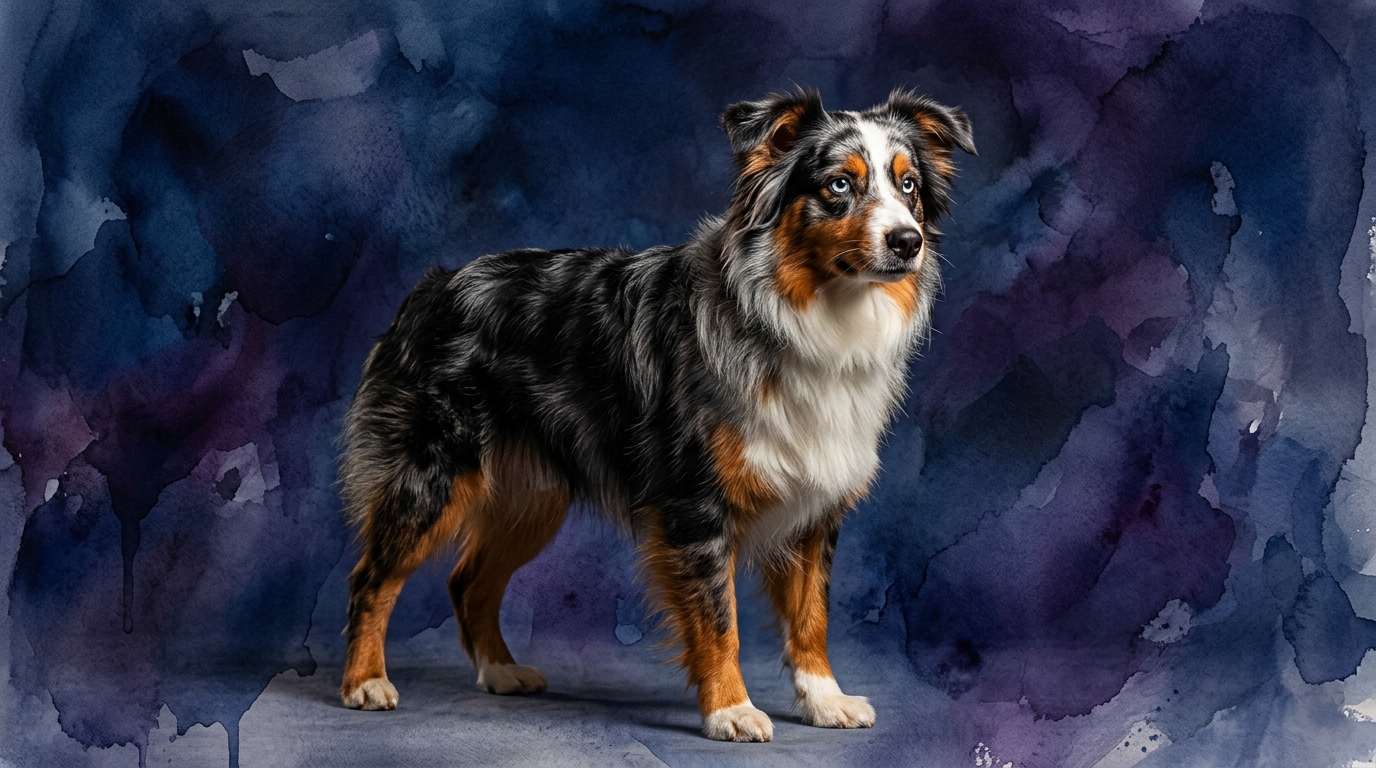
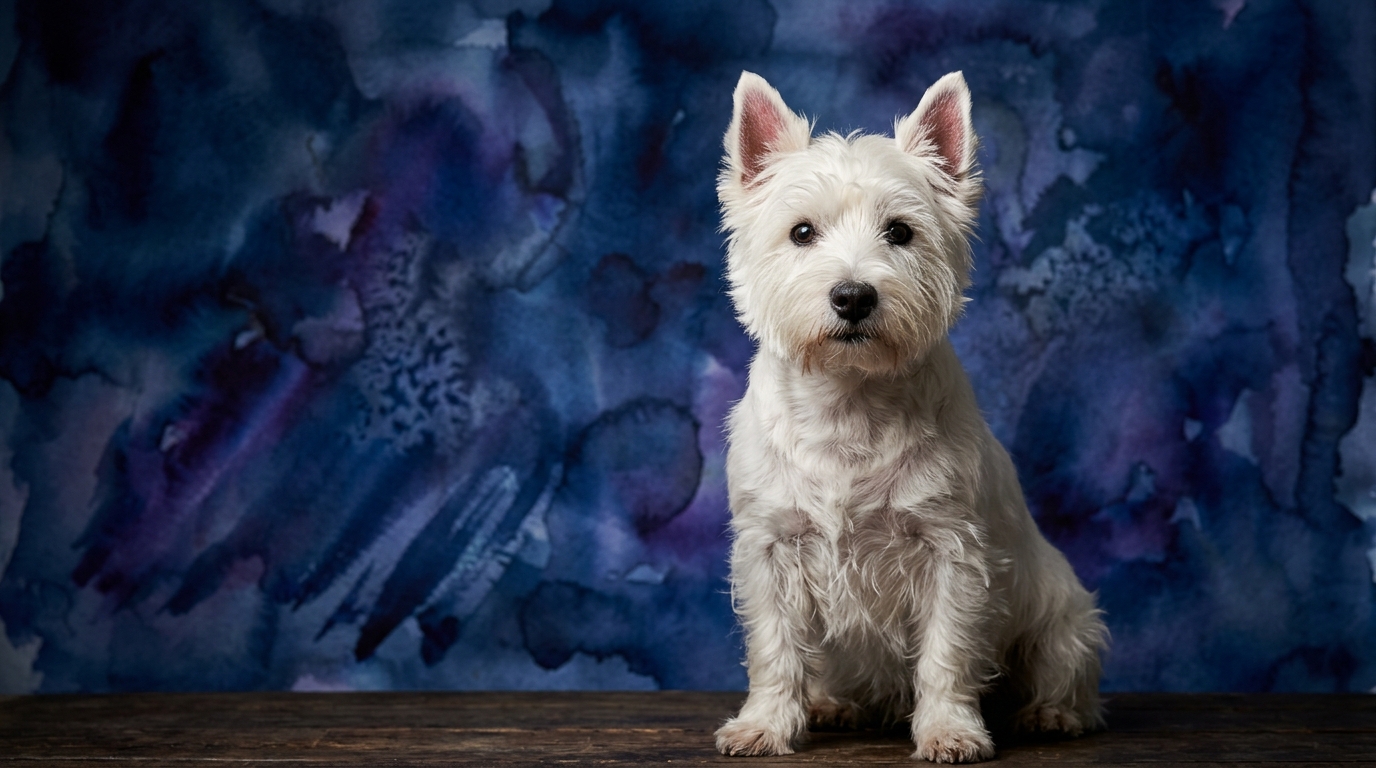
Side-by-Side Cognitive Profile: Miniature American Shepherd vs. Westie
To understand the cognitive makeup of these two breeds, The Cosmic Pet Pet IQ Lab employs a five-dimensional framework: Problem Solving, Training Speed, Social Intelligence, Instinctive Drive, and Memory. Analyzing these dimensions offers a specific lens through which to appreciate their unique mental attributes.
The Miniature American Shepherd (MAS), a member of the Herding group, exhibits a balanced cognitive profile:
Problem Solving (3/5): The MAS demonstrates a practical problem-solving approach, often involving spatial reasoning and strategic movement, reflecting their herding background. They excel at tasks requiring them to understand and manipulate their environment collaboratively, such as navigating complex agility courses or figuring out how to move objects strategically.
Training Speed (3/5): Miniature American Shepherds learn new commands at a moderate pace, thriving on consistent, positive reinforcement and clear communication. They genuinely enjoy the process of learning and benefit from structured repetitions to solidify new behaviors.
Social Intelligence (3/5): MAS dogs exhibit a balanced social understanding, keenly attuned to human cues and family dynamics, forming strong, responsive bonds. While amiable within their circle, their interactions can be discerning, showing a thoughtful reservation with strangers.
Instinctive Drive (3/5): Their herding heritage manifests as a moderate drive to gather, chase, and organize, which needs appropriate outlets to prevent misdirection. This can translate into a propensity for circling family members or showing keen interest in moving objects.
Memory (3/5): Miniature American Shepherds possess a solid memory for commands, routines, and experiences, recalling past lessons and applying learned behaviors in familiar contexts. Their memory is sufficient for mastering complex training sequences and maintaining good house manners.
The West Highland White Terrier (WHWT), hailing from the Terrier group, presents a profile with distinct terrier traits:
Problem Solving (3/5): The Westie approaches challenges with tenacious, independent determination, typical of terriers bred for vermin control, often using trial-and-error tactics. They excel at figuring out ways to achieve self-appointed goals, such as accessing small spaces or outwitting perceived obstacles.
Training Speed (3/5): Westies grasp concepts readily, learning new behaviors at a moderate pace, similar to the MAS, often showing quick comprehension. However, their independent nature means they may choose to obey only if highly motivated by a worthwhile reward or if the command aligns with their current interest.
Social Intelligence (3/5): West Highland White Terriers display a robust social understanding, engaging with family with a charming, confident, and sometimes stubborn personality. They read intentions well and can be playfully manipulative to get their way within the household dynamic.
Instinctive Drive (3/5): Rooted in its terrier lineage, the Westie's moderate instinctive drive includes a strong prey drive, a propensity for digging, and persistent curiosity. This innate desire to explore and investigate requires consistent management and appropriate outlets.
Memory (4/5): A standout feature, the Westie's superior memory allows it to retain information about locations, routines, and specific events with notable accuracy, such as remembering where a treat was hidden or a specific sound's meaning. This robust recall contributes significantly to their adaptability, even if applied selectively.
Where the Miniature American Shepherd Wins Cognitively
The Miniature American Shepherd's cognitive strengths shine in areas demanding cooperation and adaptable responsiveness. Their balanced 3/5 scores across the board, particularly in Problem Solving and Social Intelligence, suggest a dog adept at understanding and participating in complex human-dog interactions. They excel at tasks that require them to work *with* their owner, anticipating cues and adjusting their behavior to suit a common goal. For instance, in dog sports like obedience or rally, where precision and fluid teamwork are paramount, their capacity for methodical problem-solving combined with a willingness to follow direction gives them an edge. Their herding instinct, while a drive, often translates into a desire for structure and order, making them particularly receptive to learning intricate sequences and maintaining focus during extended training sessions. This breed's strength lies in its harmonious integration of various cognitive skills to become a highly collaborative partner.
Where the West Highland White Terrier Wins Cognitively
The West Highland White Terrier's distinct cognitive advantage lies in its exceptional memory (4/5) and its tenacious, independent problem-solving approach. This superior memory allows Westies to recall specific events, locations, and learned associations with remarkable accuracy, making them quick to remember house rules, favored spots, or past training experiences. This robust memory, coupled with their inherent persistence, fuels their ability to figure out creative solutions to challenges, even if those solutions are not always what their human companions intended. For example, a Westie might remember precisely where a treat was hidden days ago or devise an intricate plan to access a forbidden area by recalling previous attempts and refining their strategy. Their cognitive wins are often rooted in their self-directed determination and an impressive ability to retain information pertinent to their own goals, making them incredibly resourceful and often surprising in their ingenuity.
Which is Easier to Train and Why
Both breeds share a Training Speed score of 3/5, indicating a moderate pace for acquiring new commands. However, the *ease* of training can differ significantly due to their other cognitive dimensions and inherent breed characteristics. The Miniature American Shepherd, with its Herding background, generally approaches training with a greater desire to please and a natural inclination towards cooperative work. Their Social Intelligence (3/5) means they are attuned to their owner's intentions and typically eager to engage in structured learning. While they need consistency, their instinctive drive often aligns with working alongside a handler, making them more pliable and motivated by praise and partnership. Conversely, the West Highland White Terrier's independence and strong instinctive drive (3/5), coupled with its Terrier tenacity, can present a different training dynamic. While they learn quickly due to their excellent memory (4/5), they might apply that learning selectively, often weighing whether a command serves their own interests. Training a Westie requires more creativity, patience, and often a higher value reward system to consistently motivate them past their self-directed pursuits. Therefore, for an owner seeking a more straightforward and cooperative training partner, the Miniature American Shepherd generally presents an easier path, whereas the Westie demands a more nuanced and engaging approach to overcome its inherent self-sufficiency.
Which Suits Active Owners vs. Relaxed Owners
The choice between these two breeds for active versus relaxed owners hinges on their inherent drives and physical needs, both of which are influenced by their cognitive profiles. The Miniature American Shepherd, with its herding lineage and balanced instinctive drive (3/5), thrives with active engagement. They require regular physical exercise, such as long walks, runs, or dog sports like agility and flyball, to satisfy their need to work and expend energy. Cognitively, their problem-solving and social intelligence flourish when given tasks that stimulate their minds and allow them to collaborate with their owners. A relaxed owner might find a MAS becomes bored, potentially leading to undesirable behaviors like excessive barking or 'herding' household members. Conversely, the West Highland White Terrier, despite its smaller stature, also possesses a moderate instinctive drive (3/5) for hunting and exploring. While they don't necessarily need the same sustained endurance as a herding dog, they require consistent mental stimulation and opportunities for scent work, digging (in designated areas), and engaging play. A Westie can adapt to a moderately active lifestyle, enjoying daily walks and interactive games, but will become frustrated if denied outlets for its curious, investigative nature. For a truly relaxed owner seeking a sedentary companion, neither breed is an ideal fit, as both possess drives that demand interaction. However, a MAS leans more towards the active, working-partner owner, while a Westie suits an owner who enjoys engaging in shorter, varied bursts of activity and mental challenges.
The Verdict
Opt for the Miniature American Shepherd if you seek a highly cooperative partner for structured activities and enjoy a dog that thrives on working collaboratively with you.
Choose the West Highland White Terrier if you appreciate a tenacious, resourceful companion with a remarkable memory, who enjoys independent exploration and engaging mental challenges.
🧠 Find Your Pet's IQ Score
Our Pet IQ Lab assessment covers 25+ tests across 5 cognitive dimensions — personalized to your breed.
Take the Full IQ Test →Frequently Asked Questions
How do their problem-solving styles differ despite the same IQ score?
While both score 3/5, the Miniature American Shepherd's problem-solving is often collaborative and methodical, aiming to work with its owner. The Westie's approach is more independent and tenacious, driven by its own objectives, often through trial-and-error.
Does the Westie's superior memory make it easier to train overall?
Not necessarily. While the Westie's 4/5 memory helps it retain commands, its independent nature (3/5 social intelligence) means it might choose when to apply that knowledge. The MAS, with its cooperative drive, often presents a more consistent training experience.
Which breed is better for a family with young children?
The Miniature American Shepherd's balanced social intelligence and desire to please often make it a patient and adaptable family member, though its herding instinct needs management. The West Highland White Terrier, while affectionate, can be more assertive and requires careful socialization with children due to its independent spirit.