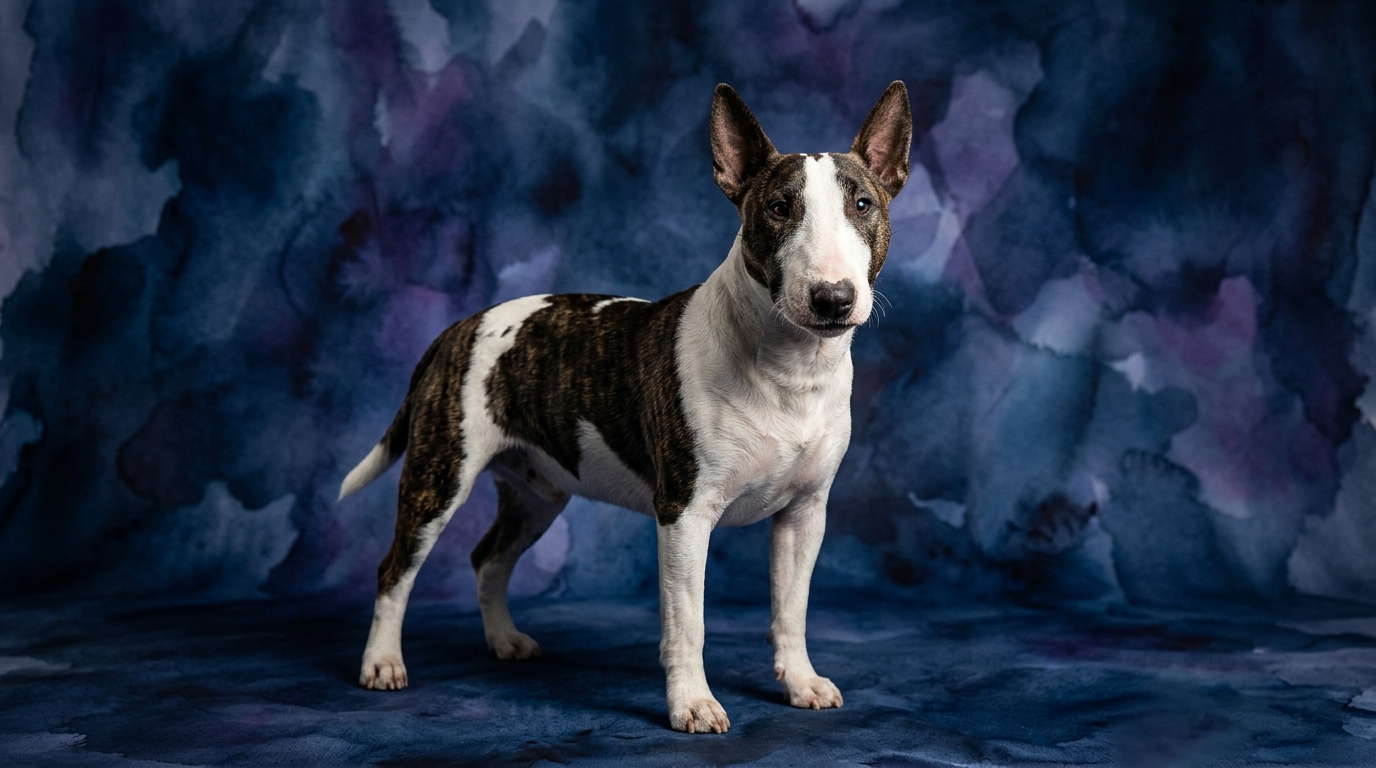

Side-by-Side IQ Profile: Miniature Bull Terrier vs. Redbone Coonhound
At first glance, the cognitive scores for both the Miniature Bull Terrier and the Redbone Coonhound appear identical across all five dimensions. However, these numerical values manifest through vastly different breed lenses, reflecting their distinct historical roles and inherent temperaments. Let's explore how a 3/5 score translates for each unique companion.
Miniature Bull Terrier (Terrier Breed):
Problem Solving (3/5): These dogs exhibit a clever, often independent approach to challenges, frequently devising their own solutions to get what they want. They might figure out how to open childproof gates, access forbidden pantry items, or outwit an owner during a game, driven by a tenacious spirit rather than external cues. Their solutions are frequently self-directed, requiring owners to be a step ahead in anticipating their ingenuity and setting up appropriate boundaries.
Training Speed (3/5): Miniature Bull Terriers grasp new commands and routines at a moderate pace, but their willingness to consistently apply that learning can be conditional. They understand concepts quickly, yet their independent nature means they often weigh whether complying serves their immediate interest or if there's a more engaging alternative, sometimes leading to perceived stubbornness if not motivated effectively with high-value rewards and engaging methods.
Social Intelligence (3/5): Their social interactions are robust, direct, and often full of personality. They understand complex social cues from their human family and other dogs, but may prefer to dictate the terms of engagement. This score reflects their capacity to navigate various social dynamics, albeit with a confident, sometimes assertive, demeanor that clearly communicates their boundaries and desires, making them expressive companions.
Instinctive Drive (3/5): This manifests as a strong prey drive, a zest for life, and an innate desire to dig or chase. They possess a natural inclination to pursue moving objects, investigate intriguing smells, and engage in vigorous play, channeling their ancestral terrier instincts into focused bursts of activity. This drive fuels their curiosity and determination, pushing them to explore and interact with their environment vigorously and often boisterously.
Memory (3/5): Miniature Bull Terriers possess a solid memory for commands, routines, and experiences, both positive and negative. They retain lessons learned, remember past interactions with people and other animals, and can recall specific locations of favored toys or treats. This reliable memory contributes to their consistent personality and learning, though it also means they remember perceived slights or negative associations, which can influence future interactions.
Redbone Coonhound (Hound Breed):
Problem Solving (3/5): Redbone Coonhounds excel at problem-solving primarily related to their overwhelming scent drive. Their intelligence is geared towards persistently following a trail, navigating complex terrain, and overcoming obstacles to achieve a scent-related goal. This might involve intricate pathfinding through dense undergrowth or deciphering faint scent puzzles, demonstrating a focused, methodical, and often single-minded approach to their task.
Training Speed (3/5): Redbone Coonhounds learn commands at a moderate pace, especially when training is positive, consistent, and conducted in environments where their powerful nose isn't overly stimulated. They are generally eager to please their 'pack' but can be easily distracted by compelling odors, which can significantly slow down the initial acquisition or reliable execution of new behaviors. Once a behavior is thoroughly learned and reinforced, they typically retain it well.
Social Intelligence (3/5): These hounds display a cooperative and generally amiable social intelligence, thriving within their family unit and often seeking companionship. They are adept at reading human emotions and intentions, frequently forming deep, affectionate bonds. While typically good-natured with other dogs, their social interactions are often colored by their strong pack instincts and a desire for harmony within their immediate group, making them generally sociable but sometimes reserved initially.
Instinctive Drive (3/5): The Redbone Coonhound's instinctive drive is overwhelmingly centered on their nose and the pursuit of scent. Their powerful scenting ability and relentless, enduring pursuit drive are paramount, guiding their exploration and engagement with the world. This drive is a central component of their identity, making them highly motivated by tracking, hunting, and any outdoor activities that engage their formidable olfactory senses.
Memory (3/5): Redbone Coonhounds have a good memory for places, people, and especially for scents. They can recall specific trails or past experiences, which is invaluable for their working heritage and ability to track. Their capacity to retain complex scent patterns and associate them with outcomes demonstrates a strong cognitive ability for recall, particularly within their specialized domain of olfactory expertise and learned behaviors.
Where Miniature Bull Terriers Excel Cognitively
Despite identical numerical scores, the Miniature Bull Terrier's cognitive strengths shine in situations demanding independent thought and adaptability in non-scent-driven contexts. Their problem-solving (3/5) is less about following a trail and more about figuring out how to achieve a desired outcome through clever manipulation or self-directed action, making them adept at navigating complex home environments or engaging with puzzle toys. Their robust social intelligence (3/5) translates into a clear, albeit sometimes strong-willed, communication style, which can be advantageous for owners who appreciate a dog with a distinct personality capable of expressing its needs and boundaries without subtlety.
Where Redbone Coonhounds Excel Cognitively
The Redbone Coonhound's cognitive strengths are particularly pronounced in tasks requiring sustained focus and sensory processing, specifically related to scent. Their problem-solving (3/5) is uniquely tailored to overcoming environmental challenges to follow a trail, demonstrating an unwavering persistence that few breeds can match. This specialized focus, combined with their instinctive drive (3/5) for scent work, gives them a distinct advantage in activities like tracking, search and rescue, or even complex scent-detection games, where their methodical and dedicated approach to olfactory puzzles is unparalleled. Their memory (3/5) is especially strong for recalling scent patterns and associated outcomes, making them exceptional at learning and remembering specific 'work' related information.
Training Dynamics: A Tale of Two 3/5s
Both breeds score 3/5 in training speed, yet their training experiences diverge significantly due to their inherent motivations and distractions. The Redbone Coonhound, while eager to please and socially intelligent (3/5), is profoundly influenced by its instinctive drive (3/5) for scent. This means training requires immense patience, high-value rewards, and often a distraction-free environment, as a compelling scent can easily override learned commands, particularly recall. Conversely, the Miniature Bull Terrier's training (3/5) is often challenged by its independent problem-solving (3/5) and strong will; they learn quickly but may choose not to comply if they perceive the task as uninteresting or if they have a better 'idea.' Training a Miniature Bull Terrier demands creativity, engagement, and consistent boundaries to harness their cleverness, whereas training a Redbone Coonhound requires managing their environmental focus and reinforcing their bond over external stimuli. Neither is 'easier' in an absolute sense, but the *nature* of the training challenge differs considerably.
Matching Breeds to Lifestyles: Active vs. Relaxed Owners
The Miniature Bull Terrier, with its robust instinctive drive (3/5) and zest for life, thrives with active owners who can provide consistent mental and physical engagement. Their need for independent problem-solving and vigorous play means they require more than just a walk; they benefit from interactive games, puzzle toys, and training that challenges their cleverness. A relaxed owner might find themselves overwhelmed by a bored Mini Bull Terrier's ingenious methods of self-entertainment, which can include destructive behaviors. The Redbone Coonhound also requires active owners, but their activity needs are more specifically directed towards their powerful instinctive drive (3/5) for scent. They are ideal for owners who enjoy hiking, scent work, or long outdoor excursions where their nose can be put to good use. While they can be calm indoors after sufficient exercise, a relaxed owner who cannot provide regular opportunities for scent-based exploration or extended physical activity will likely find their Redbone Coonhound restless and potentially vocal.
The Verdict
Opt for a Miniature Bull Terrier if you seek a confident, independent companion who thrives on mental challenges and robust social interaction, and you are prepared for consistent, engaging training that respects their clever, sometimes strong-willed, nature.
Select a Redbone Coonhound if you are an active individual or family passionate about outdoor activities, especially those involving scent work or tracking, and you appreciate a loyal, amiable companion whose primary focus is often guided by its extraordinary nose.
🧠 Find Your Pet's IQ Score
Our Pet IQ Lab assessment covers 25+ tests across 5 cognitive dimensions — personalized to your breed.
Take the Full IQ Test →Frequently Asked Questions
Do Miniature Bull Terriers and Redbone Coonhounds learn at the same pace?
While both breeds score 3/5 in Training Speed, their learning styles differ; Miniature Bull Terriers grasp concepts quickly but may need strong motivation to comply, while Redbone Coonhounds learn effectively but can be easily sidetracked by scents. The pace of reliable learning will depend on the training approach and environmental control.
Which breed is better with children based on their social intelligence?
Both score 3/5 in Social Intelligence, but this manifests differently; Miniature Bull Terriers are robust and confident, requiring supervision with very young children due to their boisterous play, while Redbone Coonhounds are generally amiable and cooperative, often forming strong bonds with family members. Proper socialization and training are crucial for both breeds to ensure harmonious family life.
How does their 'Instinctive Drive' impact daily life for each breed?
For the Miniature Bull Terrier (3/5), their drive translates into a need for active play, digging, and chasing, requiring outlets for their energetic terrier nature. For the Redbone Coonhound (3/5), their drive is predominantly scent-focused, meaning they will relentlessly follow interesting smells, necessitating secure leashes, fenced yards, and opportunities for scent work to keep them content.