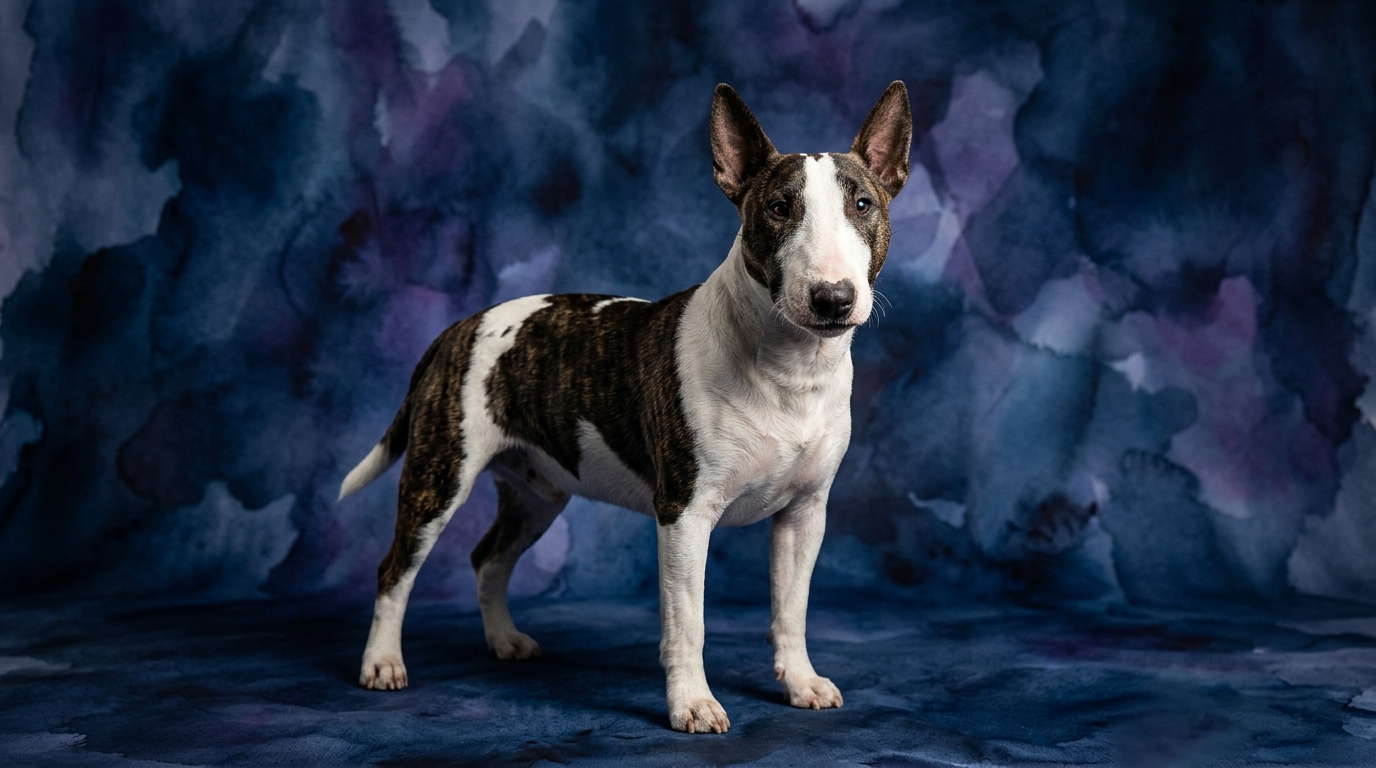

Side-by-Side Pet IQ Profile: Miniature Bull Terrier vs. Toy Fox Terrier
The Pet IQ Lab assesses canine cognition across five key dimensions, each scored out of five. Interestingly, both the Miniature Bull Terrier and the Toy Fox Terrier share the same 3/5 rating across every category, presenting a fascinating challenge to understand their unique cognitive expressions.
**Miniature Bull Terrier (MBT) - Pet IQ Lab Scores:**
**Problem Solving (3/5):** The Miniature Bull Terrier tackles challenges with a tenacious, often physical resolve, preferring persistent effort and varied physical manipulations until a goal is achieved. Their solutions might not be elegant, but they are often effective due to sheer determination.
**Training Speed (3/5):** Learning new commands at a moderate pace, the MBT's training progress is often tempered by an independent spirit, requiring more repetitions and diverse motivation for consistent performance. They excel when tasks align with their interest and perceived benefit.
**Social Intelligence (3/5):** MBTs exhibit a moderate capacity for understanding social cues, forming strong bonds but sometimes displaying direct, less nuanced interactions. Clear communication from human companions is crucial to navigate their social landscape.
**Instinctive Drive (3/5):** Possessing a moderate instinctive drive, MBTs have a natural inclination for chasing and exploring, rooted in their terrier heritage. This fuels a keen interest in their surroundings and a desire for engaging, active pursuits.
**Memory (3/5):** Demonstrating a moderate memory capacity, the MBT retains learned behaviors and routines over time, aiding in building a consistent training foundation. Regular refreshers help solidify less frequently used information.
**Toy Fox Terrier (TFT) - Pet IQ Lab Scores:**
**Problem Solving (3/5):** The Toy Fox Terrier approaches problems with a blend of quick wit and agile resourcefulness, often involving rapid assessment and nimble execution. They are adept at tasks requiring fine motor skills or swift navigation, though prolonged challenges may test their patience.
**Training Speed (3/5):** TFTs learn new behaviors at a moderate speed, often picking up on cues quickly due to their attentiveness. However, training requires engagement and novelty to maintain their focus, as their attention span can be brief.
**Social Intelligence (3/5):** TFTs typically display a moderate understanding of social dynamics, using their compact size and expressive nature to communicate effectively. They are generally adaptable but may show a discerning nature in choosing companions.
**Instinctive Drive (3/5):** The Toy Fox Terrier possesses a moderate instinctive drive, particularly evident in their sharp senses and inclination for tracking small movements. This fuels their curiosity and desire for mental stimulation through alert observation and playful bursts.
**Memory (3/5):** TFTs exhibit a moderate memory, recalling training commands, routines, and favored item locations. Their ability to remember sequences supports consistent behavior, though less significant events may fade without reinforcement.
Where the Miniature Bull Terrier Wins Cognitively
Despite identical scores, the Miniature Bull Terrier's cognitive strengths often lie in their sheer tenacity and robust physical application to tasks. Their 3/5 problem-solving, while not always about elegant solutions, is backed by an unwavering persistence; an MBT might spend significantly longer attempting to dismantle a puzzle toy or figuring out how to access a forbidden area, not giving up easily until they achieve their goal. This sustained focus, once engaged, can lead to successful outcomes in tasks requiring enduring effort where a less determined breed might abandon the challenge.
Furthermore, their 3/5 instinctive drive, combined with their physical prowess, allows them to excel in activities requiring sustained effort and a strong physical component. This might include scent work or specific agility obstacles where their determination to push through is paramount. The MBT's memory, also at 3/5, often manifests in a strong recall of specific locations or past successful strategies, enabling them to revisit and refine their approach to recurring challenges with consistent resolve.
Where the Toy Fox Terrier Wins Cognitively
The Toy Fox Terrier's cognitive advantages often stem from their inherent agility and quick processing, even with identical 3/5 scores. Their problem-solving, though also rated 3/5, typically involves rapid assessment and nimble execution; a TFT might quickly identify a weak point in a barrier or a novel way to reach a desired object using their smaller size and athleticism. This speed of thought and action, combined with their precise movements, can make them appear particularly 'clever' in situations demanding immediate, precise responses or intricate manipulations.
Their social intelligence, also 3/5, often benefits from their expressive nature and ability to navigate complex social situations with a blend of charm and discernment, making them particularly adept at reading subtle human cues and adapting their behavior accordingly. The TFT's memory, at 3/5, can be particularly sharp for routines and sequences, enabling them to anticipate events and learn complex trick chains with a fluid grace that belies their moderate rating.
Which is Easier to Train and Why
Though both breeds share a 3/5 training speed, the perceived ease of training can differ significantly due to their behavioral nuances. The Toy Fox Terrier, while capable of quick learning, often requires training sessions to be short, engaging, and varied to combat their potential for distraction or boredom. Their desire to be involved and their quickness to pick up on cues can make initial training feel swift, but maintaining consistency demands creativity and high-value rewards to keep their attention focused.
The Miniature Bull Terrier, conversely, might require more patience and a firmer, consistent hand. Their independent streak and occasional 'what's in it for me?' attitude mean that while they understand commands, they may choose not to comply if sufficiently unmotivated. Training an MBT is often about establishing a strong bond and clear expectations, making the process a marathon of consistent effort rather than a sprint, even if their cognitive ability to learn is fundamentally similar to the TFT's.
Suiting Active vs. Relaxed Owners
For active owners seeking a canine companion for structured activities and robust engagement, the Miniature Bull Terrier is often a fitting choice. Their 3/5 instinctive drive and problem-solving translate into a need for regular mental and physical outlets that challenge their tenacity and strength. They thrive on consistent routines, vigorous play, and opportunities to channel their energy into tasks like agility or advanced obedience, making them a partner for owners who enjoy a dynamic, hands-on approach to dog ownership.
The Toy Fox Terrier, while possessing a comparable 3/5 instinctive drive and problem-solving ability, often fits well with owners who appreciate bursts of activity interspersed with periods of indoor relaxation. Their agility and quick thinking make them excel in fast-paced, precision sports like flyball or trick training, but their smaller size means their exercise needs can often be met with indoor games and shorter, brisk walks. They are well-suited for owners who enjoy interactive play and mental stimulation without requiring hours of strenuous outdoor activity daily, making them adaptable to both moderately active and more relaxed home environments.
The Verdict
Opt for the Miniature Bull Terrier if you seek a robust, tenacious companion who thrives on consistent training, structured activity, and a strong, guiding hand to channel their independent spirit into productive endeavors.
Select the Toy Fox Terrier if you prefer an agile, quick-witted partner who excels in fast-paced mental challenges and enjoys interactive play, fitting well into a home that can offer engaging bursts of activity balanced with affectionate indoor companionship.
🧠 Find Your Pet's IQ Score
Our Pet IQ Lab assessment covers 25+ tests across 5 cognitive dimensions — personalized to your breed.
Take the Full IQ Test →Frequently Asked Questions
How can two breeds have identical IQ scores but different cognitive manifestations?
Pet IQ Lab scores provide a quantitative baseline, but how a dog applies that cognitive capacity is heavily influenced by breed-specific temperament, physical attributes, and historical roles. A 3/5 problem-solving score, for instance, might manifest as tenacious physical effort in a robust breed versus rapid, agile manipulation in a smaller, quicker one.
Does a 3/5 training speed mean both breeds are equally easy to train?
Not necessarily. While both breeds grasp new concepts at a moderate pace, the 'ease' of training is also affected by factors like motivation, attention span, and independence. A Miniature Bull Terrier's strong will might require more consistent, persuasive methods, whereas a Toy Fox Terrier's potential for distraction might demand more varied and engaging sessions.
How does instinctive drive at 3/5 differ between these two terriers?
For the Miniature Bull Terrier, a 3/5 instinctive drive often translates to a powerful, focused pursuit of targets, sometimes with a physical, boisterous approach. For the Toy Fox Terrier, the same 3/5 drive typically manifests as sharp, quick observation and agile pouncing, reflecting their smaller prey drive and quicker movements.