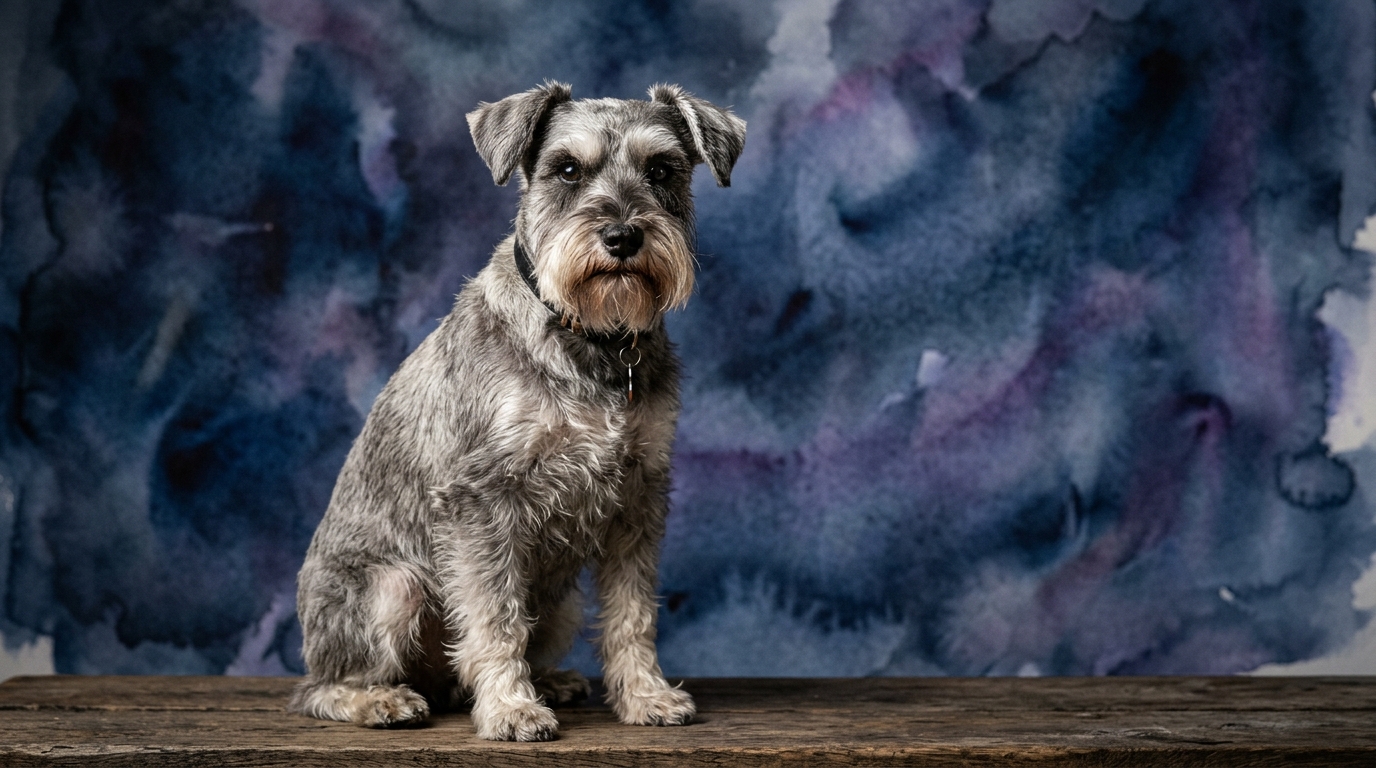
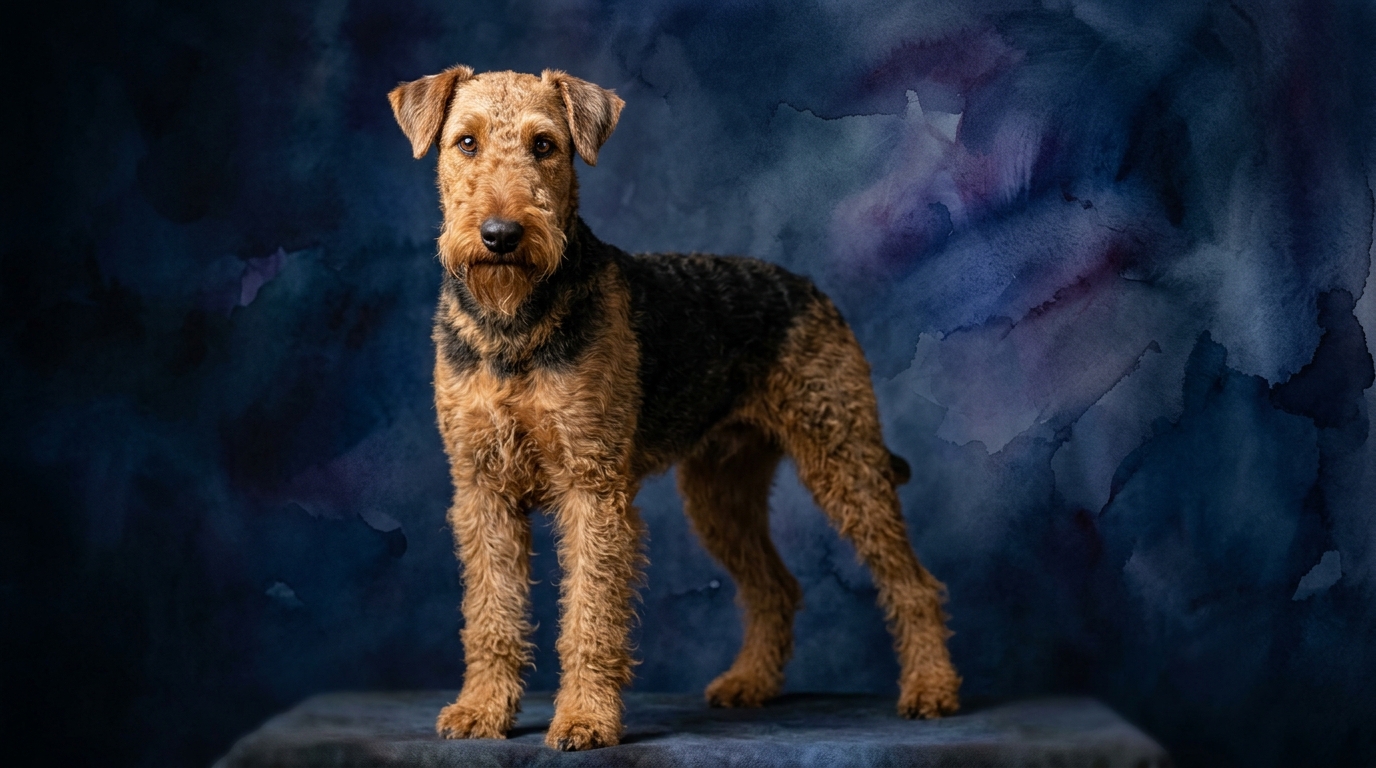
Side-by-Side Cognitive Profiles: Miniature Schnauzer vs. Airedale Terrier
The Cosmic Pet Pet IQ Lab employs a five-dimensional framework to assess canine intelligence, offering a nuanced view beyond a simple ranking. For the Miniature Schnauzer, ranked #12 by Coren, we observe a robust cognitive makeup across the board. Their Problem Solving is rated 4/5, indicating a strong capacity for independent thought and strategic navigation of new scenarios. Training Speed shines at 5/5, reflecting an exceptional readiness to grasp and execute new commands with minimal repetition. Social Intelligence stands at 4/5, demonstrating a keen awareness of human cues and emotional states, fostering strong interpersonal bonds. An Instinctive Drive of 4/5 points to their inherent terrier zest for tasks like chasing and guarding, requiring outlets for this energy. Finally, their Memory is solid at 4/5, ensuring consistent recall of learned behaviors and experiences.
In contrast, the Airedale Terrier, with a Coren rank of #29, presents a different cognitive signature. Their Problem Solving is also 4/5, showcasing a similar aptitude for independent thought and finding solutions, though often with a characteristic self-reliant approach. Training Speed is 4/5, indicating competent learning, but perhaps requiring more varied motivation or patience due to their independent streak. Social Intelligence is 3/5, suggesting they are affectionate within their trusted circle but can be more reserved or less overtly attuned to subtle human interactions than the Schnauzer. Their Instinctive Drive is 3/5, a moderate level that still requires engagement but might be less intense than some terrier counterparts. Their Memory aligns with the Schnauzer at 4/5, signifying good retention of training and past events once they are fully committed to the task.
Where the Miniature Schnauzer Excels Cognitively
The Miniature Schnauzer's cognitive profile, particularly its exceptional Training Speed (5/5) and higher Coren rank of #12, positions it with a distinct advantage in rapid behavioral acquisition. This isn't merely about understanding a command, but the sheer pace at which they integrate new instructions into their repertoire, consistently executing them. Their elevated Social Intelligence (4/5) further amplifies this, as they are often more attentive to human intentions and eager to comply, translating into quicker responses during structured learning sessions.
This breed often demonstrates a more fluid grasp of complex sequences or multi-step tasks, rapidly connecting actions to desired outcomes. For instance, teaching a Miniature Schnauzer to retrieve specific items by name or to navigate an agility course with multiple obstacles might see faster progress due to their superior responsiveness and focus on handler cues. Their problem-solving abilities, combined with their strong memory, allow them to generalize learned solutions to new, similar challenges efficiently.
Where the Airedale Terrier Shines Cognitively
While the Airedale Terrier holds a Coren rank of #29, their Problem Solving score of 4/5 highlights an impressive capacity for independent thought and resourcefulness. This isn't solely about following instructions, but about their ability to assess situations and devise their own solutions, sometimes even when it deviates from expected methods. This independence can be a significant strength when faced with novel, unstructured challenges where direct instruction isn't immediately available, such as figuring out how to access a desired object or navigating an unfamiliar environment.
Their moderate Instinctive Drive (3/5) compared to the Miniature Schnauzer’s 4/5 means they might be less prone to obsessive focus on traditional prey drive, allowing for a broader engagement with their environment beyond typical terrier pursuits. This can translate into a more adaptable problem-solver in non-predatory contexts. An Airedale might excel at finding creative ways around obstacles or persisting in a task purely out of curiosity or determination, showcasing a self-motivated cognitive drive that can be quite impressive.
Trainability: Which Breed is Easier and Why?
The Miniature Schnauzer generally presents as the easier breed to train, primarily due to its superior Training Speed (5/5) and higher Social Intelligence (4/5). Their inherent eagerness to engage with human companions and their rapid grasp of new concepts mean they typically respond well to positive reinforcement and consistent methods. They are often highly motivated by praise and treats, quickly forming associations between commands and rewards, making the training process smoother and more rewarding for both dog and owner.
The Airedale Terrier, with a Training Speed of 4/5 and Social Intelligence of 3/5, requires a more nuanced and patient approach. Their independent nature and strong will mean they might question commands or seek to find their own way, often needing more motivational variety and firmer, yet still positive, guidance. While they retain information well (4/5), the initial process of instilling a new behavior can be lengthier, as you often need to convince an Airedale that your way is the best way. Their characteristic terrier tenacity means they will persist, but that persistence must be properly channeled towards desired behaviors.
Matching Canine Cognition to Owner Lifestyles
For owners seeking a highly engaged and active companion, both breeds offer considerable energy, but their expression of this energy differs significantly. The Miniature Schnauzer, with its balanced instinctive drive (4/5) and high training speed, thrives on structured activities like agility, obedience trials, or long, varied walks that engage both body and mind. Their smaller size makes them adaptable to various environments, from urban parks to suburban yards, provided their mental and physical needs are met with consistent interaction and companionship.
The Airedale Terrier, while possessing a moderate instinctive drive (3/5), is a larger, more robust breed requiring substantial physical exercise to prevent boredom and destructive behaviors. They excel in activities demanding endurance and independent thought, such as hiking, trail running, or even participating in dog sports like earthdog trials, though they may not possess the same intense drive as some smaller terriers. For a more relaxed owner, the Miniature Schnauzer might be a better fit, as their exercise needs, while still significant, can often be satisfied with focused play sessions and walks, and they are generally more content to settle indoors once their needs are met. An Airedale's sheer physical presence and independent streak demand an owner who can consistently provide an outlet for their vigor and mental stimulation, making them better suited for highly active individuals or families who embrace outdoor adventures.
The Verdict
Choose the Miniature Schnauzer if you prioritize rapid trainability, a strong desire to please, and a dog that integrates quickly into family routines and learns complex tasks with enthusiasm. They are ideal for owners who enjoy consistent, engaging training and structured activities.
Opt for the Airedale Terrier if you appreciate an independent, resourceful companion with a robust physical presence and a clever, sometimes willful, problem-solving approach. They suit active owners who can provide ample exercise and value a dog that thinks for itself.
🧠 Find Your Pet's IQ Score
Our Pet IQ Lab assessment covers 25+ tests across 5 cognitive dimensions — personalized to your breed.
Take the Full IQ Test →Frequently Asked Questions
Do Miniature Schnauzers bark more than Airedale Terriers?
Miniature Schnauzers, with their higher social intelligence and instinctive drive as alert guardians, can be more prone to barking at perceived threats or new stimuli. Airedale Terriers are generally less vocal, though they will bark to alert or express their opinions when strongly motivated.
Are Airedale Terriers good with children?
Airedale Terriers can be excellent family dogs, often forming strong bonds with children when properly socialized from a young age. Their robust build means they can tolerate rougher play, but their independent nature requires supervision to ensure respectful interactions and boundaries are maintained.
Which breed is better for first-time dog owners?
Given its higher training speed and social intelligence, the Miniature Schnauzer is generally more forgiving and adaptable for first-time dog owners who are committed to consistent training. The Airedale Terrier's independence and physical demands often benefit from an owner with some prior experience in canine behavior and training.