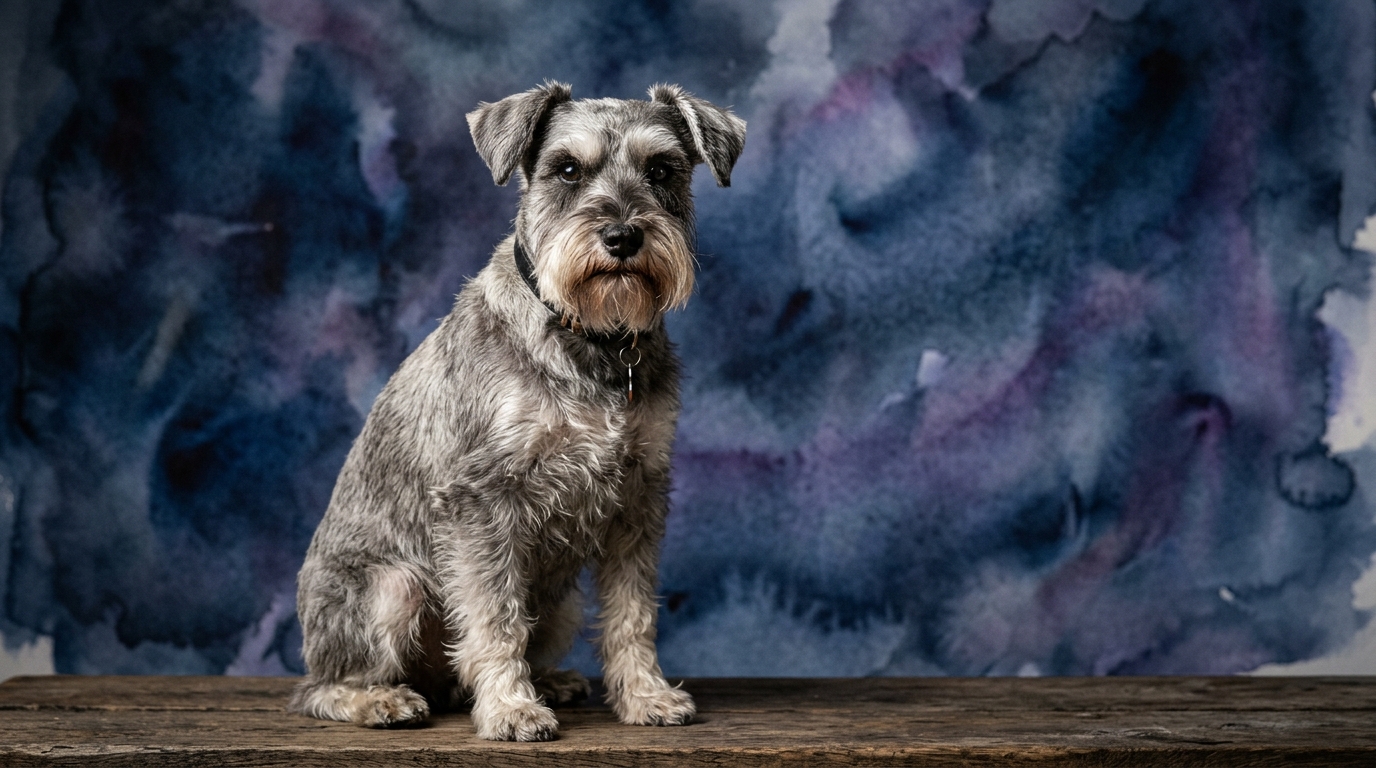
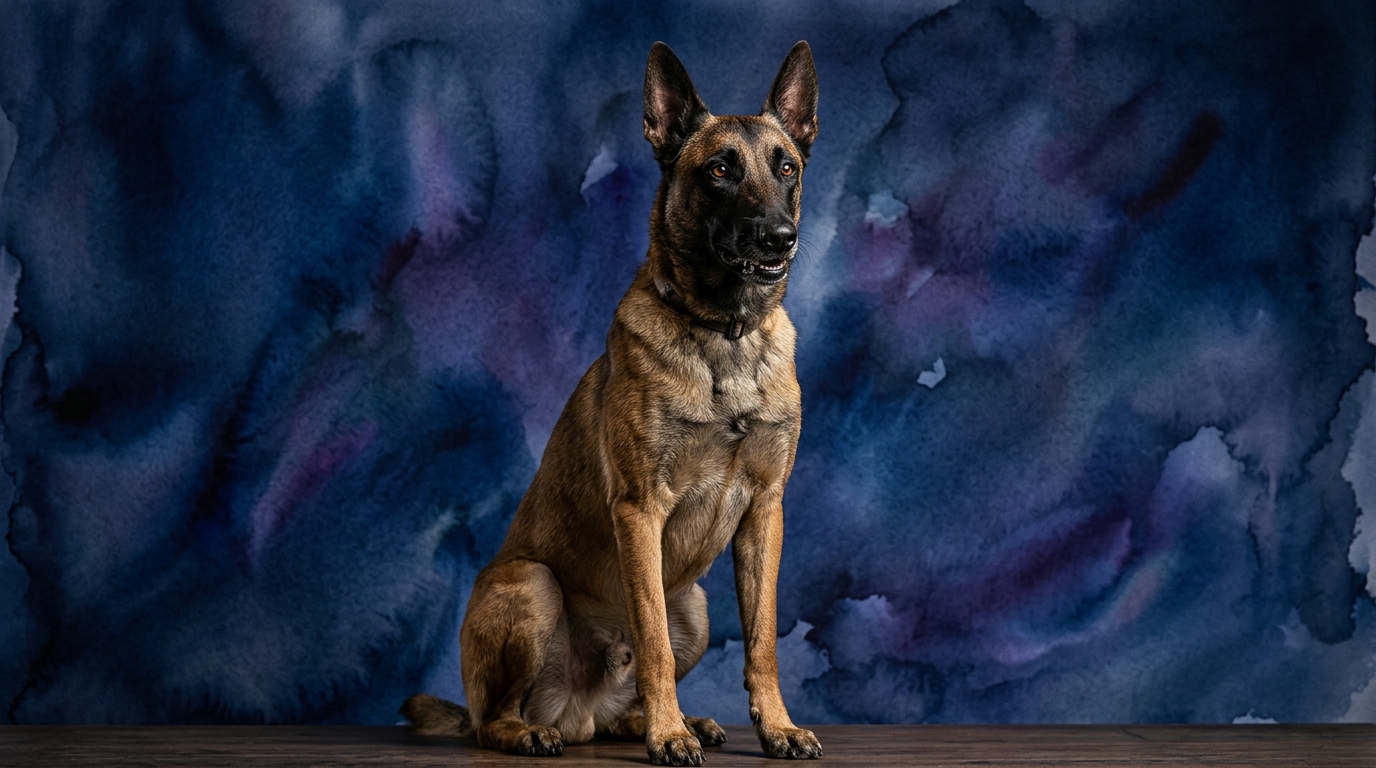
Side-by-Side IQ Profile
The Cosmic Pet Pet IQ Lab provides a nuanced framework for understanding canine intelligence, moving beyond simple obedience ranks to assess five critical cognitive dimensions. Here, we dissect the profiles of the Miniature Schnauzer and the Belgian Malinois, highlighting their unique mental architectures.
Miniature Schnauzer (Terrier, Coren rank #12): This breed's IQ profile reflects its terrier heritage and companion role. Their Problem Solving (4/5) indicates an ability for independent thought, adept at figuring out practical puzzles, often for self-serving outcomes like finding hidden treats. Training Speed (5/5) is a standout, demonstrating impressive rapidity in absorbing new commands and routines, making them highly responsive to consistent methods. Social Intelligence (4/5) shows they are quite attuned to human emotions and social cues within their family, contributing to their adaptability in diverse household settings. Their Instinctive Drive (4/5) is robust, manifesting as vigilance and prey drive that requires engaging outlets. Memory (4/5) is solid, allowing them to retain learned behaviors and experiences over time.
Belgian Malinois (Herding, Coren rank #22): The Malinois profile underscores its breeding for demanding working roles. Their Problem Solving (5/5) excels in complex, multi-stage situations, demonstrating strategic thinking and rapid adaptation under pressure. Training Speed (5/5) is equally exceptional, enabling them to grasp and execute advanced commands with precision and speed, even in demanding environments. Social Intelligence (4/5) highlights their deep attunement to handler intentions and subtle cues, crucial for forming strong working partnerships. Instinctive Drive (5/5) is a defining characteristic, an intense and unwavering desire to work that fuels endless energy and focus. Memory (5/5) is outstanding, allowing for the recall of vast repertoires of commands and complex routines with remarkable accuracy and consistency.
Where Miniature Schnauzer Wins Cognitively
While the Malinois often scores higher in raw cognitive power across several dimensions, the Miniature Schnauzer's specific blend of mental traits positions it uniquely for success in certain cognitive domains, particularly within a diverse domestic context. Their `Training Speed (5/5)` combined with `Social Intelligence (4/5)` and a more contained `Instinctive Drive (4/5)` makes them exceptionally adept at integrating seamlessly into varied human household dynamics. They can quickly learn the nuanced rules of a busy family, understanding subtle social cues and adapting their behavior without the overwhelming need for a constant 'job' that a Malinois requires.
The Schnauzer's `Problem Solving (4/5)` leans towards practical, often self-initiated, solutions within a home environment. A Schnauzer might more readily figure out how to open a specific cabinet for a treat or strategically position themselves for maximum human attention, demonstrating a cleverness focused on personal gain or comfort rather than complex, handler-directed tasks. This independence in thought, characteristic of terriers, allows them to navigate household environments with a self-assured resourcefulness, often requiring less explicit instruction for day-to-day living than a Malinois might in a non-working role. Their higher Coren rank also hints at a broader general obedience and working intelligence that adapts well to diverse learning scenarios beyond highly specialized tasks.
Where Belgian Malinois Wins Cognitively
The Belgian Malinois demonstrably excels in scenarios demanding peak cognitive performance under pressure, reflecting its specialized breeding for demanding working roles. Their `Problem Solving (5/5)` is not merely about finding solutions, but about strategic thinking and rapid adaptation in dynamic, often high-stakes environments. This manifests as an ability to analyze complex situations, anticipate outcomes, and execute multi-step plans with precision, whether tracking a scent, navigating an agility course, or performing protection work.
The combination of `Instinctive Drive (5/5)` and `Memory (5/5)` is a significant cognitive advantage for the Malinois. This drive provides an inexhaustible wellspring of motivation, allowing them to sustain intense focus and effort over long periods, while their superior memory ensures that vast amounts of learned information, from intricate scent profiles to complex command sequences, are retained with unwavering accuracy. This makes them unparalleled in tasks requiring sustained cognitive effort, precise recall, and the ability to operate effectively under distraction or duress, areas where a Schnauzer, with its different breed purpose, would not typically be expected to compete.
Which Is Easier to Train and Why
Both breeds share a top `Training Speed (5/5)` rating, yet the *experience* of training them can differ significantly due to their other cognitive dimensions and intrinsic motivations. The Miniature Schnauzer's quick learning is often accompanied by an eagerness to please its family and a more manageable `Instinctive Drive (4/5)`. They respond well to positive reinforcement, quickly grasping basic and intermediate obedience. Their training might feel 'easier' for a typical pet owner because their drive, while present, is less overwhelming, and their independent nature can be channeled into acceptable household behaviors without requiring the intense focus and structure a Malinois demands.
Conversely, the Belgian Malinois' `Training Speed (5/5)` is coupled with an unparalleled `Instinctive Drive (5/5)` and `Memory (5/5)`. While they learn complex commands and sequences with breathtaking speed and precision, their training requires a highly skilled, consistent, and dedicated handler. Their powerful drive means that if not constructively channeled, it can manifest as unwanted behaviors. Training a Malinois isn't just about teaching commands; it's about managing and directing immense mental and physical energy, providing constant mental stimulation, and building a deep working relationship. For a novice or casual owner, the sheer intensity and cognitive demands of training a Malinois to be a well-adjusted companion might feel considerably more challenging, despite their rapid learning capacity for specific tasks.
Which Suits Active Owners vs Relaxed Owners
The distinction between these two breeds regarding owner suitability is stark, primarily dictated by their respective `Instinctive Drive` scores and overall cognitive profiles. The Miniature Schnauzer, with its `Instinctive Drive (4/5)`, thrives with active owners who can provide regular exercise, engaging playtime, and mental stimulation. They enjoy daily walks, interactive games, and learning new skills, making them excellent companions for individuals or families who appreciate consistent activity but also value periods of calm companionship. They can adapt to a moderately active lifestyle, enjoying both outdoor adventures and cozy evenings, provided their mental and physical needs are met through structured engagement.
The Belgian Malinois, possessing an `Instinctive Drive (5/5)`, is unequivocally suited for highly active, experienced owners who are prepared for a profound commitment to their dog's mental and physical well-being. These dogs require not just exercise, but a 'job' or purpose that engages their superior `Problem Solving (5/5)` and `Memory (5/5)`. This could involve advanced obedience, agility, protection sports, scent work, or even real-world working roles. A relaxed owner would quickly become overwhelmed by a Malinois' insatiable energy and cognitive demands, leading to frustration for both dog and human and potentially resulting in destructive behaviors born from boredom and unchanneled drive. They are partners for life in demanding activities, not passive companions.
The Verdict
Opt for a Miniature Schnauzer if you seek a highly trainable, socially intelligent companion that integrates well into a moderately active family life, enjoying both engagement and periods of calm, offering independent cleverness without overwhelming intensity.
Select a Belgian Malinois if you are an experienced, highly active individual or family prepared to dedicate significant time and expertise to providing intense physical exercise, advanced mental challenges, and a structured working partnership.
🧠 Find Your Pet's IQ Score
Our Pet IQ Lab assessment covers 25+ tests across 5 cognitive dimensions — personalized to your breed.
Take the Full IQ Test →Frequently Asked Questions
Do Miniature Schnauzers need a lot of mental stimulation?
Yes, despite their smaller size, Miniature Schnauzers possess a `Problem Solving (4/5)` and `Instinctive Drive (4/5)` that necessitates regular mental engagement. Puzzle toys, training sessions, and varied walks help satisfy their curious terrier minds and prevent boredom, channeling their natural cleverness constructively.
Can a Belgian Malinois be a good family pet?
A Belgian Malinois can be a good family pet *for the right family* – one that is exceptionally active, experienced with demanding working breeds, and committed to providing extensive training, socialization, and daily mental and physical challenges. Without this intense commitment, their powerful drive and cognitive needs can overwhelm a typical household, making them unsuitable.
How does Coren rank relate to the IQ scores provided?
Coren rank primarily assesses 'working and obedience intelligence,' reflecting a dog's ability to learn and execute human commands. The Cosmic Pet Pet IQ Lab scores offer a more granular view across five distinct cognitive dimensions, providing a deeper understanding of how that general intelligence manifests in specific problem-solving, social interaction, and drive.