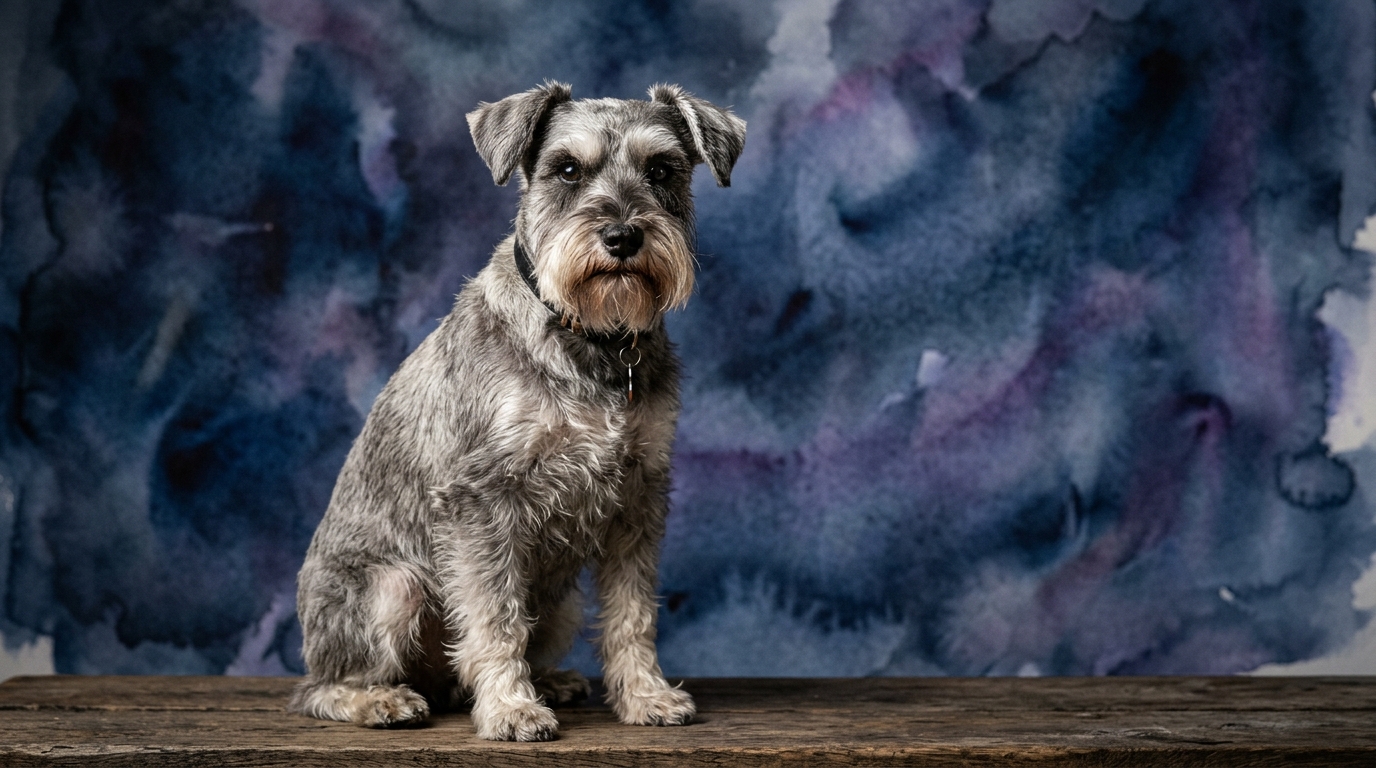
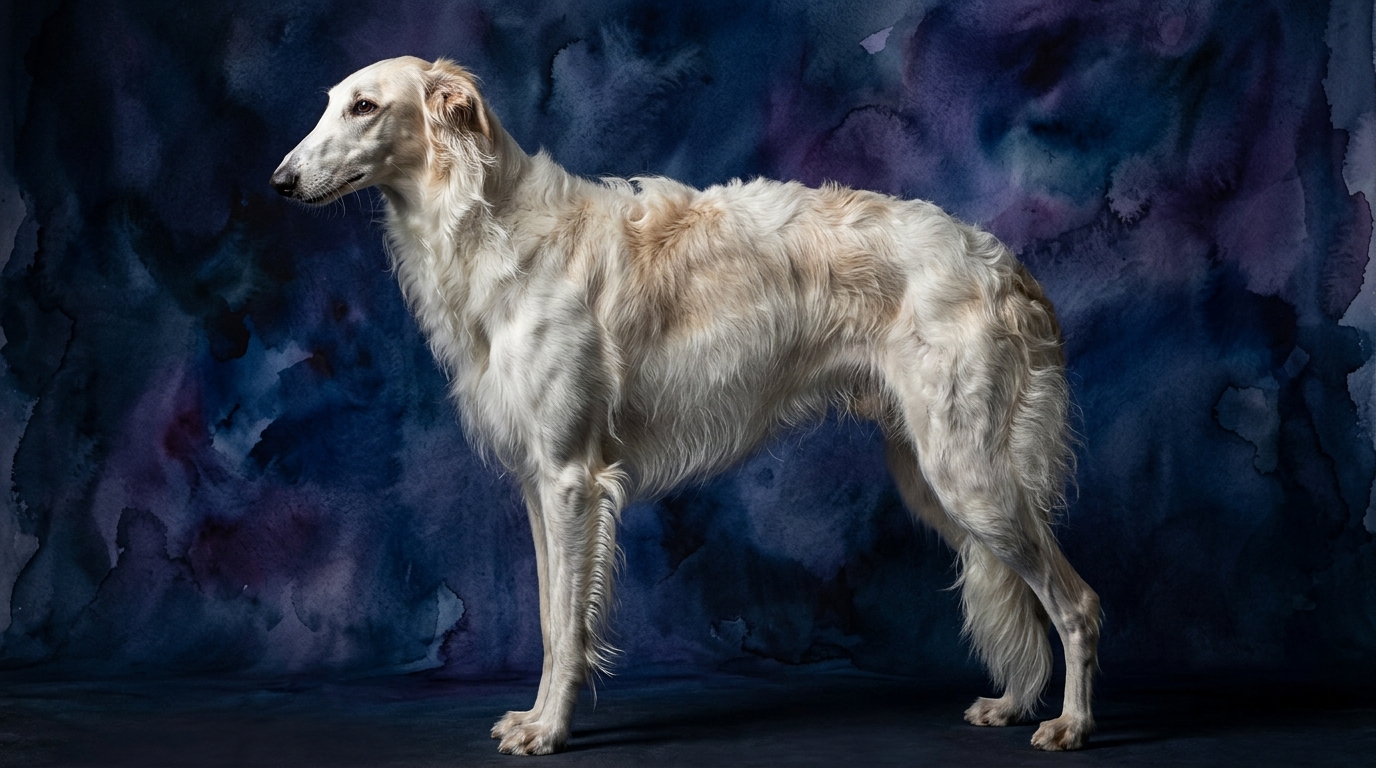
Side-by-side IQ Profile: Miniature Schnauzer vs. Borzoi
The Cosmic Pet Pet IQ Lab employs five key dimensions to evaluate canine intelligence, offering a nuanced view beyond simple rankings. When we apply these metrics to the Miniature Schnauzer and the Borzoi, distinct cognitive blueprints emerge, reflecting their divergent histories and purposes.
For the Miniature Schnauzer, a Coren rank of #12 positions them among the top tier of working and obedience dogs. Their Problem Solving ability, rated at 4/5, manifests in a cunning approach to challenges; these terriers are adept at figuring out how to access desired items or navigate complex environments, often displaying persistent trial-and-error. Their sharp minds quickly grasp cause-and-effect, making them natural at puzzle toys or tasks requiring sequential thought. Training Speed is where the Miniature Schnauzer truly shines, earning a perfect 5/5. They are eager learners, quick to form associations between commands and actions, often needing only a few repetitions. This rapid acquisition stems from their desire to engage with human companions and their innate drive to perform a “job.” Their Social Intelligence, rated 4/5, reflects strong bonds with family and a capacity to read human emotions. They often anticipate routines and react empathetically, making them highly responsive companions. The Instinctive Drive of a Miniature Schnauzer, at 4/5, is rooted in their terrier heritage – a relentless pursuit of small vermin. This translates into focused determination when tracking scents, digging, or “alerting” to perceived threats. Finally, their Memory, also 4/5, allows them to retain a vast repertoire of commands, remember specific people and places, and recall past experiences with remarkable clarity, contributing to consistent performance.
In contrast, the Borzoi, with a Coren rank of #75, presents a different cognitive landscape, shaped by their historical role as aristocratic sighthounds. Their Problem Solving capacity, rated 3/5, is less about manipulating objects and more about strategic thinking in pursuit. A Borzoi's “problem-solving” often involves calculating the fastest route to intercept a moving target or navigating varied terrain during a high-speed chase, relying on visual cues and spatial awareness. Their Training Speed, at 3/5, reflects an independent spirit. While capable of learning, Borzoi often require more patient, consistent training. They may find repetitive drills tedious and are more likely to comply if they understand the purpose of a command or if it aligns with their motivations, rather than simply seeking to please. Their Social Intelligence, also 3/5, is characterized by a dignified reserve. Borzoi form deep, affectionate bonds with family but are typically aloof with strangers. Their social cues are often subtle, preferring quiet companionship over boisterous interaction. The Instinctive Drive of a Borzoi, rated 3/5, is intensely specialized: the powerful urge to chase and capture fast-moving prey. This drive is a primal force, requiring vast open spaces to satisfy safely. Lastly, their Memory, at 3/5, is effective for recalling important routines, recognized people, and the layout of their environment, especially areas where they have previously chased. However, recall for less meaningful, arbitrary commands might require more frequent refreshing.
Where the Miniature Schnauzer Wins Cognitively
The Miniature Schnauzer's cognitive strengths lie in their adaptability and eagerness to engage directly with their environment and human partners. Their superior problem-solving ability (4/5) allows them to master complex obedience routines, excel in dog sports like agility, and even learn intricate tricks. Unlike breeds with more specialized drives, Schnauzers apply their intellect broadly, often attempting to “help” with household tasks or creatively finding ways to access forbidden areas, demonstrating a robust curiosity and planning capacity. Their 5/5 training speed means they pick up new concepts with remarkable alacrity, making them exceptionally rewarding for owners who enjoy teaching and refining behaviors. This quick learning, coupled with their strong social intelligence (4/5), enables them to adapt swiftly to new situations and understand subtle human cues, fostering a highly communicative and responsive partnership. They thrive on mental stimulation, using their memory (4/5) to build on prior learning, making progressive training a joy.
Where the Borzoi Wins Cognitively
While the Borzoi may not excel in traditional obedience or puzzle-solving in the same way a Miniature Schnauzer does, their cognitive strengths are profound and deeply rooted in their sighthound heritage. Their problem-solving (3/5) is uniquely geared towards the demands of the chase. This involves an extraordinary ability to process visual information at high speeds, calculating trajectories, anticipating prey movements, and navigating complex terrain with incredible precision and speed – a form of dynamic, real-time spatial intelligence that few breeds can match. Their instinctive drive (3/5), though rated lower in a general context, is unparalleled in its specialized intensity and focus. When a Borzoi locks onto a target, their entire being is dedicated to the pursuit, demonstrating an unwavering determination and physical intelligence in action. This isn't a lack of intelligence, but a different cognitive emphasis; their minds are wired for independent thought and rapid, decisive action in open spaces, making them masters of their specialized domain. Their memory (3/5) is particularly strong for visual cues and environmental layouts relevant to their hunting instincts and comfort zones, allowing them to remember safe running paths or preferred resting spots with ease.
Which Is Easier to Train and Why
There is a clear distinction in ease of training between these two breeds, largely favoring the Miniature Schnauzer. With a training speed of 5/5, the Schnauzer is often described as a “people pleaser” who genuinely enjoys the process of learning and performing commands for their human companions. Their high social intelligence (4/5) means they are attuned to human feedback, making positive reinforcement highly effective. They thrive on interaction and mental challenges, quickly associating verbal cues with actions and remembering them due to their strong memory (4/5). In contrast, the Borzoi's training speed of 3/5 reflects their independent nature. While capable of learning, they are not inherently driven to “please” in the same way a terrier might be. They can learn, but often view training as a negotiation rather than an eager collaboration. Repetitive drills can bore them, and their instinctive drive (3/5) for chasing can easily override a learned command if an enticing stimulus appears. Successful Borzoi training requires immense patience, consistency, and an understanding of their sighthound psychology, focusing on building a strong relationship and making training engaging rather than rote.
Which Suits Active Owners vs. Relaxed Owners
The ideal owner profile for these two breeds varies significantly based on their cognitive needs and inherent drives. The Miniature Schnauzer, with its high problem-solving capacity, rapid training speed, and strong instinctive drive, thrives with active owners who are prepared to provide consistent mental stimulation and structured activities. They require daily walks, engaging playtime, and ongoing training or dog sports like agility to keep their minds sharp and prevent boredom-induced behaviors. An active owner for a Schnauzer isn't just about physical exercise, but about active engagement in their dog's cognitive life. Conversely, the Borzoi, while requiring ample physical exercise in a safe, enclosed space to satisfy their specialized instinctive drive, can be surprisingly relaxed indoors. Their social intelligence (3/5) means they are content with quiet companionship once their exercise needs are met. A relaxed owner for a Borzoi understands their need for explosive sprints and then appreciates their calm, dignified presence within the home, providing a comfortable environment without demanding constant interaction or complex cognitive tasks.
The Verdict
If you desire a highly trainable, socially engaged companion eager to participate in daily activities and excel in dog sports or advanced obedience, the Miniature Schnauzer's robust cognitive profile makes them an excellent choice.
Opt for a Borzoi if you appreciate a dignified, independent companion who thrives on intense, supervised bursts of physical activity and offers calm, quiet companionship indoors, valuing their unique sighthound intellect.
🧠 Find Your Pet's IQ Score
Our Pet IQ Lab assessment covers 25+ tests across 5 cognitive dimensions — personalized to your breed.
Take the Full IQ Test →Frequently Asked Questions
Are Borzoi difficult to train compared to Miniature Schnauzers?
Generally, yes. Miniature Schnauzers have a 5/5 training speed due to their eagerness to please and quick learning, while Borzoi, at 3/5, are more independent thinkers who require patient, consistent training and may find repetition tedious. Their sighthound instincts can also make recall challenging if a visual lure is present.
Which breed is better with puzzle toys?
The Miniature Schnauzer, with their 4/5 problem-solving ability and curiosity, is typically more engaged with puzzle toys, enjoying the challenge of figuring them out. Borzoi (3/5 problem-solving) might find them less stimulating unless highly food-motivated, preferring challenges related to movement or observation.
Do Borzoi lack intelligence because of their lower Coren rank?
No, their Coren rank reflects their obedience intelligence, which is only one aspect. Borzoi possess a specialized intelligence for high-speed visual processing and independent decision-making during pursuit, a distinct cognitive strength not fully captured by traditional obedience metrics.