Side-by-Side Cognitive Profiles
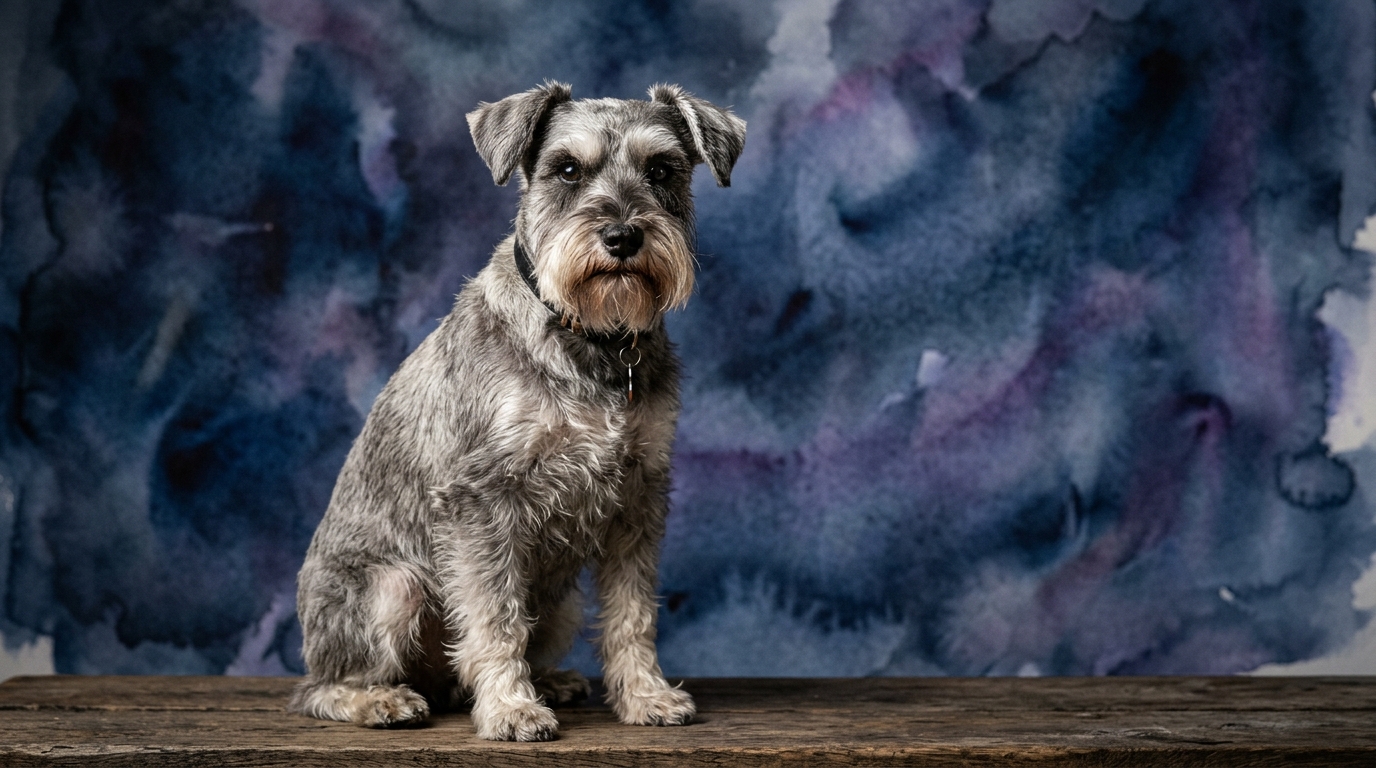
The Cosmic Pet Pet IQ Lab employs a comprehensive framework to assess canine intelligence, moving beyond simple obedience to evaluate five crucial dimensions: problem-solving, training speed, social intelligence, instinctive drive, and memory. For the Miniature Schnauzer, ranked #12 on Coren's scale, its profile reveals: Problem Solving 4/5, indicating a strong capacity to figure out complex situations independently; Training Speed 5/5, showcasing exceptional quickness in learning new commands; Social Intelligence 4/5, reflecting a keen awareness of human emotions and social cues; Instinctive Drive 4/5, highlighting a robust inherent motivation often tied to its terrier roots; and Memory 4/5, signifying excellent long-term retention of information and experiences. This breed presents a formidable cognitive package, built for engagement and learning.
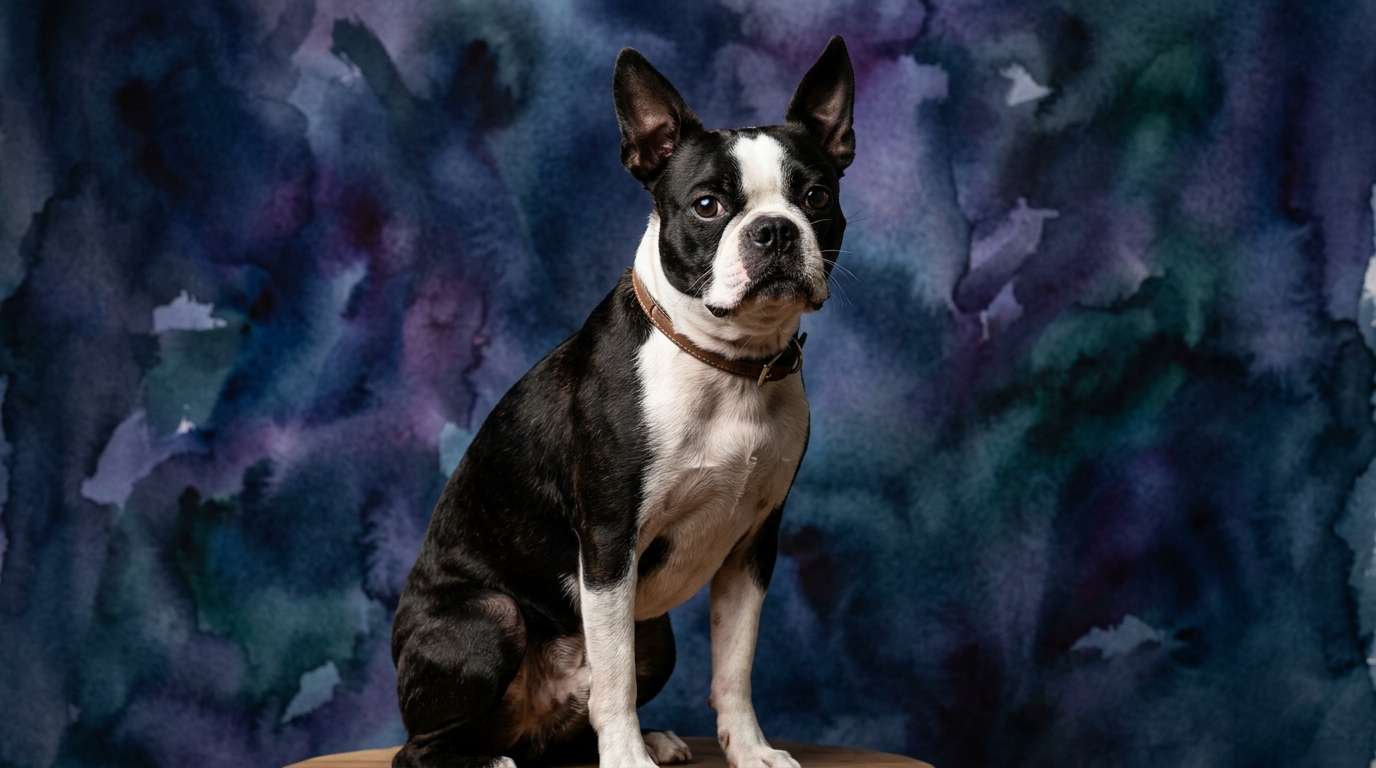
In contrast, the Boston Terrier, with a Coren rank of #54, offers a different intellectual landscape: Problem Solving 3/5, suggesting competence in everyday dilemmas but perhaps needing more guidance for novel challenges; Training Speed 3/5, indicating a moderate learning pace that benefits from consistent repetition; Social Intelligence 4/5, demonstrating a highly perceptive and empathetic nature towards its human companions; Instinctive Drive 2/5, illustrating a lower intrinsic motivation for task fulfillment compared to working breeds; and Memory 3/5, showing good recall for established routines and familiar faces. The Boston Terrier's intelligence is geared more towards companionship and adaptability within a domestic setting.
Where the Miniature Schnauzer Wins Cognitively
The Miniature Schnauzer demonstrably outpaces the Boston Terrier in several key cognitive areas, reflecting its higher Coren rank of #12 compared to the Boston's #54. Their problem-solving capabilities, rated 4/5, mean a Miniature Schnauzer is more likely to independently figure out how to open a gate, retrieve a hidden toy, or navigate a new environment with less human intervention. This breed's terrier heritage imbues them with a sharp, inquisitive mind, always keen to understand and manipulate their surroundings. Furthermore, their training speed is exceptional at 5/5; they are renowned for picking up new commands and complex sequences with remarkable alacrity, often needing only a handful of repetitions before a behavior is ingrained. This swift learning curve makes them a favored choice for dog sports and advanced obedience. Their instinctive drive (4/5) is another area of distinction; while not always directed at traditional 'work,' it translates into a purposeful focus when engaged in an activity, whether it's tracking a scent or mastering a new trick. This inherent drive gives them a persistent quality in learning and task engagement. Finally, their memory (4/5) is robust, allowing them to retain a vast repertoire of commands, routines, and social learnings over extended periods, making refresher training less frequent and more effective.
Where the Boston Terrier's Strengths Shine
While the Miniature Schnauzer boasts superior scores in several cognitive domains, the Boston Terrier presents a unique cognitive profile that aligns beautifully with particular lifestyles. With a social intelligence score of 4/5, matching the Schnauzer, the Boston Terrier excels in its capacity for companionship and understanding human nuances. Their perceptive nature allows them to seamlessly integrate into family life, often acting as sensitive emotional barometers for their owners. Where the Boston Terrier's cognitive makeup truly shines for certain households is in its instinctive drive, rated 2/5. Unlike the tenacious terrier drive of the Schnauzer, the Boston's lower intrinsic motivation means they are generally less inclined towards independent 'work' or persistent pursuit of tasks like scenting or digging. This translates into a more relaxed and less demanding cognitive landscape for owners, as their mental stimulation needs are often met through social interaction and gentle play rather than complex training or task-oriented activities. Their problem-solving (3/5) and memory (3/5) are perfectly adequate for day-to-day living, allowing them to learn household routines and basic commands without the need for constant, high-intensity mental engagement.
Training Ease: Schnauzer's Swiftness vs. Boston's Consistency
Based on their respective training speed scores, the Miniature Schnauzer is generally considered easier to train. With a remarkable 5/5 in training speed, they absorb new commands and behaviors with astonishing rapidity, often understanding the expectation after just a few repetitions. This eagerness to learn, coupled with their inherent focus (instinctive drive 4/5), means they thrive on structured training sessions and mental challenges. Their problem-solving ability (4/5) further assists in training, as they can often generalize learned behaviors to new contexts. However, their terrier tenacity can sometimes manifest as a strong-willed streak, requiring firm but fair consistency. In contrast, the Boston Terrier learns at a more moderate pace, reflected in its 3/5 training speed. They require more consistent repetition and patience to solidify new commands. Their lower instinctive drive (2/5) means they are less likely to be independently motivated by tasks, making them more reliant on positive reinforcement and owner guidance during training. While they are highly social (4/5 social intelligence) and want to please, their attention span might be shorter for repetitive drills. Realistically, a Miniature Schnauzer will likely master a new trick in half the time a Boston Terrier would, given similar training methods, though both are certainly capable of becoming well-behaved companions with the right approach.
Matching Cognitive Profiles to Lifestyles
For active owners seeking a canine partner for adventures, dog sports, or extensive training, the Miniature Schnauzer is typically the more suitable choice. Their robust instinctive drive (4/5), coupled with superior problem-solving (4/5) and rapid training speed (5/5), means they genuinely thrive on consistent mental and physical engagement. They excel in activities like agility, obedience, and even earth dog trials, requiring an owner who can consistently provide outlets for their sharp minds and energetic bodies. They are not content to merely observe; they want to participate, learn, and be challenged. Conversely, for relaxed owners who prioritize companionship and a more laid-back home environment, the Boston Terrier often proves to be an ideal match. Their lower instinctive drive (2/5) means they have less inherent need for intense, task-oriented activities, often being perfectly content with daily walks, interactive play with their family, and plenty of cuddle time. While they appreciate mental stimulation, their requirements are generally less demanding than the Schnauzer's. Their strong social intelligence (4/5) ensures they are deeply connected to their human companions, making them excellent, adaptable house pets who are happy to simply be part of the family's daily rhythm without requiring constant 'work'.
The Verdict
Choose a Miniature Schnauzer if you are an engaged owner seeking a quick-witted, highly trainable companion for advanced obedience, dog sports, or a partner who thrives on consistent mental challenges and purposeful activity.
Choose a Boston Terrier if you prefer a charming, adaptable companion whose cognitive needs are met through social interaction and moderate activity, ideal for a more relaxed home environment that values affectionate presence over intense engagement.
🧠 Find Your Pet's IQ Score
Our Pet IQ Lab assessment covers 25+ tests across 5 cognitive dimensions — personalized to your breed.
Take the Full IQ Test →Frequently Asked Questions
Are Miniature Schnauzers stubborn?
Miniature Schnauzers can exhibit a determined streak, a remnant of their terrier heritage, which might be perceived as stubbornness if not channeled appropriately. Their problem-solving abilities mean they often have their own ideas, requiring consistent, positive reinforcement training to guide their strong will.
How much mental exercise does a Boston Terrier need?
Boston Terriers benefit from daily mental exercise through interactive play, puzzle toys, and consistent, short training sessions, but their needs are generally moderate. Their strong social intelligence means engaging with their human family provides significant cognitive stimulation.
Can both breeds live in apartments?
Yes, both Miniature Schnauzers and Boston Terriers can adapt well to apartment living, provided their exercise and mental stimulation needs are met. Miniature Schnauzers require more structured activities and consistent walks, while Boston Terriers are often content with moderate daily walks and indoor play.