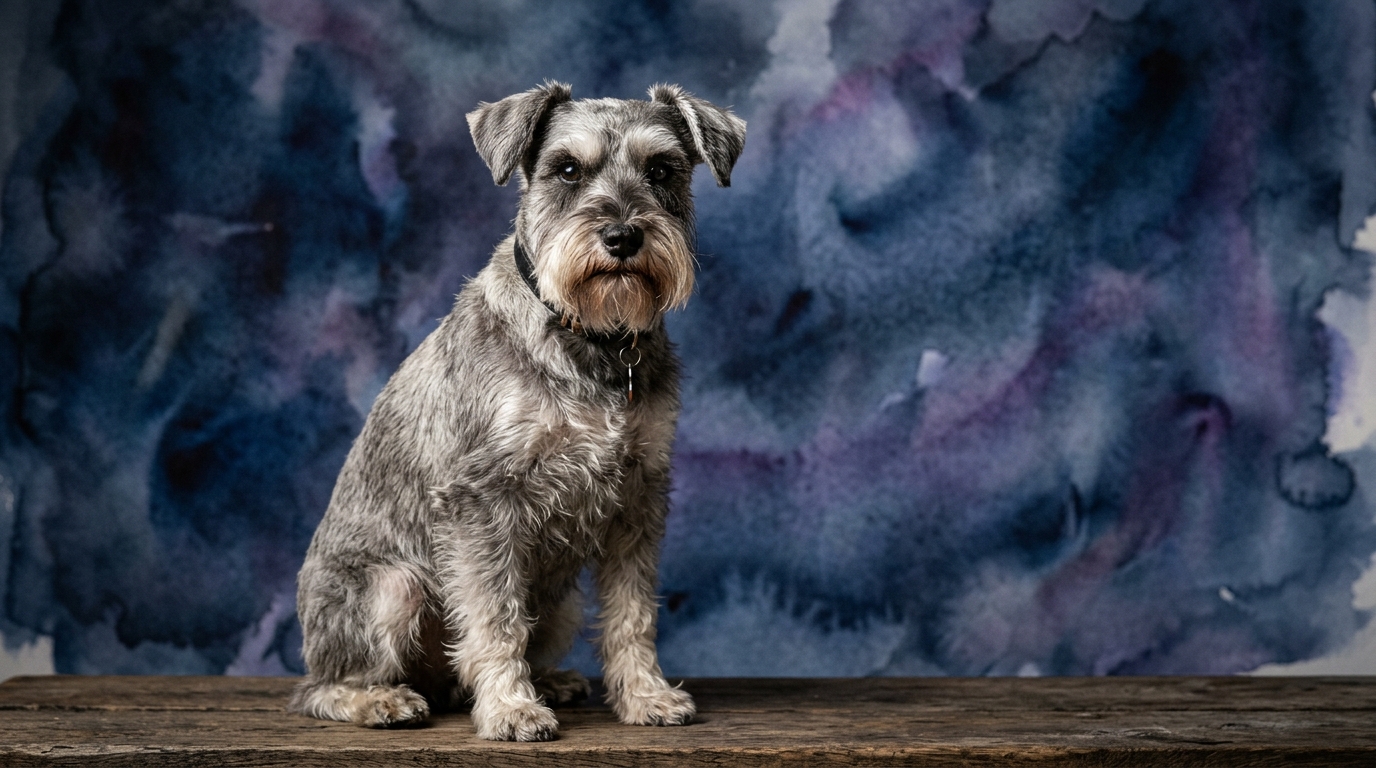

Side-by-Side Cognitive Profiles: Miniature Schnauzer vs. Bull Terrier
The Cosmic Pet Pet IQ Lab offers a unique lens through which to compare canine cognitive abilities, focusing on five key dimensions. For the Miniature Schnauzer, ranked #12 on Stanley Coren's scale, we observe a robust intellectual framework. Their Problem Solving is rated 4/5, indicating a capacity to independently figure out moderately complex challenges, such as manipulating puzzle toys or navigating novel environments. Training Speed is an exceptional 5/5, meaning they grasp new commands with remarkable rapidity, often requiring minimal repetitions. Social Intelligence stands at 4/5, reflecting their keen ability to interpret human cues and adapt their behavior within social contexts. An Instinctive Drive of 4/5 highlights their strong terrier heritage, manifesting as alert observation and a readiness to engage with tasks requiring focus and persistence. Finally, their Memory at 4/5 suggests excellent retention of learned behaviors and experiences over time.
In contrast, the Bull Terrier, with a Coren rank of #66, presents a different cognitive landscape. Their Problem Solving score is 3/5, suggesting they can tackle straightforward tasks but may require more guidance or trial-and-error for multi-step challenges. Training Speed is 3/5, meaning they will learn, but at a more moderate pace, necessitating consistent and patient instruction. Social Intelligence is also 3/5; while affectionate and loyal, they might be less nuanced in interpreting complex human emotional signals compared to breeds with higher scores. Their Instinctive Drive, also 3/5, indicates a strong, determined nature, perhaps more focused on physical engagement and robust play than intricate hunting patterns. Lastly, their Memory is 3/5, implying they retain information, but benefit significantly from regular reinforcement to keep learned behaviors sharp and accessible.
Where the Miniature Schnauzer Excels Cognitively
The Miniature Schnauzer’s cognitive architecture provides distinct advantages, particularly in areas demanding quick uptake and nuanced understanding. Their superior Training Speed (5/5) means they process new information and associate actions with commands almost instantaneously, making them highly receptive to advanced obedience or skill-based training. This rapid learning curve is a significant differentiator. Furthermore, their 4/5 Problem Solving ability allows them to approach novel situations with an adaptive mindset, often finding solutions to environmental puzzles or unexpected obstacles with less human intervention. This makes them particularly adept at activities requiring strategic thinking, such as agility courses or complex scent work. Their elevated Social Intelligence (4/5) enables them to more readily interpret subtle human body language and vocal tones, fostering a deeply responsive and interactive companionship that can feel remarkably intuitive.
Unique Strengths of the Bull Terrier's Cognitive Profile
While their scores may appear lower, the Bull Terrier possesses distinct cognitive strengths that are integral to their unique personality. Their 3/5 Problem Solving score, while not indicating complex strategic thought, often translates into a direct and determined approach; once they commit to a solution, they pursue it with unwavering resolve rather than overthinking alternatives. This sheer persistence can be a powerful asset in tasks requiring stamina and single-minded focus. Their Instinctive Drive (3/5) is characterized by a robust, confident determination, which, when properly channeled, makes them formidable and enthusiastic participants in physical activities or protective roles. Moreover, their 3/5 Social Intelligence, while less subtle, often manifests as an uncomplicated, deeply devoted affection for their chosen family, providing a steadfast and reassuring presence without the complexities of more emotionally intricate breeds.
Trainability: A Tale of Two Terriers
When it comes to ease of training, the data clearly points to the Miniature Schnauzer as the more amenable student. Their 5/5 Training Speed means they pick up new commands with remarkable efficiency, often requiring only a few repetitions before mastery. This eagerness to learn, coupled with their 4/5 Social Intelligence, allows them to quickly understand and respond to their handler's cues, making positive reinforcement highly effective and rewarding for both parties. Real behavioral differences include their tendency to seek engagement and their innate desire to please, which streamline the learning process for basic obedience and advanced tricks alike. Consistency and clear communication will yield rapid and impressive results with a Miniature Schnauzer.
The Bull Terrier, conversely, requires a more patient and persistent approach due to their 3/5 Training Speed. While capable of learning, they often need more repetitions and consistent motivation to solidify commands. Their independent terrier spirit means they can sometimes be perceived as stubborn, choosing whether a command is worth their effort. Training a Bull Terrier benefits from making lessons fun, engaging, and highly rewarding to capture their attention and leverage their determined nature. Owners should focus on short, positive sessions and understand that while they may not learn as quickly, their loyalty once a behavior is ingrained is profound. Behavioral differences include a stronger independent streak, which requires a handler who can be a firm, fair, and consistent leader, turning potential challenges into opportunities for bonding and mutual respect.
Matching Canine Minds with Lifestyles: Active vs. Relaxed Owners
Considering their cognitive and behavioral profiles, the Miniature Schnauzer demonstrates a versatile adaptability that can suit a range of owners, though they are not couch potatoes. Their 4/5 Instinctive Drive means they benefit from regular mental and physical engagement, such as daily walks, interactive play, and opportunities to learn new tricks or participate in dog sports like agility or obedience. An active owner will find a willing and eager partner for adventures, but even a moderately active owner who provides consistent mental stimulation will find a content companion. Their intellectual curiosity and desire for interaction make them thrive when their minds are challenged regularly, preventing boredom.
The Bull Terrier, with its robust physique and determined nature, is best suited for active owners who can provide ample physical exercise and consistent mental engagement. Their energy levels and direct approach mean they thrive on vigorous play, long walks, and structured activities that burn off steam and provide a sense of purpose. A relaxed or sedentary owner might find the Bull Terrier's energy and potential for independent action challenging without sufficient outlets. Owners who enjoy hiking, running, or engaging in dog sports will find a spirited and devoted companion in the Bull Terrier. Their strong will and playful exuberance require an owner who understands the breed's need for both physical exertion and firm, positive guidance.
The Verdict: When to Choose Each Breed
The Verdict
Choose the Miniature Schnauzer if you desire a highly responsive, quick-learning companion eager to engage in diverse activities from advanced obedience to complex puzzle-solving, thriving on intellectual connection and consistent interaction.
Opt for the Bull Terrier if you appreciate a robust, determined, and uniquely spirited companion, and are prepared to invest significant time in consistent, engaging training and ample physical activity to channel their strong will and affectionate nature.
🧠 Find Your Pet's IQ Score
Our Pet IQ Lab assessment covers 25+ tests across 5 cognitive dimensions — personalized to your breed.
Take the Full IQ Test →Frequently Asked Questions
Do Miniature Schnauzers need a lot of mental stimulation?
Yes, with a Problem Solving score of 4/5 and high Training Speed, Miniature Schnauzers thrive on mental challenges. Puzzle toys, learning new tricks, and engaging in obedience or agility sports are excellent ways to keep their minds sharp and prevent boredom-related behaviors.
Are Bull Terriers difficult to train?
Bull Terriers are not inherently difficult, but their 3/5 Training Speed means they require more patience and consistency than some other breeds. Engaging, positive reinforcement methods work best, and owners should be prepared for more repetitions to solidify commands due to their independent streak.
How do their social intelligence scores impact their family life?
The Miniature Schnauzer's 4/5 social intelligence allows them to be highly attuned to family dynamics and human emotions, often integrating seamlessly into household routines. The Bull Terrier's 3/5 social intelligence suggests a more straightforward, devoted affection, perhaps less nuanced in reading subtle cues but equally committed to their family unit.