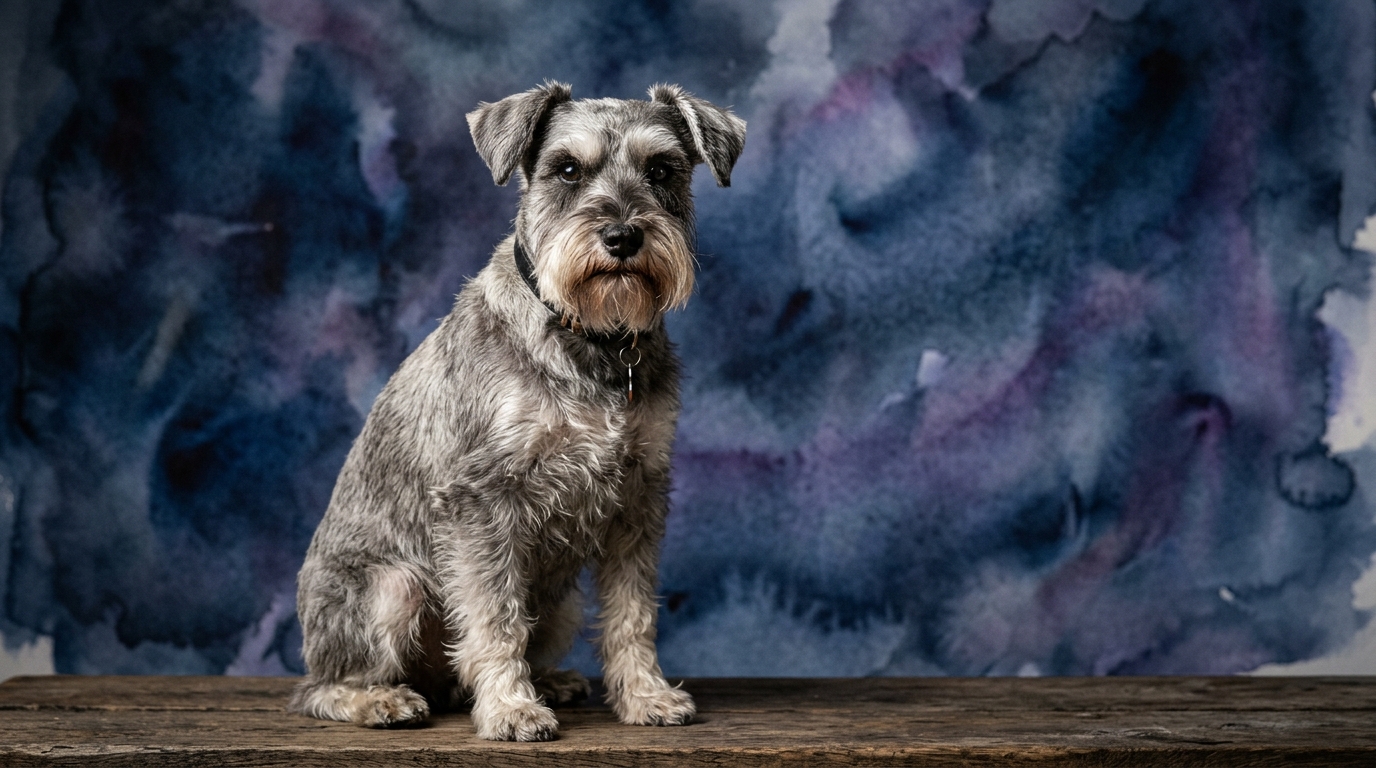
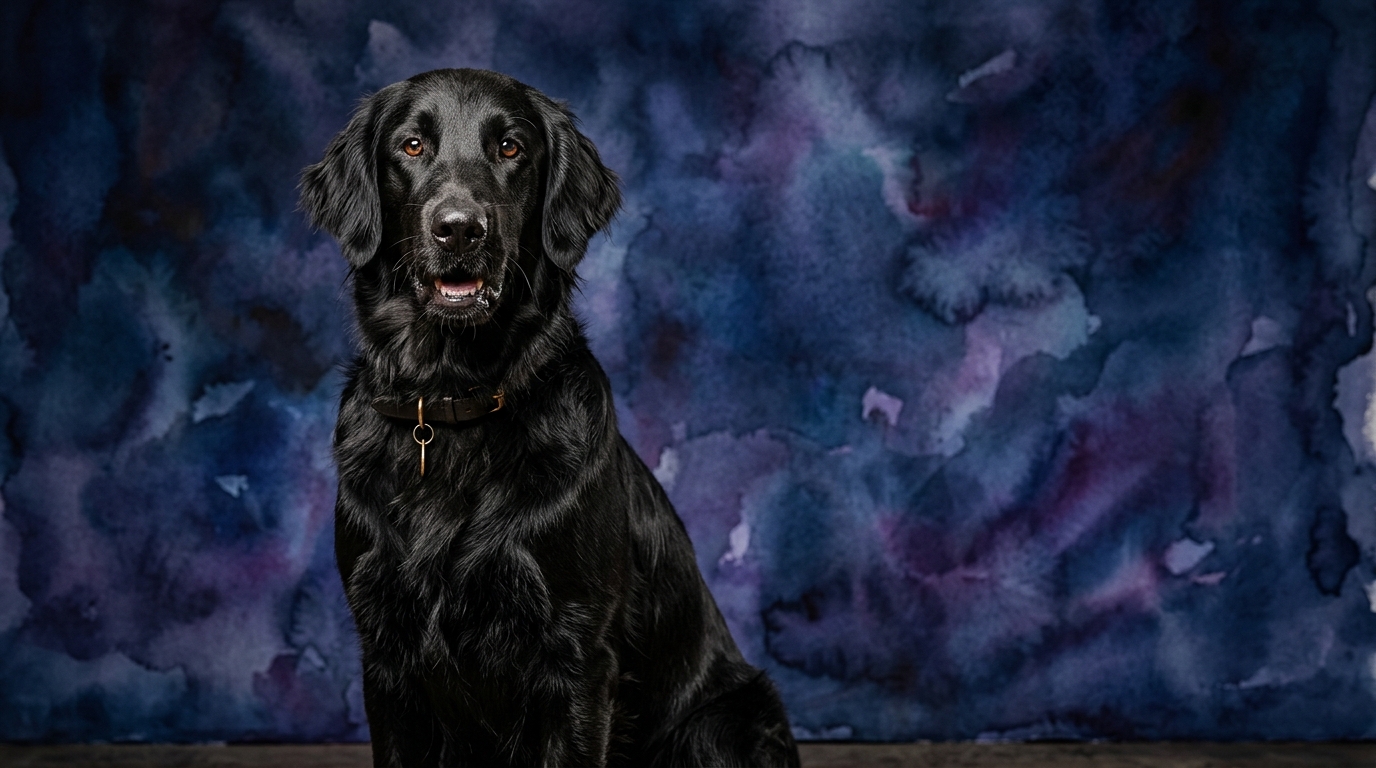
Side-by-Side IQ Profile: Miniature Schnauzer vs. Flat-Coated Retriever
The Cosmic Pet Pet IQ Lab employs five key dimensions to evaluate canine intelligence, offering a nuanced understanding beyond simple obedience. For the Miniature Schnauzer, these scores highlight a sharp, responsive mind, while the Flat-Coated Retriever showcases a different, equally capable set of cognitive strengths.
The Miniature Schnauzer's profile includes Problem Solving at 4/5, indicating an adeptness at figuring out puzzles, navigating complex environments, and overcoming obstacles to reach goals. Their terrier heritage imbues them with a persistent, independent approach to challenges. Training Speed is exceptionally high at 5/5, meaning they are remarkably quick learners, often grasping new commands and routines with minimal repetition. Their eagerness to engage and sharp focus make them highly receptive to training. Social Intelligence scores 4/5, reflecting their keen awareness of human emotions and social cues, capable of forming strong, perceptive bonds. Instinctive Drive, at 4/5, signifies a robust prey drive and a vigilant nature, characteristic of terriers bred for pest control. Memory rounds out their profile at 4/5, demonstrating their ability to retain learned behaviors, commands, and experiences effectively over time, contributing to consistent performance.
The Flat-Coated Retriever presents a profile geared towards their sporting heritage. Their Problem Solving is rated 4/5, showing a solid capacity for resolving practical challenges, particularly those involving retrieval tasks or navigating outdoor environments, approaching problems with a blend of enthusiasm and methodical exploration. Training Speed sits at 4/5, indicating they learn commands and tasks efficiently, though perhaps requiring slightly more repetition than the Schnauzer. Their desire to please and retrieve makes them generally cooperative students. Social Intelligence is 3/5; they form strong connections with their human families but may be less acutely sensitive to subtle social cues than some breeds, their social interactions often characterized by joyful, straightforward engagement. Instinctive Drive is 3/5, primarily driven by their retrieving instinct and desire to carry objects and interact through play, less about vigilance and more about active engagement. Their Memory, however, is outstanding at 5/5, exhibiting a superior ability to recall information, commands, and spatial arrangements, especially pertinent to their retrieving work, remembering where things are and what to do with remarkable accuracy.
Where the Miniature Schnauzer Wins Cognitively
The Miniature Schnauzer's cognitive strengths shine particularly in their exceptional training speed, rated 5/5. This means they often grasp new commands and routines with remarkable swiftness, demanding fewer repetitions than many other breeds to achieve proficiency in foundational obedience. Their social intelligence, at 4/5, allows them to be highly perceptive of human emotions and subtle social cues, fostering a deeply empathetic and nuanced bond with their owners. This awareness means they might anticipate needs or moods with greater accuracy, making them incredibly attuned companions who often seem to understand what you're thinking. Furthermore, their problem-solving, also 4/5, combined with a robust instinctive drive (4/5), equips them with a tenacious, independent approach to overcoming obstacles. This often manifests as cleverness in navigating household challenges, such as figuring out how to open cabinets or excel at puzzle toys, driven by a persistent terrier spirit to achieve their goals. Their vigilance, a byproduct of their strong drive, also makes them keenly aware of their surroundings, offering an alert, though sometimes vocal, presence that many owners appreciate for security.
This combination of rapid learning and social acuity makes the Miniature Schnauzer particularly responsive to early socialization and consistent, positive reinforcement. They thrive on mental challenges that engage their quick wit, making them excellent candidates for advanced obedience, trick training, and even some dog sports where speed of understanding is paramount. Their independence in problem-solving means they are not always waiting for human direction, a trait that can be both endearing and requires thoughtful management.
Where the Flat-Coated Retriever Wins Cognitively
The Flat-Coated Retriever demonstrates distinct cognitive advantages, most notably their outstanding memory, scoring 5/5. This superior recall allows them to retain a vast repertoire of commands, remember complex sequences, and recall spatial information with remarkable accuracy over extended periods, making them exceptional for demanding tasks like field work, agility courses, or scent detection. Once a behavior is learned, it is deeply ingrained and reliably executed, reducing the need for constant refreshers. While their training speed is a solid 4/5, their superior memory ensures that learned behaviors are solidified and performed consistently, even after long breaks. Their problem-solving skills, also 4/5, are often applied with a joyful, cooperative enthusiasm, especially in tasks involving retrieval or navigating challenging outdoor environments. Unlike the Schnauzer's often self-directed approach, the Flat-Coat often leverages their cognitive abilities in partnership with their handler, showing a strong desire to work together towards a common goal.
Their instinctive drive, rated 3/5, is perfectly channeled into their primary purpose: retrieving. This translates to an unwavering focus and drive when engaged in activities that align with their natural instincts, making them tireless partners in play and sport. This drive, combined with their excellent memory, makes them highly effective at tasks requiring sustained attention and repetition, such as retrieving multiple items or following complex scent trails. The Flat-Coat's cognitive profile emphasizes reliability and endurance in tasks, making them ideal companions for active individuals who engage in structured activities or require a dog to perform consistent, memory-intensive work.
Training Dynamics: Which is Easier and Why?
When considering ease of training, both breeds present unique opportunities and challenges. The Miniature Schnauzer, with a training speed of 5/5, generally proves easier for initial command acquisition. They pick up new tasks quickly, making foundational obedience relatively straightforward and often requiring fewer repetitions to achieve proficiency. Their attentiveness and desire to engage with their owner contribute to this rapid learning. However, their independent terrier spirit and relatively high instinctive drive (4/5) mean that consistency is paramount to manage potential stubbornness or a tendency to follow their nose. They might challenge boundaries more readily than a Flat-Coat, but if those boundaries are applied consistently and fairly, they will learn them just as quickly.
The Flat-Coated Retriever, with a training speed of 4/5, is also very trainable, but might require slightly more repetition during initial learning phases. Their enthusiasm and strong desire to please are powerful motivators, making them eager participants in training sessions. The primary 'challenge' with a Flat-Coat often stems from their exuberant nature and potential for distraction, particularly in stimulating environments. Their lower social intelligence (3/5) might mean they are less attuned to subtle corrections, requiring clearer, more direct communication. Training them effectively requires patient, positive reinforcement to channel their boundless energy and focus their attention. Once a behavior is learned, however, their superior memory (5/5) helps to solidify and retain those behaviors exceptionally well, leading to a highly reliable performance over time.
Lifestyle Match: Active Owners vs. Relaxed Owners
Matching a dog's energy levels and cognitive needs to an owner's lifestyle is crucial for a harmonious relationship. The Miniature Schnauzer can suit moderately active owners who appreciate consistent engagement without requiring extreme physical demands. They certainly need daily exercise and mental stimulation to prevent boredom and channel their innate drive, but their smaller size often means less intense, prolonged physical activity compared to a retriever. Their vigilance and high social intelligence make them engaging companions for owners who enjoy consistent interaction, trick training, and mental challenges like puzzle toys or scent work. They are adaptable to apartment living if their mental and physical needs are diligently met through walks, play, and training sessions.
The Flat-Coated Retriever, on the other hand, is unequivocally for active owners. Their retrieving instincts and boundless, joyful energy demand significant daily exercise, often involving vigorous activities like running, swimming, long hikes, or extensive fetch sessions. They thrive in environments where they can engage in active pursuits and participate fully in family adventures, preferring to be constantly involved rather than observing from the sidelines. A relaxed owner might find their seemingly endless enthusiasm and need for engagement overwhelming, potentially leading to destructive behaviors if their physical and mental needs are not adequately met. They are excellent partners for those involved in dog sports, outdoor recreation, or families with an energetic lifestyle.
The Verdict: When to Choose Each Breed
Choosing between a Miniature Schnauzer and a Flat-Coated Retriever ultimately depends on an owner's specific lifestyle, training preferences, and desired canine companionship dynamics.
The Verdict
Choose the Miniature Schnauzer for owners seeking a highly responsive, quick-learning companion keenly attuned to human social cues, who appreciate a vigilant nature and enjoy consistent, engaging mental stimulation without requiring extreme physical demands.
Opt for the Flat-Coated Retriever if you are a highly active owner desiring a joyful, cooperative partner with exceptional memory, eager to participate in outdoor adventures, retrieving games, and who can provide ample physical and mental exercise.
🧠 Find Your Pet's IQ Score
Our Pet IQ Lab assessment covers 25+ tests across 5 cognitive dimensions — personalized to your breed.
Take the Full IQ Test →Frequently Asked Questions
Do Miniature Schnauzers bark a lot due to their instinctive drive?
Miniature Schnauzers do possess a strong instinctive drive and a vigilant nature, which can manifest as alert barking. They are quick to notify their owners to new sights or sounds, a trait stemming from their terrier heritage for pest control. Consistent training and early socialization can effectively help manage this vocal tendency.
Is a Flat-Coated Retriever's lower social intelligence score a concern for family life?
A Flat-Coated Retriever's social intelligence score of 3/5 does not indicate a lack of affection or suitability for family life. It suggests they might be less sensitive to subtle human emotional nuances compared to some breeds. They are known for their joyful, outgoing nature and strong bonds with their families, thriving on direct, positive interaction and clear communication.
Which breed is better for dog sports like agility?
Both breeds can excel in dog sports, but their strengths differ. The Miniature Schnauzer's exceptional training speed and agility make them quick learners for complex courses and fast transitions. The Flat-Coated Retriever's superior memory and cooperative nature, combined with their athleticism, make them formidable competitors, especially in retrieving-based or endurance events where sustained performance and recall are key.