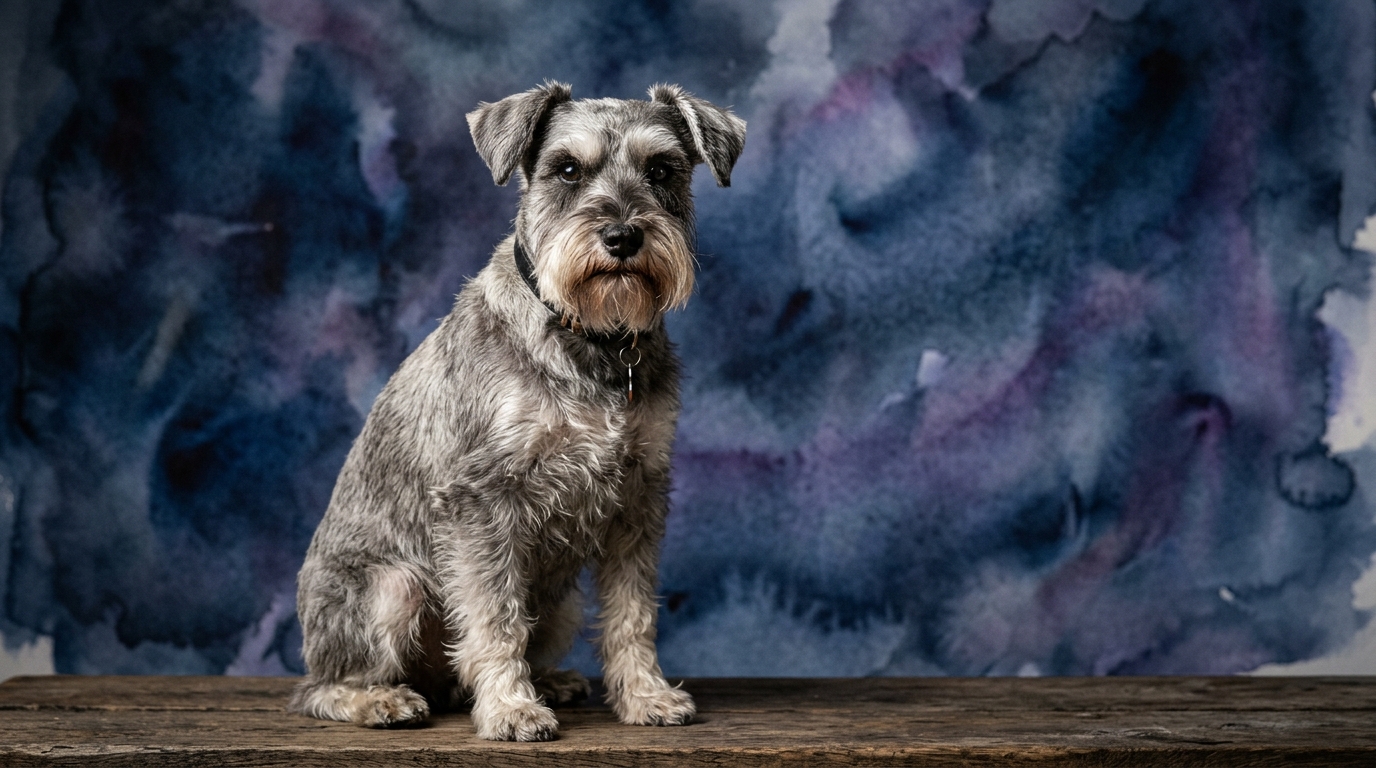
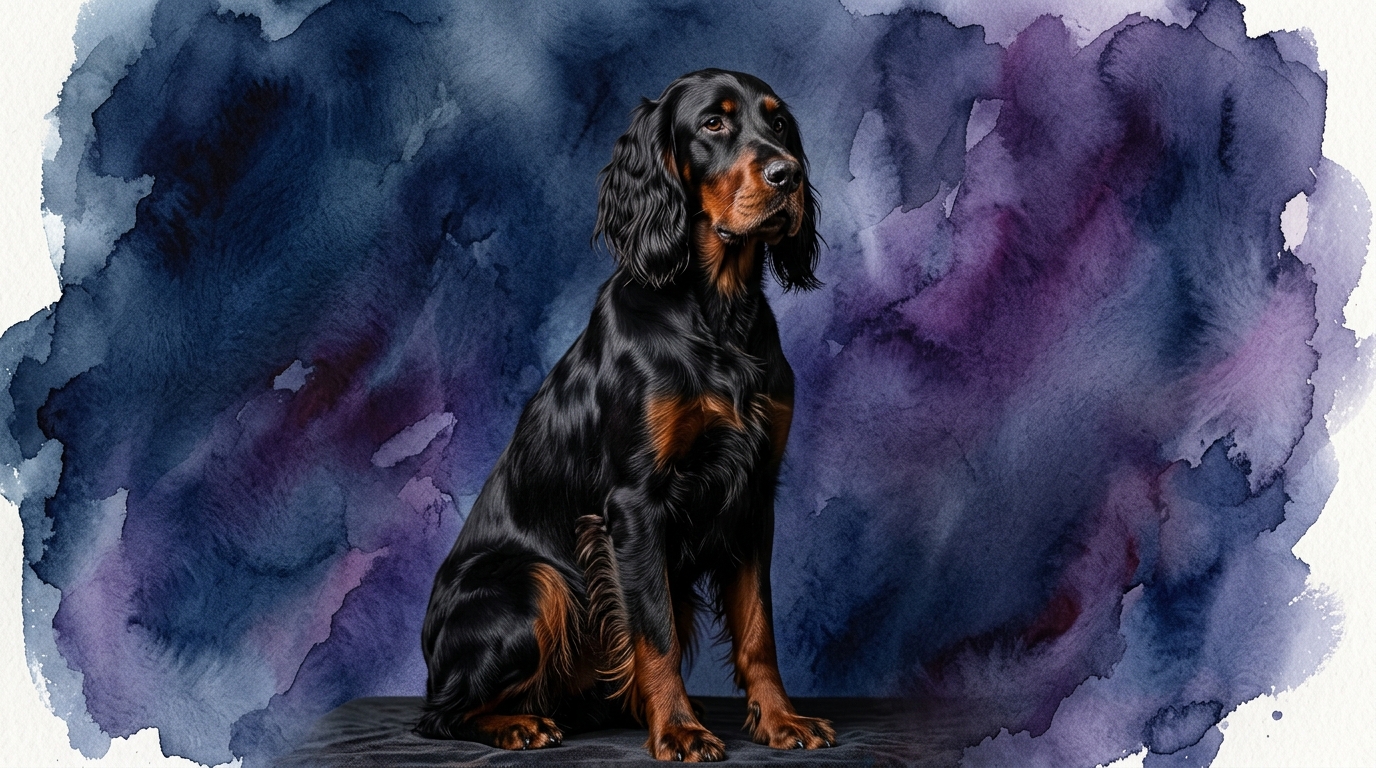
Side-by-Side IQ Profile: Miniature Schnauzer vs. Gordon Setter
The Miniature Schnauzer, a Terrier group member, commands a Coren ranking of #12, indicating a high capacity for learning and obedience. Their problem-solving acumen stands at a robust 4/5, reflecting a resourceful and often independent approach to navigating challenges. Training speed is a standout at 5/5, meaning these dogs typically grasp new commands and routines with remarkable swiftness, eager to engage. Social intelligence is strong at 4/5, allowing them to read human cues effectively and integrate well into family dynamics. An instinctive drive of 4/5 speaks to their terrier heritage, encompassing a keen alertness and a determined pursuit of interests, while their memory rating of 4/5 ensures they retain learned behaviors and experiences with reliability.
Conversely, the Gordon Setter, part of the Sporting group, holds a Coren ranking of #39, placing them as capable learners with a slightly different cognitive emphasis. Their problem-solving score matches the Schnauzer's at 4/5, suggesting a similar capability for finding solutions, though perhaps with a more methodical, persistent style. Training speed is rated 4/5, meaning they learn efficiently but may require a bit more repetition or specific motivation than their terrier counterpart. Social intelligence is rated 3/5, indicating they form deep bonds but might exhibit a more independent streak, less consistently focused on human social subtleties. Their instinctive drive is 3/5, reflecting their field-bred purpose for tracking and pointing with sustained focus rather than constant vigilance. A strong memory score of 4/5 ensures they recall complex sequences, scent trails, and learned commands effectively over time.
Where the Miniature Schnauzer Wins Cognitively
The Miniature Schnauzer's cognitive strengths shine particularly in areas demanding quick uptake and social attunement. Their training speed of 5/5 means they are exceptionally fast at associating commands with actions, often requiring fewer repetitions to master a new skill. This rapid learning curve makes them highly adaptable to varied training exercises, from basic obedience to complex tricks. Furthermore, their 4/5 social intelligence translates into a greater responsiveness to human emotional states and intentions, making them adept companions in dynamic family environments. They are often more attuned to their owner's moods and preferences, adjusting their behavior accordingly. Their instinctive drive, also 4/5, manifests as a vigilant alertness and a spirited persistence in tasks, an inherent terrier determination that can be channeled into focused activities like agility or competitive obedience, where quick decision-making and tenacity are valued.
Where the Gordon Setter Wins Cognitively
The Gordon Setter’s cognitive profile demonstrates particular advantages in sustained focus and memory-intensive tasks, especially those tied to their sporting heritage. While sharing a 4/5 problem-solving score with the Schnauzer, the Setter often approaches challenges with a deliberate, enduring persistence rather than rapid, trial-and-error bursts. This methodical approach, coupled with their 4/5 memory, makes them exceptional at retaining complex sequences, long-term scent discrimination, and intricate field commands, crucial for their original purpose. Their instinctive drive of 3/5, though lower than the Schnauzer's, represents a deep-seated drive for working outdoors, demonstrating stamina and a tireless commitment to a task once engaged. This makes them superb partners for activities requiring prolonged concentration and physical endurance, such as tracking, retrieving, or expansive hikes, where their robust memory helps them navigate and recall routes over vast terrains.
Which is Easier to Train and Why
Based on their respective IQ profiles, the Miniature Schnauzer is generally considered easier to train for a broader range of commands and behaviors. Their top-tier training speed (5/5) means they pick up new concepts with remarkable alacrity, often showing an eagerness to please and an ability to make rapid associations between cues and desired actions. This is further bolstered by their 4/5 social intelligence, which allows them to keenly observe and respond to human instruction and body language, making the training process feel more intuitive and collaborative. For instance, a Schnauzer might learn a 'stay' command in fewer sessions due to their quick comprehension and attentiveness to their handler.
The Gordon Setter, with a training speed of 4/5 and social intelligence of 3/5, certainly learns well, but may require a more patient and consistent approach. Their learning style can be more independent, and while they possess excellent memory, they might need more repetitions or different motivational tactics to fully internalize commands. A Gordon Setter might be slower to generalize a command to new environments, requiring more structured practice. Their strong instinctive drive, while beneficial for field work, can sometimes mean they are more easily distracted by environmental stimuli during initial training phases, necessitating a focused and engaging training regimen to maintain their attention and leverage their considerable capabilities.
Which Suits Active Owners vs. Relaxed Owners
For owners with a more relaxed lifestyle, or those seeking a companion adaptable to varied indoor activities and moderate outdoor excursions, the Miniature Schnauzer presents a compelling choice. Their quick cognitive processing and social intelligence make them highly engaging companions in a home setting, readily participating in mental games and short training sessions. While they do enjoy activity, their exercise needs can often be met with regular walks and interactive play, and their compact size makes them suitable for a wider range of living situations. They are generally content once their mental and physical needs are met, and thrive on consistent family interaction.
Conversely, the Gordon Setter is a better fit for active owners who enjoy extensive outdoor adventures and are prepared to dedicate significant time to physical exercise and mentally stimulating work. Their heritage as a sporting dog means they possess substantial stamina and a natural inclination for activities like long-distance running, hiking, or field work. Owners who can provide opportunities for them to use their strong memory and focused problem-solving in real-world scenarios, such as advanced scent work or competitive canine sports, will find the Gordon Setter to be a devoted and fulfilled partner. Their cognitive and physical needs demand an owner who embraces an active, outdoor-oriented lifestyle.
The Verdict
Choose the Miniature Schnauzer if you desire a quick-witted, highly trainable companion who excels in rapid learning and social responsiveness within a family setting.
Opt for the Gordon Setter if you seek a dedicated, enduring partner for extensive outdoor activities, valuing their methodical problem-solving and deep memory for sustained tasks.
🧠 Find Your Pet's IQ Score
Our Pet IQ Lab assessment covers 25+ tests across 5 cognitive dimensions — personalized to your breed.
Take the Full IQ Test →Frequently Asked Questions
Are Miniature Schnauzers good for agility sports?
Absolutely, Miniature Schnauzers often excel in agility due to their high training speed (5/5), spirited instinctive drive (4/5), and agile physique. Their quick learning and determination make them natural competitors in fast-paced canine sports.
Do Gordon Setters require a lot of mental stimulation?
Yes, Gordon Setters benefit greatly from consistent mental stimulation, beyond just physical exercise. Their robust memory (4/5) and problem-solving abilities (4/5) mean they thrive on structured training, puzzle toys, and activities that engage their focused intellect, like advanced obedience or scent work.
How do their problem-solving approaches differ despite similar scores?
While both score 4/5 in problem-solving, the Miniature Schnauzer often employs a more immediate, trial-and-error approach, quickly adapting strategies. The Gordon Setter typically exhibits a more methodical and persistent approach, relying on their excellent memory and stamina to systematically work through challenges, particularly in open environments.